
- Release Year: 2021
- Platforms: Android, iPad, iPhone, Macintosh, Windows
- Publisher: USM
- Developer: Nementic Games GmbH
- Genre: Adventure
- Perspective: 1st-person
- Game Mode: Single-player
- Gameplay: Point-and-select, Puzzle
- Setting: North America
- Average Score: 86/100
Description
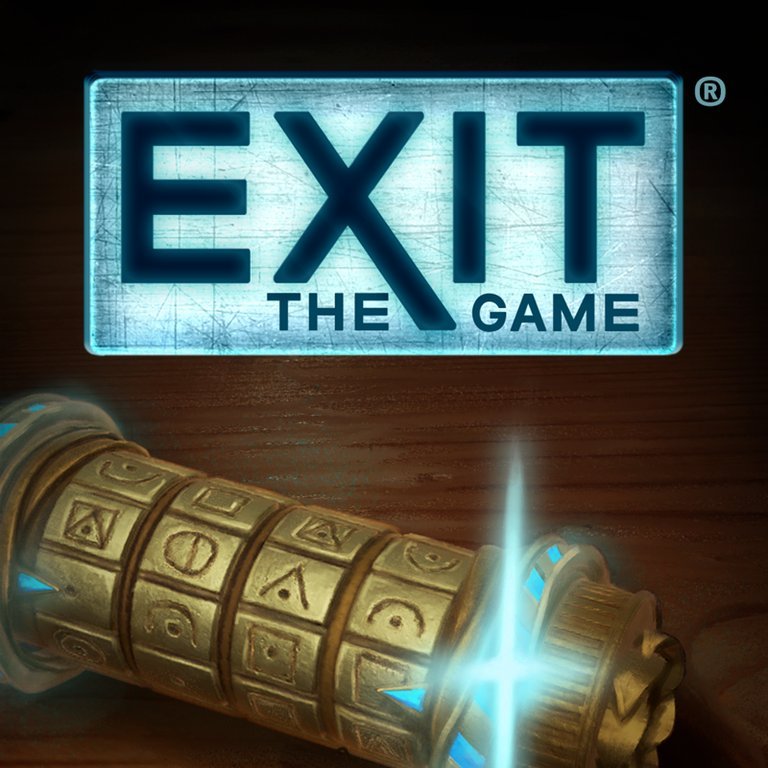
Exit: The Curse of Ophir is a first-person puzzle-adventure game set in the mysterious Hotel Ophir. Players must solve intricate puzzles and uncover hidden clues to escape the hotel’s eerie confines, unraveling the secrets behind its curse. The game features a point-and-click interface and immersive 3D environments, challenging players with a mix of detective work and logical reasoning.
Gameplay Videos
Where to Buy Exit: The Curse of Ophir
PC
Exit: The Curse of Ophir Patches & Updates
Exit: The Curse of Ophir Guides & Walkthroughs
Exit: The Curse of Ophir Reviews & Reception
appunwrapper.com : Overall, I’m really enjoying solving all the puzzles and can easily say this is my favorite game this week.
Exit: The Curse of Ophir Cheats & Codes
Event Gift Code
Enter the code in the in‑game redeem system: Profile → Settings → Redeem Code.
| Code | Effect |
|---|---|
| 1D0S2c4A3bqf | Redeems in‑game bundle |
| G5oDir8j5szP | Redeems in‑game bundle |
| 8g3N69Ejpp5h | Redeems in‑game bundle |
| W61MSmMUlp5a | Redeems in‑game bundle |
| 2VO0irxgmMjd | Redeems in‑game bundle |
| 02Um2BJEjjJc | Redeems in‑game bundle |
| VlH8XizPnlKV | Redeems in‑game bundle |
| PFgfKx2IKsvK | Redeems in‑game bundle |
| LCHH5sNPWjBE | Redeems in‑game bundle |
| 9cZjprYvF9fG | Redeems in‑game bundle |
| lm0kudO6ngPL | Redeems in‑game bundle |
| DqW4GRDEU5Is | Redeems in‑game bundle |
| qzzM13388Xrb | Redeems in‑game bundle |
Exit: The Curse of Ophir: Review
In the shadow-draped corridors of Hotel Ophir, where curses cling to the walls like dust and an eerie comet blights the Oklahoma sky, a mystery unfolds. Exit: The Curse of Ophir, the first digital adaptation of Kosmos’s award-winning EXIT board game series, transcends mere puzzle-solving to deliver a hauntingly atmospheric escape room experience. Developed by Nementic Games GmbH and published by USM, this game challenges players to unravel the disappearance of reclusive writer Tory Harlane, whose research into haunted houses plunged him into a labyrinth of supernatural secrets. While its ambition to merge tactile board-game logic with digital interactivity is laudable, Exit: The Curse of Ophir emerges as a double-edged sword—a triumph of atmospheric storytelling and intricate design, yet marred by puzzles that often prioritize obscurity over coherence. This review dissects its legacy, mechanics, and cultural impact to determine its rightful place in gaming history.
Introduction
The digital adaptation of EXIT’s board game series arrives not as a simple translation, but as a bold reimagining of the escape room genre. The Curse of Ophir thrusts players into the enigmatic Hotel Ophir, a decaying relic rumored to guard a cursed city of gold. Your mission: find the vanished writer Tory Harlane before the hotel’s otherworldly claims consume you. What sets this game apart is its philosophy that “anything can be part of the game,” urging players to think beyond the screen—a radical departure from traditional point-and-click adventures. Yet, while its premise promises a cerebral odyssey, the game’s reality is one of brilliant highs and frustrating lows. This review argues that Exit: The Curse of Ophir stands as a landmark in puzzle design for its innovative integration of digital and analog thinking, yet its uneven difficulty and opaque logic prevent it from achieving the seamless mastery of its physical counterparts.
Development History & Context
Born from Kosmos’s EXIT board game series—a phenomenon renowned for its “escape room in a box” mechanics—The Curse of Ophir was developed by Nementic Games GmbH, a studio with a pedigree in atmospheric puzzle games (e.g., Tobla: Divine Path). The project’s vision, as articulated by Nementic’s lead designers Julian Ludwig and Sebastian Jantschke, was to preserve the series’ core tenets: multi-layered puzzles, environmental storytelling, and “meta” gameplay where the physical box itself held clues. However, the digital shift demanded innovation. Leveraging Unity, the team crafted a hybrid 2D/3D world: hand-drawn backgrounds evoke the hotel’s decaying elegance, while inventory items (keys, locks, cryptexes) are fully rotatable 3D objects, echoing the tactile satisfaction of board game components.
Released on iOS (September 2021) and Steam (June 2022), the game arrived amid a booming escape room genre dominated by titles like The Room and Meridian 157. Unlike those, which focused on intimate horror, Exit positioned itself as a “detective/mystery” adventure, emphasizing investigation over fear. Technologically, it embraced cross-platform play—touch controls on mobile, mouse/keyboard on PC—but its design philosophy of “thinking beyond the app” created unique constraints. Puzzles requiring players to manipulate device settings (e.g., volume adjustments, app restarts) blurred the line between game and reality, a bold choice that would become a point of contention. This context reveals Exit as both a faithful tribute and a daring evolution of the EXIT formula, constrained by the very platform it sought to transcend.
Narrative & Thematic Deep Dive
The narrative unfolds with the urgency of a classic detective noir. You’re hired to find Tory Harlane, a writer obsessed with the Hotel Ophir’s legends of gold, hauntings, and a “curse” tied to the appearance of a comet. The hotel itself is a character: its isolation in the Wichita Mountains, its dusty artifacts (a globe, cryptexes, cryptic paintings), and its pervasive sense of dread transform exploration into an archaeological dig into the occult.
Characterization is sparse but potent. Harlane’s presence is felt through his research notes—scrawled observations about the hotel’s history, Native American folklore, and comet-related omens. These documents, combined with voiced environmental text (performed by Johannes Steck), weave a tapestry of obsession and peril. The game’s central theme is the weight of knowledge: Harlane’s pursuit of Ophir’s secrets led to his disappearance, and the hotel seems to actively resist discovery. This is underscored by puzzles that feel like “traps”—e.g., the elevator’s color-coded plugs, which must be arranged to avoid “shorting” a circuit, symbolizing the danger of meddling with forces beyond comprehension.
The comet is a recurring motif, its ominous presence fueling the narrative’s tension. Yet, the game’s greatest strength lies in its ambiguity. Unlike many escape games that tie loose ends neatly, Exit leaves the curse’s origin and Harlane’s fate tantalizingly unresolved, inviting players to ponder whether they’ve escaped—or merely played into Ophir’s hands. This ambiguity elevates the story from a simple mystery to a cautionary tale about the lure of the unknown.
Gameplay Mechanics & Systems
Exit: The Curse of Ophir’s gameplay is a masterclass in structured chaos. At its core lies a linear point-and-click loop: explore, collect, puzzle, repeat. What distinguishes it is the integration of 3D inventory manipulation (e.g., rotating keys to reveal hidden engravings) and “meta-puzzles” that require external actions. For instance:
- Initial Puzzle: Deduce a lock combination by matching a rubbled room key to key-shape charts—a clever nod to board game components.
- Elevator Puzzle: Arrange colored plugs (red, green, blue, yellow, purple) using technician’s instructions, with spatial logic (e.g., “green as far from red as possible”) dictating placement.
- Globe Puzzle: Infamously frustrating, players must align numbers on a globe to match a lock, with a critical digit (a “1” mistaken for a “7”) derailing progress.
- Puzzle Piano: Use device volume controls to play notes—the first three quiet, the last three loud—revealing a hidden sequence.
- Tunnel Compass: Requires quitting the app entirely to access a “third path,” a meta-gesture breaking immersion for narrative cohesion.
These systems showcase brilliance in design. The 3D inventory allows tactile examination (e.g., using a lighter to reveal hidden ink on a portrait), while the hint system (tiered for progressive revelation) accommodates varying skill levels. Yet, the game’s ambition also breeds flaws. Puzzles like the globe’s ambiguous digit or the frame’s orientation-dependent solution demand unsupported leaps, forcing players to rely on brute-force guesswork. Combat and character progression are absent, focusing solely on puzzle-solving—a deliberate choice that highlights the game’s niche appeal. The UI, clean and intuitive, occasionally falters in mobile ports, where small touch targets frustrate.
Ultimately, Exit’s mechanics celebrate lateral thinking but stumble when clarity gives way to obscurity. The “think beyond the app” philosophy is innovative yet inconsistently implemented, making triumphs feel earned and failures feel arbitrary.
World-Building, Art & Sound
The Hotel Ophir is a character rendered with meticulous detail. Set in Oklahoma’s Wichita Mountains, its isolation amplifies the sense of entrapment. Art direction blends hand-drawn backgrounds with 3D elements: peeling wallpaper, dusty bookshelves, and cryptic artifacts (e.g., a ship/train/plane painting hinting at Ophir’s history) create a living museum of decay. This aesthetic is enhanced by dynamic lighting—torchlight flickers as you explore, casting long shadows that seem to move independently.
Sound design is equally vital. Michael Klier’s score, a brooding mix of ambient drones and sparse piano melodies, mirrors the hotel’s oppressive atmosphere. Voiced texts, delivered with gravitas by Johannes Steck, transform notes into monologues, deepening immersion. Environmental sounds—creaking floors, distant howls, the comet’s ethereal hum—blur reality and fantasy.
The comet itself is a masterstroke of symbolism. Its appearance is tied to Ophir’s curse, and its visual design (a jagged, eye-like form) recurs in puzzles (e.g., a telescope reflecting its shape). This consistency reinforces the game’s theme of cosmic dread. Yet, the world-building’s greatest strength is its restraint. Unlike games that over-explain lore, Exit lets artifacts speak for themselves—making discoveries feel like personal revelations rather than dictated narratives.
Reception & Legacy
Exit: The Curse of Ophir received a “Very Positive” rating on Steam (87% of 71 reviews) and a polarized reception on mobile platforms. Critics praised its creativity and atmosphere, with many calling it “the best EXIT game yet” for its digital innovations. Player reviews reflected this dichotomy:
- Positive: “Puzzles required out-of-the-box thinking, just like the physical games. The 3D inventory was brilliant!” (Steam). “Atmospheric and challenging—a true escape room in your pocket.” (App Store).
- Negative: “The globe puzzle had me stuck for hours; the digit ambiguity was poor design.” (Game Solver). “Forced meta-actions (quitting the app) broke immersion.” (Steam).
Commercially, the game found success as a premium title ($5.99–$7.99), appealing to EXIT board game fans and escape room enthusiasts. Its legacy is twofold: it expanded the EXIT brand’s reach to solo players and influenced subsequent games like Exit 8 VR (2024) to embrace meta-puzzles. However, it also sparked debate about puzzle design—whether difficulty should stem from logic or obscurity.
Culturally, Exit stands as a bridge between analog and digital escape experiences. Its emphasis on “thinking beyond the app” foreshadowed trends in puzzle gaming (e.g., Return of the Obra Dinn’s deductive logic), while its flaws caution against prioritizing cleverness over clarity. For genre historians, it represents a bold experiment—one that succeeded in atmosphere but stumbled in execution.
Conclusion
Exit: The Curse of Ophir is a paradox: a game that both redefines and stumbles upon the escape room formula. Its atmospheric storytelling, innovative “meta-puzzles,” and tactile 3D inventory make it a standout achievement in digital adaptation. Yet, its penchant for obtuse puzzles and inconsistent design prevents it from reaching the heights of its board game inspiration.
For puzzle purists, it offers unparalleled challenge; for narrative-driven players, it delivers a haunting mystery. Its place in gaming history is secure as a cult favorite—a testament to the EXIT series’ ingenuity and the genre’s potential for digital reinvention. Ultimately, Exit: The Curse of Ophir is not merely a game to be won, but a mystery to be savored—a flawed masterpiece that lingers in the mind long after the comet fades from view. Verdict: Essential for escape room aficionados; approach with patience and a hint of skepticism.