
- Release Year: 2007
- Platforms: Windows
- Publisher: eGames, Inc.
- Genre: Compilation
- Game Mode: Hotseat, Online PVP, Single-player
Description
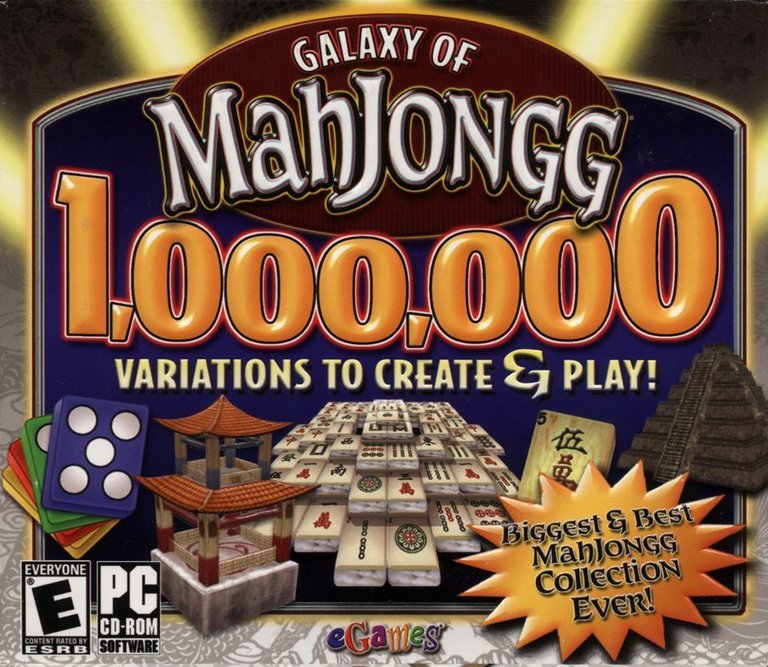
Galaxy of Mahjongg is a compilation of classic Mahjongg games released in 2007, featuring a variety of themed puzzles including Mahjongg Patience, Mahjongg Master 4 and 5, and more. Players can enjoy single-player or multiplayer modes with a range of tile-matching challenges set against different backdrops and difficulty levels.
Galaxy of Mahjongg Free Download
Galaxy of Mahjongg: Review
1. Introduction
In an era dominated by explosive action games and sprawling RPGs, Galaxy of Mahjongg stands as a quiet, meditative outlier—a testament to the enduring appeal of ancient puzzles in the digital age. Released in 2007 by eGames, Inc., this compilation package invites players to explore the intricate world of mahjongg, a tile-based game with roots tracing back to 19th-century China. More than a simple collection, Galaxy of Mahjongg serves as a digital bridge between centuries of gameplay traditions, offering both nostalgic solace and cognitive challenge. This review argues that while the game lacks the narrative depth or technical polish of contemporary titles, its meticulous preservation of mahjongg’s cultural essence and its innovative adaptation of the game’s core mechanics make it a vital, if overlooked, artifact in the history of puzzle gaming.
2. Development History & Context
Galaxy of Mahjongg emerged from the digital equivalent of a bazaar: a compilation model popularized by publishers like eGames, Inc. and RomTech, Inc. (which released an earlier, 1997 version). The studio’s vision was pragmatic—to capitalize on the resurgence of casual puzzle games in the mid-2000s, driven by platforms like PopCap’s Bejeweled and Microsoft’s FreeCell. Technologically, the game was constrained by the era’s CD-ROM distribution, which favored self-contained executables over online updates or DLC. Yet, this limitation allowed for robust offline play, a key selling point for dial-up-era users.
The game’s release coincided with a pivotal moment for mahjongg itself. While the original Chinese game had been banned in 1949 for its gambling associations, it underwent a renaissance in the 1980s as the Chinese State Sports Commission standardized it as a “healthy sport.” In the West, the National Mah Jongg League (founded in 1937 by Jewish American women) had preserved American variants, ensuring the game’s cultural survival. Galaxy of Mahjongg tapped into this legacy, bundling seven distinct mahjongg iterations—including Mahjongg Master Egyptian Edition/The Curse of Ra and Mahjongg Tiles of Time Lite—to cater to both traditionalists and newcomers.
3. Narrative & Thematic Deep Dive
As a compilation puzzle game, Galaxy of Mahjongg eschews conventional narratives. Instead, it embeds thematic depth in its individual titles:
– Mahjongg Master Egyptian Edition/The Curse of Ra frames tile-matching as a narrative of archaeological discovery. Players “solve the curse of Rah” by clearing hieroglyphic tiles, evoking 1990s Egyptomania (e.g., The Mummy films).
– Mahjongg Solitaire emphasizes solitude and introspection, mirroring the game’s role in Chinese elder communities as a social yet meditative pastime.
– The Game of Four Winds introduces multiplayer competition, reflecting mahjongg’s historical role as a communal bonding tool in Chinese and Jewish American circles.
These subtle nods to mahjongg’s cultural journey—from Qing dynasty China to 1920s America—are reinforced by the game’s art direction, which uses tile designs to signify regional variations (e.g., Cantonese characters for “East” wind). The absence of overt dialogue or plot underscores a core theme: mahjongg as a universal language of strategy and memory.
4. Gameplay Mechanics & Systems
Galaxy of Mahjongg’s brilliance lies in its modular design, offering seven distinct gameplay loops:
– Mahjongg Solitaire: The classic “pair-matching” variant, where players remove tiles to clear pyramids. Its scoring system rewards speed, with hints and undo options mitigating frustration.
– Rahjongg: A time-based challenge inspired by Egyptian themes. Players match hieroglyphs under a ticking clock, blending pattern recognition with urgency.
– Clicks: A color-matching derivative where groups of identical tiles vanish, causing cascading physics. This mode introduces spatial awareness absent in traditional mahjongg.
– The Game of Four Winds: A 2-player (offline/online) variant emphasizing probability and bluffing, akin to rummy.
Character progression is minimal, but each game unlocks new tile sets and layouts, rewarding persistence. The UI, minimalist yet functional, prioritizes clarity over flair—critical for a game reliant on visual scanning. Flaws include inconsistent difficulty ramps and lack of tutorials, though these are mitigated by the accessibility of its core mechanics.
5. World-Building, Art & Sound
Galaxy of Mahjongg’s world is abstract yet evocative, built through tile design and environmental themes:
– Visuals: The Egyptian Edition’s gold-toned pyramids and hieroglyphs contrast with the neon-bright tiles of Clicks, creating a visual mosaic of mahjongg’s global influence. 3D tile models in the 1997 RomTech version predated modern 3D casual games, though the 2007 compilation’s 2D sprites feel dated.
– Sound Design: Ambient tracks—ranging from Chinese pipa melodies to desert wind effects—anchor each mode. Tile-clicks provide tactile feedback, while victory jingles mimic traditional mahjongg shuffling sounds.
These elements coalesce to create a “digital salon” atmosphere, where the game’s aesthetic choices respect mahjongg’s cultural roots while adapting them for Western audiences. The absence of voice acting, however, underscores the game’s focus on quiet contemplation over spectacle.
6. Reception & Legacy
At launch, Galaxy of Mahjongg received scant critical attention—Metacritic lists no reviews, and IGN’s user score remains unrated. Commercially, it found a niche among casual gamers and mahjongg enthusiasts, priced affordably at $9.98–$11.89. Its legacy is twofold:
– Cultural Preservation: By compiling titles like Mahjongg Master 4 (2002) and Mahjongg Patience (2003), the game preserved mahjongg’s evolution from physical sets to digital adaptations, archiving rule variations like the American NMJL standard.
– Influence: It paved the way for modern mahjongg titles like World of Mahjongg (2008) and mobile apps, demonstrating how compilations could sustain niche genres. Its 1997 predecessor, meanwhile, pioneered shareware distribution for puzzle games, foreshadowing Steam’s “casual” section.
Though it never reached mainstream acclaim, Galaxy of Mahjongg endures as a touchstone for the digital preservation of traditional games.
7. Conclusion
Galaxy of Mahjongg is a relic, but a resonant one. It lacks the innovation of Tetris or the narrative ambition of The Oregon Trail, yet its meticulous curation of mahjongg’s mechanics and cultural context offers a unique window into how games bridge tradition and technology. The compilation’s strengths—its modular design, thematic variety, and respect for mahjongg’s history—outweigh its technical limitations, making it a vital artifact for puzzle historians and casual gamers alike. In a saturated market of hyper-stylized games, Galaxy of Mahjongg stands as a quiet reminder that sometimes, the most profound experiences are found not in explosions, but in the quiet click of a well-placed tile.