
- Release Year: 2017
- Platforms: Windows
- Publisher: S.A.D. Software Vertriebs- und Produktions GmbH
- Developer: House of Fables sp.j., The
- Genre: Adventure, Puzzle, Special edition
- Perspective: 1st-person
- Game Mode: Single-player
- Gameplay: Hidden object, Mini-games
- Setting: Fantasy
- Average Score: 72/100
Description
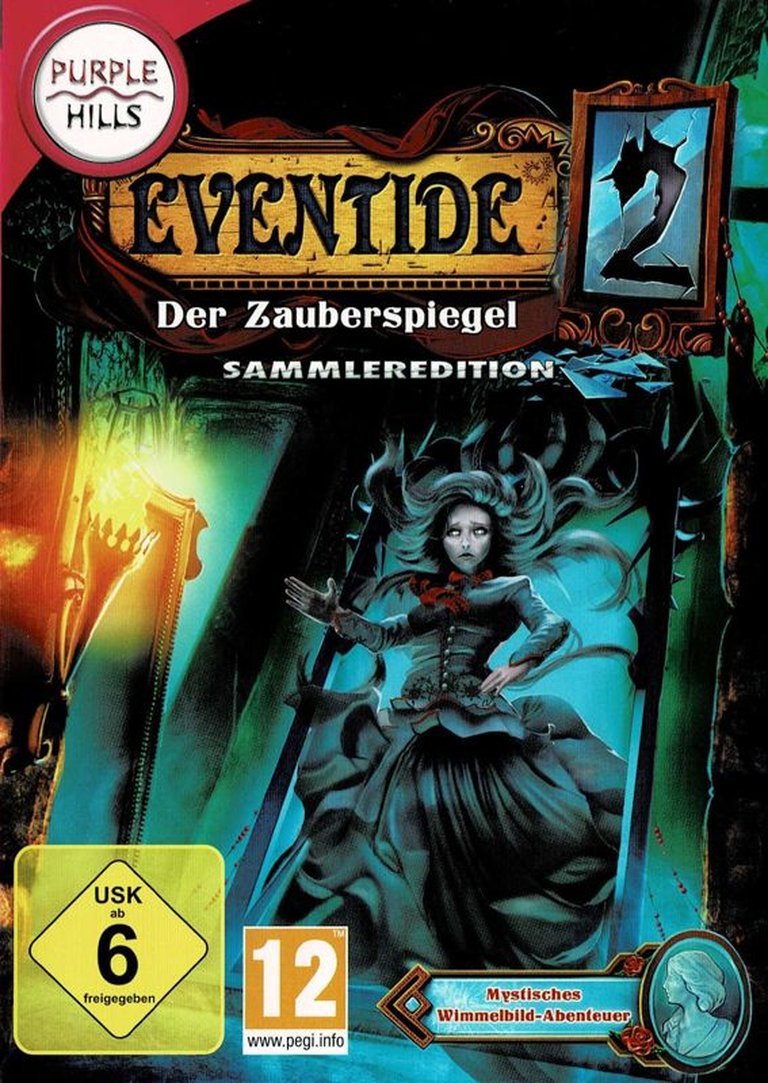
Eventide 2: The Sorcerers Mirror (Collector’s Edition) is a first-person adventure puzzle game set in a Slavic-inspired fantasy world where players solve a mysterious detective story. Players explore enchanted locations, interact with characters, and navigate hidden object scenes and mini-games, utilizing a magical mirror to overcome challenges in this atmospheric narrative-driven experience.
Gameplay Videos
Eventide 2: The Sorcerers Mirror (Collector’s Edition) Cracks & Fixes
Eventide 2: The Sorcerers Mirror (Collector’s Edition) Reviews & Reception
metacritic.com (66/100): Overall, for $9.99 Artifex Mundi has put together a point and click adventure game that relies on its strengths of presentation, and now also innovation, to entice your wallet to open up and relinquish some of your cash.
gameramble.com (77/100): Eventide 2 doesn’t quite live up to the high standards set by the original game, but it is still an imaginative adventure with some great visuals.
Eventide 2: The Sorcerer’s Mirror (Collector’s Edition): A Comprehensive Review
Introduction
Eventide 2: The Sorcerer’s Mirror (Collector’s Edition) is a hidden object adventure game that builds upon the foundation of its predecessor, Eventide: Slavic Fable, while introducing new mechanics and a darker narrative. Developed by The House of Fables and published by Artifex Mundi, this game transports players into a world inspired by Slavic folklore, where they must unravel the mysteries of an immortal sorcerer and rescue a kidnapped niece. This review will delve into the game’s development history, narrative depth, gameplay mechanics, world-building, and its reception and legacy in the gaming industry.
Development History & Context
The game was released on October 13, 2016, for Windows, with subsequent releases on Linux, macOS, iOS, Android, Xbox One, PlayStation 4, and Nintendo Switch. The Collector’s Edition, released on March 10, 2017, includes additional content such as a bonus chapter, concept art, an integrated strategy guide, and wallpapers.
Developed by The House of Fables, a studio known for its narrative-driven adventure games, Eventide 2 was created during a time when hidden object games were experiencing a resurgence in popularity. The game’s development was influenced by the technological constraints of the mid-2010s, which limited the complexity of the game’s graphics and mechanics. Despite these constraints, the developers aimed to create a visually stunning and narratively rich experience that would appeal to fans of the genre.
Narrative & Thematic Deep Dive
Plot and Characters
The game follows Mary, the protagonist from the first Eventide game, who is on a mountain-climbing vacation with her niece Jenny. Their trip is abruptly interrupted when Jenny is kidnapped by an immortal sorcerer named Tvardovsky. Mary must navigate a forgotten mountain village teeming with magic and Slavic folklore to rescue her niece and uncover the sorcerer’s dark secrets.
The narrative is driven by a series of moral choices that players must make, which influence the fate of characters and the game’s ending. These choices add a layer of replayability and personal investment in the story. The game’s antagonist, Tvardovsky, is a complex character whose motivations are rooted in tragedy rather than pure evil, adding depth to the story.
Dialogue and Themes
The dialogue is well-written and effectively conveys the game’s themes of love, sacrifice, and the consequences of one’s actions. The game’s exploration of Slavic folklore and mythology is a standout feature, immersing players in a rich cultural tapestry. The themes of redemption and the power of love are central to the narrative, providing a emotional core that resonates with players.
Gameplay Mechanics & Systems
Core Gameplay Loops
Eventide 2 is a hidden object adventure game that combines traditional point-and-click mechanics with puzzle-solving and exploration. Players navigate through beautifully rendered environments, solving puzzles and finding hidden objects to progress through the story.
The game features a variety of puzzles, including inventory-based puzzles, logic puzzles, and mini-games. The puzzles are generally well-designed and fit seamlessly into the game’s narrative. However, some puzzles may feel familiar to veterans of the genre, as they are similar to those found in other Artifex Mundi titles.
Combat and Character Progression
While the game does not feature traditional combat, players must occasionally engage in quick-time events and mini-games to avoid magical projectiles and solve puzzles. These sequences add a dynamic element to the gameplay and break up the otherwise passive experience.
Character progression is minimal, as the game focuses more on narrative and puzzle-solving. However, players can collect imp cards and herbs, which are added to a diary, providing a sense of accomplishment and encouraging exploration.
User Interface and Innovations
The user interface is intuitive and easy to navigate, with a map system that allows players to fast-travel between locations. The game also features a morality system, where players’ choices influence the story’s outcome. This system adds a layer of depth to the gameplay and encourages multiple playthroughs.
World-Building, Art & Sound
Setting and Atmosphere
The game’s setting is a forgotten mountain village steeped in Slavic mythology. The environments are beautifully rendered with hand-painted backgrounds that evoke a sense of wonder and mystery. The game’s atmosphere is enhanced by its use of color and detail, creating a visually stunning world that players will want to explore.
Visual Direction
The visual style is a blend of realistic and stylized elements, with a focus on intricate details and vibrant colors. The character designs are well-crafted, and the animations, while not groundbreaking, are serviceable and fit the game’s tone.
Sound Design
The sound design is a highlight of the game, with a hauntingly beautiful soundtrack that complements the game’s atmosphere. The voice acting, featuring Michael McConnohie, is top-notch and brings the characters to life. The sound effects are well-integrated and enhance the immersive experience.
Reception & Legacy
Critical and Commercial Reception
Upon its release, Eventide 2: The Sorcerer’s Mirror received mixed reviews from critics. While praised for its visuals, soundtrack, and narrative, the game was criticized for its short length and lack of innovation in gameplay mechanics. The game’s morality system was seen as a positive addition, but its impact on the story was considered minimal.
Commercially, the game was a modest success, appealing to fans of the hidden object genre and those interested in Slavic folklore. The Collector’s Edition, with its additional content, was well-received by completionists and fans of the series.
Influence and Impact
Eventide 2 has had a lasting impact on the hidden object genre, demonstrating the potential for narrative-driven games to incorporate moral choices and cultural themes. The game’s success paved the way for future titles in the Eventide series and influenced other developers to explore similar themes and mechanics.
Conclusion
Eventide 2: The Sorcerer’s Mirror (Collector’s Edition) is a visually stunning and narratively rich hidden object adventure game that builds upon the foundation of its predecessor. While it may not innovate significantly in terms of gameplay, its exploration of Slavic folklore, moral choices, and immersive world-building make it a standout title in the genre. The game’s short length and familiar puzzles may deter some players, but for fans of hidden object games and Slavic mythology, Eventide 2 offers a compelling and enjoyable experience.
In the grand tapestry of video game history, Eventide 2 stands as a testament to the enduring appeal of narrative-driven adventure games and the power of cultural storytelling. Its legacy lies in its ability to transport players to a world of magic and mystery, where their choices matter and the boundaries between folklore and reality blur.