
- Release Year: 2016
- Platforms: Macintosh, Nintendo Switch, PlayStation 4, Windows, Xbox One
- Publisher: Ysbryd Games Worldwide Limited
- Developer: Witching Hour Studios
- Genre: Role-playing, RPG, Strategy, Tactics
- Perspective: Diagonal-down
- Game Mode: Single-player
- Gameplay: Ally system, Tactical RPG, Team-based combat, Turn-based combat
- Setting: Fantasy
- Average Score: 77/100
Description
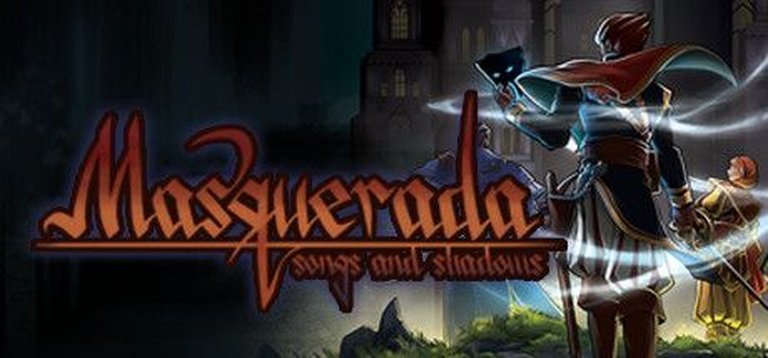
Masquerada: Songs and Shadows is a fantasy tactical RPG set in a world of political intrigue and hidden identities, where players investigate a kidnapping in a society obsessed with masks and deception. The game features turn-based combat, rich narrative choices, and a unique atmosphere blending Renaissance aesthetics with supernatural elements.
Gameplay Videos
Where to Buy Masquerada: Songs and Shadows
Masquerada: Songs and Shadows Free Download
Masquerada: Songs and Shadows Cracks & Fixes
Masquerada: Songs and Shadows Guides & Walkthroughs
Masquerada: Songs and Shadows Reviews & Reception
opencritic.com (60/100): While there’s nothing particularly poor about Songs and Shadows’ story or battle system, the way they come together leaves an unwelcome void in between.
opencritic.com (90/100): Through a combination of a fleshed-out world and interesting characters, Masquerada is the rare role-playing game that really sticks with the player after the credits roll.
opencritic.com (75/100): There’s a dissonance between this fantastic art style and dull or tame backing soundtrack.
opencritic.com (75/100): A real labour of love, Masquerada is a highly enjoyable RPG effort that is absolutely drowning in audiovisual style and spectacle, even if the overly linear structure and sometimes convoluted world building detracts from the final result.
opencritic.com (60/100): Masquerada: Songs and Shadows sacrifices depth to tell an intriguing story. Its incredibly linear design keeps things moving, but between unremarkable combat and an over-reliance on exposition through a bloated codex, it’s never able to fully capture your imagination.
opencritic.com (85/100): All in all, the game was enjoyable from start to finish and I am really hoping for a sequel. The characters were charming, the plot was exciting, and the combat system was refreshing.
opencritic.com (30/100): Like its characters, Masquerada: Songs and Shadows puts on the mask of a good game. The above par voice acting and art style will certainly lead you to believe that.
opencritic.com (90/100): A whirlwind of a journey that knows how to leave a long-lasting impression.
metacritic.com (90/100): Masquerada is a rare gem of a game in which everything about it comes together just perfectly to give plays a consistent and cohesive experience.
metacritic.com (90/100): The story is the star here, and Witching Hour Studios have crafted a narrative they should be proud of.
metacritic.com (90/100): Masquerada is by far the best story-driven game I’ve played, and I have no doubt that I will play it again.
metacritic.com (90/100): Masquerada: Songs and Shadows is a mirror depicting the ever-present shadows in society while also reflecting the societal masquerade that humanity subconsciously participates in.
metacritic.com (85/100): Masquerada is a beautiful game with fantastic well written characters and a plethora of story content.
metacritic.com (80/100): Masquerada has decent combat, painfully linear level design, and an amazing story with equally amazing characters.
metacritic.com (80/100): The story is intriguing and well told and the audio is just fantastic.
metacritic.com (77/100): A story-focused fantasy RPG with team-based realtime battles and handdrawn comic visuals: This is definitely not as generic as the title suggests.
litandplay.com : Masquerada: Songs and Shadows survives on the strength of its narrative.
operationrainfall.com : Every character is afraid of something in the plot, be it standing up to their own superiors or even trying to tell the truth.
Masquerada: Songs and Shadows: Review
Introduction
Masquerada: Songs and Shadows is a hidden gem in the tactical RPG genre, blending political intrigue, deep character studies, and a richly layered fantasy world. Developed by Witching Hour Studios and released in 2016, the game stands out for its narrative ambition and stylistic flair, even if its gameplay mechanics occasionally falter under the weight of its own aspirations. This review will dissect the game’s development history, narrative depth, gameplay systems, world-building, and lasting legacy, ultimately arguing that Masquerada is a bold, if imperfect, entry in the tactical RPG canon.
Development History & Context
Witching Hour Studios, a Singapore-based indie developer, crafted Masquerada as a labor of love, drawing inspiration from classic tactical RPGs like Final Fantasy Tactics and XCOM. The game’s development was crowdfunded via Kickstarter, reflecting the studio’s passion for storytelling and player-driven narratives. Released on September 30, 2016, for Windows, the game later expanded to PlayStation 4, Xbox One, and Nintendo Switch, demonstrating its cross-platform appeal.
The game’s setting, Ombre, is a city-state steeped in Renaissance-inspired aesthetics and political strife, where masks grant magical abilities and social hierarchy. This concept was influenced by the developers’ fascination with masquerades as both literal and metaphorical devices—masks as tools of power and deception. Technologically, Masquerada leveraged Unity, a choice that allowed for its hand-drawn, comic-book-inspired visuals but also constrained its combat mechanics, which often felt clunky compared to more polished contemporaries like Divinity: Original Sin 2.
Narrative & Thematic Deep Dive
Plot & Characters
The story follows Cicero Gavar, a disgraced former Maskrunner (rebel) turned reluctant investigator for the oppressive White Spire regime. Tasked with finding a missing researcher, Cicero uncovers a conspiracy that forces him to confront his past, particularly his estranged relationship with his revolutionary brother, Cyrus. The narrative is a slow-burn political thriller, exploring themes of neutrality, guilt, and the cost of power.
Cicero’s party includes a diverse cast:
– Kalden, a hulking warrior seeking his missing brother.
– Tiziana, a fiery guild member with a temper.
– Amadea, a former Maskrunner who resents Cicero’s past betrayal.
– Vasco, a rogue with a penchant for humor and loyalty.
Each character is fleshed out through dialogue and journal entries, making their arcs feel personal and emotionally resonant.
Themes & Dialogue
Masquerada excels in its exploration of political and moral ambiguity. Cicero’s journey from passive observer to reluctant hero mirrors the game’s central question: Can neutrality in the face of oppression ever be justified? The masks themselves symbolize duality—power and corruption, identity and deception. The dialogue is sharp, with moments of levity balancing the heavier themes, though some exposition-heavy sections slow the pacing.
Gameplay Mechanics & Systems
Combat & Progression
The game employs a real-time-with-pause combat system, where players control one character while AI manages the others. This system is reminiscent of Final Fantasy XII but lacks the depth of more modern tactical RPGs. Combat is fast-paced, often requiring constant pausing to issue commands, which can feel cumbersome. The elemental mask system (fire, water, earth, wind) adds strategic variety, but the lack of meaningful character progression (skill points are awarded at fixed intervals) limits long-term engagement.
UI & Accessibility
The UI is functional but dated, with a cluttered codex that overwhelms players with lore. The game’s linearity is both a strength (keeping the narrative tight) and a weakness (limiting player agency). Auto-saving only at loading screens is a design misstep, forcing players to replay sections after deaths or crashes.
World-Building, Art & Sound
Setting & Atmosphere
Ombre is a vibrant, oppressive city where every district reflects its political and social tensions. The hand-drawn art style, inspired by European comics, gives the world a distinctive, stylized charm. The White Spire’s towering architecture contrasts with the grimy underbelly of the slums, reinforcing the game’s themes of inequality.
Sound Design & Music
The soundtrack, composed by Josh Whelchel, is a missed opportunity. While the voice acting (featuring talents like Fred Tatasciore and Yuri Lowenthal) is excellent, the music is overly solemn, lacking variety. Combat tracks are the sole exceptions, adding energy to battles.
Reception & Legacy
At launch, Masquerada received mixed-to-positive reviews, with critics praising its narrative and art direction but criticizing its combat and linearity. Metacritic scored it 76 for PS4, while Steam users rated it “Very Positive” (88/100). The game’s influence is subtle but notable—its focus on political storytelling and mask-based mechanics has echoes in later indie RPGs like Hades (mask motifs) and Disco Elysium (narrative depth).
Conclusion
Masquerada: Songs and Shadows is a flawed but ambitious RPG that prioritizes storytelling over gameplay polish. Its strengths lie in its rich world-building, compelling characters, and thematic depth, while its combat and technical issues hold it back. As a narrative experience, it succeeds brilliantly; as a tactical RPG, it falls short. Despite its shortcomings, Masquerada deserves recognition as a bold, artistically driven title that pushed boundaries in indie game development. Its legacy endures as a testament to the power of storytelling in RPGs, even if its mechanics haven’t aged as gracefully.