
- Release Year: 2017
- Platforms: Windows
- Publisher: B-Alive GmbH
- Developer: B-Alive GmbH
- Genre: Simulation, Sports
- Perspective: 3rd-person (Other)
- Average Score: 76/100
Description
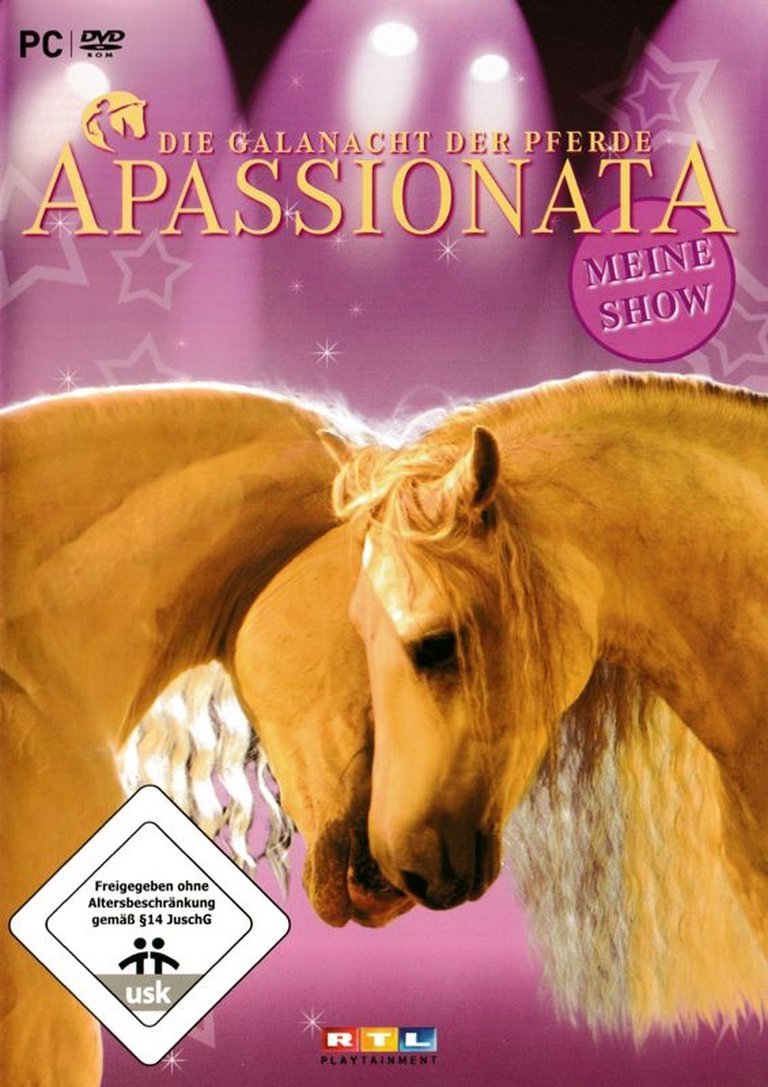
EquiMagic: Galashow of Horses is a simulation game where players prepare for a glamorous horse show by training dressage routines, styling costumes, and perfecting choreographies. With five different horse breeds and detailed animations, players can experience the thrill of performing in front of an audience, earning applause for their stunning performances.
EquiMagic: Galashow of Horses Patches & Updates
EquiMagic: Galashow of Horses Guides & Walkthroughs
EquiMagic: Galashow of Horses Reviews & Reception
steambase.io (79/100): EquiMagic – Galashow of Horses has earned a Player Score of 79 / 100.
store.steampowered.com (73/100): All Reviews: Mostly Positive (15) – 73% of the 15 user reviews for this game are positive.
mobygames.com : Moby Score n/a
EquiMagic: Galashow of Horses: Review
Introduction
In the sprawling landscape of niche simulation games, few titles capture the intersection of passion, spectacle, and digital craftsmanship as boldly as EquiMagic: Galashow of Horses. Released in December 2017 by German studio b-alive GmbH, this ambitious title promises not just a game, but an immersive portal into the glittering world of equestrian showmanship. It invites players to step into the hooves of a rising star, managing stables, training majestic horses, and crafting breathtaking performances in a “Galashow” of unparalleled glamour. Yet, beneath its shimmering surface lies a product of its time—a game born from the convergence of a niche enthusiast community and the technical constraints of its era. This review deconstructs EquiMagic‘s legacy through its development narrative, thematic depth, mechanical design, artistic vision, and cultural impact, ultimately arguing that while it stumbles in execution, it remains a fascinating, if flawed, artifact in the annals of equestrian gaming history.
Development History & Context
b-alive GmbH, a German developer known for budget-friendly simulation titles (e.g., the Crash Time series), spearheaded EquiMagic with a clear vision: to create the first-ever “Perdeshow simulation,” a digital homage to the elaborate, choreographed performances of live horse shows like the Apassionata tour. The project was a collaborative effort, with EquiArte GmbH & Co. KG providing equestrian expertise, while RTL Games GmbH handled publishing. This synergy aimed to blend authentic horse husbandry with theatrical flair, targeting a demographic of young horse enthusiasts and casual gamers drawn to dressage and customization. Technologically, the game leveraged the aging Gamebryo / Lightspeed / NetImmerse engine—a relic from the mid-2000s—supplemented by PathEngine for navigation. This choice reflected budget constraints, limiting graphical fidelity and animation complexity despite aspirations for “breathtaking” dressage. The gaming landscape in 2017 was dominated by AAA open-world titles, but the rise of Steam’s indie scene allowed niche titles like EquiMagic to find an audience, albeit one expecting polished, accessible experiences. The game’s German origins and “0” USK rating underscored its intent as a family-friendly, globally accessible product, though its reliance on middleware from a bygone era foreshadowed technical hurdles.
Narrative & Thematic Deep Dive
At its core, EquiMagic eschews traditional linear storytelling in favor of a sandbox-driven narrative of aspiration and achievement. The plot is a thinly veiled power fantasy: players inherit a modest riding stable, nurture horses, and ascend the ranks of the “Galashow” circuit. Dialogue is minimal, confined to brief tutorials and mission prompts, with no named protagonists—players project themselves into the role of a rising equestrian star. The narrative unfolds through gameplay milestones: mastering dressage moves, earning “show thalers” (in-game currency), and unlocking increasingly extravagant shows themed around global locales (e.g., “Journey to India,” “Andalusian Passion”). Thematically, the game celebrates dedication, artistry, and the human-animal bond. Training sessions—whether teaching an Icelandic horse to “tolt” or perfecting a “piaffe”—underscore patience and mutual respect. Meanwhile, the emphasis on costumes and accessories highlights the performative, almost theatrical nature of equestrian sports, where spectacle rivals skill. However, the narrative’s simplicity is a double-edged sword. The absence of conflict, character arcs, or cultural context beyond superficial themes (e.g., “Scottish Folks”) reduces the experience to a repetitive loop of training and performing, lacking the emotional depth that could elevate its ambitions.
Gameplay Mechanics & Systems
EquiMagic’s gameplay hinges on a trio of interconnected loops: stable management, horse training, and show performance.
– Stable Management: Players begin with one horse and expand their stable through breeding and purchasing. Five distinct breeds—Lusitanians, Frisians, Hanoverians, Icelanders, and Shetland ponies—each have unique traits. Shetland ponies, for instance, require meticulous grooming to achieve 100% “shine,” while larger breeds demand extensive affection and feeding. Breeding introduces genetic diversity, though the system is opaque, with little guidance on trait inheritance.
– Training & Progression: Horses are trained via mini-games focusing on dressage moves (e.g., “pesade,” “pirouette”). Timing-based inputs govern movements, but controls are clunky, with keyboard/mouse inputs often feeling imprecise. Progression is tied to “learning missions,” which unlock new moves, but the lack of difficulty scaling frustrates. The game boasts “first Perdeshow simulation,” yet shows are rigidly choreographed, offering little creative freedom beyond selecting pre-set routines.
– Performance & Customization: Shows are the climax, blending dressage with thematic stage design. Players earn points based on precision and audience reaction, with “show thalers” unlocking costumes and accessories for both rider and horse. The “complete video recording” feature is a standout, allowing players to save and share performances. However, the scoring system is arbitrary, and AI audience reactions lack nuance.
UI & Systems: The interface is utilitarian but cluttered, with menus for horse stats, costume racks, and training modules overlapping chaotically. Achievements (e.g., “Gala Show Tycoon” for earning 100,000 thalers) provide short-term goals but do little to sustain long-term engagement. Core systems are functional but unrefined: breeding feels random, training is repetitive, and shows lack dynamism. Notably, Steam discussions highlight bugs like crashes at startup and broken sound, undermining the otherwise solid foundation.
World-Building, Art & Sound
The game’s world is a curated fantasy of equestrian glamour, divided into two primary spaces: the rustic riding stable and the opulent show arena. The stable is a hub of activity, with pens, grooming stations, and training paddocks rendered in soft, painterly textures that evoke a pastoral idyll. In contrast, show arenas are spectacular, with dynamic lighting, ornate backdrops (e.g., Parisian can-can stages or enchanted forests), and particle effects that simulate spotlights and confetti. The five horse breeds are meticulously modeled, capturing breed-specific aesthetics—Frisians’ glossy black coats, Lusitanians’ arched necks—though animations are stiff during complex maneuvers.
Art Direction: The aesthetic leans toward a vibrant, cartoonish realism. Costumes are the star: hundreds of outfits range from traditional jodhpurs to fantastical ensembles (e.g., glittering armor, floral gowns), emphasizing the game’s theatrical focus. However, character models are rudimentary, with limited facial expressions and rigid poses. Environments lack interactivity, serving as backdrops rather than living spaces.
Sound Design: Audio is a mixed bag. Ambient sounds—neighing, hoofbeats, crowd cheers—create immersion during shows, but the soundtrack is repetitive, relying on generic orchestral cues. Voice acting is absent, replaced by text-based tutorials, and community reports note persistent sound bugs, such as audio cutouts. Despite this, the clippety-clop of hooves and the swell of applause during a successful “Winter Spell” show effectively convey the spectacle of live performance.
Reception & Legacy
At launch, EquiMagic received muted but notable attention within niche circles. On Steam, it maintained a “Mostly Positive” rating (73% based on 15 reviews), with praise for its unique concept, customization depth, and educational value for young equestrian fans. Positive reviews highlighted the “addictive” cycle of training and the joy of crafting perfect shows. However, criticism centered on technical flaws: “graphic bugs,” crashes, and unresponsive controls were recurring complaints in community forums. Commercially, it operated as a cult hit, priced at $9.99 on Steam, with periodic sales driving interest. Over time, its reputation has solidified as a “love-it-or-hate-it” title. Critics (where available) noted the absence of Metacritic scores, underscoring its niche appeal.
Legacy: EquiMagic’s influence is subtle but significant. It pioneered the “dressage show” subgenre, inspiring titles like My Riding Stables: Life with Horses (2018) to incorporate performance elements. Its emphasis on breed diversity and realistic training mechanics (despite technical flaws) set a benchmark for authenticity in horse sims. Culturally, it remains a touchstone for equestrian gamers, referenced in modding communities for its potential—were it polished, it could rival management sims like Stardew Valley in its niche. Yet, its technical limitations and shallow gameplay have relegated it to a historical footnote, a testament to the challenges of translating niche passions into interactive art.
Conclusion
EquiMagic: Galashow of Horses is a game of bold intentions and humble execution. It captures the magic of equestrian spectacle through its detailed breeds, customizable costumes, and show sequences, offering a unique, if narrow, experience for horse enthusiasts. However, its reliance on outdated technology, repetitive gameplay loops, and technical flaws prevent it from reaching its potential. As a historical artifact, it stands as a fascinating example of a niche simulation born from passion yet constrained by the realities of 2017’s gaming landscape. For players seeking a deep, polished equestrian RPG, EquiMagic will disappoint. But for those willing to overlook its flaws, it offers a charming, glittering glimpse into the world of horse shows—one hoofbeat at a time. In the pantheon of video game history, it is a niche gem: imperfect, unforgettable, and undeniably magical in its own right.