
- Release Year: 2004
- Platforms: Windows
- Publisher: BrainBombers Group, The, magnussoft Deutschland GmbH, Strategy First, Inc.
- Developer: BrainBombers Group, The
- Genre: Action
- Perspective: Diagonal-down
- Game Mode: Single-player
- Gameplay: Arcade, Artifact Collection, Shooter, Spellcasting, Top-down
- Setting: Fantasy
- Average Score: 49/100
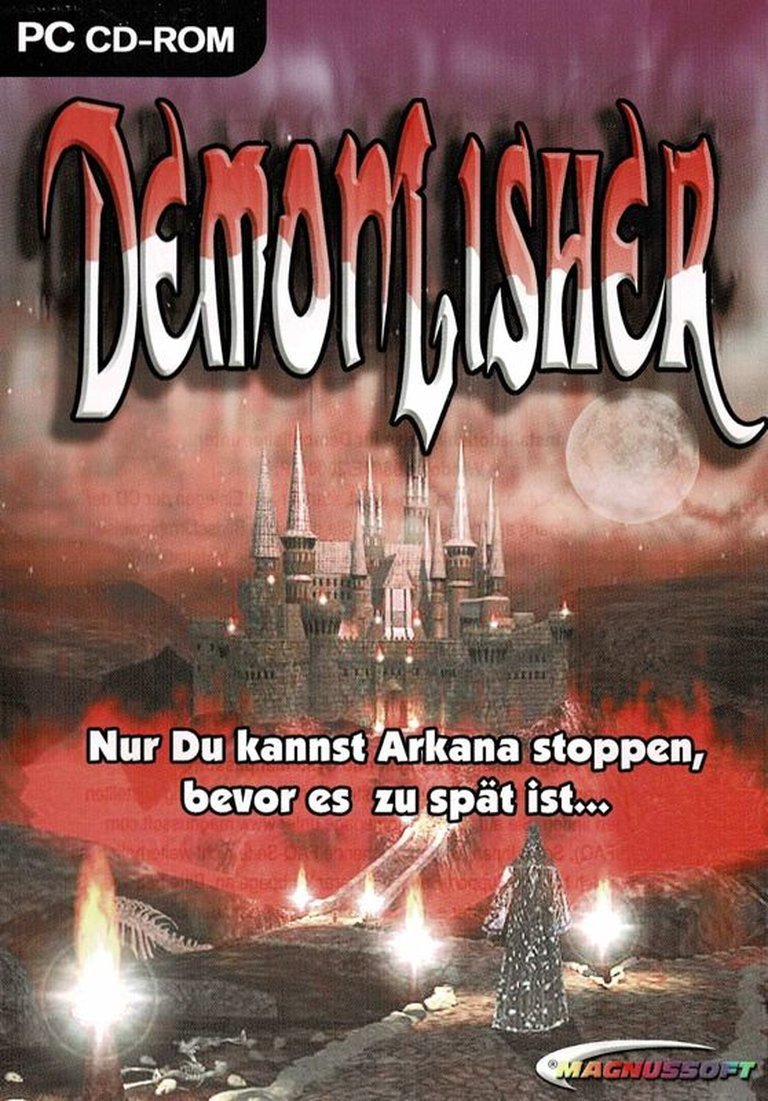
Description
DemonLisher is a top-down action game where players control a mage descending into an old castle to defeat demons. On each level, the mage must free all imprisoned souls before entering the gate, battling various demons with basic spells and collectible artifacts that grant temporary abilities like freezing or slowing enemies. The mage’s health is depleted by attacks, and death requires restarting the level.
Where to Buy DemonLisher
PC
DemonLisher Mods
DemonLisher Reviews & Reception
gamesreviews2010.com : Demonlisher is a must-play for fans of action and adventure.
DemonLisher: A Forgotten Gem of Dark Fantasy Action
Introduction
In the crowded landscape of early 2000s indie action games, DemonLisher (2004) stands as an overlooked title that blends arcade-style combat with dark fantasy aesthetics. Developed by The BrainBombers Group and published by Strategy First, this top-down shooter tasks players with navigating a labyrinthine castle to free imprisoned souls while battling waves of demons. Despite its modest critical reception, DemonLisher offers a unique blend of strategy, exploration, and fast-paced action that warrants a deeper examination. This review will dissect its development history, narrative depth, gameplay mechanics, and lasting legacy to determine whether it deserves a place in gaming history.
Development History & Context
The Studio and Its Vision
The BrainBombers Group, a small indie studio, developed DemonLisher during a time when digital distribution was still in its infancy. The game was published by Strategy First, a company known for supporting niche and independent titles. The developers aimed to create a game that combined the simplicity of arcade shooters with the depth of fantasy RPGs, resulting in a hybrid experience that prioritized accessibility and replayability.
Technological Constraints and the Gaming Landscape
Released in 2004, DemonLisher was developed for a PC gaming landscape dominated by 3D graphics and open-world designs. However, the game opted for a retro-inspired, top-down perspective—a deliberate choice that harkened back to classic arcade games like Gauntlet and Pac-Man. The decision to use fixed, flip-screen levels was likely influenced by hardware limitations, but it also allowed for tight, focused gameplay that emphasized precision and strategy over expansive exploration.
The game’s visual style, while simplistic by modern standards, was a deliberate nod to the pixel art of the 16-bit era. The developers likely sought to evoke nostalgia while avoiding the technical demands of 3D rendering, making DemonLisher accessible to a broader range of PCs.
A Niche in a Crowded Market
2004 was a competitive year for action games, with titles like Half-Life 2, Doom 3, and World of Warcraft dominating the market. DemonLisher positioned itself as a budget-friendly alternative, appealing to players who enjoyed arcade-style challenges and fantasy settings. Its low system requirements and downloadable distribution model made it an attractive option for casual gamers and retro enthusiasts.
Narrative & Thematic Deep Dive
Plot and Characters
DemonLisher follows a nameless mage who descends into the castle of Nordar to free souls imprisoned by Arkana, an evil entity. The narrative is minimalistic, focusing more on atmosphere than exposition. The player is given little backstory, which allows for a sense of mystery and immersion in the game’s dark fantasy world.
Arkana serves as the primary antagonist, embodying the classic trope of an ancient evil seeking to consume souls. The demons the player encounters are varied, ranging from basic imps to more formidable archfiends, each with unique behaviors that challenge the player’s adaptability.
Themes and Atmosphere
The game’s central theme revolves around the struggle between light and darkness, embodied by the mage’s quest to free souls from Arkana’s grasp. The castle of Nordar serves as a metaphorical and literal dungeon, its labyrinthine structure reflecting the psychological and physical challenges the player must overcome.
The atmosphere is one of tension and urgency. The game’s dark, gothic visuals and eerie sound design create a sense of isolation, reinforcing the player’s role as a lone hero battling against overwhelming odds. The lack of a traditional narrative allows players to project their own interpretations onto the game’s world, adding depth to its minimalist storytelling.
Dialogue and World-Building
Dialogue is sparse, with no spoken lines or cutscenes. Instead, the game relies on environmental storytelling and item descriptions to convey its lore. This approach is reminiscent of early Zelda games, where exploration and discovery are key to understanding the world.
The castle of Nordar is filled with hidden passages, traps, and secrets, encouraging players to explore every corner. The game’s world-building is subtle but effective, with each level introducing new enemies, artifacts, and environmental hazards that expand the game’s lore.
Gameplay Mechanics & Systems
Core Gameplay Loop
DemonLisher is a top-down action game where the player controls a mage navigating a series of interconnected castle levels. The primary objective is to free all imprisoned souls on each level before entering a gate to progress. The game features a fixed, flip-screen camera system, similar to classic arcade games, which creates a sense of urgency and tension as players must quickly react to enemy movements.
Combat and Spell System
The mage starts with a basic spark spell that deals damage to enemies. However, the game’s true depth lies in its artifact system, which allows players to collect temporary spells that grant unique abilities. These spells include freezing projectiles, slowing effects, and area-of-effect attacks, each requiring strategic use to overcome different enemy types.
Combat is fast-paced and challenging, with enemies constantly spawning and attacking the player. The game’s difficulty curve is steep, requiring players to master spell combinations and movement to survive. The lack of a traditional health system—where the player must restart the level upon death—adds to the game’s arcade-like feel.
Character Progression and UI
Unlike traditional RPGs, DemonLisher does not feature a traditional progression system. Instead, the player’s power is determined by the spells and artifacts they collect during a level. This design choice emphasizes skill and adaptability over grinding and stat-building, making each playthrough feel fresh and dynamic.
The user interface is minimalistic, with a health bar and mana meter displayed at the top of the screen. The lack of a traditional heads-up display (HUD) forces players to rely on visual cues and sound design to track their status, adding to the game’s immersive feel.
Innovations and Flaws
DemonLisher‘s greatest strength lies in its blend of arcade action and strategic spellcasting. The game’s fixed camera system and limited visibility create a sense of tension and unpredictability, while the artifact system encourages experimentation and replayability.
However, the game is not without its flaws. The lack of a save system means that players must complete levels in one sitting, which can be frustrating for those who prefer a more relaxed pace. Additionally, the game’s difficulty can be punishing, with some levels feeling unfairly balanced.
World-Building, Art & Sound
Setting and Atmosphere
The castle of Nordar is the game’s primary setting, a dark and foreboding structure filled with traps, hidden passages, and demonic enemies. The game’s level design is meticulous, with each room offering a unique challenge that tests the player’s skills and reflexes.
The game’s art style is a deliberate throwback to the 16-bit era, with pixelated sprites and simple animations. While this may not appeal to modern players accustomed to high-definition graphics, it adds to the game’s retro charm and nostalgia factor.
Visual Direction
The game’s visuals are functional rather than flashy, with a limited color palette that emphasizes the game’s dark fantasy setting. The use of fixed, flip-screen levels allows for detailed environments without the need for complex 3D rendering. The game’s lighting effects, while basic, create a sense of depth and atmosphere that enhances the overall experience.
Sound Design
The sound design is equally minimalistic, with a mix of ambient sounds and enemy noises that create a sense of immersion. The game’s soundtrack is composed of dark, atmospheric tracks that complement the game’s gothic aesthetic. The lack of voice acting is a deliberate choice, allowing the player to focus on the game’s visuals and sound effects.
Reception & Legacy
Critical and Commercial Reception
DemonLisher received mixed reviews upon release, with critics praising its retro-inspired gameplay and dark fantasy setting but criticizing its lack of innovation and punishing difficulty. The game’s average critic score of 45% on MobyGames reflects its polarizing reception, with some reviewers calling it a “dull and uninspired” experience, while others praised its unique blend of arcade action and strategy.
Commercially, the game was a modest success, appealing to a niche audience of retro gaming enthusiasts and fans of arcade-style challenges. Its low price point and downloadable distribution model made it an attractive option for budget-conscious gamers.
Influence on Subsequent Games
While DemonLisher did not have a significant impact on the gaming industry, it can be seen as a precursor to modern roguelike and arcade-style games that emphasize replayability and strategic gameplay. Its blend of top-down action and spellcasting mechanics influenced later titles like The Binding of Isaac and Dead Cells, which also prioritize fast-paced combat and procedural generation.
Evolution of Its Reputation
Over time, DemonLisher has gained a cult following among retro gaming enthusiasts who appreciate its unique blend of arcade action and dark fantasy aesthetics. The game’s availability on digital platforms like Steam has introduced it to a new generation of players, who have rediscovered its charms and challenges.
Conclusion
DemonLisher is a game that defies easy categorization. It is neither a traditional RPG nor a pure arcade shooter, but rather a hybrid experience that blends elements of both genres. Its retro-inspired gameplay, dark fantasy setting, and strategic spellcasting mechanics make it a unique and memorable title, despite its flaws.
While it may not have achieved widespread acclaim or commercial success, DemonLisher deserves recognition as a forgotten gem of early 2000s indie gaming. Its influence can be seen in modern titles that prioritize replayability and strategic gameplay, and its cult following is a testament to its enduring appeal.
In the grand tapestry of video game history, DemonLisher may not be a masterpiece, but it is a fascinating and underappreciated title that offers a unique and challenging experience. For players seeking a nostalgic trip through the dark fantasy dungeons of Nordar, DemonLisher remains a worthy adventure.