
- Release Year: 2019
- Platforms: Windows
- Publisher: Alawar Five-BN, smatrade GmbH
- Developer: Alawar Five-BN
- Genre: Adventure
- Perspective: 1st-person
- Game Mode: Single-player
- Gameplay: Hidden object, Puzzle elements
- Setting: Fantasy
- Average Score: 92/100
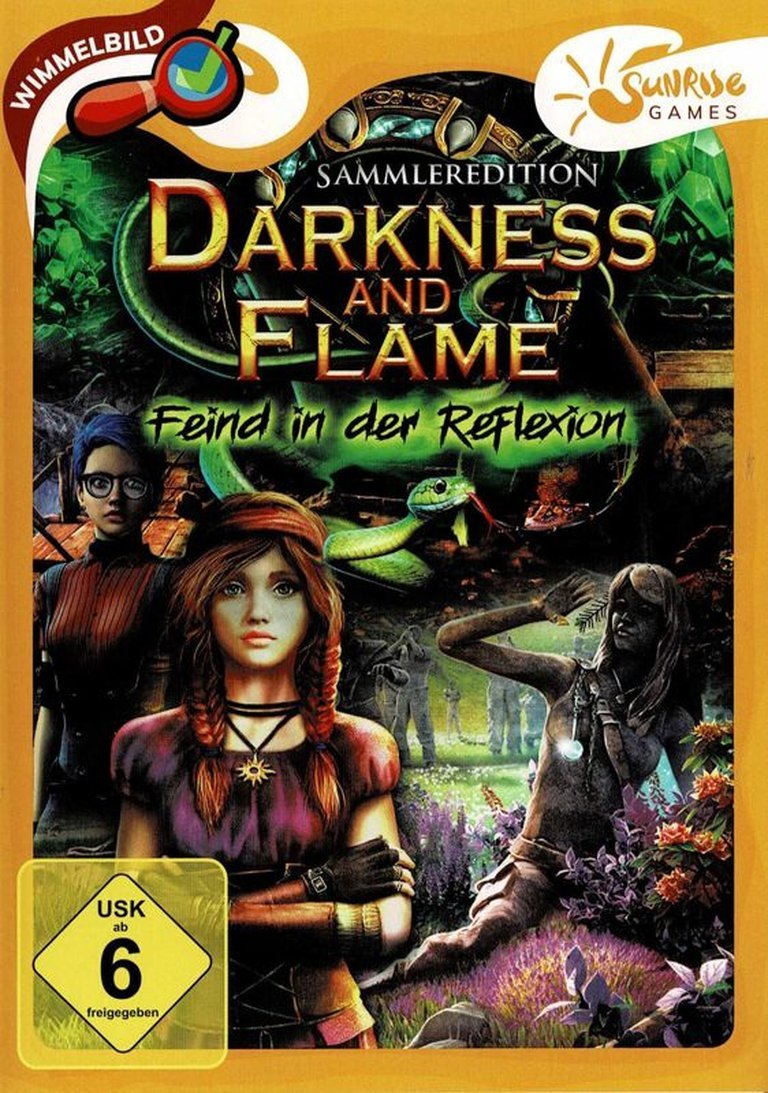
Description
Darkness and Flame: Enemy in Reflection Collector’s Edition is an adventure game set in a fantasy world, combining hidden object gameplay with intricate puzzles and mini-games. Players embark on a journey filled with unforgettable characters and complicated quests, exploring a rich narrative that tests their wits and observational skills.
Gameplay Videos
Where to Buy Darkness and Flame: Enemy in Reflection (Collector’s Edition)
Darkness and Flame: Enemy in Reflection (Collector’s Edition) Guides & Walkthroughs
Darkness and Flame: Enemy in Reflection (Collector’s Edition) Reviews & Reception
store.steampowered.com (92/100): “Darkness and Flame. Enemy in Reflection” is an adventure game in the genre of Hidden Objects, with plenty of mini-games and puzzles, unforgettable characters and complicated quests.
gamehouse.com : Uncover the secrets of ancient evil and defeat a malicious spirit.
mobygames.com : The evil spirit tricked you. Now you have to make everything right, because others have tried and failed for centuries …
Darkness and Flame: Enemy in Reflection (Collector’s Edition): Review
Introduction
In the crowded landscape of hidden object adventure games, few series command the reverence of Darkness and Flame. For years, Five-BN Games has weaved tales of Alice, a young heroine wielding the power of Flame against encroaching darkness, blending fairy-tale charm with high-stakes fantasy. Enemy in Reflection (Collector’s Edition), the fourth installment in the saga, arrives as a polished, atmospheric entry that honors its legacy while refining the genre’s core tenets. This review posits that the game represents the zenith of Five-BN’s craft—a meticulously crafted journey where haunting visuals, intricate puzzles, and a deeply personal narrative culminate in an unforgettable experience that elevates the series and the genre itself.
Development History & Context
Studio and Vision
Developed by the Ukrainian studio Five-BN Games, Enemy in Reflection emerges from a team with over two decades of experience in casual gaming. The studio, led by Director Evgeniy Sokolov and Producer Anatolij Gorshkov, has consistently prioritized narrative depth within the hidden object framework. Their vision for the Darkness and Flame series is clear: to create sprawling fantasy worlds steeped in mythology, where puzzle-solving drives character-driven stories. With 65 credited artists, programmers, and designers—including stalwarts like Art Producer Sergey Zabelin and Technical Director Alexander Frolov—the game reflects a collaborative effort focused on cohesive storytelling and technical accessibility.
Technological Constraints and Platform Release
Released on December 24, 2019, Enemy in Reflection targeted Windows with modest system requirements (1.6 GHz CPU, 1 GB RAM, DirectX 11), ensuring broad accessibility. This aligned with Five-BN’s strategy of optimizing for mid-tier hardware—a necessity in the casual gaming market where players prioritize stability over graphical fidelity. The Collector’s Edition, priced at $9.99 on Steam, included exclusive extras like concept art and a bonus chapter, a model Five-BN had perfected in prior titles. Later porting to macOS, Android, iOS, and Nintendo Switch (May 2022) underscored the studio’s commitment to multi-platform reach, though the core experience remained unchanged.
Gaming Landscape in 2019
The hidden object adventure genre in 2019 was dominated by episodic content and subscription services like Big Fish Games, where Five-BN had established a strong following. Competitors such as Elephant Games (Mystery Case Files) and GrandMA Studios dominated the premium market, but Five-BN differentiated itself through rich, interconnected universes. Enemy in Reflection capitalized on this by serving as a direct sequel to The Dark Side (2019), rewarding series fans while remaining accessible to newcomers. Its release during the holiday season also capitalized on seasonal demand for immersive, escapist experiences.
Narrative & Thematic Deep Dive
Plot Structure and Narrative Arc
The game picks up immediately after The Dark Side, with Alice and her allies seeking refuge in a serene glade after escaping the Dark Army. This moment of respite is shattered when an ancient, mirror-dwelling evil corrupts their friends, leaving Alice alone to confront a force “older than darkness itself.” The narrative unfolds through linear exploration, with chapters dedicated to unraveling the evil’s origins in the “Fertile Lands.” Key twists include the revelation that Alice herself was lured into the evil’s trap, and the moral ambiguity of her “righteous” actions inadvertently enabling the curse.
Characterization and Themes
Alice, as a protagonist, embodies resilience burdened by guilt. Her isolation—her friends cursed, her allies scattered—forces introspection, contrasting with the communal heroism of earlier entries. New allies, like the enigmatic Mirror Keeper, introduce themes of duality: trust versus deception, light versus shadow. The central antagonist, a sentient reflection of ancient evil, operates not through brute force but through psychological manipulation, emphasizing the game’s thematic exploration of identity and self-deception.
Dialogue and World Integration
Dialogue is functional yet purposeful, advancing quests while revealing lore. Characters speak in concise, evocative phrases (“Hope is a currency we’ve spent centuries hoarding”), weaving exposition into action. The narrative’s strength lies in its environmental storytelling—ancient ruins, cursed mirrors, and desolate villages visualize the toll of centuries of failed quests, reinforcing the theme of cyclical tragedy.
Gameplay Mechanics & Systems
Core Loop and Pacing
Enemy in Reflection adheres to the genre’s trifecta: hidden object scenes, puzzle-solving, and inventory-based progression. The pacing balances urgency with deliberation, with chapters climaxing in multi-stage puzzles that mirror the narrative’s escalating stakes. Hidden object scenes are diverse—some require list-finding, others involve “morphing objects” that transform upon discovery, adding replayability.
Puzzle Design and Innovation
Puzzles range from intuitive (jigsaw rearrangements) to complex (symbol-based logic gates). A standout is the “Mirror Maze,” where players manipulate reflections to unlock paths—a mechanic that thematically aligns with the plot. Difficulty is adjustable, catering to both casual players and veterans. Mini-games, such as tile-matching and pattern-recognition challenges, are varied but rarely frustrating, thanks to hint systems and skip options.
UI and Accessibility
The point-and-click interface is streamlined, with an inventory wheel and journal for quest tracking. A customizable cursor aids in navigating dense scenes. Collector’s Edition extras—morphing object collections, achievement unlocking (22 Steam Achievements)—extend playtime, though these feel tacked-on compared to the main narrative. Notably, the game avoids modern genre pitfalls: no forced microtransactions, no padded gameplay.
World-Building, Art & Sound
Setting and Atmosphere
The “Fertile Lands” are rendered as a dichotomy of beauty and decay. Lush meadows give way to shadow-choked forests, and vibrant villages coexist with crumbling temples. Five-BN’s artistry shines in environmental storytelling—a shattered mirror shard in a field of flowers hints at the game’s central metaphor. The glade, pivotal to the plot, uses dappled lighting and swaying flora to evoke false security, later subverted by the evil’s corruption.
Visual Direction and Art Style
The game adopts a painterly, fairy-tale aesthetic reminiscent of Studio Ghibli. Characters are expressive, with Alice’s determined gaze contrasting the evil’s formless, mirror-like silhouette. Textures are rich—wood grain, fabric weave, stone cracks—creating tactile immersion. Lighting is dynamic: torches cast flickering shadows during puzzles, while ethereal glows emanate from the Flame power.
Sound Design and Audio
Soundscapes are carefully layered: birdsong in the glade gives way to dissonant whispers as the evil manifests. A haunting orchestral score swells during climactic moments, anchored by a recurring leitmotif for the Flame. Voice acting is competent, though accents occasionally feel incongruous. Sound effects—glass shattering, gears grinding—enhance puzzle immersion, making tactile interactions feel weighty.
Reception & Legacy
Critical and Commercial Reception
Upon release, Enemy in Reflection garnered widespread acclaim. Steam users rated it “Very Positive” (92% of 75 reviews), praising its “stunning locations” and “addictive puzzles.” Big Fish Games highlighted its “unforgettable characters,” while GG.deals noted its consistent sales performance, with historical lows reaching $1.99 during Steam sales. Critically, the game was lauded for pushing the genre’s visual boundaries, though some reviewers noted its derivative narrative compared to earlier Darkness and Flame entries.
Long-Term Influence and Series Legacy
The game solidified Five-BN’s reputation as hidden object pioneers, influencing titles like The Legacy: Tree of Might (2020) by blending puzzles with cinematic storytelling. Its mirror-world mechanics prefigured psychological horror elements in later series entries, such as Missing Memories. Commercially, it drove the Darkness and Flame bundle’s success (33.16€ for four titles), attesting to its popularity.
Cultural Impact
Beyond sales, Enemy in Reflection resonated for its representation of female agency in fantasy. Alice’s solo quest—devoid of male saviors—subverted genre tropes, inspiring fan art and cosplay. Its exploration of anxiety and self-doubt also struck a chord with players, using fantasy as an allegory for real-world struggles.
Conclusion
Darkness and Flame: Enemy in Reflection (Collector’s Edition) stands as a masterclass in hidden object adventure design. Five-BN Games delivers a game where every element—from the haunting visuals to the psychologically rich narrative—serves a unified vision. While its puzzles may not innovate as radically as its art, the game’s emotional depth and technical polish elevate it above its peers. It is a testament to the power of storytelling within constraints, proving that the genre can deliver epic, intimate journeys. For fans of the series, it is a triumphant culmination; for newcomers, it is a perfect entry point into a world where darkness and flame dance in eternal, captivating balance. Verdict: An essential, genre-defining experience.