
- Release Year: 2017
- Platforms: PlayStation 4, Windows, Xbox One
- Publisher: Team17 Digital Limited
- Developer: Mothership Entertainment LLC, Team17 Digital Limited
- Genre: Simulation
- Perspective: Diagonal-down
- Game Mode: Single-player
- Gameplay: City building, construction simulation
- Setting: Futuristic, Sci-fi
- Average Score: 68/100
Description
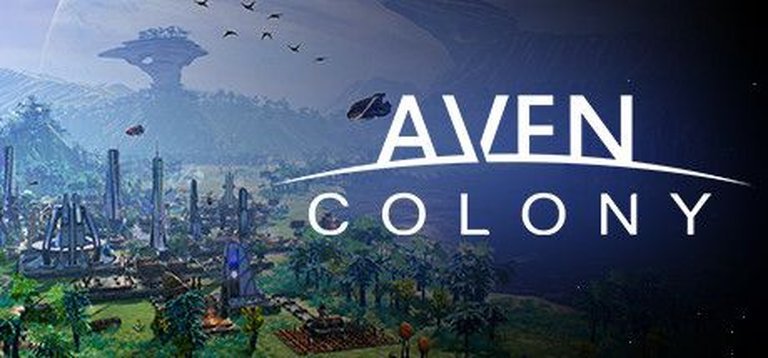
Aven Colony is a sci-fi city building and construction simulation game where players establish and manage a human colony on an alien planet. Set in a futuristic setting, the game challenges players to construct infrastructure, manage resources, and ensure the survival of colonists in a harsh extraterrestrial environment, requiring strategic planning to overcome environmental hazards and sustain a thriving interstellar settlement.
Gameplay Videos
Where to Buy Aven Colony
Aven Colony Free Download
Aven Colony Cracks & Fixes
Aven Colony Patches & Updates
Aven Colony Mods
Aven Colony Guides & Walkthroughs
Aven Colony Reviews & Reception
metacritic.com (65/100): Aven Colony is pretty decent and stable colony sim.
polygon.com : Aven Colony aspires to set me free, but ends up constricting me.
opencritic.com (72/100): Aven Colony is a nice alternative to Cities: Skylines and a well‑made city builder.
metro.co.uk : Aven Colony is a SimCity clone that actually works really well on consoles.
Aven Colony: Review
Introduction
The dream of taming an alien world has long been a cornerstone of science fiction, but few video games truly capture the existential thrill and logistical nightmare of extraterrestrial colonization. Aven Colony, developed by Mothership Entertainment and published by Team17, arrives in 2017 as a bold attempt to merge the city-building genre with the grandeur of interstellar survival. Set on the enigmatic planet Aven Prime—a world of deserts, tundras, and toxic jungles—it promises a symphony of resource management, environmental hazards, and alien mysteries. Yet, beneath its stunning veneer lies a complex narrative of ambition and compromise. This review posits that while Aven Colony excels in technical execution and atmospheric design, it ultimately stumbles in depth and innovation, solidifying its place as a visually captivating yet mechanically shallow entry in the city-building canon.
Development History & Context
Aven Colony emerged from the vision of Mothership Entertainment, a fledgling studio founded by industry veterans Russell Chamier, Neil Griffiths, Sasha Nodia, and Paul Tozour. With a development cycle spanning two and a half years, the team sought to create a “SimCity-in-space” that balanced accessibility with strategic depth. Partnering with Team17—a publisher renowned for supporting indie darlings like Worms and The Escapists—they leveraged the power of Unreal Engine 4 to render Aven Prime’s alien landscapes with breathtaking fidelity.
The game’s release in July 2017 coincided with a pivotal moment for city-builders. On PC, the genre was dominated by Cities: Skylines (2015), which set a high bar for complexity and modding support. Consoles, however, lacked comparable depth, with Cities: Skylines’ console ports still in development. Aven Colony targeted this gap, offering a streamlined alternative tailored for gamepad controls. Technical constraints included optimizing Unreal Engine 4’s performance across platforms and translating complex UI into intuitive radial menus for PlayStation 4 and Xbox One. The game’s beta launch on Steam in September 2016, followed by console releases in July 2017, underscored its ambition to democratize the genre.
Narrative & Thematic Deep Dive
Aven Colony’s narrative is a tapestry of survival, ambition, and cosmic mystery. As the Colonial Governor, players oversee humanity’s first foothold on Aven Prime, a planet harboring eerie ruins and hostile ecosystems. The campaign unfolds across 12 missions, each introducing environmental crises—dust devils, toxic gas eruptions, “The Creep” (a fungal blight)—that test the colony’s resilience. Characters like Vory (the colony’s stern administrator), Kalandra (a biologist obsessed with alien flora), and Uros (a pragmatic engineer) provide guidance, yet their voices lack distinct personalities, reduced to functional exposition rather than compelling arcs.
The dialogue prioritizes gameplay clarity over character development, with lines like “Air quality critical! Build air filters!” serving as mechanical prompts. Themes of colonial hubris are implicit but underexplored; Aven Prime’s ancient artifacts hint at a vanished civilization, but their significance remains a footnote. The narrative culminates in a referendum mechanic where low morale can oust the player—a clever nod to democratic fragility but one that feels tacked on rather than integrated. Ultimately, the story’s greatest strength is its environmental storytelling: the ruins of alien structures, the desolate beauty of frozen tundras, and the creeping dread of a planet that tolerates humanity only by accident.
Gameplay Mechanics & Systems
Core Loops and Building Blocks
At its heart, Aven Colony is a ballet of interconnected systems. Construction drones erect structures using “nanites” (a metal resource mined from iron/copper deposits or grown from alien spores), while colonists traverse hermetically sealed tunnels—essential for survival in Aven Prime’s oxygen-poor atmosphere. The game’s 12 overlay modes (e.g., Air, Electricity, Citizens) offer granular control, but their sheer volume can overwhelm, especially on consoles.
Resource Management and Challenges
Resource scarcity drives early-game tension. Players must balance power grids, water purification, and food production while fending off threats like shard storms (hailstorms damaging buildings) and plague spores (infecting colonists via air intakes). The “morale” system adds social complexity; low happiness triggers referendums, where colonists can vote the player out. Yet, mechanics like “commute” (colonists’ travel efficiency) feel artificial—characters lament walking through buildings, undermining immersion.
Combat and Exploration
Expeditions deploy teams to investigate alien artifacts or destroy spore nests, but these segments are shallow RTS-lite affairs. Defensive structures (plasma turrets, lightning rods) automate threats like sandworms, reducing combat to reactive micromanagement. The “Expedition Update” later added sub-colonies and airships, but these feel like tacked-on extensions rather than cohesive integrations.
UI and Design
The PC UI is cluttered, while the console radial menus streamline at the cost of depth. Buildings upgrade in tiers, encouraging sprawl, but the 250-building cap (for performance) stifles creativity. Late-game resources become abundant, trivializing challenge—a stark contrast to the perilous early stages.
World-Building, Art & Sound
Aven Prime: A Character in Itself
Aven Prime is a triumph of environmental storytelling. Its biomes—from the toxic swamps of Hyla’s Crescent to the glacial wastes of Tenari Glacier—are rendered with meticulous detail. The day/night cycle, where winter freezes the landscape and halts solar power, creates visceral tension. Alien flora glows with bioluminescence, while colossal crystal formations hint at geological history. Yet, the planet’s “Earth-like” feel (grassy plains, familiar crops like barley) undercuts its alienness, making it feel like a reskinned Earth rather than a truly foreign world.
Visual Design
Unreal Engine 4 enables stunning vistas: shimmering auroras over ice fields, crimson deserts under twin suns, and neon-lit colonies sprawling into the night. The highest zoom level reveals a “diorama” aesthetic, where buildings resemble intricate models. However, repetitive textures and limited creature variety (sandworms, plague spores) reduce environmental richness.
Sound and Music
Alexander Brandon’s score is a masterclass of ambient sci-fi, blending ethereal synths with tribal percussion that evokes both wonder and dread. Voice acting, led by talents like Keith Ferguson and Cindy Robinson, is professional yet lacks emotional weight. Sound design excels during crises—the crackle of shard storms, the hiss of toxic gas—but becomes grating with repeated alerts, as noted by critics who called the “air quality” notifications “shrill and relentless.”
Reception & Legacy
Launch and Critical Response
Upon release, Aven Colony received mixed-to-positive reviews. Metacritic scores reflected its niche appeal: PC (65/100), PS4 (73/100), Xbox One (77/100). Critics praised its accessibility on consoles (Metro hailing it “one of the best SimCity clones on consoles”) and visual polish, while decrying shallow mechanics. Polygon’s Colin Campbell lamented it felt like “hard labor,” with “repetitive pop-ups” and “drab busy work.” Conversely, Garage Band Gamers (90%) celebrated its “strategy elements” and difficulty options.
Post-Launch Evolution
Mothership Entertainment supported the game with free updates: “Content Drop One” added hover cars and space elevators; “Content Drop Two” introduced sub-colonies and cultist airships. These expanded sandbox potential but didn’t address core issues. Sales were modest, with Steam sales boosting visibility.
Legacy
* Aven Colony* carved a niche as a console-friendly city-builder, paving the way for Surviving Mars (2018). Its legacy is one of technical competence over innovation—proof that atmospheric sci-fi could thrive on consoles, but also a cautionary tale about depth. The game remains a cult favorite for its relaxing gameplay and aesthetic, yet is rarely cited as a genre benchmark.
Conclusion
Aven Colony is a paradox: a visually sumptuous, mechanically sound city-builder that aspires to greatness yet falters in execution. Its portrayal of Aven Prime as a living, breathing world is unmatched in the genre, while its streamlined systems offer approachability for newcomers. Yet, the absence of profound narrative stakes, repetitive late-game loops, and underutilized alien potential relegate it to the realm of “competent but flawed.” For players seeking a moment of quiet interstellar colonization, it delivers. For veterans craving the ruthless complexity of Cities: Skylines or the narrative depth of Surviving Mars, it will disappoint.
In the annals of city-building history, Aven Colony is a footnote—a beautiful, earnest attempt that reminds us that colonizing a new world is as much about managing expectations as it is about managing resources. It is not the Blade Runner of city-builders, but perhaps its Logan’s Run: visually arresting, conceptually intriguing, and ultimately incomplete.
Verdict: A visually stunning and accessible sci-fi city-builder with atmospheric depth, hampered by repetitive mechanics and a lack of narrative innovation. A solid entry point for console players, but unlikely to satisfy genre purists.