
- Release Year: 2010
- Platforms: Windows
- Publisher: HQ Simulation
- Developer: HQ Simulation
- Genre: Action
- Perspective: 1st-person
- Game Mode: Single-player
- Gameplay: Shooter
- Setting: Europe, World War II
- Average Score: 48/100
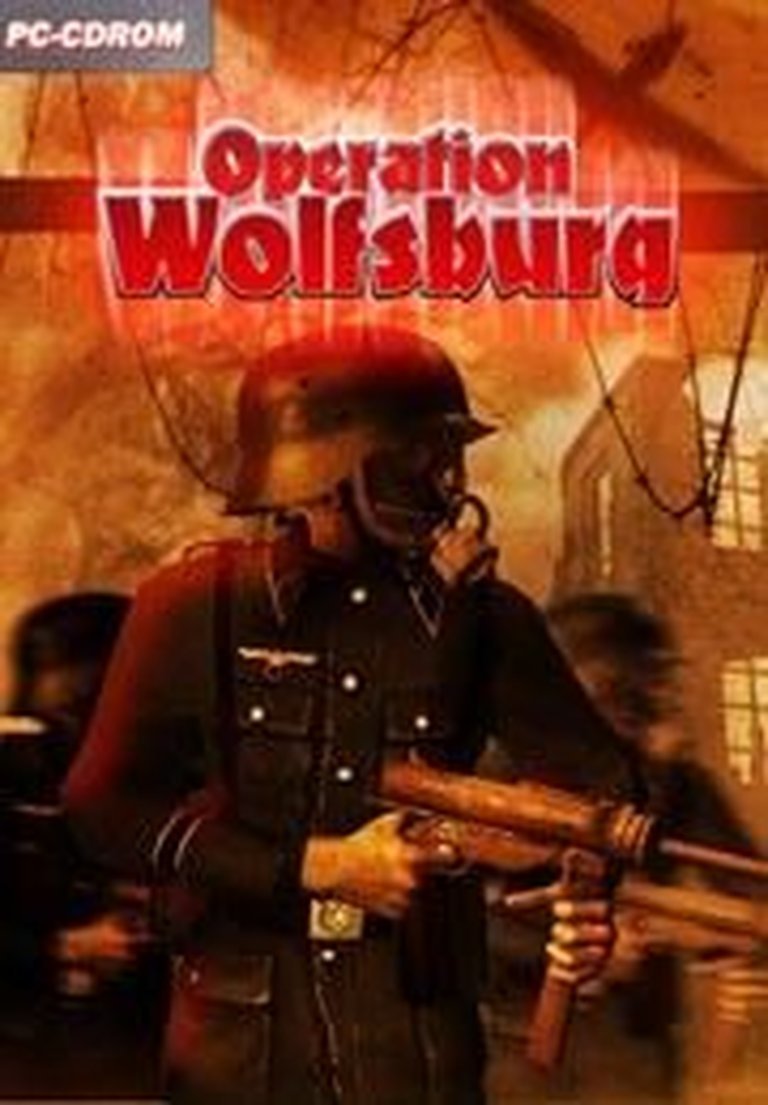
Description
Operation Wolfsburg is a low-budget World War II first-person shooter released in 2010, where player takes on the role of soldier Mike Baker, sent to investigate German chemical labs experimenting with mysterious materials from Egypt. The game features eight missions, basic weapons, and was developed using the FPS Creator program, known for its technical issues like enemies glitching through walls.
Gameplay Videos
Operation Wolfsburg Free Download
Operation Wolfsburg Cracks & Fixes
Operation Wolfsburg Reviews & Reception
gamefaqs.gamespot.com (30/100): Unplayable, incomplete, uneditable, depressive and glitchy.
Operation Wolfsburg: Review
Introduction
In the crowded landscape of World War II shooters, Operation Wolfsburg (2010) stands as a monument to ambition tragically undermined by execution. Developed by the obscure German studio HQ Simulation and built atop the rudimentary FPS Creator engine, this low-budget commercial release promised a tale of occult science and wartime intrigue. Yet, its legacy is not one of groundbreaking innovation, but of cautionary tale—a digital artifact where technical collapse, narrative void, and amateurish design coalesce into an experience so profoundly broken it transcends mere “bad game” status into a kind of interactive performance art. This review will dissect Operation Wolfsburg through the lens of its tumultuous development, narrative aspirations, catastrophic gameplay failures, and the singular, almost legendary status it has achieved among gaming historians and masochistic players alike.
Development History & Context
HQ Simulation, a shadowy entity credited solely to the ambiguous “Korte & Wieland GbR” on some platforms, operated in the late 2000s—a period when indie game development tools like FPS Creator offered accessible, if limited, pathways for aspiring creators. The studio’s vision, as articulated in promotional materials and the game’s brief lore, was ambitious: to craft a narrative-driven WWII shooter blending historical conflict with supernatural pulp elements. They envisioned Mike Baker, a U.S. Secret Service agent, infiltrating a Nazi research facility experimenting with mysterious Egyptian artifacts. However, this vision was shackled by the constraints of its chosen engine. FPS Creator, designed for rapid level building而非 polished game creation, enforced a brutal austerity: rigid level geometry, limited enemy AI scripting, and a clunky physics system that ignored fundamental interactions like collision detection.
Released in March 2010 (Windows) on a shoestring budget, Operation Wolfsburg entered a gaming environment dominated by juggernauts like Call of Duty: Modern Warfare 2 and Bad Company 2. Its $9.95–$12.99 price point placed it directly in competition with AAA titles it couldn’t hope to rival, yet its amateurish presentation—reminiscent of early 2000s freeware—betrayed a desperate attempt to mimic commercial production values. The development process, hinted at in forum archives and retrospectives, was likely a passion project by students or hobbyists lacking technical polish. The result was a product defined by its engine’s limitations: levels assembled from prefabricated assets, AI that prioritized visual glitches over tactical behavior, and a release state so riddled with bugs it bordered on unplayable.
Narrative & Thematic Deep Dive
Operation Wolfsburg’s narrative is a fleeting whisper drowned by the cacophony of its technical failures. The premise, outlined in pre-release blurbs and the game’s truncated intro, holds pulpy promise: in 1939, German scientist Fritz Braun discovers a potent mystical material in Egypt, leading to secret weapons experiments in an underground castle complex. The U.S. dispatches elite agent Mike Baker to infiltrate Wolfsburg, capture Braun, and destroy the facility. However, the game itself delivers this narrative with the subtlety of a sledgehammer. Textures on walls occasionally display nonsensical mission objectives (“Destroy the experimental plants!”), while cutscenes—assuming they exist beyond static text—are absent. Characters are pure archetype: the grim American hero, the faceless Nazi soldiers, the absent-minded scientist. Dialogue is nonexistent within gameplay, replaced by sporadic, untranslated text fragments.
The underlying themes—scientific hubris, the corruption of discovery by militarism, occultism as a wartime weapon—are hinted at but never explored. The “mysterious material” from Egypt is a MacGuffin with no lore, while the “terrible monstrous inventions” promised in marketing are nowhere to be seen. The narrative collapses under the weight of its own brevity and the game’s inability to convey story through gameplay. Baker’s mission lacks context; the castle’s secrets remain buried in the game’s broken code. Operation Wolfsburg becomes a hollow vessel for WWII tropes, its narrative aspirations evaporating like mist under the harsh light of its technical ineptitude.
Gameplay Mechanics & Systems
The core gameplay loop of Operation Wolfsburg is a masterclass in how not to design a first-person shooter. Players navigate eight linear missions, armed with an anachronistic arsenal: a pistol, bolt-action rifle, submachine gun, and grenades. Combat is defined not by tactical depth, but by the game’s systemic collapse. Enemy AI is a study in absurdity: soldiers patrol in floating, glitched patterns, phasing through walls to pop out at nonsensical angles. They exhibit no tactical acumen, often standing idle for seconds before firing inaccurate volleys. Worse, their detection mechanics are broken; Baker can be spotted across rooms through solid geometry, while enemies themselves are blind when crouched behind invisible obstacles.
Progression is nonexistent. There’s no skill system, no weapon upgrades, no meaningful collectibles. Health is managed through medkits that spawn erratically, often behind walls. The much-touted “Sniper Mode” is a standard zoom function, devoid of tactical scope sway or bullet physics. Mission objectives are delivered via cryptic text or environmental markers that frequently point to empty space. Persistent bugs—enemies spawning without ammunition, collision failures allowing Baker to walk through walls, and grenades detonating harmlessly within solid obstacles—turn every encounter into a farce. The game’s UI is a relic of the FPS Creator era, featuring a minimalist HUD with no minimap, no objective tracking, and clunky key bindings that can’t be remapped. Operation Wolfsburg isn’t just flawed; it’s actively anti-gameplay, a system designed to frustrate rather than engage.
World-Building, Art & Sound
The game’s world-building is trapped in a limbo between ambition and austerity. The setting—Nazi Germany’s secret castle laboratory—evokes classic B-movie horror, but the visuals betray its low-budget origins. Environments are assembled from repetitive, low-polygon textures: drab stone corridors, sterile lab rooms, and barren courtyards. Lighting is flat and static, casting harsh, unmodulated shadows that eliminate depth. Enemy models are blocky and animate with jerky, disjointed motions, their faces devoid of expression beyond vacant stares. The game’s sole attempt at artistry—the “mysterious castle” of Wolfsburg—feels like a theme park ride: Gothic arches and grand halls devoid of soul, populated by props that clip through floors.
Sound design is equally impoverished. Weapon effects are flat, tinny imitations of real firearms, while enemy fire lacks punch or spatial awareness. Music is a repetitive, gloomy synth loop that plays endlessly during loading screens, amplifying the game’s oppressive tedium. Voice acting is nonexistent; all communication occurs through written text riddled with grammatical errors (“Mike Baker hat to search for hints”). The game’s audio landscape is a monochrome void, failing to elevate the atmosphere beyond its sterile, glitchy environments. In Operation Wolfsburg, art and sound serve as a constant reminder of the gulf between the game’s imaginative premise and its impoverished execution.
Reception & Legacy
Operation Wolfsburg’s reception at launch was a critical annihilation. Aggregate scores on MobyGames and Metacritic reflect its status as an unmitigated disaster: a paltry 14% critic rating (based on two reviews) and a 1.0/5 player average. Russian site StopGame awarded it 25%, declaring it a “pryv v zhanre” (a “breakthrough in the genre”) with dripping sarcasm, noting it was so bad it made one “want to write one word starting with ‘P’” (presumably a euphemism for profanity). Absolute Games (AG.ru) was even harsher, a brutal 3/100, dismissing it as “dremuyushchaya grafika vremen Half-Life” (DRUDGING graphics from the Half-Life era) and questioning its $12.99 price point. Player reviews on platforms like GameFAQs echo this sentiment, with one describing it as “unplayable, incomplete, uneditable, depressive and glitchy.”
Over time, Operation Wolfsburg has transcended its initial infamy to acquire a legendary status among gaming curators and preservationists. On the Internet Archive, it’s preserved as a relic of indie development’s early struggles, its broken code archived for posterity. Its inclusion in “worst game” lists and YouTube retrospectives has cemented its place as a touchstone of gaming’s awkward adolescence. While it never influenced mainstream design, its persistence in pop culture—as a cautionary tale, a meme, and a benchmark for failure—ensures its legacy will endure long after forgotten AAA titles fade from memory.
Conclusion
Operation Wolfsburg is less a game and more a digital fossil—a testament to the perils of ambition without the resources to realize it. Its narrative, while pulpy, is strangled by technical limitations; its gameplay, promised as thrilling, is a cascade of bugs and broken systems; its world-building, rich in concept, is rendered in sterile, glitching polygons. Yet, in its catastrophic failure, it offers a unique historical value: a snapshot of a moment when indie tools democratized creation but failed to guarantee quality. For historians, it’s a study in amateur perseverance; for masochists, it’s a challenge to endure; for the rest, it’s a monument to the adage that even the most imaginative ideas can be undone by execution.
Verdict: Operation Wolfsburg is an unmitigated disaster, a broken artifact that fails as entertainment but succeeds as a cultural artifact of gaming’s imperfect past. It is not recommended for play, but it is essential study for anyone seeking to understand the boundaries of game design. In the grand pantheon of historical failures, it holds a singular, tragic place.