
- Release Year: 2018
- Platforms: Windows
- Publisher: Narko Games
- Developer: Narko Games
- Genre: Action
- Perspective: 3rd-person
- Game Mode: Single-player
- Average Score: 25/100
Description
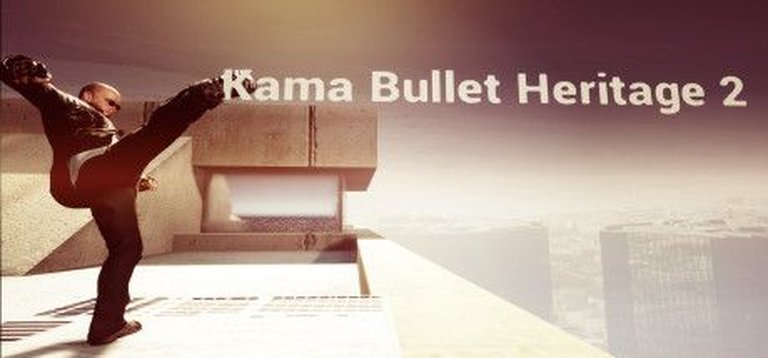
Kama Bullet Heritage 2 is an intense action game set in the corrupt city of Novosibirsk, where protagonist Kama Bullet takes a job at the company ‘Mix & Sol’ only to discover its involvement in selling drugs to children. Outraged, he resolves to dismantle the entire operation, with players guiding him through high-stakes combat using the ‘TAA-SHAA’ fighter equipment. The game features realistic graphics, challenging gameplay, and a focus on irreversible consequences for mistakes, creating a gripping narrative-driven experience.
Kama Bullet Heritage 2 Cracks & Fixes
Kama Bullet Heritage 2 Mods
Kama Bullet Heritage 2 Guides & Walkthroughs
Kama Bullet Heritage 2: Review
Introduction
In the vast, often chaotic landscape of indie game development, certain titles emerge not as polished masterpieces, but as raw, unfiltered expressions of creative ambition—warts and all. Kama Bullet Heritage 2 is one such artifact. Released in 2018 by the enigmatic Russian studio Narko Games, this action title arrived amid the deluge of Steam Direct-era releases, promising brutal combat, a gritty narrative, and uncompromising difficulty. Yet it quickly became a parable of unrealized potential, a game consumed by its own technical flaws and controversial themes. This review dissects Kama Bullet Heritage 2 not merely as a product, but as a cultural artifact—a snapshot of indie ambition colliding with harsh execution. My thesis is that while the game’s core premise—a vigilante’s crusade against corporate corruption in Novosibirsk—holds thematic resonance, its legacy is defined by its systemic failures, making it a fascinating yet cautionary footnote in gaming history.
Development History & Context
Narko Games, a shadowy studio with a scant digital footprint, crafted Kama Bullet Heritage 2 as a sequel to their 2017 debut, Kama Bullet Heritage. The studio’s vision, as articulated in the Steam store description, was to deliver a “realistic,” high-stakes brawler with moral weight. Yet the game’s development was likely constrained by limited resources and time. The 2018 release window coincided with a glut of low-budget Steam titles, where visibility often depended on aggressive marketing or shock value. Narko Games capitalized on this with a provocative premise—drug-dealing corporations, child exploitation, and one-man justice—but lacked the technical finesse to realize it.
Technologically, the game demanded modest hardware (a quad-core CPU, 4GB RAM, DirectX 11 GPU), but its engine was rudimentary. PCGamingWiki notes basic widescreen support, no anti-aliasing, and no FOV options, reflecting an underdeveloped toolset. The absence of controller support (per Steambase) and reliance on keyboard inputs further signaled a desktop-first, budget-conscious approach. Yet the most telling constraint was the developer’s own admission in a 2021 Steam news post: the game would be “deleted due to poor quality.” This self-awareness underscores a studio overwhelmed by ambition, unable to polish a concept that deserved more finesse.
Narrative & Thematic Deep Dive
The narrative of Kama Bullet Heritage 2 is a microcosm of post-Soviet disillusionment. The protagonist, Kama Bullet (also inconsistently named Kame Poole), is an outsider from the small town of Kiselevsk who migrates to Novosibirsk—a city “mired in corruption and the sale of drugs.” His job search leads him to “Mix & Sol,” a corporation that offers him a Faustian bargain: sell drugs to children. When Kama Bullet refuses, he resolves to “smash the whole office,” becoming a one-man wrecking ball against systemic rot.
This setup is ripe for thematic exploration: the clash between rural innocence and urban decay, the exploitation of the vulnerable, and the ethics of vigilante justice. Yet the game never delves deeper. Dialogue is nonexistent beyond cutscene narration, and characters are archetypes—Kama Bullet as the stoic hero, “Mix & Sol” as faceless villains. The narrative’s brevity (most players report completing it in under an hour) and lack of nuance reduce it to a pretext for violence. The title itself—Kama Bullet Heritage—hints at a legacy (possibly a familial one), but this thread is never woven into the plot. Ultimately, the narrative is a blunt instrument: a framework to justify the game’s brutal combat without enriching it thematically.
Gameplay Mechanics & Systems
Kama Bullet Heritage 2’s gameplay is a masterclass in unfulfilled potential. The core loop is simple: navigate the “Mix & Sol” office, defeat waves of enemies, and survive. Execution, however, is where everything collapses.
Combat relies on a clunky keyboard-and-mouse scheme, detailed in a pinned Steam community post:
– Q: Capture enemy
– Left Mouse: Normal hit / Charged skill (held)
– Spacebar: Rollover (dodge)
– Right Mouse: Block
– Shift: Dodge
– 1-3: Rage, Fatality, and Combo abilities
The absence of a tutorial or control menu forces players to memorize inputs through trial and error—a critical flaw exacerbated by the game’s unforgiving difficulty. Per the Steam description, “one wrong blow or step will lead to irreversible death.” Yet there are no checkpoints. A single mistake forces a full restart, turning minor errors into soul-crushing repetition.
Combat itself is a study in frustration. Combos are “randomized,” according to a translated RAWG review, making it impossible to strategize. Blocking is ineffective, and hit detection is ambiguous—players must constantly check damage numbers to confirm if an attack landed. The “TAA-SHAA” fighter equipment (the protagonist’s suit) is never explained, leaving its abilities a mystery. Progression is equally opaque. Abilities like “Rage” and “Fatality” unlock as the player “prokachatsya” (levels up), but the leveling system is undefined, and skill efficacy is unbalanced. Enemies deal disproportionate damage, while Kama Bullet’s attacks feel weighty.
The UI exacerbates these issues. Health and stamina bars are minimal, and the lack of visual feedback for blocking or dodging makes combat feel like guesswork. In short, Kama Bullet Heritage 2’s gameplay is a paradox: it promises hardcore precision but delivers chaos.
World-Building, Art & Sound
The game’s setting—Novosibirsk’s corporate underworld—is its strongest asset. By grounding the story in a real Russian city, Narko Games infuses the narrative with authenticity. The office environment, though simplistic, serves as a claustrophobic symbol of institutional corruption. Desks, computers, and generic office drapery create a believable, if underdeveloped, space for Kama Bullet’s rampage.
Art direction leans into a “trash aesthetic,” as noted in a RAWG review. Character models are “toppornye” (crude) with exaggerated physics—enemies “tumble and jump” in ways that defy realism, evoking a B-movie charm. Textures are low-resolution, and animations are stiff, yet this roughness aligns with the game’s brutal tone. The “cotton physics” mentioned in a review adds a jarring, almost cartoonish violence that, for some, enhances the thrash-metal atmosphere.
Sound design is a mixed bag. The Steam store touts “great music,” and the Russian audio track (supported per Steambase) likely anchors the game in its cultural context. However, sound effects are indistinct—impacts lack weight, and enemy grunts are repetitive. The absence of an English dub and minimal subtitles (UI only) further alienates non-Russian speakers. Ultimately, the audio-visual package is inconsistent: the art’s scrappiness feels intentional, but the audio’s underdevelopment is a missed opportunity to immerse players in Kama Bullet’s rage.
Reception & Legacy
Kama Bullet Heritage 2’s reception was a swift and brutal verdict from players. On Steam, it holds a “Mostly Negative” rating (25/100 on Steambase, based on 76 reviews). A translated 2019 RAWG review encapsulates the consensus: “The fun was 15 minutes, then a solid hemorrhoids.” Players cited no checkpoints, unclear controls, and randomized combos as unforgivable sins. One Steam user bluntly titled their post, “GAME İS TRASH,” while another lamented, “NOBODY ADVISE TO BUY THIS PRODUCT WILL NOT, EVEN IN THE VIEW OF ITS CHEAPNESS!”
Commercially, the game flopped. With only 3 players “collecting” it on MobyGames and no sales data, it’s clear Kama Bullet Heritage 2 made negligible impact. Yet its legacy persists as a cautionary tale. In December 2021, Narko Games announced the game’s deletion from Steam, citing “poor quality”—a rare act of contrition from a developer. This act cemented its status as an artifact: a game so flawed it was voluntarily erased.
Influence is minimal. While its themes of corporate corruption and vigilantism echo in games like Hotline Miami, Kama Bullet Heritage 2 lacks the polish to inspire imitation. Instead, it’s referenced in niche gaming circles as an example of ambition untethered from execution. Its place in history is as a punchline—a reminder that even the most potent ideas can be squandered by technical incompetence.
Conclusion
Kama Bullet Heritage 2 is a game of dual extremes: it is both thematically potent and mechanically broken. Its narrative—a small-town hero battling urban corruption—resonates with timeless, anti-establishment fury, yet it’s delivered with the subtlety of a sledgehammer. The combat, which promises hardcore precision, devolves into a frustrating lottery of randomized combos and instant death. Its art and sound flirt with a gritty charm but are undermined by technical sloppiness.
In the end, Kama Bullet Heritage 2 is less a game and more a case study. It represents the peril of the indie scene, where passion without polish leads to obscurity. For historians, it’s a fascinating artifact of 2018’s Steam Direct era—a snapshot of unrefined ambition. For players, it’s a cautionary tale: a title with a powerful heart but a hollow core. Its deletion from Steam was an act of mercy, sparing future players from its maddening flaws. In the annals of gaming, Kama Bullet Heritage 2 will be remembered not as a classic, but as a question: what could have been if its creators had tempered their vision with competence? The answer remains as unresolved as the game’s narrative.