
Description
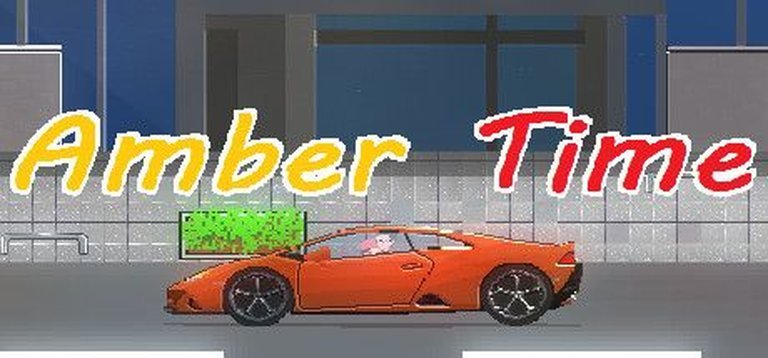
Amber Time is a pixel cartoon RPG set in a modern metropolis where players strive to become billionaires through diverse activities like working, investing, buying companies, exploring, and farming. The game features a permanent-death survival mechanic where managing health and resources is crucial, alongside transportation options, luxury acquisitions, and the pursuit of wealth in a world driven by desire and ambition.
Where to Buy Amber Time
PC
Amber Time Mods
Amber Time Guides & Walkthroughs
Amber Time Cheats & Codes
PC Version
Cheats must be entered in all lowercase in the Cheats menu, found on the main menu. Having cheats active will prevent leaderboard entry.
| Code | Effect |
|---|---|
| noirpauly | Applies a black and white filter |
| cometopuffy | Applies a red and blue filter, and changes cult members’ masks |
| cantseeshit | Increases flashlight power |
| censoringislame | Removes censor |
Amber Time: Review
Introduction
In the vast landscape of video games, few titles dare to grapple with the raw, unfiltered nature of modern capitalism and survival quite like Amber Time. Released in 2020 by the independent studio Aurora, this 2D pixel-art RPG positions itself as a “simulation of life” where players chase the dizzying heights of wealth against the brutal reality of mortality. At its core, Amber Time is a provocative experiment: a game that thrusts players into a hyper-capitalist metropolis, tasking them with transcending their humble beginnings to become billionaires—all while managing hunger, exhaustion, and the ever-looming specter of permanent death. As a historical artifact of indie game design, Amber Time stands as a fascinating, if flawed, reflection of 21st-century aspirations and anxieties. This review will dissect its ambition, mechanics, and cultural resonance, arguing that beneath its chaotic exterior lies a surprisingly prescient exploration of desire, survival, and the hollow promise of material success.
Development History & Context
Amber Time emerged from Aurora, a small developer with little prior industry presence, positioning itself as a passion project rather than a commercial blockbuster. Released on April 14, 2020, for Windows, the game arrived during a unique period in gaming history. The indie scene was flourishing, with titles like Stardew Valley and Terraria demonstrating how small teams could achieve global impact through creativity and accessibility. Meanwhile, life sims were gaining traction, often leaning into escapism or pastoral charm. Amber Time, however, chose a different path: a brutally realistic simulation of modern-day excess. Technologically, it embraced 2D scrolling and pixel art—nostalgic yet efficient—while promising “realistic and ambient lighting technology” to elevate its visuals. Its development was constrained by indie-standard resources: modest team size, minimal budget, and a reliance on Unity for cross-platform compatibility. The game’s release coincided with the onset of the COVID-19 pandemic, a period when themes of isolation, economic precarity, and digital escapism resonated deeply. In this context, Amber Time felt like a response: a game where players could live out fantasies of unrestricted wealth and freedom, even as real-world anxieties loomed large.
Narrative & Thematic Deep Dive
Amber Time eschews traditional storytelling in favor of emergent narrative, driven by player actions and systemic consequences. The “plot” is one of relentless ambition: players begin as ordinary citizens in a bustling metropolis, navigating temptations (luxury cars, mansions, exotic foods) and hardships (hunger, crime, exhaustion). The game’s tagline, “Amber world, feel the desire of money together!” encapsulates its core theme: capitalism as a driving force, where wealth accumulation becomes existential meaning. This is underscored by the survival mechanic—death is irreversible—forcing players to weigh risk against reward. Do you invest in stocks, become an entrepreneur, or retreat to the countryside to farm? Each path shapes a personal fable: the rags-to-riches mogul, the hedonist, or the recluse. NPCs remain functional rather than fleshed out, serving as obstacles, vendors, or combatants, reinforcing the world’s transactional nature. Thematic depth emerges in the game’s cyclical structure: players start weak, accumulate power, and eventually “despise everything” upon achieving billionaire status—a commentary on the hollowness of materialism. Yet, this bleakness is punctuated by moments of absurdity (e.g., using an “Invincible pill” or “oil bucket” for acceleration), satirizing consumer culture’s excesses. Ultimately, Amber Time’s narrative is one of self-made tragedy: a world where success breeds ennui, and survival demands constant, predatory engagement.
Gameplay Mechanics & Systems
Amber Time’s gameplay is a sprawling, unforgiving sandbox of systems that interlock to simulate economic and physical survival. Core loops revolve around resource management (food, money, stamina) and progression—from penniless newcomer to tycoon. Combat is rudimentary yet strategic: players can equip up to 10 weapons (mapped to keys 0-9) and employ defense layers (bulletproof vests, tanks, “Invincible pills”) against bandits or “monsters in the wild.” Exploration is facilitated by diverse transport: subways, buses, sports cars, RVs, and yachts, each accelerating movement or enabling activities like treasure hunting in the “South China Sea.” The survival aspect is punishing; hunger and fatigue cause “life to decline,” demanding constant replenishment through eating, resting, or using air conditioning. Progression systems are broad but shallow:
– Economic: Buy stocks, companies, or real estate to generate passive income.
– Active: Fish, mine, farm, or run a stall (“hanging up mode”).
– Breeding & Farming: Raise poultry or grow crops.
– Exploration: Scavenge or loot in dangerous areas.
The UI emphasizes direct control (WASD for movement, Shift for sprint, F for interact), but the sheer volume of systems creates friction. For example, switching between weapons (1-0), managing inventory, and monitoring health feels disjointed. Innovation lies in its time-acceleration mechanics—using TVs, beds, or baths to speed up passive activities—though this risks trivializing survival. Ultimately, Amber Time’s brilliance lies in its systemic interplay: buying a mansion to store goods, hiring bodyguards to protect wealth, or using an “RV” to survive field expeditions. Yet, it suffers from imbalance: combat feels tacked-on, while economic activities lack depth, reducing progression to a grind of numbers.
World-Building, Art & Sound
Amber Time’s world is a caricature of modern consumerism—a pixel-art metropolis sprawling with skyscrapers, suburbs, and wilderness. The “Amber world” is a patchwork of biomes: urban centers (with supermarkets, restaurants, and stock exchanges), rural zones (for farming and mining), and coastal areas (for yacht-based treasure hunts). This fragmentation creates a sense of boundless opportunity, yet the map’s size (enhanced by a subway system) can feel overwhelming. Art direction leans into cartoonish absurdity, with pixelated characters and environments rendered in bright, saturated colors. Lighting effects, touted as “realistic and ambient,” subtly elevate mood—dusk in the city glows with neon reflections, while forests cast long shadows. Sound design, though not extensively detailed, likely mirrors this contrast: urban areas hum with traffic and chatter, while wilderness sounds evoke isolation (wind, rustling leaves, distant monster roars). Music, if present, would likely be minimalist to avoid immersion-breaking repetition. The world’s atmosphere is one of manic energy—a celebration of excess (“sports cars, RV, all kinds of weapons”) tinged with existential dread. This duality makes exploration compelling: the thrill of discovering a new city or unearthing loot (“treasure house of nature”) clashes with the tension of survival, creating a uniquely dissonant experience.
Reception & Legacy
Upon release, Amber Time flew under the critical radar, with no Metacritic score and minimal mainstream coverage. Its lone Steam review at launch was positive, praising its ambition (“a game simulating life”) while acknowledging rough edges. Commercially, it found a niche on Steam, buoyed by its low price point ($1.99) and user tags like “Relaxing” and “Funny,” which attracted curious players. Over time, its reputation evolved from obscurity to cult status among indie simulation fans, who appreciated its chaotic creativity. The game’s legacy is cemented by its expansion into a franchise: three DLCs (Resource Packages 01–03) added vehicles, monsters, and bodyguards, while sequels like Amber City (2022) and Amber Isle (2024) refined the formula. Its influence is most visible in the wave of “modern life” sims that followed, though none replicated its singular focus on wealth-driven survival. Historically, Amber Time represents a bold, if unpolished, branch of indie RPG design—one that prioritizes systemic experimentation over polish. It resonates with contemporary discussions about inequality and digital escapism, making it a curious footnote in gaming’s exploration of capitalism.
Conclusion
Amber Time is a paradox: a game that is simultaneously clunky and profound, shallow and insightful. As a simulation of life, it excels in its chaotic ambition, capturing the fever dream of capitalist ambition with pixel-perfect clarity. Its survival mechanics and economic systems, though unrefined, create a compelling tension where every decision carries weight. Thematically, it serves as a dark mirror to consumerist culture, showing how the pursuit of wealth can hollow out the soul. Yet, its technical flaws—unintuitive controls, repetitive loops, and underdeveloped combat—prevent it from reaching greatness. Despite this, Amber Time earns its place in video game history as a fearless experiment. It stands as testament to indie innovation, proving that a small team can tackle big ideas with limited resources. For players willing to embrace its quirks, it offers a unique journey: one where the thrill of becoming a billionaire is inevitably tempered by the cold reality that, in Amber Time, as in life, nothing comes without cost. In the end, this is not just a game—it’s a reflection of our own desires, fears, and relentless pursuit of more. Verdict: A flawed, fascinating, and unforgettable indie landmark.