
- Release Year: 2003
- Platforms: PlayStation 2, Windows
- Publisher: CNEC Inc., KOEI Co., Ltd., KOEI Corporation, KOEI Korea Corporation, Taiwan Koei Entertainment Software, Inc.
- Developer: KOEI Co., Ltd.
- Genre: Grand strategy, Strategy, Tactics
- Perspective: Top-down
- Game Mode: Co-op
- Gameplay: Officer development, Real-time army movement, Turn-based combat
- Setting: Ancient, China, Chinese Three Kingdoms era, Historical events, Imperial
- Average Score: 63/100
Description
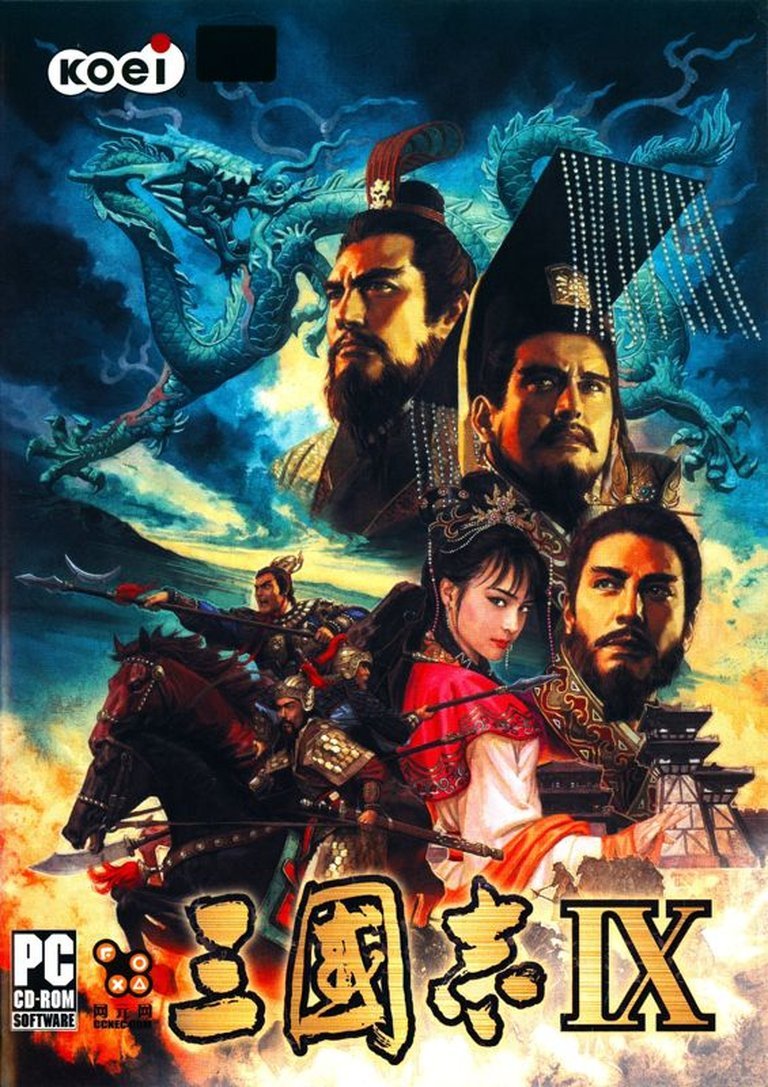
Romance of the Three Kingdoms IX, the ninth installment in Koei’s historical simulation series, transports players to Ancient China’s turbulent Three Kingdoms period, where they assume the role of a Ruler tasked with unifying the fractured nation. This turn-based strategy game challenges players to leverage leadership, resource management, and tactical warfare across 25 scenarios (15 Historical, 5 Fictional, 5 Challenge), featuring faster-paced combat than previous entries, an enhanced Officer Development System, and a comprehensive map display of China. Players can deploy over 30 troop formations, build defensive structures, experience character-specific events, and unlock multiple endings, all accompanied by the Moscow Symphony Orchestra’s soundtrack.
Gameplay Videos
Where to Buy Romance of the Three Kingdoms IX
PC
Romance of the Three Kingdoms IX Patches & Updates
Romance of the Three Kingdoms IX Mods
Romance of the Three Kingdoms IX Guides & Walkthroughs
Romance of the Three Kingdoms IX Reviews & Reception
metacritic.com (74/100): With an overhauled tutorial, user-friendly interface and straightforward goals, this is easily the most accessible game in the series.
gamespot.com (73/100): Romance IX manages to make a few improvements to the interface and systems from the previous games while still retaining the core of what made them good. Ultimately, it’s more of what you already love.
Romance of the Three Kingdoms IX Cheats & Codes
PlayStation 2 (NTSC-U)
Use Codebreaker or Xploder cheat devices. Enable master/enable codes first.
| Code | Effect |
|---|---|
| CKCR-0ZAJ-DADB2 | ARMax Master Code (Must Be On) |
| YVRP-UBK3-RDQNA | ARMax Master Code (Must Be On) |
| FA7A006E 32C66DF1 | Codebreaker v1-6 / Xploder v1-3 Enable Code (Must Be On) |
| 9A5C44EC 188E9964 | Codebreaker v6+ Enable Code (Must Be On) |
Romance of the Three Kingdoms IX: Review
Introduction
In the pantheon of historical grand strategy games, Koei’s Romance of the Three Kingdoms series stands as a titan, a decades-long chronicle of ambition, diplomacy, and warfare in ancient China. Its ninth installment, Romance of the Three Kingdoms IX (2003), arrived not merely as another iteration but as a radical reimagining of the formula. While previous titles often allowed players to ascend from humble officer to ruler, RTK IX immediately thrusts players into the highest echelon of power, demanding mastery of statecraft from the outset. This bold shift streamlined the experience while introducing kinetic combat, a unified map view, and deeper officer customization—changes that polarized the fanbase yet cemented the game’s status as a pivotal, if controversial, entry in Koei’s legacy. Though criticized for its abstraction and steep learning curve, RTK IX remains a masterclass in turn-based strategy, offering a uniquely potent blend of historical authenticity and emergent narrative chaos that continues to resonate with hardcore strategists.
Development History & Context
Developed by Koei Co., Ltd. and helmed by producer Kazuhiro Fujishige under the general oversight of series founder Kou Shibusawa, RTK IX emerged from a studio deeply entrenched in recreating Chinese history. Its creation occurred during a transitional period for Koei: the company was simultaneously riding the massive success of the hyper-stylized Dynasty Warriors action franchise (with whom RTK IX shared cross-promotional features) while maintaining its commitment to niche simulations. Technologically, the game was bound by the constraints of the early 2000s: its PlayStation 2 and Windows versions relied on 2D isometric graphics and turn-based mechanics, eschewing the 3D revolution sweeping the industry. This choice was deliberate, preserving the series’ focus on statistical depth over visual spectacle. The gaming landscape of 2003-2004 saw turn-based strategy on consoles as a hard sell, with RTK IX competing against the rise of real-time tactics and action-RPGs. Koei’s vision was clear: to refine the series’ core by stripping away RPG elements (present in RTK VII and VIII) and returning to a purer “ruler simulation,” aligning with the growing appetite for “serious” historical games among a dedicated, if small, audience.
Narrative & Thematic Deep Dive
RTK IX grounds its narrative in the epic chaos of China’s Three Kingdoms period (2nd–3rd century AD), adapting Luo Guanzhong’s Romance of the Three Kingdoms novel with fidelity. Unlike its predecessors, the game eliminates player progression through military ranks; players begin and end as rulers, immediately embodying figures like Liu Bei, Cao Cao, or Sun Quan. This shift reframes the narrative around statecraft: ambition is no longer personal but dynastic, with success measured in territory, alliances, and legacy. The 15 historical scenarios (e.g., the Yellow Turban Rebellion, the Battle of Red Cliffs) anchor gameplay in documented events, while the 5 “if” scenarios (e.g., unifying China as Dong Zhuo) explore counterfactual history. Thematic depth emerges from the Personality Dependent System, where officers’ loyalty and decision-making reflect their historical traits—a strategist like Zhuge Liang might defy a reckless order, while a brute like Zhang Fei could ignore diplomacy. Officer-specific events (34 in total) weave personal dramas into the macro-politics: a duel between Guan Yu and Lü Bu, or the betrayal of Dong Zhuo, transforming abstract numbers into human drama. Multiple endings per scenario emphasize the series’ core theme: history is not fixed, but a tapestry woven by countless choices, large and small.
Gameplay Mechanics & Systems
RTK IX’s gameplay revolves around a deceptively simple goal: unify China under your rule. Execution, however, is a ballet of interlocking systems. The Unified Map revolutionized the series by displaying all of China—capitals, forts, troop movements, and geography—in a single, navigable view, replacing the disjointed city screens of earlier titles. This enabled real-time army tracking and strategic depth, as players could anticipate invasions or block supply lines. Combat accelerated significantly: battles resolved automatically once armies clashed, governed by 30+ tactical formations (e.g., Wild Goose, Cradle Formation) that activated unique bonuses. Players could also build defensive towers or lay traps, adding layers of battlefield preparation. The Officer Development System allowed rulers to allocate points to boost officers’ stats or gift items, creating personalized powerhouses. Diplomacy was equally robust, with options for alliances, marriages, and espionage. A standout feature was the Dynasty Warriors 4 cross-pollination: importing save data unlocked exclusive officers, bridging Koei’s franchises. The Power Up Kit expanded this with features like “Soldier Scouting” (recruiting officers mid-battle), “Expert Mode” (permadeath for officers), and an editor for customizing cities and generals. Yet, these systems demanded intense micromanagement—each turn involved juggling officer tasks, city development, and military maneuvers—creating a game of sublime depth that could overwhelm newcomers.
World-Building, Art & Sound
RTK IX’s world-building is a triumph of abstraction and atmosphere. The Unified Map transforms China into a living chessboard, with provinces’ terrains (mountains, rivers) dictating movement and strategy, while the presence of foreign tribes (Wuwan, Nanman) adds geopolitical volatility. This geographic authenticity—cities like Luoyang and Chengdu are placed historically—grounds the epic scope in tangible reality. Artistically, the game eschewed 3D for a stylized 2D isometric view, using hand-painted portraits for officers and battle sequences to convey personality. While the in-game graphics were dated even for 2003, the story sequences featured lush, static artwork that evoked classical Chinese scroll paintings, complementing the novel’s dramatic moments. The soundtrack, performed by the Moscow Symphony Orchestra, elevates the experience with sweeping, orchestral compositions that evoke both the grandeur of imperial courts and the tension of impending war. Authentic Chinese dialogue (with English subtitles) in key events further immerses players, though the lack of voice acting for routine interactions reinforces the game’s text-heavy nature. Together, these elements create a world that feels both authentically historical and mythic—a “what if” sandbox where players rewrite the Romance.
Reception & Legacy
RTK IX’s reception was a study in contrast, earning a Metacritic score of 74/100 (based on 17 reviews) and a MobyGames rating of 7.4. Critics lauded its streamlined interface, faster combat, and unified map. IGN praised the “terrific new gameplay elements,” awarding it 87%, while GameZone commended its addictive depth, noting players might “forget what day it is.” Yet others found it overly dry; Game Informer likened it to “playing a Chinese History textbook,” and OPM criticized the removal of tactical battle control. Players were more favorable, rating it 4.4/5 on MobyGames, appreciating the strategic purity. Commercially, it sold steadily as a niche title, bolstered by Koei’s dedicated fanbase. Its legacy is profound: by refocusing on ruler simulation and abandoning RPG bloat, it set the template for future entries like RTK X and XI, which expanded on its systems. The Power Up Kit’s features (e.g., alliances, permadeath) became series staples. Though overshadowed by Dynasty Warriors’ mass appeal, RTK IX remains a cult classic, celebrated for its bold design choices and as a testament to Koei’s commitment to historical simulation. It cemented the series’ identity as a thinking player’s wargame, influencing titles like Total War through its emphasis on grand strategy over real-time action.
Conclusion
Romance of the Three Kingdoms IX is a landmark achievement in historical strategy, both for its innovations and its willingness to alienate parts of its audience. By forcing players into the role of a ruler from the start, it distilled the series’ essence into pure statecraft, offering a potent mix of diplomacy, warfare, and emergent storytelling. While its abstraction and steep learning curve may deter casual players, those who master its intricate systems are rewarded with unparalleled depth—a world where every officer, city, and alliance matters. The unified map, kinetic combat, and cross-franchise integration were visionary for 2003, and the Moscow Symphony soundtrack remains one of gaming’s most evocative audio experiences. Though imperfect—its lack of online play and dated visuals limit its accessibility—RTK IX endures as a testament to Koei’s creative ambition. In a genre often defined by spectacle, it reminds us that the most powerful strategy games are those that let players rewrite history with a single, calculated move. For veterans of the series and connoisseurs of turn-based tactics, RTK IX is not just a game; it is a digital Romance, waiting to be rewritten.