
- Release Year: 2014
- Platforms: Windows
- Publisher: Bethesda Softworks LLC
- Developer: ZeniMax Online Studios, LLC
- Genre: Action, Role-playing (RPG)
- Perspective: 1st-person, 3rd-person (Other)
- Game Mode: MMO
- Gameplay: Crafting, Open World
- Setting: Fantasy
- Average Score: 69/100
Description
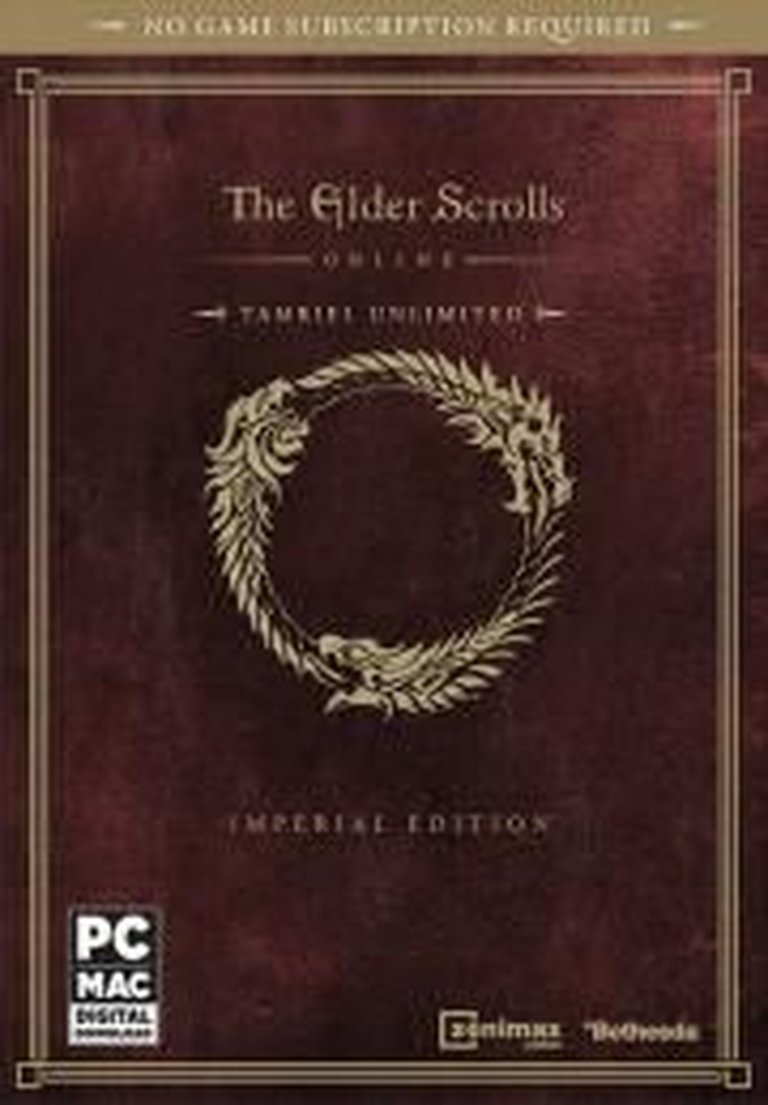
The Elder Scrolls Online: Imperial Edition is the collector’s edition of the base game, set in the fantasy world of Tamriel 1,000 years before the events of Skyrim. Players join three alliances vying for control of the Imperial City while combating dark forces that threaten the world, engaging in massive PvP battles, cooperative dungeons, or solo adventures. This edition includes exclusive content such as the ability to play as the Imperial race, a white Imperial horse, a Nibenay Mudcrab pet, and bonus items like Rings of Mara.
The Elder Scrolls Online: Imperial Edition Patches & Updates
The Elder Scrolls Online: Imperial Edition Mods
The Elder Scrolls Online: Imperial Edition Guides & Walkthroughs
The Elder Scrolls Online: Imperial Edition Reviews & Reception
imdb.com (70/100): They got a lot right with this game
opencritic.com (68/100): A few well-designed systems struggle to overcome lifeless presentation. Capable, but ultimately hard to recommend.
The Elder Scrolls Online: Imperial Edition Cheats & Codes
PC
Press the ~ key to open the console admin, then enter commands starting with ‘/’.
| Code | Effect |
|---|---|
| /bug | Opens the bug report panel within the Help Portal UI |
| /chat | Opens the ‘Ask for Help’ window within the Help Portal UI |
| /chatlog | Toggles chat logging on or off |
| /emote | Toggles a list of all available emote commands |
| /e | Toggles a list of all available emote commands |
| /me | Toggles a list of all available emote commands |
| /feedback | Opens the ‘Feedback’ window within the Help Portal UI |
| /fps | Toggles the display of current framerate on screen |
| /help | Opens the in-game Help Portal UI |
| /invite | Invites another player to your group, followed by their name (use @ for account name) |
| /jumptofriend | Transports you to the wayshrine or graveyard closest to a named friend |
| /jumptogroupmember | Transports you to the wayshrine or graveyard closest to a named group member |
| /jumptoguildmember | Transports you to the wayshrine or graveyard closest to a named guild member |
| /jumptoleader | Transports you to the wayshrine or graveyard closest to the group leader |
| /latency | Displays server based RTT (Round Trip Time) |
| /logout | Logs off the current server and returns to the login screen |
| /played | Displays the total hours you have played the game |
| /quit | Exits the game entirely, closing the game window |
| /reloadui | Reloads the user interface from the source files |
| /stuck | Portals you to the nearest safe point (wayshrine or graveyard) for a small gold fee |
| /camp | Logs you out to the login screen |
Console (with keyboard and mouse)
Connect a keyboard and mouse, then press the ~ key to open the console admin, then enter commands starting with ‘/’.
| Code | Effect |
|---|---|
| /bug | Opens the bug report panel within the Help Portal UI |
| /chat | Opens the ‘Ask for Help’ window within the Help Portal UI |
| /chatlog | Toggles chat logging on or off |
| /emote | Toggles a list of all available emote commands |
| /e | Toggles a list of all available emote commands |
| /me | Toggles a list of all available emote commands |
| /feedback | Opens the ‘Feedback’ window within the Help Portal UI |
| /fps | Toggles the display of current framerate on screen |
| /help | Opens the in-game Help Portal UI |
| /invite | Invites another player to your group, followed by their name (use @ for account name) |
| /jumptofriend | Transports you to the wayshrine or graveyard closest to a named friend |
| /jumptogroupmember | Transports you to the wayshrine or graveyard closest to a named group member |
| /jumptoguildmember | Transports you to the wayshrine or graveyard closest to a named guild member |
| /jumptoleader | Transports you to the wayshrine or graveyard closest to the group leader |
| /latency | Displays server based RTT (Round Trip Time) |
| /logout | Logs off the current server and returns to the login screen |
| /played | Displays the total hours you have played the game |
| /quit | Exits the game entirely, closing the game window |
| /reloadui | Reloads the user interface from the source files |
| /stuck | Portals you to the nearest safe point (wayshrine or graveyard) for a small gold fee |
| /camp | Logs you out to the login screen |
The Elder Scrolls Online: Imperial Edition: Review
From the sun-drenched streets of Sentinel to the snow-capped peaks of Sky Haven Temple, The Elder Scrolls series has always been synonymous with boundless exploration and rich, immersive worlds. With The Elder Scrolls Online: Imperial Edition, ZeniMax Online Studios embarked on a monumental task: translating the soul of a single-player RPG into the sprawling, interconnected tapestry of an MMORPG. More than just a game launch, the Imperial Edition represented a cultural artifact—a collector’s odyssey that bundled physical lore artifacts, digital exclusives, and the weight of a 25-year legacy into a single, steel-clad package. This review dissects not merely the game, but the phenomenon of Imperial Edition—a testament to ambition, identity crisis, and the enduring power of Tamriel.
Introduction
The Elder Scrolls Online: Imperial Edition is far more than a collector’s box; it is a time capsule, a lore tome, and a declaration of war on the conventions of the MMORPG genre. Released on April 4, 2014, by Bethesda Softworks and developed by ZeniMax Online Studios, it tasked itself with translating the unparalleled exploration, deep narrative, and systemic freedom of its single-player predecessors into a persistent, multiplayer world. The Imperial Edition, a lavish physical and digital bundle, encapsulated this ambition. It included a 12-inch Molag Bal statue, a 224-page illustrated guide penned by Imperial scholar Flaccus Terentius, a steelbook case, a map of Tamriel, and exclusive digital content: the ability to play as an Imperial (a race locked to any alliance), a white Imperial horse mount, a Nibenay Mudcrab vanity pet, the Rings of Mara for experience bonuses, and the Explorer’s Pack. But beneath the gleaming chrome and Daedric stone lay a game wrestling with its identity. Was it a true Elder Scrolls experience, or a creature of its subscription-based, mass-market constraints? The Imperial Edition’s legacy is defined by its answer: a flawed, revolutionary foundation that would redefine the series’ future.
Development History & Context
The genesis of The Elder Scrolls Online is a story of audacity and trepidation. ZeniMax Online Studios, formed in 2007 by veterans of DAoC and other MMOs, faced the monumental challenge of translating Bethesda’s signature single-player design philosophy—freedom, exploration, and player-driven narrative—into an inherently structured, socially-driven genre. The vision, as articulated by creative director Matt Firor, was to create a game that felt like an Elder Scrolls title first, with MMO systems serving that core identity. This meant a world where players could wander off the beaten path, discover hidden ruins, and engage with the deep lore of Tamriel without being railroaded by quest hubs.
Technologically, the team pushed boundaries for 2014. The game’s engine was built from the ground up to handle thousands of players in a single, seamless world, a feat requiring significant compromises in scale and detail compared to the meticulously crafted, hand-placed worlds of Oblivion or Skyrim. The gaming landscape at the time was dominated by World of Warcraft, a behemoth with a rigid, level-gated structure. ESO’s initial promise of a truly open world, where players could explore any zone at any level (a feature later refined but present at launch), was a direct counterpoint to this norm. However, the technological constraints of the era were palpable. The game’s visual fidelity, while attempting a blend of Bethesda’s grounded realism with the stylization of WoW, often resulted in a hybrid that lacked the sharpness of either. Performance issues, particularly in large-scale PvP, plagued the game at launch, testing the patience of a fanbase accustomed to stability from single-player entries.
Narrative & Thematic Deep Dive
ESO’s narrative is a sprawling epic, set during the tumultuous Interregnum of the Second Era (2E 582), a century before the events of Skyrim. The central conflict is the Planemeld, a catastrophic event orchestrated by the Daedric Prince of Domination, Molag Bal. This isn’t a simple invasion; Bal seeks to merge the mortal realm of Nirn with his hellscape of Coldharbour, using soul-stealing Dark Anchors to shatter the barriers between worlds. The story begins with the player character, the Vestige, sacrificed in a ritual by Mannimarco, the King of Worms, only to be resurrected in Coldharbour with a stolen soul. Guided by the enigmatic Prophet (revealed to be the missing Emperor Varen Aquilarios), the Vestige escapes and becomes embroiled in a quest to reunite the Five Companions—Varen, Lyris Titanborn, Sai Sahan, and the reformed Abnur Tharn—to stop the Planemeld.
Interwoven with this apocalyptic threat is the Alliance War. With the Ruby Throne vacant after Varen’s disappearance and betrayal, three great coalitions vie for control of Cyrodiil and the White-Gold Tower:
– The Ebonheart Pact: An uneasy alliance of Nords, Dunmer, and Argonians, forged in fire to repel Akaviri invasions centuries earlier. Led by the High King of Eastern Skyrim, Jorunn the Skald-King, it embodies resilience and pragmatism.
– The Aldmeri Dominion: A coalition of Altmer, Bosmer, and Khajiit, believing elven supremacy is the only hope for Tamriel’s future. Queen Ayrenn of Summerset drives this alliance, seeking to impose order through elven superiority.
– The Daggerfall Covenant: A union of Bretons, Redguards, and Orsimer, united under the chivalric High King Emeric of Wayrest. They champion the traditional values of the Empire and seek to restore order.
Thematic depth emerges from this collision of epic fantasy and political intrigue. The narrative explores identity (the Vestige’s soulless existence), betrayal (Mannimarco’s turn, Abnur Tharn’s initial allegiance to evil), and the corrupting nature of power (Clivia Tharn’s pact with the Worm Cult). The rich tapestry of Elder Scrolls lore is woven in: references to the Amulet of Kings, the Dragonguard, the Synod and Aetherium Society, and the political machinations of houses like Tharn and Crucible. The story’s climax in Coldharbour, battling a weakened but still formidable Molag Bal, is a high point, concluding with the Vestige’s soul restored and a sacrifice that echoes the series’ themes of heroism and loss. The Alliance War, while initially a backdrop, gains thematic weight as players confront the cost of factional loyalty versus the greater good.
Gameplay Mechanics & Systems
ESO’s gameplay systems represent a bold, if sometimes conflicting, hybridization of Elder Scrolls tradition and MMO necessity.
Combat is arguably the game’s most successful Elder Scrolls adaptation. It’s action-oriented, requiring active blocking, bashing, and timed abilities rather than tab-targeting. Light attacks, heavy attacks, and skill rotations form the core loop, with stamina for physical/magicka for spell-based combat. The active dodge and interrupt mechanics add a layer of skill absent in many contemporaries. However, the sheer number of abilities (swappable weapon sets, class skills, guild skills, world skills, champion points) can lead to UI clutter and a steep learning curve. The Imperial race, exclusive to the Imperial Edition, offers unique passives: Diplomat (15% bonus to One-Hand and Shield, +1% gold), Tough (increased health), Imperial Mettle (increased stamina), and Red Diamond (reduced ability cost, damage-over-time heal/resource restore). This makes Imperials versatile, fitting any role, but arguably less thematically distinct than other races.
Character Progression is multi-faceted. Leveling is primarily through questing and world exploration, with a traditional level cap of 50. Beyond this, Champion Points (introduced later but present in the post-Imperial Unlimited era) provide deep, account-wide customization, allowing players to specialize in hundreds of passive abilities. The four base classes (Dragonknight, Sorcerer, Nightblade, Templar) are flexible, each capable of tanking, healing, or DPS, allowing for diverse builds. The crafting system is a standout, deeply reminiscent of single-player entries. Alchemy requires experimentation with ingredient properties, Blacksmithing and Clothing involve research time and rare materials, and Enchanting requires finding runes. This depth is rewarding but also demanding; inventory management becomes a major chore.
The UI is clean and minimalist by default, echoing Skyrim’s interface, but can be heavily customized with add-ons. The social systems include guilds (up to 5), with dedicated trading guilds becoming essential for the player-driven economy, though the guild store interface is notoriously clunky. The subscription model (required at launch) offered a monthly stipend of Crowns (premium currency), access to all DLC, and crafting bag space, but the high entry barrier and mandatory fee were points of contention. The Explorer’s Pack, included in the Imperial Edition, was a significant quality-of-life perk, allowing players to choose any race for any alliance (breaking faction/race locks) and offering inventory pets and treasure maps.
World-Building, Art & Sound
Tamriel in ESO is a world built for exploration. While initially gated by faction zones, the sheer density of content is staggering. Each province feels distinct: the Nordic gloom of Eastmarch, the mushroom forests of Shadowfen, the deserts of Alik’r, the jungles of Valenwood. The world is filled with discoverable Skyshards (for skill points), delves (solo instances), public dungeons (group instances), world bosses, and Dark Anchor events (public group objectives). The sense of discovery is palpable; stumbling upon a hidden Ayleid ruin in a remote Glenumbra field or finding a rare book snippet in a mundane crate captures the Elder Scrolls spirit.
Art Direction is a blend of ambition and compromise. It leans into the series’ low-fantasy aesthetic, favoring earthy tones, weathered stone, and organic architecture over the high-gloss polish of many MMOs. Cities like Elden Root (Valenwood) or Mournhold (Morrowind) are marvels of vertical design, filled with life. However, the technical limitations of 2014 are evident in character models (often stiff and expressionless) and textures that can appear blurry at close range. The Imperial Style armor and furnishings, a digital perk of the Imperial Edition, are beautifully ornate, featuring intricate filigree and the iconic red-and-gold color palette, showcasing the art team’s ability to translate lore into visual assets.
Sound Design elevates the experience. Jeremy Soule’s iconic Elder Scrolls theme is reprised, though primarily at the login screen; the main score was composed by Brad Derrick. It effectively blends orchestral grandeur with ambient regional music that evokes the landscapes – Nordic choirs in Skyrim, Bosmer pipes in Valenwood. Voice Acting is extensive, with thousands of voiced NPCs. The quality varies, from strong performances (especially for key characters like Lyris Titanborn or Sai Sahan) to more robotic line readings, particularly for generic quest givers. The ambient world sounds – clanging swords in cities, the rustle of leaves in forests, the distant call of a guar – are immersive. The Imperial Horse mount’s clip-clop and the Mudcrab pet’s skittering sounds are charming touches that enhance the digital exclusives.
Reception & Legacy
The reception of The Elder Scrolls Online: Imperial Edition and the base game was deeply polarized at launch. Critics praised the rich lore, the quality of the main quest, the depth of crafting, and the action-oriented combat. IGN awarded it 7.8/10, calling it “fun, as long as you remember it’s predominantly an MMO,” and highlighting the rewarding combat and massive world. MGR Gaming lauded the Imperial Edition itself as a “masterful edition,” praising the physical artifacts and the significant gameplay advantages of the digital perks. However, the game was savaged by the player base and reviewers for its numerous bugs, performance issues, and the mandatory subscription model in a market increasingly moving towards free-to-play or buy-to-play. The phasing system (instancing players separately) hindered cooperative play, and the veteran zones (requiring players to quest through two entire enemy factions after level 50) felt like a grind-heavy chore. The initial UI and inventory management were heavily criticized. On IMDb, user reviews reflected this divide, with scores ranging from 1/10 (“flat and lacking,” “deal-breaker vertigo”) to 10/10 (“an online epic fantasy,” “brilliant game”), often citing the game’s evolution over time.
The legacy of the Imperial Edition is inseparable from the game’s remarkable transformation. Facing near-disaster, ZeniMax Online made a pivotal decision in 2015 to release The Elder Scrolls Online: Tamriel Unlimited. This shift to a buy-to-play model with an optional subscription (ESO Plus) for perks and DLC access revitalized the game. It introduced Crafting Bag (essential inventory space), Dungeon Finder, and One Tamriel (removing level/faction restrictions for overworld exploration), turning it into the solo-friendly, exploration-driven RPG fans craved. The Imperial Edition’s exclusives – the Imperial race, mount, pet, and style – became desirable status symbols, later available for purchase in the Crown Store but retaining their lore significance. ESO went on to become one of the most successful and long-lived MMORPGs, with numerous well-received DLC chapters (Morrowind, Summerset, Elsweyr) and regular content updates. It proved that an Elder Scrolls MMO could not only survive but thrive by embracing its single-player roots while evolving its multiplayer design. The Imperial Edition stands as the ambitious, flawed, but essential starting point of that journey – a physical monument to a game that dared to dream big and, through perseverance, found its place in the sun.
Conclusion
The Elder Scrolls Online: Imperial Edition is a fascinating artifact, a microcosm of both the immense ambition and the growing pains inherent in translating a beloved single-player franchise into the demanding ecosystem of online gaming. The physical bundle – the Molag Bal statue, the Flaccus Terentius guide – is a tangible celebration of the series’ lore, a collector’s dream that elevated the standard for MMO special editions. The digital exclusives – the versatile Imperial race, the majestic horse, the whimsical Mudcrab – offered meaningful gameplay advantages and cosmetic flair, enhancing the player experience in tangible ways.
Yet, the game within the box was a creature of its time and its compromises. The deep, Elder Scrolls-inspired questing and world-building shone through, anchored by a compelling narrative of betrayal and heroism in the face of Planemeld. The combat and crafting systems offered genuine depth and satisfaction, drawing directly from the series’ single-player DNA. However, these strengths were often overshadowed by technical woes, a rigid subscription model that felt increasingly archaic, and design choices that prioritized MMO structure over pure player freedom.
The true legacy of the Imperial Edition, however, lies not in its launch state, but in its role as the foundation for ESO’s remarkable evolution. The game’s subsequent shift to Tamriel Unlimited, embracing a buy-to-play model with optional perks and overhauling its progression systems, transformed it from a troubled experiment into a thriving, long-term success. It became a game that genuinely delivered on the promise of exploring Tamriel, one that could be enjoyed solo or with friends, in epic dungeon delves or quiet library corners.
In the grand tapestry of video game history, The Elder Scrolls Online: Imperial Edition occupies a unique space. It is a flawed but noble first step, a collector’s item that captures the passion and trepidation of a studio attempting the impossible. It is a reminder that even the most ambitious endeavors require refinement and that the journey, with all its detours and dark anchors, can be as rewarding as the destination. For the dedicated fan, the Imperial Edition remains more than just a game; it is the first stone laid in the construction of a digital Tamriel, a world that continues to grow and captivate nearly a decade after its tumultuous birth.