
- Release Year: 2018
- Platforms: Nintendo Switch, PlayStation 4, Windows
- Publisher: Phoenixx Inc., Sony Music Entertainment (Japan), Inc., Unties
- Developer: souvenir circ., Team Shanghai Alice
- Genre: Action
- Perspective: Side view
- Game Mode: Single-player
- Gameplay: Arcade, Shooter
- Average Score: 72/100
Description
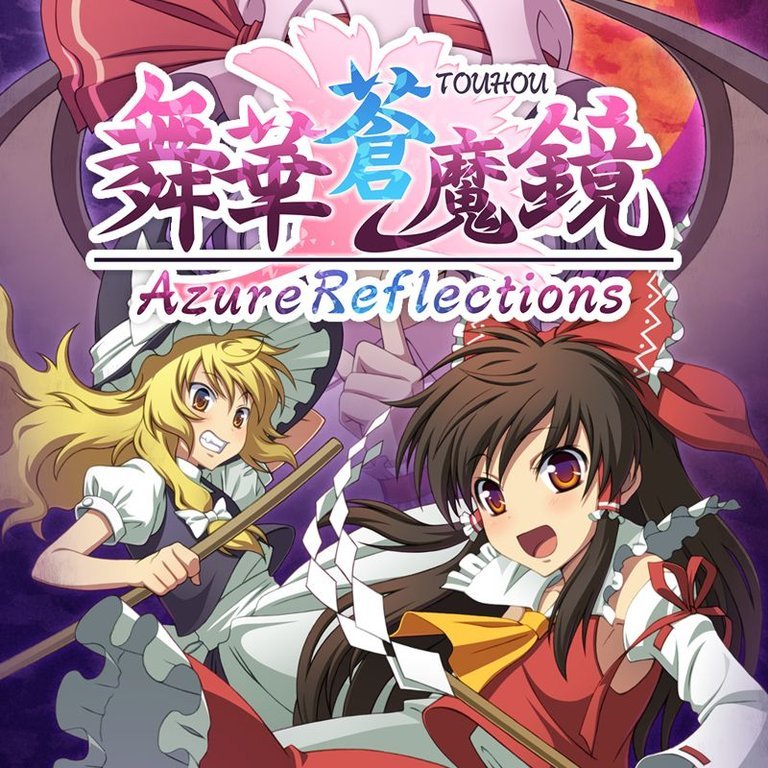
Azure Reflections, also known as Maihana Sōmakyō, is a side-scrolling shooter and fangame set in the Touhou Project universe. Developed by souvenir circ. and Team Shanghai Alice, it features multiple playable characters from the Touhou series, each with unique story modes, and offers accessible yet challenging gameplay with adjustable difficulty levels, training features like hit box display, and vibrant 2D visuals. Initially released on PlayStation 4 in 2018, the game has been ported to Nintendo Switch and Windows, making it available across multiple platforms.
Gameplay Videos
Where to Buy Azure Reflections
PC
Azure Reflections Cracks & Fixes
Azure Reflections Patches & Updates
Azure Reflections Guides & Walkthroughs
Azure Reflections Reviews & Reception
metacritic.com (73/100): A short but sweet experience that I really enjoyed.
opencritic.com (70/100): Hard to recommend to anyone bar die-hard fans.
thesixthaxis.com (70/100): One of the most pleasant surprises I’ve had all year.
nintendoworldreport.com (75/100): One part anime, one part bullet hell, a dash of weirdness.
Azure Reflections Cheats & Codes
Nintendo Switch
Use with Atmosphere, EdiZon, or SXOS on a modded Nintendo Switch.
| Code | Effect |
|---|---|
| 580F0000 00403B18 580F1000 00000040 580F1000 00000070 580F1000 00000000 580F1000 00000570 780F0000 00000008 640F0000 00000000 447A0000 80000100 640F0000 00000000 00000000 20000000 |
Infinite Barrier (Toggle with ZL) |
| 580F0000 00A3EEF0 580F1000 000000A0 580F1000 00000220 780F0000 00000DBC 640F0000 00000000 00000006 |
Infinite Lives |
| 580F0000 00A3EEF0 580F1000 000000A0 580F1000 00000220 780F0000 00000DC0 640F0000 00000000 00000007 |
Infinite SP |
| 580F0000 00A3EEF0 580F1000 000000A0 580F1000 00000220 780F0000 00000104 680F0000 50000000 00000010 |
Invincibility |
Azure Reflections: Review
Introduction
In the vibrant, often insular world of doujin (independent) game development, few franchises command the reverence and creative output of the Touhou Project. What began as a series of hyper-difficult vertical shooters in 1996 has blossomed into a sprawling multimedia empire, with fan-games serving as both tributes and experimental offshoots. Among these, Azure Reflections—originally titled Maihana Sōmakyō: Uniting Barrage Action—stands as a fascinating anomaly. Developed by souvenir circ. and published by Unties, this 2018 horizontal bullet hell shooter transcends its origins as a Touhou fangame to become a compelling reimagining of the genre. While it inherits the series’ punishing difficulty, vibrant aesthetics, and rich lore, it carves its own identity through innovative mechanics and a fresh perspective. Yet, its legacy is one of brilliant ambition tempered by executional flaws. This review deconstructs Azure Reflections as both a love letter to Touhou and a standalone artistic statement, arguing that it succeeds more as a gateway for newcomers than a definitive genre milestone.
Development History & Context
Azure Reflections emerged from the crucible of Japan’s doujin scene, where developer souvenir circ. operated with the resource constraints typical of non-commercial projects. Its initial PC release at Comiket 82 in August 2012 showcased a vision distinct from the vertical-scrolling norms of Team Shanghai Alice’s mainline Touhou games. The team sought to reimagine the bullet hell experience by shifting to a horizontal plane—a bold move that fundamentally altered enemy placement and player strategy. This ambition was constrained by technical limitations of the era; the PC version relied on 2D sprites with minimal environmental detail, prioritizing bullet density over visual grandeur.
The game’s transition to consoles in 2018-2019 marked a significant evolution. Partnering with Unties, souvenir circ. leveraged the PS4, Nintendo Switch, and PC platforms to elevate production values, introducing full 3D character models, orchestrated soundtracks, and professional voice acting. This shift occurred during a period when Touhou fangames were gaining mainstream traction, with publishers like NISA and XSEED localizing titles for Western audiences. The genre itself saw a resurgence on consoles, with shooters like Shikhondo: Soul Eater and Danmaku Unlimited 3 finding new audiences. However, Azure Reflections faced unique challenges: translating a niche, keyboard-centric experience to controllers required meticulous redesign of controls and UI, while retaining the genre’s core difficulty. The result was a game that balanced accessibility features—like hit box visualization and stun states—with the unforgiving precision expected by veterans, reflecting the studio’s dual goal of honoring tradition and innovating.
Narrative & Thematic Deep Dive
Azure Reflections weaves a deceptively intricate narrative centered on the return of the Scarlet Mist, a phenomenon first depicted in Touhou Project’s Embodiment of Scarlet Devil. The plot follows Reimu Hakurei, the stoic shrine maiden, as she investigates the unnatural fog enveloping Gensokyo, leading her to the Scarlet Devil Manor. Here, she confronts Remilia Scarlet, the vampiric mistress of the manor, and her sister Flandre, whose destructive powers are tied to a mysterious blue mirror. The narrative employs a time-loop mechanic, with each failure in a boss battle restarting the sequence—creating a meta-commentary on repetition and perseverance central to Touhou lore.
Character interactions drive the story’s charm. Dialogue, presented in fully voiced cutscenes, blends absurdist humor with character-defining quirks: Sakuya Izayoi, the time-manipulating maid, delivers dry wit during battles, while Cirno, the ice fairy, exhibits childlike bravado. The writing assumes familiarity with Touhou’s deep lore; characters reference past incidents and relationships (e.g., Remilia’s “Scarlet Mist incident”) without exposition, rewarding long-time fans while leaving newcomers adrift. Thematically, the game explores cyclical conflict—Reimu’s quest mirrors her past battles—and the futility of power, embodied by Flandre’s uncontrollable abilities. Yet, the narrative is ultimately secondary to gameplay, serving as a framework for boss encounters and character unlocks. Its brevity (completable in under two hours) and reliance on Touhou’s established mythos prevent it from standing alone as a compelling story, though it succeeds as atmospheric window dressing.
Gameplay Mechanics & Systems
At its core, Azure Reflections subverts bullet hell conventions through its horizontal perspective, demanding constant vigilance as bullets assault from all screen edges. Players control Reimu, Marisa, or unlockable Cirno, each with unique shot types, spell cards, and movement speeds. Combat revolves around three key systems:
-
Danmaku Rush: The game’s signature mechanic, activated via a rechargeable shield. When triggered, time slows, allowing players to absorb bullets—each clearing the meter—and dash into enemies. The absorbed bullets fuel the rush’s power, turning defense into a high-risk, high-reward offensive tool against bosses. This system adds strategic depth, rewarding pattern recognition and aggressive positioning.
-
Barrier and Spell Cards: A defensive barrier clears immediate threats, while spell cards act as screen-clearing bombs. Each character’s spells differ—Reimu vaporizes bullets, Marisa freezes them—encouraging diverse playstyles.
-
Stun State: Instead of instant death, taking a player stuns them for ~2 seconds, enabling recovery unless hit again. This “anti-frustration” feature reduces the genre’s notorious barrier to entry, though it can backfire in dense bullet storms.
The progression system emphasizes replayability. Clearing the game unlocks Marisa, Cirno, and harder difficulties, while an “Ascetic Mode” removes stun for instant death purists. An accessory shop, funded by in-game currency, allows cosmetic and stat-based customization (e.g., reduced stun duration). Yet, the gameplay loop reveals flaws: stages are fleeting (1-2 minutes each), populated by repetitive enemy swarms that feel like filler. Boss encounters are the true highlight, demanding mastery of Danmaku Rush to meet stringent victory conditions (e.g., defeating bosses within time limits). These requirements, coupled with a no-continue policy for true endings, create frustrating repetition, especially for new players. The UI is clean but spartan, with the ability to toggle hit box visualization serving as a welcome tutorial aid.
World-Building, Art & Sound
Azure Reflections immerses players in Touhou’s rich lore, primarily set within the Scarlet Devil Manor and its surrounding locales like the Misty Lake. However, its world-building is hindered by environmental repetition. Three of the seven stages occupy an identical ethereal blue dimension with floating geometric shapes, while others reuse generic forest or sky motifs. This lack of variety undermines the sense of place, though the horizontal scrolling occasionally offers dynamic shifts—e.g., mid-stage directional changes that break monotony.
The art direction is a study in contrasts. Character models are rendered in 3D with a distinctive hatched, cel-shaded aesthetic that mimics hand-drawn illustrations, particularly in close-up cutscenes. These designs, featuring vibrant outfits and expressive animations, are a high point—Reimu’s hakama and Marisa’s witch hat brimming with personality. Enemies, by contrast, suffer from bland, recycled sprites, often differing only by color. Boss designs shine, blending Touhou’s iconic gothic horror with playful flair (e.g., Patchouli’s tomes floating around her). The bloom effect on character portraits, however, is excessive, washing out details during dialogue scenes.
Sound design excels, blending orchestrated remixes of classic Touhou tracks (e.g., U.N. Owen Was Her?) with crisp voice acting. Seiyuu veterans like Rina Sato (Reimu) and Ayumi Fujimura (Marisa) infuse characters with emotion, though rapid-fire boss dialogues are often drowned out by bullet noise. The soundtrack, while energetic, lacks the memorability of ZUN’s original compositions, occasionally feeling derivative. Overall, the audio-visual presentation captures Touhou’s essence but falters in environmental polish and narrative integration.
Reception & Legacy
Upon its 2018 console release, Azure Reflections received a mixed-to-positive critical reception, with a Metascore of 73 and an OpenCritic score of 70. Critics lauded its accessibility and mechanics; Digitally Downloaded called it “a great introduction to the world of Touhou shooters,” praising the stun system and Danmaku Rush. Video Chums awarded it 80/100, hailing it as a “top-notch shoot ’em up.” However, recurring critiques targeted its short length and repetitive stages. Defunct Games lamented the “lackluster level designs,” while Nintendo Life noted the game’s “sparse amount of content” hampered its appeal beyond Touhou fans. Commercially, it performed modestly, buoyed by the genre’s niche resurgence and Unties’ localization efforts.
Its legacy is twofold. Within the Touhou community, it’s respected as a polished fangame that expanded the series’ boundaries, particularly through its horizontal perspective and mechanics. The Danmaku Rush system influenced subsequent indie shooters like Kaleido Stella (2019), which adopted similar bullet-absorption mechanics. Yet, it failed to achieve the genre-defining status of titles like Crimson Clover or Touhou itself. Over time, its reputation has cooled, with newer releases overshadowing its innovations. It remains a curious footnote—a technical and creative bridge between the PC doujin era and the console-driven bullet hell resurgence, remembered more for its ambition than its perfection.
Conclusion
Azure Reflections is a testament to the creative vitality of the Touhou Project and its community. As a horizontal shooter, it reinvigorates a formula with systems like Danmaku Rush that merge offense and defense, while its stun state and customizable accessories lower the genre’s notoriously high barrier to entry. The game’s strengths lie in its boss battles—kinetic, pattern-based duels that justify the price of admission—and its faithful, if abbreviated, adaptation of Touhou’s charm. However, these triumphs are undermined by structural shortcomings: fleeting stages, environmental repetition, and a narrative that demands niche knowledge.
Ultimately, Azure Reflections occupies a unique space in gaming history. It is not the pinnacle of bullet hell design, nor does it surpass its source material in narrative depth or visual splendor. Yet, for genre newcomers, it serves as an exemplary entry point, balancing challenge with approachability. For Touhou devotees, it is a polished homage that honors tradition while charting new territory. Its place in history will be as a bridge—a game that, like its Danmaku Rush mechanic, absorbed influences to launch itself into the future, even if it didn’t quite reach the stars.