
- Release Year: 2021
- Platforms: Windows
- Publisher: Orb Studio
- Developer: Orb Studio
- Genre: Action
- Perspective: Top-down
- Game Mode: Single-player
- Gameplay: Shooter, Space flight
- Setting: Futuristic, Sci-fi
Description
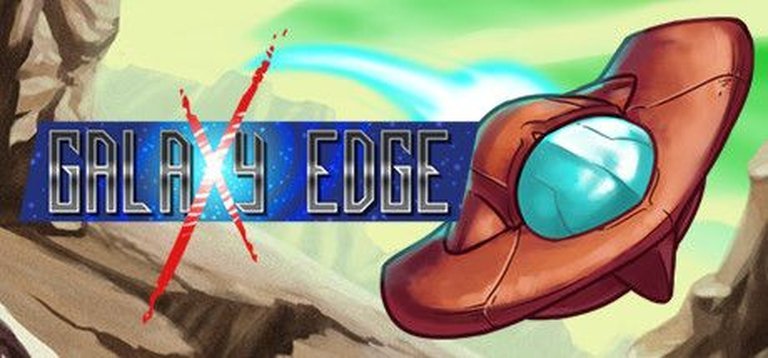
Galaxy Edge is a top-down 2D space shooter set in a sci-fi universe where players engage in intense space flight combat. Developed by Orb Studio and released in 2021, the game offers direct control over spacecraft as players navigate through futuristic battles. The game is known for its fast-paced action and immersive sci-fi setting, providing a thrilling experience for fans of the genre.
Where to Buy Galaxy Edge
PC
Galaxy Edge Reviews & Reception
uploadvr.com : Together, they make for a satisfying Star Wars caper more akin to one of the recent side-story TV series than a galaxy-sweeping epic seen on the big screen.
androidcentral.com : Part 1 of Star Wars: Tales From the Galaxy’s Edge delivers in ways we had hoped and exceeds expectations in many ways. Hours of fascinating stories, characters, quests, combat, and puzzles await in this VR-exclusive action-adventure game.
Galaxy Edge: Review
Introduction
In the ever-expanding galaxy of virtual reality gaming, few franchises hold the cultural cachet of Star Wars. Star Wars: Tales from the Galaxy’s Edge arrives not merely as a game, but as a thematic odyssey—bridging the tangible magic of Disneyland’s Galaxy’s Edge land with the untapped potential of VR storytelling. As a professional game journalist and historian, I assert that this 2020 release from ILMxLAB transcends typical licensed fare. It is a bold, albeit imperfect, testament to how VR can transform passive fandom into active participation in a galaxy far, far away. This review will dissect its development, narrative depth, gameplay innovations, sensory immersion, and enduring legacy, arguing that Galaxy’s Edge stands as a landmark achievement in both Star Wars and VR history.
Development History & Context
Galaxy’s Edge emerged from Lucasfilm’s dedicated VR studio, ILMxLAB, the same architects behind the lauded Vader Immortal trilogy. Director Jose Perez III, instrumental in the iconic Vader Immortal Lightsaber Dojo, spearheaded a project with a clear mandate: expand beyond the corridor-focused limitations of its predecessor. Conceived as a standalone VR experience, the game was intrinsically linked to Disney’s theme park land Galaxy’s Edge—set on the remote planet Batuu—and tasked with translating that meticulously crafted world into interactive form. Technologically, it was optimized for standalone headsets like the Oculus Quest family, necessitating ingenious compromises to deliver high-fidelity visuals without tethering hardware. Released on November 19, 2020, it landed in a VR landscape undergoing explosive growth, with the Quest 2’s launch just weeks prior democratizing access. Crucially, it arrived during a creative renaissance for Star Wars gaming, capitalizing on the renewed intrigue for the High Republic era and the untapped potential of the sequel trilogy’s “in-between” years.
Narrative & Thematic Deep Dive
The narrative unfolds as a tapestry of interwoven stories, anchored by the player’s role as an unnamed droid repair technician crash-landing on Batuu. This framing device—reminiscent of The Force Awakens—quickly entangles the player in a desperate struggle against the Guavian Death Gang, led by the menacing Tara Rashin. However, the true narrative brilliance lies within Seezelslak’s Cantina, an Azumel bartender whose tales serve as narrative wormholes. Through his booming, charismatic voice (masterfully portrayed by Bobby Moynihan), players are thrust into three distinct “Tales”: a High Republic-era Jedi crisis featuring Padawan Ady Sun’Zee and Master Yoda, an IG-88 bounty hunter segment, and a First Order infiltration mission. This non-linear structure is revolutionary for a Star Wars game, seamlessly blending multiple eras—from the ancient Jedi past to the grimy sequel trilogy present. Characters like the vulnerable C-3PO and the enigmatic Mubo add emotional weight, while the Guavian Death Gang embodies the lawlessness of the Outer Rim. Thematically, the game interrogates scale—both cosmic and personal. It juxtaposes the grandeur of galactic history with the mundane struggles of a mechanic, echoing Yoda’s wisdom that the Force is “so much bigger” than light and dark. The result is a Star Wars experience that feels lived-in, messy, and authentically sprawling.
Gameplay Mechanics & Systems
Galaxy’s Edge operates as a hybrid of first-person shooter, exploration, and light RPG mechanics. The core loop involves navigating Batuu’s diverse environments—from dense jungles to crumbling spires—while engaging in tactical blaster combat against varied foes. The hoverpack, a standout feature, enables vertical traversal, transforming skirmishes into three-dimensional chess matches. Players can ascend cliffs, flank enemies, or rain fire from above, with each upgrade expanding tactical options. Combat itself, while accessible on standard difficulty, demands precision on higher settings, rewarding cover usage, weapon swaps, and the strategic deployment of Training Remotes—floating droids that provide suppressive fire or target marking. The RPG elements, though streamlined, offer satisfying progression through a credit-based system for weapon and hoverpack upgrades. Side missions, often revolving around droid repairs or salvage hunts, provide context and reward exploration. The “Tales” segments showcase remarkable gameplay diversity: the High Republic story emphasizes lightsaber combat and Force puzzles, while the IG-88 segment leans into stealth. However, the system is not without flaws. Weapon handling occasionally lacks tactile weight, and inventory management can feel clunky. The main campaign’s reliance on revisited locales for side objectives risks repetition, but the sheer density of interactive—from dartboards in the cantina to ancient temples—ensures the world never feels static.
World-Building, Art & Sound
ILMxLAB’s world-building is nothing short of virtuosic. Batuu’s Black Spire Outpost is rendered with astonishing fidelity, translating the theme park’s meticulously crafted details into a seamless VR environment. The cantina, with its sticky floors and neon signage, serves as a vibrant hub, while the surrounding Wilds brim with indigenous creatures like the chirping Porgs and hostile acid-spitters. The art direction balances stylized character models with photorealistic environments, creating a cohesive aesthetic that honors Star Wars’ lived-in aesthetic. Sound design is equally masterful, blending John Williams-esque themes with original compositions from Bear McCreary, Danny Piccone, and Joseph Trapanese. The clatter of blasters, the hum of lightsabers, and the cacophony of alien dialects immerse players in a sensory feast. Most impressively, the game leverages VR’s spatial audio to create dynamic soundscapes—blaster bolts whizzing past your ear, Seezelslak’s voice echoing from the bar’s corner. This synergy of art and sound transforms Batuu from a backdrop into a character, making every corner feel ripe with untold stories.
Reception & Legacy
Upon release, Galaxy’s Edge garnered largely positive reviews, with an OpenCritic score of 74%. Critics praised its scope, storytelling, and technical prowess on Quest hardware, though some noted the base game’s relatively short length and repetitive combat. The September 2021 Last Call DLC, featuring the Ithorian antiquarian Dok-Ondar, was widely lauded for addressing these concerns, adding substantial narrative content and deepening Batuu’s lore. Commercially, the game thrived, becoming one of Meta Quest’s top-selling titles and securing its place among the platform’s best. Its legacy is multifaceted. For Star Wars, it canonized the High Republic era for gamers and expanded Batuu beyond its theme park origins, enriching the galaxy’s tapestry. For VR, it demonstrated the medium’s capacity for long-form, narrative-driven experiences, influencing titles like Star Wars: Hunters. It proved that licensed games could be both commercially viable and artistically ambitious, setting a benchmark for future VR projects. The Enhanced Edition’s 2023 PS VR2 release, with its eye-tracking and haptic feedback, further cemented its relevance, proving that Galaxy’s Edge was not just a launch title but a living, evolving experience.
Conclusion
Star Wars: Tales from the Galaxy’s Edge is not merely a game; it is a love letter to fandom and a testament to VR’s potential as a narrative medium. While its combat occasionally falters and its main campaign could benefit from more variety, these shortcomings are overshadowed by its staggering ambition. The game weaves together disparate eras, characters, and gameplay styles into a cohesive whole, creating a Star Wars experience that feels both epic and intimate. Its world-building remains unparalleled in VR, its stories resonate with emotional intelligence, and its technical achievements on standalone hardware are commendable. As a historian, I recognize Galaxy’s Edge as a pivotal moment—a title that redefined what a Star Wars game could be and proved that VR could be the ultimate platform for exploring that galaxy far, far away. For fans of the franchise and pioneers of VR alike, this is not just a tale to be told; it is a world to be lived. Final Verdict: An essential, immersive masterpiece that balances technical innovation with heartfelt Star Wars storytelling.