
- Release Year: 2013
- Platforms: Android, iPad, iPhone, Linux, Macintosh, Windows
- Publisher: JK Soft, Zero Rock Entertainment
- Developer: JK Soft
- Genre: Action, Driving, Racing
- Perspective: 3rd-person (Other)
- Game Mode: Single-player
- Gameplay: Collectibles, Jumping, Lane-based Movement, Obstacle avoidance, Procedural generation, Survival
- Setting: Literary, Minimalist, Retro
Description
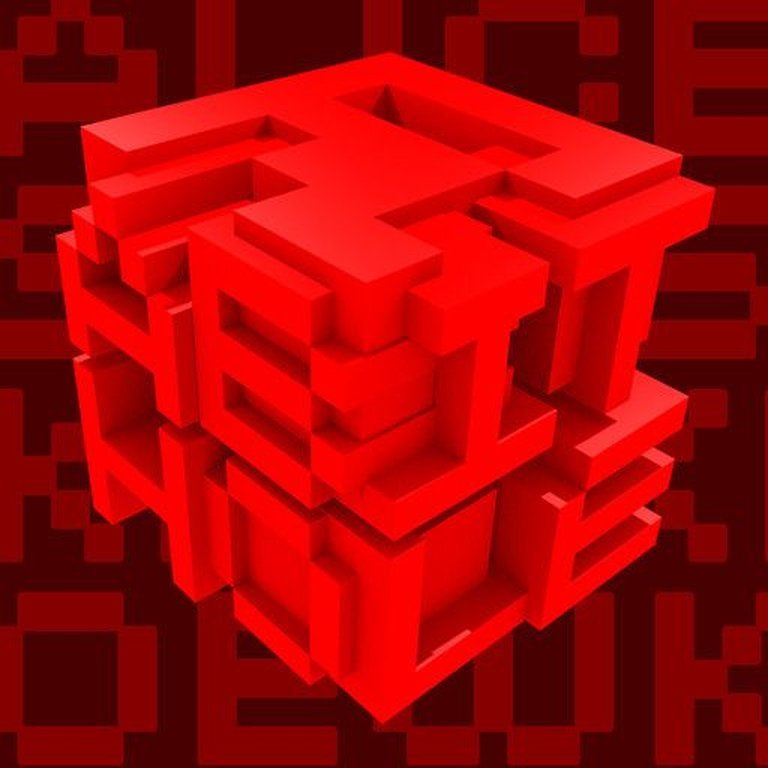
Rabbit Hole 3D is a fast-paced action game where players navigate a red block through a procedurally generated 3D tunnel filled with giant, pixelated letters forming words from Lewis Carroll’s ‘Alice’s Adventures in Wonderland’. The objective is to survive as long as possible by avoiding obstacles and collecting letters to spell out ‘rabbit hole’ for extra lives, all set to a retro chiptune soundtrack.
Gameplay Videos
Where to Buy Rabbit Hole 3D
Rabbit Hole 3D Cracks & Fixes
Rabbit Hole 3D Patches & Updates
Rabbit Hole 3D Mods
Rabbit Hole 3D Guides & Walkthroughs
Rabbit Hole 3D Reviews & Reception
gamesreviews2010.com : A captivating word puzzle game that offers a captivating and immersive experience for players of all ages.
mobygames.com : A fast-paced action game with a minimalist, procedurally generated retro look and chiptune music.
Rabbit Hole 3D: A Descent into Minimalist Madness
Introduction
In the lexicon of gaming, few metaphors evoke as much intrigue as the “rabbit hole” – a journey into the unknown, a plunge into chaotic wonder. Few games embody this concept as literally and punishingly as Rabbit Hole 3D. Released in 2013 by developer JK Soft and publisher Zero Rock Entertainment, this minimalist arcade racer stands as a unique artifact of the indie boom – a title that eschews sprawling narratives for pure, unadulterated thematic immersion. Its premise is deceptively simple: pilot a red block through a tunnel of words from Lewis Carroll’s Alice’s Adventures in Wonderland by navigating through the gaps in letter-shaped obstacles. Yet, beneath its pixelated facade lies a deeply philosophical experience, one that mirrors the disorienting descent into a labyrinthine void. This review argues that Rabbit Hole 3D is not merely a high-score chase, but a brilliant, if brutally difficult, reimagining of Carroll’s classic – a game where language itself becomes the environment, survival demands literary awareness, and the “rabbit hole” is both a literary reference and an existential gameplay loop.
Development History & Context
Rabbit Hole 3D emerged from the fertile ground of the early 2010s indie scene, spearheaded by the small studio JK Soft (also credited under DA SOM JEON). The game’s development was a testament to the power of accessible tools; built entirely within the Unity engine, its creators leveraged the engine’s robust capabilities to deliver a polished, cross-platform experience. The initial release on November 22, 2013, targeted the burgeoning mobile market (iOS/iPad), capitalizing on the touch-screen interface for its swipe-based jumping mechanic. This mobile-first approach dictated the game’s core design philosophy: simplicity in control, complexity in execution. The port to Windows, Mac, Linux, and Android in 2014, and later its “Steam Edition,” expanded its reach with minor control refinements but retained its punishing core.
Technologically, Rabbit Hole 3D operated within the constraints of its era while pushing minimalist aesthetics. Procedurally generated backgrounds of “grey letters” and dynamically colored environments ensured replayability, while its chiptune soundtrack and 8-bit audio cues paid homage to retro gaming sensibilities. The 2013 gaming landscape was dominated by AAA blockbusters and the rise of curated digital storefronts like Steam, which championed unique, often experimental, titles. Rabbit Hole 3D fit perfectly into this indie ethos – a game born from a single, potent concept rather than market trends. Its success lay in its audacity: distilling a literary masterpiece into a relentless arcade challenge, proving that deep engagement could stem from the most abstract of premises.
Narrative & Thematic Deep Dive
While traditional narrative elements like characters and plot are absent, Rabbit Hole 3D weaves its story through environmental storytelling and auditory exposition, creating one of gaming’s most unique narrative experiences. The narrative is Lewis Carroll’s Alice’s Adventures in Wonderland, specifically the first chapter, “Down the Rabbit Hole.” As the player hurtles forward, a serene female voice reads the text line by line: “‘Down the rabbit-hole Alice was beginning to get very tired of sitting by her sister on the bank…'” This narration is not mere flavor text; it is the game’s literal terrain. Each word becomes a physical obstacle, a barrier to be pierced. The player doesn’t just hear the story; they navigate it.
The game’s core theme is the disorienting, often nonsensical, nature of entering a new, rule-bound world – a direct parallel to Alice’s fall into Wonderland. The procedurally generated tunnel, stretching infinitely upwards and downwards, embodies the rabbit hole itself: a seemingly linear path that constantly shifts in speed, color, and curvature, defying the player’s sense of control. The letters, altered to ensure at least one passage (like the missing top-left pixel of ‘E’), symbolize the arbitrary rules of Wonderland – made slightly navigable, but never truly friendly. The “rabbit hole” life system is a masterstroke of thematic integration. The red letters spelling this crucial word are scattered throughout the level, their collection mirroring Alice’s quest for understanding and agency in a bewildering realm. They are not just power-ups; they are narrative anchors, linking the player’s struggle for survival back to Carroll’s source text. The game’s brutal permanence – no continues, only restarts after failure – underscores the theme of embracing the absurdity of the journey, where the goal isn’t escape, but endurance within the madness.
Gameplay Mechanics & Systems
At its core, Rabbit Hole 3D is a high-octane lane-switcher with vertical traversal, demanding split-second reflexes and spatial reasoning. The player controls a simple red block hurtling down a 3 tunnel. Acceleration is relentless and automatic, creating constant forward momentum and pressure. Movement is strictly lane-based: left and right inputs shift the block between lanes, a simple control scheme that allows for precise, if limited, horizontal evasion. The vertical dimension adds complexity: a swipe (on iOS) or press (on PC) triggers a jump, propelling the block upwards. Crucially, there are no intermediate heights – it’s a binary “up” or “down,” forcing players to commit to jumps with zero room for error.
The primary gameplay loop revolves around navigating letter-shaped obstacles. Words from Carroll’s text form arched gateways across the tunnel. Each letter is a solid block of pixels with strategically removed gaps – the bottom of ‘A’, the top of ‘U’, or the altered ‘E’ mentioned earlier. Survival requires identifying the passage point and timing the jump (if vertical movement is needed) and lane shift perfectly. The game’s difficulty curve is relentless. As players progress, the speed increases sharply, the tunnel curves unpredictably, and the environment shifts colors, disorienting the senses. Later levels become a blur of pixelated letters, demanding near-photographic memory of their shapes and split-second decision-making.
The “rabbit hole” life system is both ingenious and brutally unforgiving. Red letters within the obstacles spell the word “rabbit hole” at the bottom of the screen. Passing through a red letter highlights the corresponding letter in the goal word. Completing “rabbit hole” grants an extra life. However, the game provides no visual cue for which letters are red when they appear; players must mentally track the sequence from the bottom display. Failure to collect a life before perishing results in a complete restart from the beginning, with no continues. This stark choice – a punishing, unforgiving system versus a “practice mode” with unlimited lives – defines the game’s duality: a masochistic high-score challenge for some, a frustrating dead end for others. The Steam Edition refined controls slightly but left this core, divisive mechanic untouched.
World-Building, Art & Sound
Rabbit Hole 3D‘s world is one of stark, minimalist abstraction, yet it possesses an uncanny power to immerse. The setting is never explicitly defined; it is the rabbit hole. The player exists within a seemingly infinite, procedurally generated tunnel. The background is a chaotic heap of grey, indistinct letters, a visual metaphor for the flood of language and sensation Alice experiences. The foreground presents the core challenge: the arches formed by words from the Carroll text. These words are rendered as large, blocky pixels, their bold simplicity contrasting sharply with the background’s murk. The color palette is deliberately restricted primarily to greys and the player’s vibrant red, punctuated by sudden shifts in environmental hues (blues, purples) as levels progress, signaling the ever-changing, disorienting nature of the descent.
The art direction is a masterclass in “less is more.” The Unity engine renders the 3D space with a clean, almost retro-futuristic aesthetic. The letter obstacles, despite their simplicity, are clear and identifiable due to the enforced gap design. The player’s red block acts as a focal point, a stark marker of agency against the overwhelming grey void. This minimalism isn’t just stylistic; it’s functional. By stripping away excess detail, the game forces the player’s focus onto the crucial elements: the gaps in the letters and the path ahead. The sound design is equally integral to the experience. A relentless, upbeat chiptune soundtrack drives the pace, creating an almost manic energy. Over this, the female voice reading Carroll’s text provides a constant, calm counterpoint. This juxtaposition – frantic action vs. serene narration – heightens the dissonance, mirroring Alice’s own experience in Wonderland. The sound of the block shifting lanes, the jump, and the collision (a simple, jarring beep) are all meticulously tuned to provide immediate, unambiguous feedback, essential for a game demanding such precision.
Reception & Legacy
Upon its release in 2013, Rabbit Hole 3D garnered moderate attention within indie gaming circles but largely flew under the radar of mainstream critics. Metacritic lists no critic reviews, and its user score remains “tbd.” However, its reception among players and niche publications was more defined. The Games Reviews 2010 article awarded it a respectable 8/10, praising its “unique blend of word puzzles, Alice in Wonderland immersion, and educational value,” and lauding it as a “standout in the genre” for its “3D word puzzles” and “immersive experience.” This perspective, while positive, seems to conflate Rabbit Hole 3D with a different, more traditional word-puzzle game described in other sources (e.g., rotating word blocks), highlighting a potential confusion in the coverage. Player reactions, as glimpsed in Steam Community discussions (focused primarily on coupon trading), and the small MobyGames collection base (24 players), suggest a cult following rather than widespread acclaim. Its punishing difficulty and niche concept limited its mass appeal.
Over time, Rabbit Hole 3D‘s reputation has solidified as a cult classic – a challenging, thematically rich experiment. Its influence is more subtle than direct. It stands as a prime example of how minimalist design and strong conceptual hooks can create compelling, unique experiences, aligning with the broader indie movement’s ethos. While it didn’t spawn direct sequels, its core idea – using literary text as dynamic gameplay terrain – remains innovative. Games exploring similar themes of language-as-environment or punishing, high-concept arcade challenges owe a debt to its bold execution. Its enduring legacy lies in its unwavering commitment to its singular vision: making the player feel the descent into the rabbit hole, transforming Carroll’s words into a tangible, treacherous world.
Conclusion
Rabbit Hole 3D is a flawed masterpiece, a game that simultaneously frustrates and fascinates. Its minimalist aesthetics and punishingly difficult core mechanics will undoubtedly alienate many players seeking a more forgiving experience. The need to manually track “rabbit hole” letters and the stark restart penalty create a barrier to entry that feels archaic by modern standards. Yet, within these flaws lies its profound strength. By stripping away everything but its core concept – navigating the words of Alice in Wonderland – the game achieves a rare level of thematic purity. It doesn’t just tell you about falling down a rabbit hole; it makes you tumble through one, with language as your sole guide and obstacle.
The voice reading Carroll’s text over a frantic chiptune score, the stark visual design focusing solely on the letter gaps, the life system tied directly to the source text – these elements coalesce into an experience that is uniquely, almost uncomfortably, immersive. It is a game that rewards not just reflexes, but a kind of literary vigilance. While its place in the pantheon of great games might be contested due to its accessibility, its place as a fascinating, ambitious artifact of the indie renaissance is undeniable. Rabbit Hole 3D stands as a testament to the power of a singular vision, proving that the most profound journeys often begin not with a grand quest, but with the simple, terrifying decision to keep moving forward through the letters of a very strange world. For those willing to embrace its descent, it offers an experience as memorable and disorienting as the rabbit hole itself.