
- Release Year: 2012
- Platforms: Windows
- Publisher: Ubisoft Entertainment SA
- Genre: Action, Adventure
- Perspective: Third-person
- Game Mode: Single-player
- Setting: Historical
- Average Score: 87/100
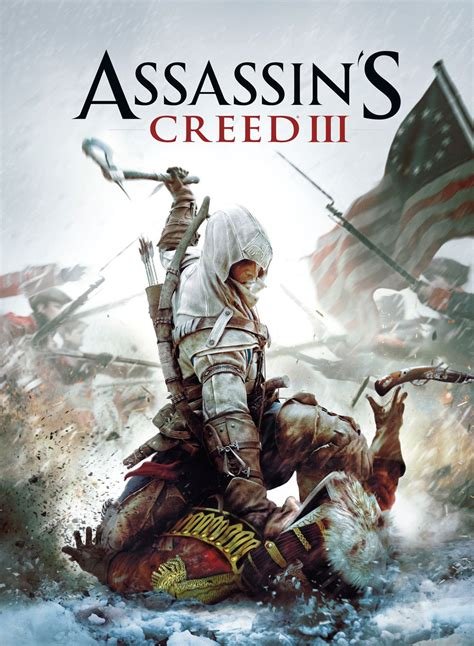
Description
Assassin’s Creed III is a 2012 open-world action-adventure game and the fifth main title in the series, set in the American Northeast during the Seven Years’ War and American Revolutionary War (1754-1783). Players follow Ratonhnhakéton, a half-Mohawk Assassin, and his father Haytham Kenway as they navigate colonial conflicts, explore the expansive Frontier, Boston, and New York, and utilize enhanced combat and stealth mechanics while concluding Desmond Miles’ modern-day saga.
Assassin’s Creed III (Xzone Edice) Cracks & Fixes
Assassin’s Creed III (Xzone Edice) Patches & Updates
Assassin’s Creed III (Xzone Edice) Mods
Assassin’s Creed III (Xzone Edice) Reviews & Reception
ign.com : It attempts an astonishing amount, and doesn’t always succeed.
imdb.com (90/100): Jeez this is a good game
Assassin’s Creed III (Xzone Edice) Cheats & Codes
Xbox 360
After completing Sequence 6, go to the Davenport Homestead. Stand next to a corner of the house, enter stealth to lean against the wall, press B to whistle to summon a turkey. Highlight the turkey and enter the code.
| Code | Effect |
|---|---|
| Up, Up, Down, Down, Left, Right, Left, Right | Turkey wears an assassin’s hood |
| Up, Up, Down, Down, Left, Right, Left, Right, B, A | Turkey wears an assassin’s hood and follows you |
Assassin’s Creed III (Xzone Edice): Review
Introduction
In the pantheon of gaming milestones, few titles embody the spirit of radical reinvention quite like Assassin’s Creed III. Released in 2012, this fifth main entry in Ubisoft’s flagship franchise shattered expectations by shifting the series’ focus from Renaissance Italy and the Ottoman Empire to the tumultuous battlefields of the American Revolution. It was a gamble of staggering ambition, promising to conclude the modern-day saga of Desmond Miles while introducing a new protagonist—Ratonhnhakéton, a half-Mohawk assassin—amidst the birth of a nation. The Xzone Edice, a special edition packaged with a leatherette notebook, quill pen, and embossed logo, was a physical testament to the game’s grandeur. Yet, beyond the collector’s trinkets lay a landmark achievement in open-world design, narrative complexity, and mechanical innovation. This review argues that Assassin’s Creed III, for all its technical hiccups and narrative unevenness, stands as a pivotal masterpiece. It redefined what historical epics could achieve in gaming, weaving intimate character drama with sweeping historical upheaval while pioneering systems—from naval combat to dynamic ecosystems—that would shape the series’ future.
Development History & Context
Ubisoft Montreal embarked on Assassin’s Creed III in January 2010, initiating a three-year development cycle—the longest in the series’ history since the original. This extended timeline reflected the project’s monumental scope. Creative Director Alex Hutchinson and Art Director The Chinh Ngo settled on the American Revolution after realizing its unique potential: “We could meet Washington, sail a boat, leap from tree to tree in the middle of winter and hunt wildlife.” The team grappled with skepticism about the setting’s viability, initially dismissing the wilderness as an “empty space” unsuitable for open-world gameplay. This doubt was quelled by their decision to embed weather—snow, fog, rain—as a core environmental feature, transforming the Frontier from a void into a living, breathing landscape.
Technologically, the game debuted the AnvilNext engine, a quantum leap from its predecessor. AnvilNext enabled unprecedented scale, rendering the Frontier 1.5 times larger than Brotherhood‘s Rome and supporting thousands of combatants on-screen. Weather simulations affected gameplay dynamically: snowfall reduced visibility for stealth, fog obscured navigation, and storms disrupted naval battles. Yet, the engine’s ambition came with constraints. Memory limitations forced the omission of interactive climbing elements (e.g., falling rocks or flower pots), a decision that would later frustrate players seeking emergent physics.
The gaming landscape of 2012 was defined by the rise of “living worlds,” with Red Dead Redemption setting a benchmark for immersive wilderness exploration. Ubisoft openly acknowledged Red Dead‘s influence, admitting a “convergence of minds” in their approach to animal hunting and frontier design. Meanwhile, the series’ annual release model was solidified, with Revelations serving as a direct bridge to Desmond’s impending 2012 apocalypse. Assassin’s Creed III was positioned as the definitive climax to this arc, promising a narrative resolution as momentous as its gameplay revolution.
Narrative & Thematic Deep Dive
At its core, Assassin’s Creed III is a dual tragedy: the fall of a nation and the fracturing of a family. The narrative unfolds through two intertwined perspectives, a structural choice that enriches its exploration of loyalty, identity, and the corrosive nature of power.
The game opens with Haytham Kenway, a charismatic British Templar aristocrat, as the surprise protagonist. Voiced with theatrical gravitas by Adrian Hough, Haytham’s sequences (1754-1755) deconstruct the Templar philosophy with nuance. His mission to locate the First Civilization’s Temple in the colonies evolves into a complex romance with Kaniehtí:io, a Kanien’kehá:ka woman, and a crisis of faith when he discovers the Temple cannot be opened. Haytham’s arc is a masterclass in subversion: he is the first playable Templar, forcing players to question the Assassins’ moral absolutism. His eventual recruitment of Charles Lee and Benjamin Church underscores the Templars’ pragmatic, if ruthless, vision of order.
The narrative pivots to Ratonhnhakéton (Connor), Haytham’s son, raised by his Mohawk mother after her death in a Templar-led village burning. Adopting the name “Connor” at the behest of the embittered mentor Achilles Davenport, Connor’s journey (1760-1783) is a harrowing study in cultural displacement. His dual heritage—English father, Mohawk mother—makes him an outsider in both Colonial and Native societies. Connor’s motivations are clear: protect his people from displacement and avenge his mother. Yet, his unwavering devotion to the Assassins’ cause creates profound moral dissonance. When he learns George Washington ordered the attack that killed his mother, his disillusionment is palpable: “I am torn. Part of me wants to fight and repel all outsiders. The other part of me is the outsider.”
Thematic richness permeates the story. The American Revolution is not romanticized but dissected as a proxy war between Assassins and Templars. Connor’s alliances with figures like Samuel Adams and Paul Revere are undercut by the Founding Fathers’ hypocrisy—Washington’s order to expel Native tribes, Jefferson’s silence on slavery. The game’s most searing moment comes in 1783, as Connor watches enslaved people sold near New York Harbor, realizing the revolution’s promise of “liberty” is a lie for Indigenous and African communities. This is underscored by the tragic fate of his childhood friend Kanen’tó:kon, manipulated by Charles Lee into attacking Continental troops, forcing Connor to kill him to prevent bloodshed.
The modern-day narrative provides a stark counterpoint. Desmond’s fugue state in the Animus, triggered by the 2012 solar flare threat, leads the team to the Grand Temple. His sacrifice—choosing to save humanity at the cost of his own life to prevent Juno’s liberation—closes the Desmond saga with Shakespearean gravity. Minerva’s warning that Desmond would become a “messiah” figure, only to have his words twisted to perpetuate control, echoes the series’ recurring theme of cyclical violence.
Gameplay Mechanics & Systems
Assassin’s Creed III overhauls nearly every core system, introducing innovations that would define the series for years to come.
Exploration and Movement
The game’s defining achievement is its seamless integration of urban and wilderness environments. Boston and New York are meticulously recreated as bustling colonial hubs, but the true revolution is the Frontier: a vast, open wilderness where Connor can climb trees, cliffs, and rock faces, leap across canyons, and traverse rope-slung bridges. This verticality is complemented by a robust fast-travel system, unlocked by discovering underground tunnel networks beneath the cities, rewarding exploration with instant transit.
Combat is reimagined as a fluid, momentum-driven ballet. Connor dual-wields weapons—tomahawk and flintlock pistol, Hidden Blade and rope dart—with devastating effect. The counter system is contextual: pressing a button after an enemy attack triggers a chain of possibilities (disarm, throw, kill with secondary weapon), requiring tactical awareness against diverse enemy archetypes. Stealth is equally refined. Connor uses tall grass, dense forests, and rooftops for cover, and context-sensitive actions (e.g., using enemies as human shields) add strategic depth. The removal of the target-locking system encourages proactive positioning, making combat feel weightier and more visceral.
Naval Combat, a series first, emerges as a standout feature. Connor captains the Aquila, a brigantine engaged in privateer contracts and naval battles. Realistic wind physics and weather systems govern ship handling, turning broadsides and swivel-gun fire into tactical duels. Upgrading the Aquila and mastering its cannon placements make sea engagements thrilling and strategic. This system was so well-received it became the foundation for Black Flag.
Economic and Social Systems introduce unprecedented player agency. The Homestead serves as Connor’s community, where displaced settlers (e.g., carpenters, tailors) can be recruited to craft goods and generate income. Hunting animals for pelts and meat—where kill quality affects value—adds a satisfying loop. Side missions like “Peg Leg” (exploring underground forts) and minigames (Fanorona, Nine Men’s Morris) diversify the experience. The Assassin recruitment system returns, but with six recruits (down from Brotherhood’s infinity), each with unique skills (riots, ambushes, escort cover).
Modern-Day segments expand beyond Ezio’s Apple of Eden, requiring Desmond to explore Manhattan, São Paulo, and Abstergo’s Rome facility. These missions, though brief, break the historical immersion and remind players of the stakes. The synchronization system is RPG-like, with finite experience earned through mission variety, encouraging replays for 100%.
World-Building, Art & Sound
Assassin’s Creed III’s world is a triumph of environmental storytelling. The Frontier, spanning forests, rivers, and cliffs, is not mere backdrop but a character in its own right. Seasonal transitions—lush summers, snow-bound winters—dynamically alter visuals and gameplay. Snow muffles sounds and tracks Connor’s footprints, while autumn foliage provides natural cover. The weather system is equally impactful: fog obscures vision during stealth sections, and storms capsize ships during naval battles.
Art direction balances historical accuracy with artistic flair. Boston’s North End contrasts with its affluent Beacon Hill, while New York’s Dutch-inspired architecture is juxtaposed with war-torn districts. The Kanien’kehá:ka village of Kanatahséton was developed in consultation with cultural expert Teiowí:sonte Thomas Deer, ensuring authentic depictions of dress, language, and spirituality—even omitting ceremonial masks at Deer’s request to avoid cultural appropriation. Connor’s Mohawk heritage is woven into his design: his attire blends Assassin leather with Native beadwork, and his animations incorporate traditional movement.
Sound design envelops players in the era’s chaos. Lorne Balfe’s score replaces Jesper Kyd’s signature motifs with orchestral grandeur, blending tribal drums with martial strings during battle scenes. Voice acting is uniformly superb: Adrian Hough’s Haytham oscillates between charm and menace, while Noah Watts’ Connor conveys quiet resolve and profound grief. The Mohawk language, coached by Akwiratékha Martin, lends authenticity to Connor’s dialogue, with Ubisoft refusing to trademark “Ratonhnhakéton” out of respect.
Reception & Legacy
Assassin’s Creed III was a commercial juggernaut, selling 12 million copies and becoming Ubisoft’s best-selling title at the time. It debuted to critical acclaim, with praise for its narrative ambition, naval combat, and world-building. Game Informer awarded it 9.5/10, calling it “the true next generation of interactive entertainment,” while Eurogamer lauded its “profound size and ambition.” However, reviews were tempered by criticism of uneven pacing, mission design, and technical bugs. Connor’s stoic persona drew mixed reactions—PC Gamer deemed him “relentlessly strait-laced” compared to Ezio’s charisma—while Haytham emerged as an unlikely fan favorite.
The game’s legacy is complex but undeniable. Mechanically, its naval systems and wilderness exploration directly influenced Black Flag, which pivoted the series to piracy. The Homestead’s community-building and hunting foreshadowed the settlement systems in Valhalla. Narratively, it concluded Desmond’s arc with bittersweet finality, shifting focus to episodic storytelling in future titles. Culturally, it expanded the series’ historical scope, proving 18th-century America could anchor a compelling epic.
Yet, Assassin’s Creed III also exposed the franchise’s growing pains. The 2012 “anti-British” marketing controversy—where trailers depicted Connor exclusively killing Redcoats—sparked accusations of jingoism, forcing Ubisoft to clarify that Templars existed on both sides of the conflict. Technical issues plagued all versions, with a day-one patch addressing over 100 bugs, and the PC version’s delayed release (November vs. October consoles) exacerbating player frustration. The multiplayer, while introducing co-op “Wolfpack” modes, was criticized for feeling tacked-on.
The 2019 Remaster addressed many flaws: improved stealth (whistling from anywhere), enhanced UI, and smoother combat. It also included legacy outfits from later games, bridging the series’ history. For all its imperfections, Assassin’s Creed III remains a touchstone—a game that dared to be different, even when it stumbled.
Conclusion
Assassin’s Creed III is a flawed titan—a game of staggering ambition that occasionally buckles under its own weight. Its narrative duality, historical scope, and mechanical innovations set new standards for open-world design, while its exploration of liberty’s hypocrisies and cultural identity gives it a thematic resonance few games achieve. The Xzone Edice’s physical trinkets—a notebook, a quill—mirror the game’s blend of historical reverence and modern spectacle.
Connor’s journey is a poignant meditation on loss and disillusionment, Haytham’s a testament to the gray areas between ideology and power, and Desmond’s sacrifice a fitting, if somber, end to the “Desmond Cycle.” The Frontier’s majesty, naval battles’ thrill, and Homestead’s warmth ensure the game endures as a landmark.
Verdict: Assassin’s Creed III is essential. It is the series’ boldest leap forward, a game that redefined historical epics in gaming. For all its technical hiccups and narrative unevenness, it remains a testament to the power of ambition—a flawed, unforgettable masterpiece.