
- Release Year: 2020
- Platforms: Atari VCS, Windows
- Publisher: Tiny Warrior Games
- Developer: Tiny Warrior Games
- Genre: Action
- Perspective: Side view
- Game Mode: Single-player
- Gameplay: Platform
- Average Score: 90/100
Description
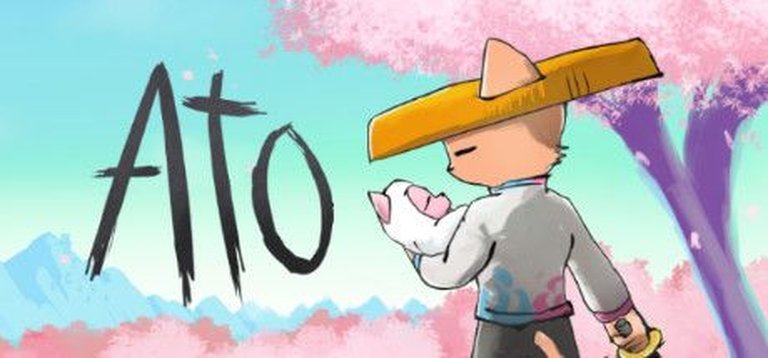
Ato is a 2D scrolling platformer and Metroidvania game developed by Tiny Warrior Games, immersing players in a visually driven journey through a world of beauty and mystery. Featuring emotive animations, atmospheric environments, and a compelling narrative, the game combines exploration with memorable sword duels in a side-view perspective, creating an emotionally charged adventure first released in 2020.
Gameplay Videos
Where to Buy Ato
PC
Ato Guides & Walkthroughs
Ato Reviews & Reception
metacritic.com (90/100): It’s clear that Tiny Warrior Games put a ton of effort into making a beautiful and emotionally charged game in Ato. The environments and audio design are worth it alone, but for platforming fans in general, Ato is a must-buy.
metacritic.com (90/100): It’s clear that Tiny Warrior Games put a ton of effort into making a beautiful and emotionally charged game in Ato. The environments and audio design are worth it alone, but for platforming fans in general, Ato is a must-buy.
thegamer.com : Ultimately, the glitch wasn’t enough to reduce my enjoyment of the overall game. It’s clear that Tiny Warrior Games put a ton of effort into making a beautiful and emotionally charged game in Ato. The environments and audio design are worth it alone, but for platforming fans in general, Ato is a must-buy.
Ato: Review
Introduction
In the crowded landscape of indie Metroidvanias, few games manage to carve out a space as distinct and emotionally resonant as Ato. Released in May 2020 by Tiny Warrior Games, this atmospheric masterpiece transcends its humble pixel-art aesthetic to deliver an unforgettable journey through feudal Japan, reimagined through the lens of anthropomorphic animals. At its core, Ato is a testament to the power of minimalist storytelling, where every pixel, note, and sword swing conveys a depth of emotion rarely seen in the genre. This review explores how Ato masterfully blends exploration, combat, and narrative into a cohesive, harrowing experience, solidifying its place as a hidden gem in video game history.
Development History & Context
Tiny Warrior Games, a small independent studio founded by passionate developers, conceptualized Ato as a labor of love, aiming to create a Metroidvania that prioritized atmosphere and emotional weight over traditional exposition. The game was funded via Indiegogo in July 2019, reflecting a burgeoning trend of community-supported indie projects during the late 2010s. Built on the accessible yet versatile GameMaker engine, the team faced the challenge of imbuing 2D pixel art with profound expressiveness, a technological constraint that paradoxically became a creative strength. The 2020 release date placed Ato in an era dominated by the indie renaissance, where titles like Hollow Knight and Ori and the Blind Forest had redefined genre expectations. Against this backdrop, Ato distinguished itself through its wordless narrative and singular focus on character-driven tragedy, proving that innovative storytelling could thrive within technical limitations.
Narrative & Thematic Deep Dive
Ato’s narrative unfolds without a single line of dialogue or text, relying instead on masterful visual storytelling and environmental cues to convey its tragic arc. Players embody a retired samurai cat who has abandoned his violent past for a quiet life with his wife and child. This idyll is shattered when a cult of masked ninjas abducts the infant, forcing the protagonist to confront his legacy. The narrative unfolds through meticulously animated cutscenes, where subtle facial expressions—visible even in the pixelated designs—speak volumes: the protagonist’s steely resolve, the wife’s grief, and the cult’s eerie, silent menace. Thematically, Ato explores the cyclical nature of violence, as the protagonist’s quest for peace inevitably demands bloodshed. The climax is devastatingly bittersweet: to save his child, he must slay his own wife, who has been possessed by a demon. This sacrifice underscores the game’s central tragedy—that love and duty are often irreconcilable. The absence of text transforms the story into a universal fable about loss and redemption, making its emotional impact even more potent.
Gameplay Mechanics & Systems
At its heart, Ato is a synthesis of Metroidvania exploration and boss-focused dueling. The gameplay loop revolves around two interconnected pillars: movement and combat. Players traverse labyrinthine maps, unlocking abilities like double jumps and dashes to access new areas and solve environmental puzzles. These maneuvers are not merely traversal tools but integral to combat, allowing fluid dodges and tactical positioning during duels. The combat system is a triumph of minimalist design: every encounter is a one-on-one duel against a unique boss, each with distinct personalities and attack patterns. Parrying, bouncing off opponents, and precise timing are essential, demanding patience and observation. Progression is organic; defeating bosses grants new abilities that expand both combat options and exploration potential. The UI is intentionally sparse, using visual cues for health and progress, while difficulty options—Assist, Accessible, and Experienced—ensure accessibility without diluting the challenge. However, minor technical flaws, such as occasional loading lags during area transitions and critical boss fights, briefly disrupt the flow, a testament to the game’s ambition over polish.
World-Building, Art & Sound
Set in a stylized Feudal Japan populated entirely by anthropomorphic animals, Ato’s world-building is a marvel of atmospheric storytelling. Environments transition from serene bamboo groves and tranquil villages to eerie, demon-haunted shrines, each rendered with vibrant, hand-crafted pixel art. The use of color and lighting evokes shifting moods—warm pastels for peaceful moments, stark contrasts for conflict. Characters, despite their simplicity, exude life through emotive animations: the protagonist’s weary determination, his wife’s protective grace, and the cult’s silent, menacing presence. The sound design is equally integral, with an Eastern-inspired soundtrack ranging from melancholic flute melodies to thunderous taiko drumbeats during combat. These auditory cues heighten emotional beats, turning exploration into a meditative experience and duels into heart-pounding crescendos. Together, art and sound forge an immersive world where silence speaks volumes, making every corner a story.
Reception & Legacy
Upon release, Ato garnered critical acclaim, with TheGamer awarding it a 90/100, praising its “emotional charge” and “beautiful environments.” Steam reviews remain overwhelmingly positive (97%), highlighting its “memorable sword duels” and “visually driven story.” While commercial figures are scarce, its success on multiple platforms—including a 2021 Atari VCS port—indicates a dedicated following. Within the Metroidvania genre, Ato is celebrated for its narrative bravery, proving that wordless storytelling can rival traditional dialogue-driven narratives. Its influence is evident in the rise of atmospheric indies like Asleep: Ato 1 (2024), which builds on its foundation. Though overshadowed by AAA releases, Ato has cultivated a lasting legacy as a cult classic, admired for its synthesis of gameplay and artistry in an era of bloated blockbusters.
Conclusion
Ato stands as a towering achievement in indie game design, a poignant meditation on love and loss wrapped in deceptively simple pixel art. Its genius lies in its restraint: a wordless narrative, focused combat, and emotive visuals coalesce into an experience that feels both intimate and epic. While minor technical hiccups prevent perfection, they do little to diminish the game’s emotional core. In the annals of video game history, Ato will be remembered not just as another Metroidvania, but as a masterclass in storytelling through gameplay—a testament to the idea that sometimes, the most powerful stories are the ones left unsaid. For fans of atmospheric, character-driven adventures, it is not merely a game but a profound experience, and an essential addition to any collection.