
- Release Year: 2015
- Platforms: Android, iPad, iPhone, Linux, Macintosh, Nintendo Switch, Windows
- Publisher: Big Fish Games, Inc, JetDogs Studios Oy
- Developer: JetDogs Studios Oy, Zoom Out Games
- Genre: Action, Strategy, Tactics
- Perspective: Diagonal-down
- Game Mode: Single-player
- Gameplay: Time management
- Setting: Classical antiquity, Fantasy
- Average Score: 83/100
Description
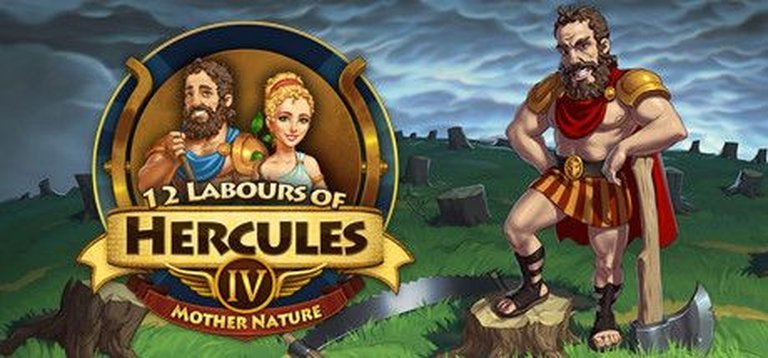
12 Labours of Hercules IV: Mother Nature is a time management strategy game set in a classical antiquity fantasy world where players guide Hercules, his wife Megara, and mythical creatures like Medusa and Cerberus on a quest to break an ancient curse upon the earth. Through strategic resource management, players revive dead trees, water forests, and battle supernatural threats by gathering food, wood, and gold to build structures, remove obstacles, and complete levels.
Gameplay Videos
Where to Buy 12 Labours of Hercules IV: Mother Nature
PC
12 Labours of Hercules IV: Mother Nature Free Download
12 Labours of Hercules IV: Mother Nature Cracks & Fixes
12 Labours of Hercules IV: Mother Nature Patches & Updates
12 Labours of Hercules IV: Mother Nature Mods
12 Labours of Hercules IV: Mother Nature Guides & Walkthroughs
12 Labours of Hercules IV: Mother Nature Reviews & Reception
metacritic.com (76/100): Another fun game in the series.
steambase.io (90/100): Player Score of 90 / 100
steamcommunity.com : The narrative cleverly marries ancient myth with modern ecological themes, injecting a fresh sense of purpose and novelty into a well‑established formula.
12 Labours of Hercules IV: Mother Nature: Review
Introduction
In the pantheon of casual gaming, few series blend mythological grandeur with accessible strategy as deftly as the 12 Labours of Hercules franchise. 12 Labours of Hercules IV: Mother Nature (2015), developed by JetDogs Studios and Zoom Out Games, stands as a testament to the series’ enduring appeal. This entry shifts the narrative from direct confrontations with monsters to an ecological crisis, tasking players with restoring blighted landscapes while preserving the series’ signature humor and charm. Yet, does this thematic pivot breathe fresh life into the time-management formula, or does it merely retread familiar ground? Through exhaustive analysis of its development, mechanics, artistry, and legacy, this review argues that Mother Nature refines the series’ core strengths through innovative environmental storytelling and refined gameplay loops, cementing its place as a polished, thought-provoking entry that elevates casual strategy beyond simple resource collection.
Development History & Context
JetDogs Studios and Zoom Out Games, a Finnish-Russian collaboration, crafted Mother Nature during a pivotal era for casual gaming. The mid-2010s saw a surge in mobile and PC-based time-management games, with studios like Big Fish Games dominating the market. This game emerged as part of a deliberate franchise expansion, building on the success of 12 Labours of Hercules III: Girl Power (2015). The developers, led by producer Igor Minaev and project manager Igor Rzhevkin, aimed to innovate by integrating contemporary themes—specifically environmentalism—into classical mythology. Technologically, the game adhered to accessible constraints: minimum system requirements included a 1.6 GHz processor and 512 MB RAM, targeting a broad audience. The diagonal-down perspective and point-and-click interface prioritized clarity over graphical complexity, reflecting the genre’s design ethos. Notably, the team expanded the series’ multiplatform reach, releasing on Windows, macOS, Linux, iOS, Android, and later Nintendo Switch (2021), demonstrating an astute awareness of the casual gaming market’s fragmentation. The inclusion of a “Platinum Edition” on Steam in 2015 added achievements, trading cards, and cloud saves, aligning with contemporary PC gaming trends. This strategic positioning allowed Mother Nature to capitalize on the franchise’s established fanbase while attracting new players seeking narrative depth in a traditionally mechanics-focused genre.
Narrative & Thematic Deep Dive
The narrative unfolds in five acts, beginning with a poisoned chalice that leaves Hercules weakened. A year later, the couple returns to find Hellas transformed into a desert wasteland by the gods’ vengeance. Zeus, Hera, and Hades, humiliated by past defeats, summon an “Anti-Hercules” from a golden mirror, unleashing a beast capable of matching the hero’s strength. This eco-villain—manifested as a trampling creature—symbolizes unchecked power, directly paralleling industrialization’s impact on nature. The story cleverly subverts expectations: Megara, traditionally a damsel-in-distress, becomes a co-protagonist with magical gardening abilities, reviving barren trees and ecosystems. Her agency reframes “Mother Nature” not as a passive victim but as a force Hercules and Megara must actively restore.
Thematic depth emerges through allegorical characters. King Midas embodies the greed that exploits natural resources, while Epeius’ Trojan Horse represents humankind’s ability to rebuild and innovate. The gods’ descent into pettiness—Hera kidnapping Megara, Hades creating an evil twin—satirizes institutional hubris. The dialogue maintains the series’ lighthearted tone (“‘Tis five o’clock and time for tea,” quips Hercules), but the stakes are unexpectedly profound. The bonus episode, “The Giant Egg,” further explores ecological balance, framing a seismic egg as a metaphor for unsustainable growth. By weaving classical myths with modern environmentalism, Mother Nature transcends its genre, using whimsy to deliver a poignant message about stewardship and consequence.
Gameplay Mechanics & Systems
Mother Nature refines the series’ time-management foundation with layered complexity. Core mechanics center on three resources—food, wood, and gold—gathered by workers or produced via buildings like farms, workshops, and gold mines. Each resource serves distinct purposes: food clears obstacles and feeds workers; wood builds infrastructure; gold summons allies or removes special barriers. Strategic resource allocation is paramount, especially as levels introduce escalating challenges.
Key innovations include:
– Character Specialization: Hercules smashes boulders and hydrants; Megara revives trees; Cerberus scares ghosts; Medusa turns minotaurs to stone. This division of labor demands tactical pathfinding.
– Dynamic Obstacles: Crystals cost gold to remove; ghosts require Cerberus; minotaurs need Medusa’s Lair. Anti-Hercules, a recurring nemesis, scurries workers away, adding urgency.
– Alliance Systems: King Midas trades resources for gold, while the Trojan centurion exchanges food for wood. These mechanics force players to prioritize long-term planning over short-term gains.
Level design showcases meticulous pacing. Early stages teach basics (e.g., Level 1.1 “Three Stumps” focuses on tree revival), while later levels (e.g., Level 5.10 “Hatching the Egg”) integrate portals, catapults, and multi-objective chains. The “Stop Clock” and “More Resources” power-ups offer relief but risk trivializing challenge. The 56 levels—plus a bonus episode—provide immense replayability, though the formula’s repetition may fatigue non-fans. The game excels in its hidden-object challenges, where players locate puzzle pieces amidst the chaos, blending genres seamlessly. Ultimately, Mother Nature balances accessibility with depth, rewarding foresight over frantic clicking.
World-Building, Art & Sound
The game’s world is a vibrant tapestry of myth and nature, rendered in a stylized, hand-painted aesthetic. Blighted landscapes—charred forests, cracked earth—contrast vividly with restored zones bursting with greenery, visually representing the narrative’s core conflict. This transformation is deeply satisfying, as players witness barren stumps blossom into fruit-bearing trees under Megara’s touch. The diagonal-down perspective offers a godlike view, emphasizing players’ role as custodians of the environment.
Art direction excels in character design. Hercules remains a hulking oaf with a heart of gold, while Megara’s pragmatic energy shines through her gardening gear. Mythical creatures are reimagined as endearing allies: Cerberus is a three-headed pup; Medusa’s serpentine hair is rendered in playful coils. Environmental storytelling abounds, with oil spills, rubble, and overgrown ruins hinting at the gods’ wrath. The UI is clean, with intuitive icons for resources and objectives, though the small text on lower resolutions can strain the eyes.
Sound design elevates the experience. The soundtrack, composed by Dewey Dellay and others, blends Mediterranean melodies with ambient cues—crickets in forests, waves at beaches—immortalizing each setting. Voice acting is minimal but effective, with Hercules’ booming declarations and Megara’s gentle sighs reinforcing their personalities. Sound effects are crisp: wood-chopping thuds, gold-chinking, and the satisfying thud of boulders collapsing. This audio-visual harmony creates a meditative rhythm, turning resource management into a therapeutic ritual.
Reception & Legacy
At launch, Mother Nature garnered critical acclaim for its thematic boldness and polished execution. Steam’s “Very Positive” rating (90% from 364 reviews) underscores its player appeal, with users praising its “relaxing yet engaging” loops. Metacritic’s 7.6 user score reflects similar enthusiasm, with one review noting, “The concept… is very nice with multiple features and never-ending challenges.” Critics highlighted the environmental theme as a refreshing departure, though some lamented the lack of mechanical innovation. Commercially, it performed robustly across platforms, becoming a staple in Big Fish Games’ casual catalog.
Legacy-wise, Mother Nature influenced subsequent entries in the series, such as 12 Labours of Hercules V: Kids of Hellas (2016), which incorporated its ally-summoning mechanics. Its success demonstrated that casual games could tackle substantive themes without sacrificing fun, paving the way for narrative-driven time-management titles. The expanded Nintendo Switch release in 2021 introduced the series to a new generation, affirming its timeless appeal. Yet, its true impact lies in proving that mythological adaptations could evolve beyond monster-slaying narratives, offering a blueprint for games like Fable Anniversary (2014) that blend folklore with social commentary.
Conclusion
12 Labours of Hercules IV: Mother Nature is a masterclass in genre refinement. By infusing classical mythology with ecological urgency, JetDogs Studios and Zoom Out Games transcend the limitations of casual strategy, delivering a game that is both intellectually resonant and viscerally satisfying. Its refined mechanics, from character specialization to resource trading, offer depth without overwhelming newcomers, while the art and sound design create an immersive, almost meditative experience. Though it doesn’t revolutionize the time-management genre, it elevates it through thematic coherence and polished execution.
For fans of the series, this is a triumphant evolution that honors its roots while charting new territory. For newcomers, it serves as an ideal entry point—accessible, charming, and surprisingly profound. In an era of AAA blockbusters, Mother Nature stands as a testament to the power of small-scale ambition: a game where every revived tree and cleared obstacle feels like a victory, not just for Hercules, but for the very essence of storytelling in games. Verdict: 8.5/10—a must-play for anyone who believes mythology and modernity can coexist.