
- Release Year: 2015
- Platforms: Android, iPad, iPhone, Macintosh, Windows
- Publisher: OhNoo Studio
- Developer: OhNoo Studio
- Genre: Adventure
- Perspective: 3rd-person
- Game Mode: Single-player
- Gameplay: Graphic adventure, Moral choices, Multiple endings, Puzzle elements
- Setting: Dark fantasy, Fantasy, Gothic
- Average Score: 71/100
Description
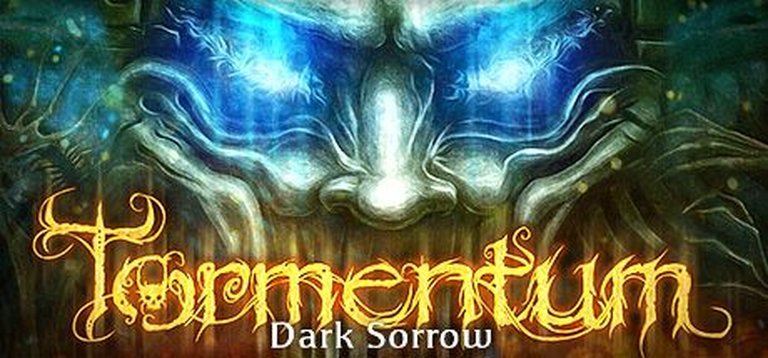
Tormentum: Dark Sorrow is a point-and-click adventure game set in a grim, dark fantasy world. Players assume the role of a nameless prisoner imprisoned in a nightmarish castle for an unknown crime, tasked with escaping, exploring wastelands, uncovering their identity, and regaining memories while solving puzzles and interacting with enigmatic characters who may aid or hinder their journey. The narrative evolves through impactful moral choices that determine which characters live or die, altering the story’s outcome.
Gameplay Videos
Where to Buy Tormentum: Dark Sorrow
Tormentum: Dark Sorrow Free Download
Tormentum: Dark Sorrow Cracks & Fixes
Tormentum: Dark Sorrow Patches & Updates
Tormentum: Dark Sorrow Mods
Tormentum: Dark Sorrow Guides & Walkthroughs
Tormentum: Dark Sorrow Reviews & Reception
metacritic.com (72/100): Ultimately, Tormentum comes close to forming a great point-and-click adventure in 2015, but the lack of variety in the puzzle design really drags down the whole experience.
gamingtrend.com : Tormentum possesses one of the most unique art styles ever featured in a game.
opencritic.com (71/100): Though some adventure game tropes serve as an irritant in this game, the gorgeous artwork and dark story of Tormentum – Dark Sorrow more than make up for it.
rpgfan.com : Unfortunately, Tormentum didn’t quite torment my mind.
gamewatcher.com : I could pick any screenshot of this game and I’d want to hang it on my wall. Y’know, to freak out visitors.
Tormentum: Dark Sorrow: Review
Introduction
In the shadowed realms of interactive artistry, few games manage to carve a niche as singularly haunting as Tormentum: Dark Sorrow. Released in 2015 by Polish indie studio OhNoo Studio, this point-and-click adventure stands as a macabre love letter to the dystopian surrealist visions of H.R. Giger and Zdzisław Beksiński. More than a mere game, it is a visceral descent into a world where every frame oozes existential dread, every character a grotesque tableau, and every choice a step toward damnation or redemption. Yet, for all its artistic brilliance, Tormentum is a study in contrasts—a triumph of atmospheric design shackled by mechanical simplicity and narrative ambiguity. This review posits that while the game excels as a sensory, almost painterly experience, its reliance on adventure game conventions and underdeveloped themes prevents it from transcending its influences. Nevertheless, it endures as a cult masterpiece, a testament to the power of unflinching visual storytelling in an industry often obsessed with spectacle over substance.
Development History & Context
Tormentum: Dark Sorrow emerged from the crucible of OhNoo Studio, a three-person Polish development team led by directors Łukasz Rutkowski and Piotr Ruszkowski. Their vision was singular: to forge a point-and-click adventure unshackled from cheerful escapism, instead plumbing the depths of Giger-esque biomechanical horror and Beksiński’s post-apocalyptic desolation. This ambition was realized through a successful 2014 Indiegogo campaign, raising $11,000 to crowdfund the project—a necessity given its mature themes and niche appeal. The game was later greenlit on Steam, reflecting a burgeoning indie scene hungry for experiences that dared to challenge conventional aesthetics.
Technologically, Tormentum embraced constraints as creative strengths. With a modest budget and a skeleton crew, the team prioritized hand-painted artistry over 3D dynamism, resulting in a world that feels more like a gallery of disturbing sketches than a living environment. Released on March 4, 2015, for Windows and macOS, the game arrived amid a renaissance of crowdfunded adventures, yet distinguished itself by rejecting the genre’s lighthearted tropes. The mid-2010s landscape saw a surge of nostalgic remakes (e.g., Broken Sword revivals), but Tormentum carved its own path by channeling the existential gloom of games like Dark Seed and Sanitarium, filtered through a distinctly Eastern European lens. Its development was a triumph of passion over polish, a deliberate choice to prioritize thematic cohesion over technical spectacle—a decision that would define both its brilliance and its limitations.
Narrative & Thematic Deep Dive
At its core, Tormentum: Dark Sorrow is a labyrinthine allegory of sin and salvation. Players awaken as an amnesiac prisoner suspended in a cage beneath a grotesque flying contraption, hurtling toward a nightmarish castle. The quest to escape and decipher recurring visions of a statue—hands clasped skyward—unfolds as a fragmented odyssey through realms of purgatorial torment. The narrative unfolds through environmental storytelling, cryptic notes, and sparse dialogue, eschewing exposition for ambiguity. Characters are archetypes distilled: the affably evil Rat (whose family hunts humans), the noble Lizard, the deceitful Bird. Their interactions mirror Dante’s Inferno, each encounter a moral trial where kindness begets cruelty and mercy invites betrayal.
The game’s thematic gravitas lies in its reinterpretation of the afterlife. The castle is no mere prison but a Secret Test of Character, a Purgatory where the protagonist’s soul is judged for the murder of his wife—a revelation deferred until the final act. Moral choices—spare or kill, help or hinder—are not binary but ethically complex. Sparing the Rat, for instance, is deemed “good” despite his cannibalism, exposing the game’s irony: true villainy lies in intent, not deed. This system culminates in a stark choice between a black key (accepting sin) or a white key (denial), framed as a judgment for Heaven or Hell. Yet the narrative’s strength is also its weakness. Amnesia and vagueness create atmosphere but also distance; the protagonist’s silence renders his existential crisis impersonal. Themes of dread are potent but underexplored, reducing the story to a series of haunting vignettes rather than a cohesive epic. Still, the game’s courage to embrace nihilism—where even redemption is a cosmic joke—resonates as a bold, if unsettling, meditation on human frailty.
Gameplay Mechanics & Systems
Tormentum streamlines the point-and-click formula to prioritize atmosphere over complexity. Navigation is reduced to clicking arrow buttons between static, hand-painted screens, creating a “Myst-like” flow that minimizes backtracking but sacrifices dynamism. The protagonist never moves; the world pans around him, reinforcing the sense of being an observer in a dream. This simplicity extends to puzzles, which fall into two camps: environmental observation and self-contained mini-games. Over 20 puzzles test logic, but few challenge deeply. Most involve locating objects (e.g., a bone to appease a beast) or solving basic pattern-matching tasks. The inventory is minimalistic—no item combinations—lowering the barrier to entry but removing the genre’s signature gratification.
Mini-games, however, highlight the design’s dichotomy. Clever gear-rotation or symbol-sequence puzzles integrate with the narrative, while others—most notably a glut of sliding-tile arrangements and a mid-game Tetris-like challenge—feel like filler. These repetitions fracture tension, their tediousness at odds with the game’s artistry. The moral choice system is ambitious but poorly implemented. Choices rarely impact gameplay immediately, making them feel arbitrary. Killing a guard might unlock a path but carries “evil” points without context, reducing morality to a checklist. The multiple endings, tied to a hidden tally of deeds, offer replay value but suffer from vague feedback. The UI is clean, with highlighted hotspots aiding accessibility, yet the absence of animations or voice acting (replaced by text and sound effects) amplifies the world’s static nature. Ultimately, Tormentum’s gameplay is functional but inert—a vessel for its art rather than a driver of engagement.
World-Building, Art & Sound
Tormentum’s world is its magnum opus, a meticulously crafted hellscape where every scene is a testament to Beksiński’s dystopian grandeur and Giger’s biomechanical terror. The castle looms as a Gothic-engineered nightmare, its halls fused with flesh and bone, while the wastelands stretch as barren, rock-strewn plains under a bruised sky. Frozen Tears, a land of ice and sorrow, is littered with corpses frozen in poses of eternal despair. These locales are not backdrops but characters, each designed to evoke unease: rusted machinery whispers of forgotten gods, and twisted statues leer with silent accusation.
The art style is the game’s defining triumph. Every screen is a hand-painted masterpiece, blending surrealism with hyper-detail. Characters are grotesque yet elegant—the Rat a patchwork of fur, metal, and viscera; the Lizard a stoic, scaled enigma. Color palettes are oppressive: ochres, umbers, and deep blues dominate, punctuated by arterial reds and ghoulish greens that mimic decay. This consistency creates a unified vision of damnation, where beauty and horror are inseparable. Sound design amplifies this dread. The soundtrack, sourced from Videoblocks and Paris Music, shifts from mournful piano in the castle to dissonant, industrial rhythms in the wastelands, each track amplifying location-specific tension. Sound effects—clanking chains, distant screams, the skitter of rats—are sparse but visceral, turning silence into a palpable entity. Voice acting is absent, but this absence becomes a strength; text-based interactions force players to imagine voices, deepening immersion. Together, art and sound forge a world that feels tactile, alive, and inescapable—a triumph of sensory storytelling.
Reception & Legacy
Tormentum: Dark Sorrow debuted to a chorus of critical ambivalence. Aggregators scored it 72/100 (Metacritic), with praise heaped on its artistry and criticism leveled at its puzzles. GamingTrend lauded its “solid soundtrack” and “unsettling atmosphere” but lamented the “lack of variety in puzzle design,” awarding 75/100. Adventure Gamers was more scathing, calling the story “barren” and puzzles “uninteresting” (60/100). Yet players rallied to its defense; Steam boasts a “Very Positive” rating, with reviews celebrating its “haunting beauty” and “brutal honesty.” Mobile ports (2016) fared similarly, with iOS users praising its “mesmerizing visuals.”
The game’s legacy is one of a niche cult classic. It inspired a wave of dark fantasy indies, like Blair Witch and The Dark Pictures Anthology, which prioritized atmosphere over gameplay. Its most enduring impact lies in its art: developers cite Giger and Beksiński as touchstones for projects like Scorn. A sequel, Tormentum II, was announced in 2018 but remains elusive, its vaporware status fueling fan theories. Critically, Tormentum is now analyzed as a case study in “style over substance,” yet its moral ambiguity and unflinching tone have cemented its relevance in discussions of mature gaming. For all its flaws, it endures as a benchmark for atmospheric world-building, proving that even in a crowded industry, a singular vision can leave an indelible mark.
Conclusion
Tormentum: Dark Sorrow is a paradox: a breathtaking nightmare of a game that feels both complete and unfinished. As an artistic statement, it is peerless—a Gigeresque fever dream realized with meticulous care, where every brushstroke and dissonant note reinforces its theme of damnation. As a game, however, it is a frustrating exercise in missed potential. Puzzles veer between inspired and tedious, the moral system feels perfunctory, and the narrative’s ambiguity often borders on obscurity. Yet these shortcomings are mitigated by the sheer force of its vision. In a gaming landscape saturated with explosions and heroism, Tormentum dares to linger in the shadows, asking players to confront not monsters, but the darkness within themselves.
Its place in history is secure: a flawed but vital entry in the canon of atmospheric adventures. For players seeking a journey that prioritizes mood over mechanics, it remains essential. For those craving narrative depth or innovative gameplay, it may disappoint. Ultimately, Tormentum: Dark Sorrow is less a game and more an experience—a 5-hour descent into purgatory that lingers like a half-remembered nightmare. It is not a masterpiece, but it is an unforgettable one, and in an industry desperate for originality, that is no small feat.