
- Release Year: 2016
- Platforms: Macintosh, Windows
- Publisher: Eversim S.A.
- Developer: Eversim S.A.
- Genre: Simulation, Strategy, Tactics
- Perspective: Real-time
- Game Mode: Single-player
- Gameplay: Business simulation, Managerial
- Setting: Geo-political
- Average Score: 60/100
Description
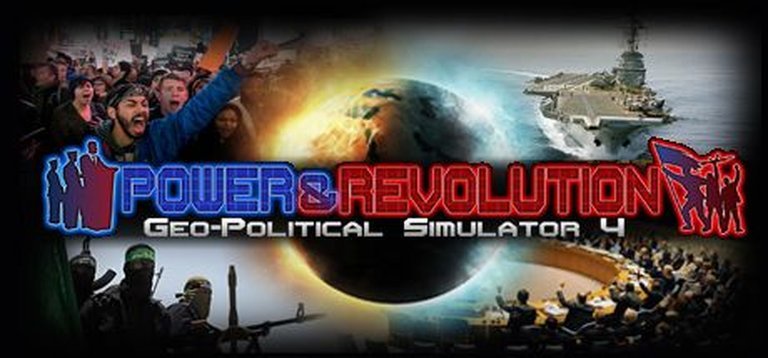
Power & Revolution: Geo-Political Simulator 4 is a comprehensive geopolitical simulation game that immerses players in the complexities of modern global governance across all nations. Set in a detailed, animated 3D world map, it allows players to manage and influence intricate systems spanning economic, political, military, social, financial, environmental, and energy domains. With over 100,000 data points, 15,000 texts, and 10 hours of recorded dialogue, players navigate real-world challenges through diplomatic negotiations, legislation, military actions, and resource management, experiencing the dynamic consequences of their decisions on a global scale.
Gameplay Videos
Power & Revolution: Geo-Political Simulator 4 Cracks & Fixes
Power & Revolution: Geo-Political Simulator 4 Patches & Updates
Power & Revolution: Geo-Political Simulator 4 Mods
Power & Revolution: Geo-Political Simulator 4 Guides & Walkthroughs
Power & Revolution: Geo-Political Simulator 4 Reviews & Reception
metacritic.com (60/100): Awkward interface and many bugs.
Power & Revolution: Geo-Political Simulator 4 Cheats & Codes
PC
Press CTRL + SHIFT + ENTER to open the cheat window (called ‘Agreement protocol’). Enter the codes with correct capitalization and ending exclamation mark.
| Code | Effect |
|---|---|
| Iamthearchitect! | Maximal 7 Tage für alle Konstruktionen / 7 days maximum for all constructions |
| Trustmeyeswecan! | Alle Parteien, Organisationen, etc. Mögen sie / All parties, organizations, etc. support and love you |
| Nelsonmandelapower! | Alle Länder der Welt lieben dich / All the countries of the world love you |
| Mypeoplelikeme! | 10% Steigerung der Popularität / 10% increase in popularity |
| Whereismyslushfund! | Erhöht den Staatshaushalt und bringt das Wachstum auf mehr als 100% (maximal 900%) / Increases the state budget, bringing growth to more than 100% (maximum 900%) |
| Alberteinsteinisalive! | Längerfristige technologische Forschung wird erheblich reduziert / Longer term technological research is considerably reduced |
| Helpmepresidentwashingsky! | Kann das Spiel nicht verlieren, jedoch ist die Pause nicht mehr verfügbar / Cannot lose the game, however, the break is no longer available |
| Itoldyou2012wastheend! | Das Spiel ist vorbei / The game is over |
| Ihopetheywillnotputschme! | Fügt 100 Einheiten / Fahrzeuge zu denn Rang 5 Ausstattung hinzu / Adds 100 5-star units of every type |
| Longlivetotherightofinterference! | Switches to the selected nation |
| Welovetheworld! | Makes other nations like you |
| Allbymyself! | Alle Nationen hassen dich / All nations hate you |
| Worldwarthree! | Alle Nationen hassen sich gegenseitig / All nations hate each other |
Power & Revolution: Geo-Political Simulator 4: Review
Introduction
In an era dominated by streamlined grand strategy and hyper-accessible political simulations, Power & Revolution: Geo-Political Simulator 4 (GPS4) emerges as a defiant, unapologetic titan of complexity. As the fourth iteration in Eversim’s ambitious Geopolitical Simulator series, it represents a decade of refinement in attempting to digitally replicate the unforgiving machinery of global power. This review posits that while GPS4 stands as the most comprehensive and realistic geopolitical simulation ever created, its staggering depth is paradoxically its greatest liability—a masterpiece of ambition trapped within an interface and design philosophy that often feels archaic, alienating, and needlessly obtuse. For players willing to endure a brutal learning curve and navigate a labyrinthine UI, it offers unparalleled strategic depth; for the uninitiated, it remains a formidable, often frustrating, niche artifact.
Development History & Context
Eversim’s Pedigree and Vision:
Developed by French studio Eversim S.A., founded in 2004 by veterans of publisher Silmarils (responsible for titles like Targhan and Ishar), GPS4 embodies a singular vision: to create a living, breathing digital replica of our world’s political, economic, and military systems. The series, initiated in 2007 with G.P.S.: Geo-Political Simulator, has consistently prioritized raw simulation fidelity over user-friendly design. Eversim’s background extends beyond entertainment; the company explicitly notes that “various organizations, including NATO, use the technologies… for education and training,” highlighting the game’s intended role as a “serious gaming” tool. This dual identity—as both a consumer product and a strategic simulation—shapes GPS4’s entire philosophy, favoring exhaustive data representation (over 600 data points per country, updated to January 2016) over accessibility.
Technological Constraints & Gaming Landscape (2016):
Released on May 26, 2016, GPS4 operated within specific technological boundaries. Its “totally unique simulation engine” leveraged multithreading to accelerate real-time calculations—a significant technical leap over predecessors, managing interconnected systems for 175 nations. The gaming landscape that year was dominated by polished, accessible titles like Hearts of Iron IV and Civilization VI. Democracy 3, while a peer in the political genre, offered a far more digestible experience. GPS4 positioned itself as the antithesis to this trend, as stated in its ad copy: it was the “world’s benchmark,” not a game for the casual player. This deliberate niche positioning reflected Eversim’s confidence in its unique offering, even as it ignored contemporary trends toward streamlined UIs and tutorials.
Narrative & Thematic Deep Dive
Scenario-Driven Storytelling:
GPS4 eschews a traditional narrative, instead offering a dynamic, reactive world shaped by player choices and a library of over 20 scenarios. These scenarios act as curated “starting points,” each deeply rooted in real-world turmoil: “War in Iraq and Syria,” “Libyan Chaos,” “Mess in Ukraine,” “Terror in Nigeria,” “Yemeni Puzzle,” and “Threats in Somalia.” They provide immediate context and high-stakes conflict, immersing players in contemporary geopolitical crises. The “2016 American Presidential Elections” scenario exemplifies this, offering a detailed electoral campaign model with televised debates, rallies, and polling. These scenarios aren’t static events but evolving sandboxes where outcomes depend entirely on player intervention.
Characters and Dialogue as Systems:
Characters are less “written” figures and more nodes within the simulation’s complex web. Over 200 personalities, including world leaders and opposition figures, are represented by 3D models with facial animations. Their interactions are driven by a sophisticated AI system reacting to player actions. Dialogue isn’t merely exposition; it’s a tool for influence, negotiation, or intimidation. The game boasts “over 16,000 texts and 10 hours of recorded dialogue,” with characters expressing opinions, issuing threats, or offering deals based on their allegiances and the player’s track record. For instance, players can “try to corrupt other figures or make them sing” during meetings with a “secret services director” or a “syndicate leader,” turning dialogue into a high-stakes minigame.
Thematic Core: Power, Revolution, and Consequence:
The central themes revolve around the nature and fragility of power. Playing as a Head of State involves navigating a minefield of internal pressures (budget deficits, parliamentary opposition, public popularity) and external threats (wars, sanctions, espionage). Playing as Opposition legal or illegal forces explores the mechanics of revolution, from street protests and media manipulation to military coups and insurgencies. A profound theme is interconnectedness: a decision to raise retirement ages in one nation can spark protests that ripple across borders, while a secret assassination can trigger international condemnation or war. The game constantly forces players to weigh short-term gains against long-term stability, embodying the ruthless calculus of real-world geopolitics.
Gameplay Mechanics & Systems
Dual Paths: Governance vs. Insurgency:
GPS4’s core innovation is offering two diametrically opposed playstyles:
– Head of State: Players manage budgets across ministries (allocating funds to “geriatric services,” “counter-spy services,” or “video games” with granular control), propose legislation (from “setting speed limits” to “develop[ing] atomic weapons in secret”), command military units, negotiate international trade deals, and give televised addresses. Economy is simulated with over 130 sectors, 30 tax types, and infrastructure projects (pipelines, nuclear plants, high-speed rail) that visibly alter the map.
– Opposition Leader: Players lead a political party or illegal organization. This involves managing party funds, funding protests or violence, purchasing polls, bribing officials, infiltrating government circles, raising armies (mercenaries, black-market weapons), and attempting to topple the regime through elections, coups, or civil war. As a “warlord” or “terrorist leader,” players can command rebel units in city battles, aiming to capture symbolic locations like the presidential palace.
The Simulation Engine: Depth vs. Opacity:
The “Geo-Political Simulator 4” engine continuously recalculates global dynamics. Over 175 nations interact through economic exchanges, political relations, and military alignments. International organizations (NATO, G7, EU, OPEC) hold summits and vote on propositions based on member states’ interests. AI lobbies, political parties, and social groups react to player decisions with protests, strikes, or resignations. While this creates a living world, it often obscures cause-and-effect. As the 4Players.de lamented, “the consequences of certain decisions… are not clearly visible,” making tactical planning feel like navigating a fog. The sheer volume of “over 1,000 playable actions” is overwhelming, with poorly categorized menus exacerbating the problem.
Innovative & Flawed Systems:
– City Battles: A standout feature, allowing detailed tactical control of protesters, police, tanks, and snipers on maps of major capitals. Players capture key locations (parliament, TV station) to shift conflict momentum, with population reactions adding layers of complexity.
– Espionage & Coups: “Secret services” enable sabotage, assassination, and blackmail, but discovery risks scandals. Opposition can orchestrate “military or criminal coups,” adding a layer of covert strategy.
– Technical Shortcomings: The UI, despite a 2016 redesign, remains a major flaw. It’s “ugly” and “almost without informative value” (4Players), with confusing menus and icons. Bugs are pervasive: crashes, calculation errors (e.g., budget deficits), and save corruption are common complaints in Steam forums. The economic model, while detailed, can feel illogical, leading to player frustration.
World-Building, Art & Sound
A Living World Map:
GPS4’s foundation is a meticulously detailed 3D world map, updated to January 2016. It includes all 175 nations with accurate borders, regions, resources, and strategic locations. The map dynamically changes with player actions—pipelines snake across continents, military bases appear, and conflict zones show front lines, occupied territories, and besieged cities. This isn’t just a backdrop; it’s the stage where the simulation unfolds, with infrastructure projects and troop movements having tangible, visible consequences.
Visual Design: Functional but Dated:
The art direction prioritizes information over aesthetics. The 3D map and city battle maps are dense with data points, but character models and UI elements look dated compared to 2016 AAA titles. 3D leader faces show subtle animations during dialogues, adding a touch of humanity, but overall visuals are utilitarian. The “new redesigned and optimized interface” improved clarity but retained a clunky, spreadsheet-like feel. The lack of visual polish reinforces the game’s serious simulation ethos but contributes to its intimidating appearance.
Sound Design: The Atmosphere of Power and Chaos:
Sound is crucial for immersion. Over 10 hours of recorded dialogue bring characters to life, with voices reflecting their demeanor and situation. A daily “newspaper” read aloud summarizes global events, reinforcing the simulation’s scale. City battles are a cacophony of gunfire, explosions, and crowd noise, conveying chaos. The 3,000-question quiz mode (educational use) and strategic briefings from an in-game “professor of geopolitics” add auditory layers. However, the soundtrack is minimal, relying on ambient sounds and the news system to build atmosphere rather than composed scores.
Reception & Legacy
Critical Reception at Launch:
Critical reception was mixed, reflecting the game’s polarizing nature. MobyGames cites an average score of 51% based on a single review from 4Players.de (51%). The German review was scathing: “Politics are a cumbersome topic for a game. But on top of that Power & Revolution tries its best to push you away,” citing the “ugly” interface and unclear consequences. Metacritic aggregated two reviews: 4Players.de (51%) and SpazioGames (60%), the latter noting the game’s depth but acknowledging “awkward interface” and “many bugs.” User reviews on Steam were “Mixed” (55% positive from 1,162 reviews), with praise for its uniqueness and depth countered by complaints about bugs and UI.
Commercial Performance & Community:
Exact sales figures are undisclosed, but the existence of annual add-ons (2017, 2018 Editions), a standalone God ‘n Spy expansion, and a Modding Tool indicates a sustained, dedicated player base willing to invest further. Steam discussions reveal an active community troubleshooting bugs, sharing strategies, and creating mods, highlighting the game’s niche appeal and longevity. The official site and GPS Wiki fanbase maintain its presence.
Legacy and Influence:
GPS4 solidified Eversim’s reputation as the undisputed leader in hardcore geopolitical simulation. Its legacy is twofold:
1. Niche Benchmark: It remains the gold standard for players seeking unparalleled depth in simulating global power dynamics, influencing titles like Collapse: A Political Simulator (2021). Its use by NATO for training underscores its unique value beyond entertainment.
2. Cautionary Tale: It serves as a reminder of the pitfalls of prioritizing ambition over usability. Its clunky UI and persistent bugs became notorious, often cited in discussions about “love-it-or-hate-it” indie sims. The series continues with annual editions (2019, 2020, etc.), but GPS4’s core design philosophy—depth-first—remains both its defining feature and its most significant barrier. It occupies a unique historical space: a simulation so bold and comprehensive that it defied commercial trends, leaving a permanent, challenging mark on the genre.
Conclusion
Power & Revolution: Geo-Political Simulator 4 is a digital paradox: a staggering achievement in simulation that feels both revolutionary and deeply flawed. It offers an unprecedented level of detail in modeling the intricate, interconnected web of modern geopolitics, from national budgets to military coups and international summits. For the patient strategist, it provides a depth of gameplay unmatched by any competitor—a true “world simulation” where player actions have cascading, often unpredictable, consequences. The dual paths of governance and insurgency, the dynamic scenarios, and the living world engine are testaments to Eversim’s ambitious vision.
However, this ambition comes at a steep price. The UI, despite a redesign, remains a formidable obstacle, turning navigation into a frustrating chore. The game’s opacity regarding cause-and-effect, combined with pervasive bugs and a learning curve steeper than the Himalayas, actively repels all but the most dedicated players. It is less a “game” in the traditional sense and more an interactive tool—an encyclopedia of systems demanding mastery.
Verdict: Power & Revolution: Geo-Political Simulator 4 is an essential, deeply flawed masterpiece. It deserves its place in video game history as the most comprehensive geopolitical simulation ever created, a testament to the potential of games as complex systems. Yet, its execution ensures it will forever remain a niche artifact—loved by a devoted few for its unparalleled scope, yet cautioning future developers that depth without clarity is a double-edged sword. It is not a title for everyone, but for those who seek the ultimate test of their political and strategic acumen, it remains an unparalleled, if unforgiving, digital crucible.