
- Release Year: 2023
- Platforms: PlayStation 5, Windows, Xbox Series
- Publisher: Hooded Horse Inc., Mimimi Games GmbH
- Developer: Mimimi Games GmbH, Moby Score
- Genre: Strategy, Tactics
- Perspective: Diagonal-down
- Game Mode: Single-player
- Gameplay: characters control, Multiple units, Point and select, Real-time tactics, Stealth
- Setting: Caribbean, Sea pirates
- Average Score: 85/100
Description
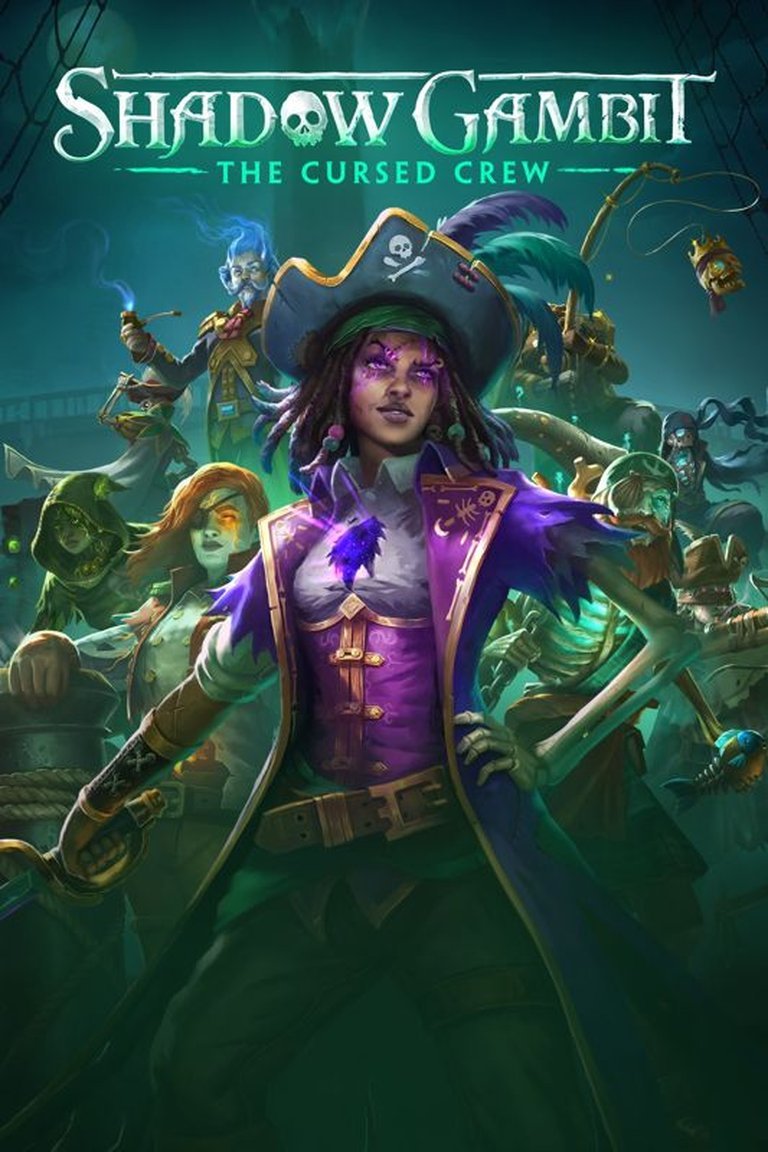
In ‘Shadow Gambit: The Cursed Crew’, players command a team of supernatural pirates in the open-world Caribbean during the 17th century. This real-time tactics game blends stealth, strategy, and supernatural abilities as players infiltrate Spanish colonies, command cursed crewmates with unique powers, and outwit formidable adversaries in a vibrant, high-stakes adventure.
Gameplay Videos
Where to Buy Shadow Gambit: The Cursed Crew
Shadow Gambit: The Cursed Crew Free Download
Shadow Gambit: The Cursed Crew Cracks & Fixes
Shadow Gambit: The Cursed Crew Mods
Shadow Gambit: The Cursed Crew Guides & Walkthroughs
Shadow Gambit: The Cursed Crew Reviews & Reception
metacritic.com (85/100): A joyous blend of stealth tactics, swashbuckling adventure and whimsical humour, Shadow Gambit is Mimimi Games at their very best and considering their history, that is saying something.
opencritic.com (85/100): Shadow Gambit: The Cursed Crew is dead-on stealth tactics-filled with character and vigor – a peak for the genre.
ign.com : The tales told and the characters that act them out are delightful.
gamesradar.com : Shadow Gambit is a fiendishly fun stealth strategy game that does precisely what it says on the tin.
rockpapershotgun.com : an all-time treasure
Shadow Gambit: The Cursed Crew Cheats & Codes
PC (DEMO)
In the options menu (while in-game, not on main menu), type ‘honorless’ to enable cheats. Then, hold the ‘insert’ key and press number keys (10-99) to spawn different units. Use ‘home’ and ‘end’ to toggle immortality, ‘page up’ and ‘page down’ to toggle visibility, and ‘-‘ (possibly ‘/’) to revive characters.
| Code | Effect |
|---|---|
| honorless | Enables access to cheat mode/spawning console. |
Shadow Gambit: The Cursed Crew: Review
Introduction
Ahoy, matey, and prepare to set sail into the treacherous, magical waters of the Lost Caribbean! Shadow Gambit: The Cursed Crew marks the breathtaking swan song from Mimimi Games, the studio that resurrected the real-time tactics genre with Shadow Tactics: Blades of the Shogun and Desperados III. This isn’t just another pirate adventure; it’s a masterclass in blending supernatural heists, intricate strategy, and darkly comedic storytelling. As Mimimi’s final voyage before its untimely closure, Shadow Gambit embodies the studio’s signature ingenuity while expanding its horizons into an open-ended, pirate-infused sandbox. In this exhaustively detailed review, we’ll dissect how this cursed crew delivers on its promise of freedom, chaos, and tactical brilliance—or if it ultimately sinks beneath the weight of its own ambition.
Development History & Context
Mimimi Games, the German studio behind Shadow Gambit, was renowned for its meticulous approach to stealth strategy. Internally codenamed “Project Süßkartoffel” (Sweet Potato), the game was developed with financial support from Germany’s Federal Ministry for Economic Affairs and Climate Action and the indie accelerator Kowloon Nights. It represented a significant pivot: Mimimi’s first self-published title and its most ambitious, shifting from linear, mission-driven structures to a sprawling, nonlinear pirate epic. The team leveraged the Unity engine to craft vibrant, multi-level islands, while consulting with Sweet Baby Inc. on narrative inclusivity—a choice that sparked controversy but underscored the studio’s desire to innovate beyond historical settings.
Released on August 17, 2023, for PC, PlayStation 5, and Xbox Series X/S, Shadow Gambit arrived during a crowded year for strategy games, yet its unique fusion of supernatural pirates and tactical depth set it apart. Tragically, Mimimi announced its closure just weeks after launch, citing rising development costs and insufficient revenue. This abrupt end cast a shadow over the game’s legacy, making it a poignant final statement from a studio that had redefined a niche genre. Hooded Horse later acquired publishing rights in December 2024, ensuring its long-term availability—a fitting tribute to a game that deserved a longer life at sea.
Narrative & Thematic Deep Dive
Set in an alternate-history Golden Age of Piracy, Shadow Gambit weaves a tale of cursed souls, ruthless inquisitors, and the ghosts of greed. Players join Afia Manicato, an undead pirate with a sword protruding from her chest, as she revives the crew of the ghost ship Red Marley and seeks Captain Mordechai’s lost treasure. The narrative unfolds across eight islands, each dripping with lore about the “Curse of Lost Souls”—a force that reanimates the dead and grants supernatural abilities. This curse fuels the game’s central conflict: the player’s ragtag crew of misfits (e.g., the vine-wrapped botanist Suleidy, the posh ghost Pinkus, the cannon-wielding Gaëlle) versus the Inquisition of the Burning Maiden, a fanatical cult obsessed with eradicating magic and enforcing rigid order.
Thematic richness permeates every corner. The Inquisition’s “Grand Design” mirrors real-world dogmatism, representing oppressive control in contrast to the pirates’ chaotic freedom. Characters grapple with their cursed existences: Toya, the one-armed ninja-cook, seeks purpose; John Mercury, the ship’s carpenter, reconciles his love for the living with his undead state. Even the Red Marley’s time-rewind mechanic is narratively integrated, blurring the line between gameplay convenience and in-universe tragedy. The plot, however, isn’t without flaws. Its non-structure can feel disjointed, with main quests interrupting character-driven “Crew Tales,” and some players criticize the villain Ignacia as underdeveloped. Yet these minor quakes don’t capsize the ship: the game’s humor, heart, and worldbuilding—like the haunted Twins of Nerechtemeresh or the soul-jarred Isle of Penance—make Shadow Gambit a narrative treasure.
Gameplay Mechanics & Systems
At its core, Shadow Gambit is a symphony of supernatural stealth. Players control a three-person squad in real time, using a mix of observation, environmental manipulation, and character-specific abilities to infiltrate Inquisition strongholds. The game’s genius lies in its sandbox design: each island is a layered puzzle box, allowing entry and escape from multiple angles. Afia’s blink-teleport and time-freeze powers enable Hitman-like precision, while Suleidy’s ability to sprout instant bushes or distract with spores turns the environment into a weapon. Pinkus’s possession mechanic lets you infiltrate restricted areas, and Gaelle’s cannon can launch allies—or corpses—into unsuspecting foes.
Key innovations include Shadow Mode, a pause system that queues simultaneous character actions, and the Red Marley’s time-rewind, which lets you undo mistakes as a story-driven “captured memory.” Progression revolves around collecting Black Pearls and Soul Energy to resurrect crewmates, while “vigour” upgrades abilities. Yet the freedom comes at a cost: accommodating 500+ character combinations forces mission design to simplify. Some abilities feel overpowered (e.g., Afia’s blink trivializes early levels), and enemy AI lacks the adaptability of Desperados III. The UI, however, is impeccable, with vision cones highlighted in green and clear indicators for sound and sightlines. Replayability is strong, with optional Crew Tales and post-game challenges, though revisiting the same islands can breed repetition. Ultimately, Shadow Gambit rewards experimentation, turning each heist into a high-stakes puzzle where creativity triumphs over brute force.
World-Building, Art & Sound
The Lost Caribbean is a character unto itself, a tapestry of haunted coves, cursed jungles, and Inquisition fortresses. Art direction leans into vibrant, painterly visuals—think Sea of Thieves meets Monkey Island—with lush, diorama-like levels that reward exploration. From the angler-fish skull of Angler’s Grave to the overgrown ruins of Ritual Island, each locale is steeped in personality. The Red Marley serves as a lively hub, where crewmembers banter, fish (literally—John Mercury’s pal Sir Reginald is a talking fish!), and embark on side quests, reinforcing the game’s “found family” ethos.
Sound design elevates the atmosphere further. Composer Filippo Beck Peccoz’s score is rousing yet melancholic, blending sea shanties with orchestral dread. Voice acting is uniformly superb, with standout performances like Mark Takeshi Ota’s boisterous Toya and Beth Robb Adams’ weary Afia. Sound effects—from cannon booms to the whisper of undead footsteps—ground the supernatural in tactile reality. Together, these elements craft an immersive world where every creak of the Red Marley and every rustle of cursed vines deepens the sense of place.
Reception & Legacy
Shadow Gambit sailed into critical acclaim, holding an 85 on Metacritic and scores from IGN (9/10) and PC Gamer (87/100). Critics lauded its creativity, character depth, and tactical freedom, with God is a Geek calling it “the best example of the genre Mimimi helped create.” However, player reviews were mixed (Metacritic user score: 6.5), with some citing narrative pacing issues and repetitive island revisits. Commercially, the game underperformed, contributing to Mimimi’s closure—a tragedy that paradoxically enhanced its legacy as a cult classic.
In the years since, Shadow Gambit has been celebrated as a genre landmark. Its nonlinear structure and supernatural mechanics expanded the possibilities of real-time tactics, influencing titles like Sea of Thieves and Pirate’s Legacy. The two DLCs—Yuki’s Wish and Zagan’s Ritual—added Japanese-inspired missions and dark alchemy, respectively, further cementing Mimimi’s bold storytelling. Most importantly, it stands as a testament to Mimimi’s artistry: a game where death is not an end, but an opportunity for clever, chaotic redemption.
Conclusion
Shadow Gambit: The Cursed Crew is a flawed but magnificent final voyage from Mimimi Games. It falters in narrative cohesion and mission repetition, yet soars in its ambition, blending supernatural piracy with tactical genius in a way no other game has dared. The studio’s signature strengths—razor-sharp level design, unforgettable characters, and seamless gameplay-loop innovation—are present in spades, while its pirate-infused world offers unparalleled freedom. As Mimimi’s swan song, it’s poignant, playful, and profoundly satisfying—a reminder that even cursed souls can find purpose in creativity. For strategy enthusiasts and pirate romantics alike, Shadow Gambit isn’t just a game; it’s a buried treasure waiting to be unearthed. Set sail, matey—the Lost Caribbean awaits.