
- Release Year: 2014
- Platforms: Windows
- Genre: Action
- Perspective: Side view
- Game Mode: Single-player
- Gameplay: Arcade, Endless runner
Description
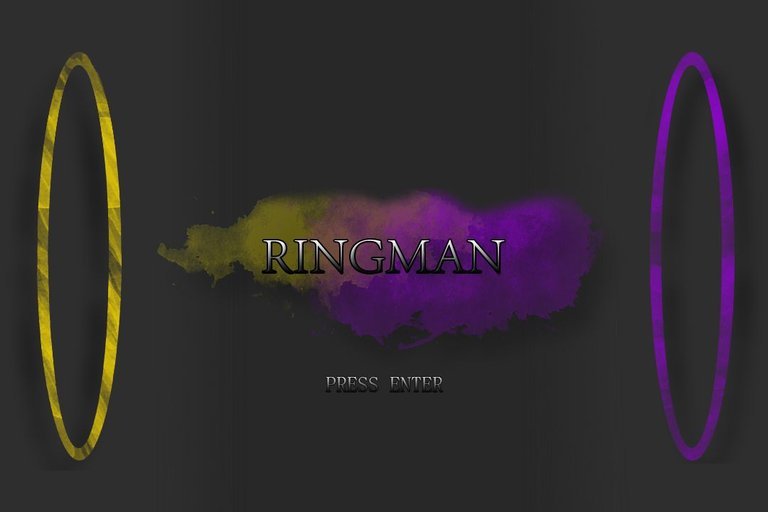
Ringman is a competitive fast-paced 2D side-scrolling endless runner where players control either Ringman or Ringpig, flying through the air to collect all gold rings. As the game progresses, the difficulty intensifies with increasing speed, demanding quicker reflexes, and features both local and global leaderboards for competitive play.
Ringman Guides & Walkthroughs
Ringman Cheats & Codes
Ringman Edition
While in-game, type the code on your keyboard.
| Code | Effect |
|---|---|
| lovemaker | Displays acceptance on the top left of the screen. |
| cashman | Unknown. |
| whatareyou | Unknown. |
| Tess | Changes the site assistant’s clothes. |
Ringman: Review
1. Introduction
In the pantheon of video games, some titles achieve immortality through sprawling narratives, others via groundbreaking mechanics, and a few, like Ringman (2014), carve their niche through sheer, unadulterated purity. Released for Windows on June 3, 2014, Ringman is a deceptively simple 2D side-scrolling endless runner that strips gaming to its essence: flight, collection, and competition. It eschews the cinematic ambitions of its contemporaries, instead offering a raw, adrenaline-fueled experience where reflexes and persistence reign supreme. Yet, beneath its minimalist exterior lies a microcosm of design philosophy that reflects both the strengths and limitations of the genre. This review argues that Ringman, while modest in scope and narrative, is a masterclass in focused gameplay—a testament to the enduring appeal of arcade purity in an era of bloated AAA extravagance.
2. Development History & Context
Ringman’s genesis lies in the vision of David Klein II, a solo developer who assumed the roles of programmer, artist, and designer, crafting the game with a singular focus on competitive action. The project emerged in 2014, a period when the indie scene was thriving, with titles like Super Meat Boy and Fez redefining expectations for small-scale development. Yet Ringman stands apart by deliberately avoiding the trend toward narrative depth or experimental artistry. Instead, it harkens back to the arcade ethos of the 1980s—prioritizing instant accessibility, escalating difficulty, and high-score chasing.
Technologically, Ringman was built with modern tools but constrained by its 2D scrolling mechanics and minimalist aesthetic. The game’s structure—endless, procedurally generated flights—demands precise collision detection and adaptive speed scaling, feats Klein II executed with commendable efficiency. The audio, contributed by Jackie Smiles (“Fly To Live”), Nick Standing (“Piggyback Ride”), and Jabun/HurpADervish, provides a functional, albeit unmemorable, backdrop, emphasizing gameplay over auditory spectacle.
Curiously, the name “Ringman” carries a legacy from gaming history. As a boss in Mega Man 4 (1987), Ringman was defined by his ring-shaped weapon, the Ring Boomerang. Klein II’s game reclaims this iconography, transforming it into a playable character, yet the connection is purely thematic, not narrative. This contextualizes Ringman (2014) as a love letter to classic arcade tropes—no grand backstory, no world-saving quests—just the joy of motion and mastery.
3. Narrative & Thematic Deep Dive
Ringman’s narrative is a void, and that is its deliberate strength. There are no cutscenes, no dialogue, and no plot—only the abstract pursuit of gold rings as the player controls either Ringman (a humanoid figure composed of interlocking rings) or Ringpig (a pig-like counterpart). This absence of story is not a flaw but a design choice. The game’s “narrative” is told through gameplay itself: the relentless acceleration mirrors life’s unyielding pace, while the rings symbolize fleeting goals that recede as they are approached. Thematically, Ringman embodies the futility of pursuit and the elation of temporary triumph. Each ring collected is a small victory against entropy, yet the game’s endless nature ensures no definitive win—a meditation on the human condition’s cyclical nature.
The lack of character development or backstory for Ringman/Ringpig is intentional. By stripping away personality, the game universalizes the player’s experience. Ringman is not a hero but an avatar, a vessel for the player’s skill and persistence. This minimalist approach aligns with the “arcade” philosophy, where identity is secondary to action. Even the title, “Ringman,” is functional—a label rather than a persona. In a gaming landscape saturated with cinematic epics, Ringman’s silence is radical, forcing players to find meaning in motion rather than mythology.
4. Gameplay Mechanics & Systems
At its core, Ringman is a symphony of precision and escalation. Players control a character flying perpetually forward, navigating horizontally scrolling environments to collect gold rings while avoiding obstacles. The gameplay loop is brutally simple:
– Core Loop: Tap or hold to ascend, release to descend. Rings are strung across the screen, demanding split-second decisions. Missing one feels like a personal failure; collecting a sequence sparks euphoria.
– Difficulty Curve: The game’s genius lies in its escalating speed. Initially manageable, the pace accelerates relentlessly, transforming the screen into a blur of rings and hazards. This “speed pressure” creates a state of flow, where concentration narrows to tunnel vision.
– Character Selection: Ringman and Ringpig offer no substantive differences, likely a nod to accessibility. Both handle identically, ensuring competition hinges on skill, not stats.
– Innovations: The “ring” mechanic—where rings can be strung together for combo points—adds a layer of strategy. Players risk grazing obstacles to extend chains, turning mere collection into a high-stakes gamble.
– UI/Feedback: Clean, minimalist HUD displays ring count and speed. Visual and audio cues (a “bling” sound for rings, a sharp crash for impacts) provide instant feedback, critical for an endless runner.
Yet, the game’s simplicity is also its limitation. With no power-ups, level variety, or progression systems beyond leaderboards, Ringman risks feeling repetitive. The absence of enemy encounters or environmental gimmicks reduces the experience to a test of reflexes alone, which may not sustain long-term engagement for players seeking depth.
5. World-Building, Art & Sound
Ringman’s world is a void: a boundless sky rendered in flat, primary colors. There are no landmarks, no horizons, no context—just an infinite expanse punctuated by rings and obstacles. This emptiness is intentional, eliminating distractions and amplifying focus. The art style is geometric and abstract, with Ringman and Ringpig resembling minimalist sculptures. Their ring-based designs echo the Mega Man boss’s aesthetic, but here, they feel like toys, not warriors.
The sound design mirrors this austerity. Jackie Smiles’ “Fly To Live” and Nick Standing’s “Piggyback Ride” are upbeat, chiptune-adjacent tracks that blend into the background, never overwhelming the gameplay. Sound effects are crisp and functional—ting for rings, thud for collisions—serving as tactile cues rather than emotional anchors. Together, art and sound create a “digital playground” atmosphere, devoid of narrative weight but rich with kinetic energy. This aesthetic coherence is Ringman’s triumph: it wastes no pixels on world-building, ensuring every visual and audio element serves gameplay.
6. Reception & Legacy
Ringman (2014) was met with near-total silence. MobyGames, a meticulous archive, lists no critic reviews, and Metacritic offers no scores—reflecting its obscurity. Its commercial impact was negligible, with only one player documented as “collecting” it on MobyGames. This obscurity stems from its niche appeal: a hyper-focused endless runner in a market saturated with narrative-driven indies. Yet, its legacy endures in the Mega Man franchise, where Ringman remains a beloved boss, his Ring Boomerang weapon symbolizing clever design (piercing shields, hitting multiple targets). Ironically, Klein II’s game resurrects this iconography as a playable character, creating a meta-narrative of homage.
Influence-wise, Ringman exemplifies the “solo dev” movement, proving that one person can deliver a polished, if minimalist, experience. Its emphasis on leaderboards and speed prefigured trends in mobile gaming, though it didn’t pioneer them. Today, it’s a footnote—a curiosity for speedrunners and genre purists—yet its design philosophy resonates in games like Geometry Dash, which similarly distills challenge to its purest form.
7. Conclusion
Ringman (2014) is a paradox: a game of profound simplicity that reveals depths in its execution. As an endless runner, it is near-perfect—tight controls, escalating tension, and addictive ring-chaining create moments of sublime clarity. Yet, its refusal to explore narrative or visual ambition limits its staying power. It is not a game that will redefine the medium or stir the soul; it is a game that demands respect for its discipline.
In the grand tapestry of video game history, Ringman occupies a small but vital thread. It reminds us that joy can be found in purity, that a single mechanic, refined to brilliance, can outshine bloated epics. For players seeking a distilled test of skill, it remains a hidden gem. For historians, it stands as a testament to the enduring power of arcade ideals. Ringman may not be a masterpiece, but it is a masterwork of its own uncompromising vision—a fleeting, golden ring in the endless sky of gaming.