
- Release Year: 2022
- Platforms: Windows
- Publisher: Small Game Studio
- Developer: Small Game Studio
- Genre: Role-playing (RPG)
- Perspective: Side view
- Game Mode: Single-player
- Gameplay: Point and select, Turn-based
- Setting: Fantasy, Medieval
Description
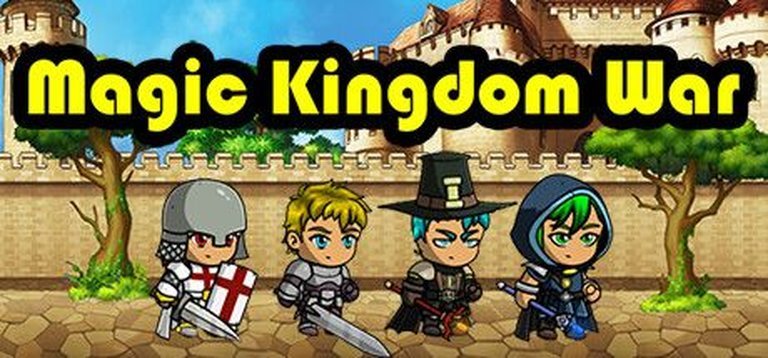
Magic Kingdom War is a turn-based role-playing game set in a fantasy medieval world, featuring a side-view perspective and fixed-screen visuals. Players engage in strategic gameplay through a point-and-select interface, managing their kingdoms, and exploring a randomly generated world filled with monsters, heroes, and rival factions, as they expand their empire and battle for dominance.
Magic Kingdom War Mods
Magic Kingdom War: Review
1. Introduction
In the crowded landscape of indie RPGs, Magic Kingdom War emerges as a deceptively simple yet strategically rich experience. Released on October 6, 2022, by Small Game Studio, this turn-based role-playing game blends character collection, tactical positioning, and progression systems into a compelling medieval-fantasy package. Its charming art style and accessible mechanics belie a depth that rewards thoughtful experimentation. While it may not revolutionize the genre, Magic Kingdom War carves a niche through its elegant fusion of deck-building-like character synergy and traditional RPG combat. This review examines how the game achieves its unique identity while navigating the challenges of indie development in a saturated market.
2. Development History & Context
Developed by Small Game Studio, Magic Kingdom War represents a modest but ambitious undertaking from a small team operating within Unity’s ecosystem. Its 2022 release places it amid a resurgence of indie RPGs leveraging accessible engines, though its focus on turn-based tactics distinguishes it from contemporaries like Disco Elysium or Baldur’s Gate 3. The game’s development was constrained by budgetary limitations, evident in its fixed-screen visuals and limited voice acting, yet these constraints fostered creativity in its systems design.
The studio’s vision was clear: create an approachable yet deep RPG where player choice in team composition and formation dictated success. This philosophy aligns with broader trends in 2022, where games prioritized player-driven narratives and emergent gameplay over cinematic storytelling. Notably, Magic Kingdom War avoids competing with AAA titles by embracing its indie roots—releasing on Windows with minimal marketing and relying on community feedback to refine its mechanics post-launch via two DLC expansions (DLC-1 and DLC-2) that expanded the roster and added strategic layers.
3. Narrative & Thematic Deep Dive
Magic Kingdom War eschews complex storytelling in favor of a timeless fantasy premise: defending a kingdom from orcish invasion. The narrative unfolds through brief character dialogues and quest snippets, prioritizing gameplay over exposition. Characters archetypes—such as the wise Auxiliary healer or the ferocious Attack Type warrior—serve as thematic vessels for core ideas of unity, sacrifice, and adaptability.
The absence of a grand plot is intentional, shifting focus to the player’s emergent tales: a fragile Agility character evading enemy strikes, or a Magic Type turning the tide with a well-timed spell. Themes of resourcefulness permeate the game, as players must maximize limited party slots and synergize disparate roles. This minimalist approach avoids clichés but risks feeling shallow, though the charm lies in how every battle becomes a chapter in the player’s personal legend. The orcs, while generic, symbolize the relentless challenges of empire-building, reinforcing the game’s core loop of preparation, experimentation, and triumph.
4. Gameplay Mechanics & Systems
At its core, Magic Kingdom War revolves around three interlocking systems: character progression, formation strategy, and tactical combat.
Character Progression
Each of the five character classes (Magic, Attack, Agility, Defensive, Auxiliary) has distinct attributes and skills. Progression occurs through:
– Leveling: Experience points (XP) earned in combat unlock stat boosts.
– Quality Upgrades: Raising a character’s tier grants passive skills and stat improvements, akin to deck-building in Slay the Spire.
– Equipment: Weapons and armors, which can be upgraded with gems, offer customizable stat bonuses—though user reports of “diminishing returns” on stacked modifiers hint at a lackluster late-game economy.
Formation & Combat
Drag-and-drop positioning is the game’s standout mechanic. Each of the five battle slots grants unique attribute bonuses (e.g., front-row slots boost defense, rear-row enhance magic damage). Players must exploit these synergies: placing a Defensive character upfront to absorb damage while Magic Types rain spells from the rear. Combat is turn-based, with speed and evasion determining action order. However, the interface’s point-and-select nature can feel sluggish, and the absence of terrain effects limits tactical depth compared to contemporaries like Final Fantasy Tactics.
Flaws & Innovations
The system’s brilliance lies in its accessibility—no complex skill trees or resource management exists. Yet, this simplicity becomes a double-edged sword: the lack of enemy variety and predictable difficulty curve lead to repetitive loops. The DLCs mitigate this by introducing new characters, but the core combat remains formulaic. Notably, the game’s “passive skill” system via Quality upgrades offers meaningful customization, rewarding players who invest in specific builds.
5. World-Building, Art & Sound
Magic Kingdom War’s world is intentionally abstract, favoring gameplay fidelity over environmental storytelling. The fixed-screen, side-view perspective emphasizes clarity, with cartoonish, colorful sprites populating medieval-inspired arenas. Unity’s engine renders charming details—glowing magic effects or animated character idles—but the static backdrops lack dynamism. Sound design is similarly minimalist: upbeat, looping tracks create a lighthearted mood, while combat sound effects are functional but unremarkable.
Atmosphere derives from gameplay itself: the tension of positioning a fragile Agility character between two enemies, or the catharsis of watching a Magic Type spell erupt across the screen. The art style, reminiscent of mobile RPGs, ensures accessibility but risks feeling generic. Yet, this coherence serves the game’s focus, turning battles into vibrant tactical puzzles where visual clarity aids strategic planning.
6. Reception & Legacy
Upon release, Magic Kingdom War garnered modest attention, buoyed by a niche of turn-based RPG fans. Player reviews on Steam highlight its “awesome” potential and “cool mechanics,” though critiques of shallow replay value and bug-ridden gem-stacking persist. Critically, the game flew under the radar, with Metacritic absent and mainstream outlets ignoring it. Its legacy lies in its influence on smaller indie titles: its formation-based prefigured mechanics seen in mobile RPGs like AFK Arena and demonstrated how low-budget games could leverage simplicity for depth.
The DLCs expanded its longevity, adding new characters and formations that addressed early complaints of monotony. While it won’t be remembered as a landmark title, Magic Kingdom War exemplifies the strengths of indie development—nimble iteration, focused design, and community-driven refinement.
7. Conclusion
Magic Kingdom War is a testament to the adage that “less is more.” By stripping RPG conventions to their essence and focusing on character synergy, Small Game Studio crafted a satisfying, if flawed, experience. Its accessibility makes it an ideal entry point for genre newcomers, while its strategic layers offer depth for veterans. However, repetitive content and technical hiccups prevent it from reaching greatness.
In the grand tapestry of video game history, Magic Kingdom War occupies a modest but valuable space—a reminder that innovation isn’t always about reinvention. It’s a charming, well-executed indie RPG that prioritizes player creativity over spectacle. For those seeking a turn-based game where every battle is a puzzle, it’s a kingdom worth defending. For others, it’s a footnote—a solid if unremarkable entry in a genre overflowing with ambition. Final Verdict: A delightful diversion with room to grow.