
- Release Year: 2020
- Platforms: Windows
- Publisher: Ragnarökr Project
- Developer: Ragnarökr Project
- Genre: Role-playing (RPG)
- Perspective: Diagonal-down
- Game Mode: Single-player
- Gameplay: characters control, Japanese-style RPG, Multiple units, Point and select
- Setting: Fantasy
- Average Score: 87/100
Description
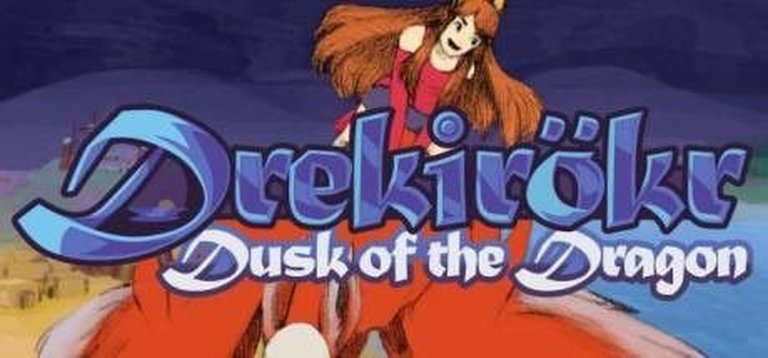
Set millions of years after a devastating incident in a world similar to our own, Drekirökr: Dusk of the Dragon is a Japanese-style RPG where humanity fights for survival against the planet’s evolution. This fantasy and sci-fi hybrid features SNES/GBA-styled graphics, tactical battles against hordes of enemies, and a dynamic world where time passing influences environments. Players explore vast areas, interact with the environment, and use magic, swords, and knowledge to uncover the planet’s true nature.
Gameplay Videos
Where to Buy Drekirökr: Dusk of the Dragon
PC
Drekirökr: Dusk of the Dragon Free Download
Drekirökr: Dusk of the Dragon Reviews & Reception
steambase.io (87/100): Drekirokr – Dusk of the Dragon has achieved a Steambase Player Score of 87 / 100.
steamcommunity.com : While there isn’t much to this game so far, it’s obvious a lot of time and attention has been put into what is here.
store.steampowered.com (87/100): 87% of the 39 user reviews for this game are positive.
Drekirökr: Dusk of the Dragon: Review
Introduction
In the vast, often repetitive landscape of indie RPGs, few titles dare to blend the mythic grandeur of Norse apocalypse with the speculative grit of post-human evolution. Drekirökr: Dusk of the Dragon, the magnum opus of solo developer Orochii Zouveleki under the Ragnarökr Project banner, stands as a testament to audacious ambition. Born from a 14-year development odyssey—spanning iterations from RPG Maker 2003 to its current RPG Maker XP incarnation—this Early Access offering reimagines the twilight of gods as the dawn of dragons, weaving a post-apocalyptic tapestry where magic, science, and survival collide. Yet, while its core vision radiates promise, Drekirökr exists in a liminal state: a JRPG fossil animated by modern indie spirit, simultaneously evoking the golden age of 16-bit epics and wrestling with the growing pains of unfinished development. This review dissects its legacy, mechanics, and cultural footprint to ask: Is Drekirökr a diamond in the rough, or a cautionary tale of ambition outpacing execution?
Development History & Context
The genesis of Drekirökr is as mythic as its narrative. Conceived in 2006 as Ragnarökr X – Dawn of Dragon for RPG Maker 2003, the project was a labor of love for Zouveleki, a developer enamored with the narrative freedom of Square’s SaGa series and the pixel-art aesthetics of SNES-era classics. After a hiatus, the game underwent a radical rebirth in 2012 when Zouveleki migrated it to RPG Maker XP, a decision demanding a near-total rewrite of its systems. This technological shift underscores a key tension: while XP’s flexibility allowed for deep customization—enabling modding and bespoke battle mechanics—it also imposed constraints, limiting graphical fidelity and relying on community-driven polish.
Released into Early Access on June 10, 2020, Drekirökr arrived amid a renaissance for narrative-driven indies, where titles like Undertale and Octopath Traveler proved pixel art’s enduring appeal. Zouveleki’s decision to make the game forever free defied monetization trends, positioning it as a passion project. Yet, its Early Access status—projected to last 3–5 years—mirrored the era’s contentious embrace of unfinished games. By late 2023, updates stalled, with Zouveleki citing “life circumstances,” leaving the community to wonder if the project’s ambitious scale (e.g., a multi-party system and synthesis mechanics) had outpaced its solo creator. The result is a game both technically ambitious and timelessly retro, a digital fossil preserved in amber by RPG Maker’s limitations.
Narrative & Thematic Deep Dive
Millions of years after a devastating incident, Drekirökr thrusts players into a world where humanity’s hubris birthed its own undoing. The narrative opens with a chilling monologue: “Our world is beautiful isn’t it? Altered by human’s stupidity, natural order simply vanished.” This cataclysm—a fusion of magical experimentation and genetic engineering—spawned “bizarre creatures” that decimated civilization. Now, millennia later, magic is mundane, but the planet’s evolved inhabitants remain a constant threat. Players assume the role of Hikari Morishita, a young recruit of the Academy, an international organization tasked with protecting scattered human enclaves. Her journey begins not with heroism, but with investigation: uncovering why “strong creeps” are reawakening from their “deep reeves,” and who the enigmatic saviors from “another plane of the Earth” truly were.
The narrative’s strength lies in its thematic duality. It interrogates hubris: the arrogance that reduced gods to “dreki” (dragons) and turned miracles into monstrosities. Magic, once a tool of progress, is now “naturalized,” yet its origins remain shrouded in guilt—a metaphor for technology’s double-edged sword. Characters like Hikari embody hope, but their world is weary, populated by “human subspecies” and “mythical beasts” forced into uneasy coexistence. Dialogue, though occasionally hampered by translation quirks, fleshes this out: NPCs discuss “fragile masters” and “almighty human existence” with a resigned cynicism that feels earned. Yet, the Early Access structure truncates this promise. Only “one fifth” of the story is playable, and unresolved plot threads—like the saviors’ motives—linger like unfinished spells. Still, Drekirökr’s fusion of Norse myth (its very name swaps “Ragnarök”’s gods for dragons) with sci-fi transhumanism creates a unique post-apocalyptic vision.
Gameplay Mechanics & Systems
At its core, Drekirökr is a JRPG with open-world aspirations, controlled via a diagonal-down perspective and point-and-click interface. The Early Access build delivers a functional, if unpolished, experience centered on three pillars: exploration, tactical combat, and character progression.
Exploration is a mixed bag. The world map—filled with “SNES/GBA styled” towns, forests, and caves—encourages roaming, but lacks direction. Players “interact” with environments, yet “many doors couldn’t be entered, and stairs that didn’t go anywhere,” as one Steam user noted. A time-passing simulation (day/night cycles, weather) adds life, though its impact is largely cosmetic. Movement feels clunky, with overshot doors and clunky turning frustrating immersion.
Combat is the highlight: a tactical turn-based system where “basic attacks feel like skills” due to weapon-based variants. Players fight “hordes of enemies” with swords, magic, and synthesized items. Skill trees allow deep customization, and battles are visually animated. Yet, critical flaws persist. Early Access versions suffered game-crashing bugs—using healing items like “Remedy” would crash the game, and defeated bosses sometimes respawned, forcing repeated fights. While later patches addressed some issues, these flaws reveal the game’s fragile code.
Progression is robust but incomplete. Character skill trees offer RPG depth, and item synthesis is teased but unimplemented. Quests, however, lack clarity. Players receive “3 quest options” but struggle to distinguish primary objectives, as the diary fails to highlight main storylines. The UI, though customized, buries essential menus (e.g., equipping gear), creating friction. Still, when systems click—like solving the torch puzzle in the Hideout cave—Drekirökr’s potential shines.
World-Building, Art & Sound
Drekirökr’s world is its most mesmerizing achievement. The post-apocalyptic setting is rendered in crisp, low-resolution pixels, evoking the warmth of Final Fantasy VI and the grit of EarthBound. Towns like Havoc feel lived-in, with NPCs discussing “maglev” trains and “genetic manipulation,” weaving sci-fi into fantasy’s fabric. The Academy’s sterile contrast with Famas Forest’s organic chaos underscores humanity’s tenuous grip on this new world.
Art direction is meticulous. Sprites animate smoothly, from Hikari’s idle bounce to enemy attacks, while environmental details—like flickering torches or decaying ruins—tell stories without words. The “SNES/GBA style” isn’t mere nostalgia; it’s a deliberate choice, ensuring clarity even in dense battle scenes. Sound design, however, remains a mystery. No audio languages are listed on Steam or GOG, and while the Steam page promises “lively” worlds, audio cues are sparse. This silence amplifies the game’s isolation, but also its incompleteness.
Reception & Legacy
Drekirökr’s reception is a study in contrasts. Commercially, its free-to-play model ensured broad access, but it remains a niche title—collected by only 7 players on MobyGames. Critically, it’s a ghost story: no major reviews exist, and Metacritic lists zero scores. Yet, player response on Steam is surprisingly positive (87% of 39 reviews), with praise for its “story-rich” narrative and “retro” charm. Fans laud the “epic adventure” and “female protagonist,” while critics decry crashes and bugs. One GOG user lamented, “I can tell that this game would be amazing, but unfortunately when you heal, the game crashes.”
Legacy-wise, Drekirökr occupies a curious space. Its moddability—enabled by RPG Maker XP—fosters a dedicated community, with Zouveleki actively soliciting feedback on Steam and Discord. Its blend of post-apocalyptic sci-fi and Norse myth influenced indie peers, though direct traces are hard to pinpoint. Most significantly, it exemplifies the Early Access era’s promise and peril: a game with “clear direction” but an uncertain future. As of 2023, development lingers in stasis, leaving its unfinished saga as a cautionary tale of ambition versus endurance.
Conclusion
Drekirökr: Dusk of the Dragon is a paradox: a brilliant fossil encased in amber, breathing with the spirit of JRPGs past while straining under the weight of its own ambition. Its narrative—where gods become dragons and magic is both salvation and damnation—resonates with thematic depth, while its tactical combat and pixel art evoke genre golden ages. Yet, Early Access stunts its potential: bugs, crashes, and truncated storytelling transform a promising epic into a fragment.
Ultimately, Drekirökr’s legacy is not as a finished masterpiece, but as a testament to indie resilience. It stands alongside titles like Starbound and RimWorld—games whose incomplete state sparks imagination rather than frustration. For players willing to tolerate its rough edges, it offers a free, unique journey through a world where the twilight of gods births a new dawn. For history, it’s a reminder that some myths are still being written. As Zouveleki noted in a 2023 response to feedback: “It’s still going, just way slower than I intended.” Until that day, Drekirökr remains a dragon slumbering, waiting for its awakening.