
- Release Year: 2017
- Platforms: PlayStation 4, Windows
- Publisher: Beijing Spirit Games Limited, Viking Inc., Zodiac Interactive
- Developer: Viking Inc.
- Genre: Action
- Perspective: 1st-person
- Game Mode: Single-player
- Gameplay: Shooter
- Setting: Futuristic, Sci-fi
- Average Score: 71/100
- VR Support: Yes
Description
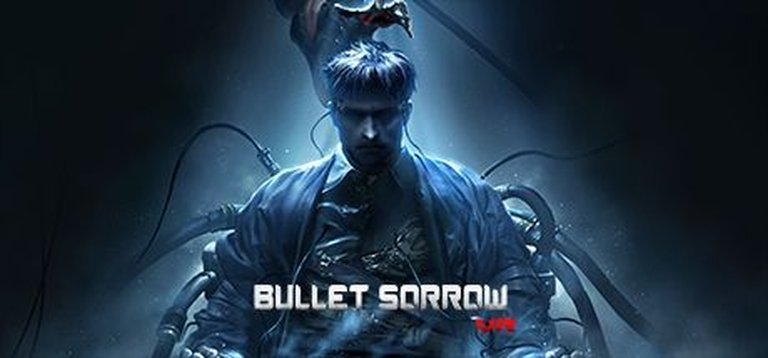
Set in the dystopian near-future of the 2030s, Bullet Sorrow VR is a first-person sci-fi shooter where players wake up in an air base with amnesia and a time-manipulation ability. Guided by an ally named Nova, you infiltrate the enigmatic global arms corporation ‘S’, battling waves of futuristic enemies like armored tanks and agile ninjas to uncover dark secrets and recover your identity.
Gameplay Videos
Where to Buy Bullet Sorrow VR
PC
Bullet Sorrow VR Guides & Walkthroughs
Bullet Sorrow VR Reviews & Reception
metacritic.com (60/100): What Bullet Sorrow VR does well is create a no-holds barred, bullet rich, shooting experience. The single-player mode shows you what VikingVRStudio is capable of, there’s just not enough of it.
Bullet Sorrow VR: A Synaptic Surge of Nostalgic Violence in Virtual Reality
Introduction
In the nascent years of consumer virtual reality, when the medium was still grappling with its identity and potential, Bullet Sorrow VR emerged not merely as a game, but as a manifesto—an unapologetic love letter to the golden age of arcade shooters reimagined for the headset era. Released on April 17, 2017, by VikingVRStudio, this title detonated onto Steam’s VR charts, briefly crowning itself a top seller and igniting debates about the future of immersive combat. Yet, its legacy is a paradox: lauded for its kinetic brilliance yet criticized for its narrative thinness, it stands as both a triumph of mechanical design and a cautionary tale of ambition outpacing storytelling. This review dissects Bullet Sorrow VR not just as a product, but as a cultural artifact—a snapshot of VR’s awkward adolescence, where the thrill of movement and the poetry of bullet time collided with the limitations of technology and narrative.
Development History & Context
Bullet Sorrow VR was forged in the crucible of 2017, a period when VR hardware like the HTC Vive and Oculus Rift was finally hitting its stride, but software struggled to define itself beyond tech demos. VikingVRStudio, a small Beijing-based developer, approached the project with a clear vision: to distill the adrenaline-drenched, cover-based chaos of arcade classics like Time Crisis into a VR-native experience. As revealed in their Unreal Engine dev log, the team drew deeply from nostalgic childhood memories of arcade cabinets, crafting a game where “movement and dodging” were paramount.
Technologically, the game leveraged Unreal Engine 4 to deliver visuals that pushed mid-2017 VR boundaries, though it still faced constraints like performance hiccups on mid-tier GPUs (recommended: GTX 1070). The studio’s ambition was evident in its cross-platform support (Vive/Rift) and early embrace of competitive multiplayer—a rarity in VR at the time. However, these ambitions collided with industry realities: post-launch, the game was delisted from Oculus (2020–2024) and PlayStation 4 (2021–2023) as publisher Zodiac Interactive shifted focus, a casualty of VR’s volatile market.
Narrative & Thematic Deep Dive
Bullet Sorrow VR’s narrative unfolds across two disjointed stories, epitomizing its identity crisis. The primary campaign drops players into the dystopian 2030s, awakening as an amnesiac ex-employee of the enigmatic arms corporation “S Corp.” Guided solely by cryptic messages from a ally named Nova, the player must infiltrate S Corp’s headquarters to uncover corporate secrets and reclaim lost memories. This setup borrows heavily from cyberpunk tropes—memory loss, augmented humans, and faceless monolithic corporations—but executes them with clinical detachment. Nova’s disembodied voice, while functional, lacks emotional resonance, reducing her to a glorified mission-briefing system.
The Arena mode’s “clone outbreak” narrative, added in a 1.1 update, fares slightly better. Here, S Corp’s “Second Evolution” project—gene-modified clones gone rogue—adds a layer of biological horror. Themes of unethical experimentation and dehumanization resonate more sharply, yet both narratives remain secondary to gameplay. The game’s true thematic core lies in its mechanics: the player’s time-manipulation abilities symbolize control in chaos, while the “blink” movement between bunkers mirrors arcade-era risk-reward. Ultimately, Bullet Sorrow VR prioritizes action over allegory, treating story as a scaffold for gunplay rather than a driving force.
Gameplay Mechanics & Systems
Bullet Sorrow VR’s genius lies in its seamless fusion of arcade sensibilities and VR immersion. The core loop revolves around three pillars: movement, combat, and time manipulation.
Movement is revolutionary for its era. Players “blink” between pre-set bunkers or cover points—a teleportation system that eliminates VR motion sickness while retaining strategic depth. This echoes Time Crisis’s cover mechanics but adds spatial freedom, allowing players to flank enemies or reposition dynamically. Dual-wielding motion-controlled pistols forms the combat backbone, each shot delivering tangible recoil that demands physical recoil management. The satisfaction stems from tactile feedback: the metallic click of reloading, the thud of bullets hitting armor, and the visceral feedback of haptic controllers.
The bullet-time mechanic is the game’s crown jewel. Activated via controller grip, it slows time to a crawl, transforming firefights into balletic bullet-dodging sequences. Unlike flat games, VR makes this spatially immersive—players physically lean to avoid projectiles, a mechanic enhanced by the “Bullet-time force field” in multiplayer. Enemy variety, however, is uneven. Heavy Tanks lumber with miniguns, while Ninjas zip with energy blades, but their AI can be erratic, sometimes failing to capitalize on flanks.
Progression is light-weight. The single-player campaign offers no skill trees, but Arena mode’s “Super gene buff system” lets players temporarily enhance weapons with genetic power-ups. Multiplayer supports 10-player cross-platform battles, though reliance on matchmaking often left lobbies empty post-launch. UI is minimalist—health ammo, and objective markers float in VR space—practical but lacking flair.
World-Building, Art & Sound
Bullet Sorrow VR’s world is a study in contrast. The primary campaign unfolds in S Corp’s sterile air bases and corporate HQs, all rendered in cold, utilitarian sci-fi. Lighting per map varies dramatically: one level bathes players in the eerie green glow of an abandoned lab; another mimics the claustrophobic red corridors of a spaceship, evoking Alien. The Arena mode’s clone-infested facility trades chrome for grime, with biohazard warnings and flickering emergency lights amplifying its horror-tinged atmosphere.
Art direction leans into realism. Weapons are meticulously modeled, from the weighty pistols to the miniguns’ rotating barrels. Enemies, however, suffer from inconsistency—Ninjas’ sleek designs clash with the blockier Tanks. Environmental detail is impressive but uneven; textures pop in close combat but blur in distant vistas. Sound design elevates the experience. Weapon fire is crisp and distinct, reloading rhythmically mimics arcade cabinets, and bullet whizzes create a constant auditory tension. The score is understated, relying on ambient drones and percussive stings during combat—effective but forgettable.
Reception & Legacy
At launch, Bullet Sorrow VR polarized critics and players. On Steam, it earned a “Very Positive” rating (83% based on 272 reviews), with players praising its “fun gameplay” and “nostalgic arcade feel.” Critics like GMW3 (Metacritic) lauded its “bullet-rich shooting experience” but noted the single-player campaign’s brevity, calling multiplayer the “core experience.” Review aggregation sites like Steambase echoed this, highlighting the “satisfying gunplay” but lamenting the “short length” and “uninspired story.”
Over time, the game’s reputation solidified as a cult favorite. Its legacy lies in two key areas: mechanical innovation and VR’s growing pains. The blink-movement system and bullet-time became templates for later VR shooters like Sairento VR, proving arcade mechanics could thrive in VR. However, its narrative shortcomings and technical instability (crashes, AI bugs) underscored early VR’s limitations. Delisted from consoles by 2024, Bullet Sorrow VR now exists as a historical artifact—a snapshot of when VR shooters dared to dream big but often stumbled in execution.
Conclusion
Bullet Sorrow VR is a game of thrilling contradictions. It is a love letter to arcades yet feels most alive in VR’s immersive present. It boasts mechanics that feel ahead of their time yet is hamstrung by narrative and AI that belong to an earlier era. Its legacy is not one of perfection but of promise—a testament to the creative ferment of mid-2010s VR. For enthusiasts, it remains a must-play for its groundbreaking movement and bullet ballets. For historians, it stands as a crucial footnote, illustrating the medium’s struggle to balance nostalgia with innovation. Ultimately, Bullet Sorrow VR is less a finished masterpiece and more a synaptic surge—a burst of pure, unadulterated joy that reminds us why virtual reality captivates us: it lets us become the hero, dodge the bullet, and live the action movie. In a genre still finding its voice, that is a sorrow worth celebrating.