
- Release Year: 2016
- Platforms: Windows
- Publisher: NTTGame
- Developer: MGAME Corp., Noah System Co., Ltd.
- Genre: Role-playing (RPG)
- Perspective: Behind view
- Game Mode: MMO
- Setting: Fantasy
- Average Score: 65/100
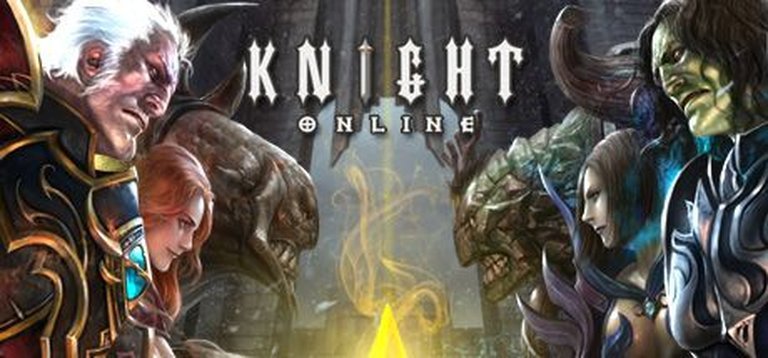
Description
Knight Online is a fantasy-themed massively multiplayer online role-playing game set in the war-torn world of Carnac, where players engage in persistent real-time combat. The lore traces back to the creation of the world by Logos, a primordial being who shaped the land and waters, but this cosmic origin has plunged the realm into eternal conflict. Players align with factions like humanity’s El Morad or the Karus empire, battling through epic quests, faction wars, and god-tier adversaries in a realm of deception, honor, and divine intervention.
Gameplay Videos
Where to Buy Knight Online
PC
Knight Online Patches & Updates
Knight Online Mods
Knight Online Guides & Walkthroughs
Knight Online Reviews & Reception
gamepressure.com : The game is heavily criticized for its pay‑to‑win mechanics, creating an imbalance.
mmogames.com : Okay, this game has a lot of problems but the biggest, technical issues aside, is the number of people that have set up player‑run stores in the capital city.
gamefaqs.gamespot.com (80/100): For controls, I give the game a solid 8/10.
Knight Online: A Decade of Blood, Honor, and Pixels in the World of Carnac
Introduction
In the ever-shifting landscape of Massively Multiplayer Online Role-Playing Games (MMORPGs), few titles have endured with the tenacity and controversy of Knight Online. First glimpsed in 2002 in Korea and later unleashed upon the Western world in 2004, this persistent fantasy realm has become a digital battleground where the echoes of ancient gods clash with the ambitions of mortal warriors. For nearly two decades, Knight Online has carved out a unique, if often contentious, legacy as a PvP-centric titan, where the thrill of combat against other players overshadows the traditional trappings of leveling and questing. Yet, to dismiss it as a mere relic of a bygone era would be to overlook a game that, despite its technical flaws, pay-to-win mechanics, and aging aesthetics, retains a fiercely devoted community and a raw, unvarnished appeal. This review delves into the heart of Carnac, dissecting the game’s origins, its complex mythos, its brutal gameplay systems, its enduring appeal, and its place in the annals of gaming history. The thesis is clear: Knight Online stands not as a polished masterpiece, but as a significant, flawed, and unforgettable artifact of early MMORPG design, a testament to the enduring power of player conflict in a world shaped by divine betrayal and eternal war.
Development History & Context
Knight Online emerged from the crucible of early 2000s South Korea, developed by MGAME Corp. and Noah System Co., Ltd. at a time when the MMORPG genre was exploding alongside the rise of broadband internet. The game officially launched in Korea on July 15, 2002, requiring the then-unusual step of a Korean Resident Registration Number for access, effectively restricting it to the domestic market. Western players had to wait until August 17, 2004, when eGames (in the US) and other regional publishers brought forth Knight Online World (USKO). The vision was clear: create a game where Player versus Player (PvP) wasn’t just an option, but the absolute core experience. This was a deliberate counterpoint to the PvE-focused behemoths like World of Warcraft (released the same year) and the early success of games like Lineage II, offering a more direct, conflict-driven model.
The technological constraints of the era are evident. Built on a custom engine, Knight Online utilized a top-down perspective (with an optional behind-the-view mode for combat) and relied heavily on direct point-and-click movement and targeting, reflecting the prevalent interface paradigms of the time. The persistent world required server infrastructure that, while functional, often struggled under heavy loads, leading to the infamous “Premium” system – a paid subscription offering priority login access during peak hours, a necessary evil born of server limitations. The gaming landscape of 2004 was dominated by subscription-based models, and Knight Online initially followed suit, transitioning to a free-to-play (F2P) model with a “Powerup Store” selling items, buffs, and convenience features – a model that would become both its financial lifeline and its greatest source of controversy. The Steam release on January 26, 2016, published by NTTGame, aimed to reintroduce the classic to a new generation, though it largely preserved the core mechanics and monetization structure of its predecessors.
Narrative & Thematic Deep Dive
Unlike many MMORPGs where lore is an afterthought, Knight Online possesses a surprisingly intricate and darkly fascinating mythology, detailed extensively in community guides like “The Story of Knight Online” on Steam. The narrative roots lie in a cosmic conflict between primordial deities. The creator god, Logos, fashioned the world of Carnac and humanity in his image. However, a forgotten sliver of energy, infused with bitterness, coalesced into Pathos, a god of change and malice who introduced seasons, death, and the inherent flaws of humanity (greed, lust, destruction). The Goddess of Life, Akara, tasked with renewal after Logos’s retreat, saw humanity’s suffering and conspired with Logos to create the destructive god Cypher to eliminate Pathos. A battle ensued where Pathos and Cypher swapped souls via a magical spear, leading to Pathos’s death and Cypher’s rebirth with Pathos’s power of change. Cypher, now embodying Pathos’s essence, became the malevolent entity humans worshipped as a god, his monument of glass a testament to his twisted power.
This divine conflict cascades into the mortal realm. Humanity, beset by monsters spawned by Pathos’s corruption, fragmented into six kingdoms. Only El Morad, ruled by King Manes, survived as humanity’s last bastion. For seven years, El Morad’s Knights fought off the undead hordes. Their victory came when Logos, moved by their prayers, intervened and destroyed the Pathos-Cypher entity. However, the cost was horrific: the surviving Knights were cursed with Pathos’s black blood. Their children, the Tuareks, were deformed and shunned, enslaved in El Morad. Led by the heroic Zignon, the Tuareks fled north, crossing the mountains of Eslant to found their own nation, Karus, at Luferson Castle. Thus began the Forever War – not just between nations, but between the descendants of humanity’s saviors and its outcasts, fueled by Akara’s manipulations and the lingering curse.
The narrative evolves with expansions. The hero Ronark, an El Moradian mage, is transformed into a god by Akara’s magic, becoming an immortal but tormented figure. His rival, Girakon, a Karus warrior imbued with similar power by Logos and Akara, represents the hope of his people. The climax involves Ronark absorbing the remnants of Pathos and Cypher, becoming the resurrected Pathos-Cypher, only to be imprisoned beneath Moradon by Akara’s volcanic magic. The story themes are deeply resonant: the corrupting nature of power (seen in Ronark’s descent), the cyclical nature of war, the tragic cost of survival (the Tuareks’ exile), the ambiguity of divine intervention (Logos’s neglect, Akara’s scheming), and the burdens of legacy carried by both nations. It’s a tapestry woven with betrayal, sacrifice, and the relentless march of conflict, providing a surprisingly rich backdrop for the endless PvP battles that define the gameplay.
Gameplay Mechanics & Systems
At its core, Knight Online revolves around the eternal struggle between the two factions: El Morad (humans) and Karus (Tuareks orcs). Choosing a nation is a fundamental, difficult, and often costly decision, locking players into a world of factional enmity. Character creation offers four primary classes per nation: the stalwart Warrior (tank/DPS), the versatile Rogue (ranged/melee/invisibility), the destructive Mage (AoE magic, debuffs), and the essential Priest (healing, buffs, debuffs). A unique system allows players to choose three skill sets after the first job change (level 10) and one master set after the second (level 60), enabling significant build customization within each class archetype – Warriors can become defensive tanks or berserkers, Rogues can focus on archery or assassination, Mages on fire, ice, or lightning, Priests on healing or offensive magic. This job change system provides long-term progression goals.
The gameplay loop is deceptively simple: kill monsters to gain experience (XP), level up, acquire better gear, and use that gear to fight other players. The core PvE experience involves hunting monsters that spawn loot boxes containing in-game currency (Noahs) and items. A critical mechanic is the Party System, essential for tackling tougher monsters and dungeons. Parties of 2-8 players share XP and loot, with distribution based on damage contribution (though complex rules govern who gets coins). Clans (guilds) offer social structure, shared chat, and collective progression towards Knight Squad ranks (Training Knight, Accredited Knight, Royal Knight), unlocking unique capes and insignia. Clans can also form alliances.
However, the true heart of Knight Online is its PvP. The game is replete with dedicated zones:
* Ardream (Lvl 35-59) & Ronark Land (Lvl 60+): Open battlefields where players gain National Points (NP) and Leader Points (LP) for killing enemies, also transferring 50% of the victim’s Noahs. These are the primary PvP hotspots.
* Lunar Valley: The stage for massive Lunar Wars and Dark Lunar Wars, scheduled events where hundreds from each nation battle to destroy enemy warders/keepers or control monuments for dominance. Victorious nations can invade the loser’s homeland.
* Delos: Hosts the Castle Siege War, a clan-versus-clan event where top clans battle for control of the castle, the right to set taxes in Moradon/Delos, and control of the gate to the lucrative Abyss Dungeon.
* Juraid Mountain: High-level (70-83) PvE/PvP events where teams must fight through rooms to defeat a boss, rewarding the winning nation with rare items.
* Border Defense Wars: Level-specific 8v8 party battles for rewards.
* Chaos Battle: Level-normalized free-for-all PvP instances.
* Bifrost: Siege battles to control a zone hunting monsters linked to the Seven Sins.
Monetization is a significant aspect. The game is F2P but requires Premium for reliable access during peak hours. The Powerup Store sells items (potions, scrolls), convenience (XP boosts, warp scrolls), and crucially, items that aid in upgrading gear. The Upgrade System is notoriously risky and central to progression. Players use scrolls at a “Magic Anvil” to enhance weapons/armor (+1 to +10), with success rates plummeting after +7. Failure often destroys the item. Players can buy Trina’s Pieces (or Tears of Karivdis for rebirthed items) from the store to increase the success rate, creating a direct pay-to-win path for obtaining high-tier gear. The Rebirth System (introduced later) allows upgrading items beyond +10 by converting +7/+8/+9/+10 items into “Rebirth” versions (+1/+5/+11/+21), which then use special scrolls. Crafting powerful “Satanism” weapons and set armors using materials from events and zones adds another layer of progression and economic activity.
The UI and controls, while functional, show their age. Point-and-click movement is primary, with WASAD keys causing rotation rather than strafe, making precise movement in combat cumbersome. The interface itself is generally clear, though quest text is often plagued by “Engrish” translations. The party and clan management systems are robust, facilitating large-scale coordination for wars and sieges.
World-Building, Art & Sound
The world of Carnac is partitioned into distinct zones, each with its own purpose and atmosphere:
* Moradon: The bustling, neutral starting city. A hub for trade (player kiosks), quests, and meeting points. It’s perpetually crowded, often overwhelming new players with the sheer number of merchants and players. Its resurrection in an expansion added new areas but maintained its chaotic core.
* El Morad & Karus Eslant: The homelands of each faction. These large zones offer mid-to-high-level hunting grounds, with specific areas for different monster types. They are primarily PvE, but become PvP battlefields after a successful Lunar War invasion.
* Ardream & Ronark Land: The iconic PvP zones. Ardream is a lower-level (35-59) bowl with roaming bosses. Ronark Land (formerly Colony Zone) is a higher-level (60+) map featuring a central boss arena, challenging terrain, and constant faction clashes.
* Delos: The castle zone, primarily for Castle Sieges and access to the Abyss. Its grand design reflects the importance of the event it hosts.
* Abyss Dungeon: A 20-level (plus Hell Abyss) dungeon beneath Delos Castle. Filled with progressively stronger monsters dropping valuable gems and items, it’s a high-risk/high-reward PvE zone where an uneasy truce between nations often shatters into PvP over loot rights.
* Krowaz’s Dominion & Ronark Land Base (Exploration Zone): Later additions offering mid-level (60-69) challenges and crafting materials, bridging the gap between Ardream and Ronark Land.
* Bifrost: A special event zone tied to the Seven Sins, accessible via a siege.
The Art Direction is firmly rooted in a functional, somewhat dated fantasy aesthetic. Character models for humans and orcs are distinct but limited, leading to clones wearing identical gear at similar levels. Monster designs range from generic beasts to more unique bosses like the dragon Felankor (added in an expansion). Environments are varied but often repetitive, with noticeable terrain texture issues (untextured black patches) and a reliance on copy-pasted assets. Spell effects are relatively simple but satisfying, particularly weapon glows and AoE bursts. The overall visual style prioritizes clarity for combat over artistic beauty, a pragmatic choice for a game focused on large-scale PvP. The Sound Design is less documented but community feedback mentions functional effects and background music that, while not groundbreaking, provides adequate atmosphere for battles and exploration. The distinct clanks of armor, the crackle of spells, and the roar of monsters contribute to the visceral combat feel.
Reception & Legacy
Knight Online‘s reception has always been polarized, reflecting its strengths and glaring weaknesses. Upon its Western release in 2004, reviews often criticized its dated graphics, clunky controls, steep learning curve, and high grind. However, it gained a passionate following, particularly in Turkey, where players formed a massive, dedicated community. The PvP-centric design was frequently praised as intense, strategic, and rewarding for skilled players. The large-scale wars (Lunar War, Castle Siege) were lauded as epic events fostering camaraderie and fierce competition within clans and nations. The relative depth of class builds and the constant threat of other players created a unique tension absent in PvE-focused MMOs. The free-to-play model, while controversial, allowed a large player base to access the game.
The Legacy of Knight Online is complex but undeniable. As one of the earliest and most successful PvP-focused MMORPGs in the West, it paved the way for titles emphasizing player conflict over cooperative questing. It cemented the “warring factions” trope in MMO design. Its influence is seen in games that prioritize large-scale PvP and clan-based politics. The game’s longevity – active servers nearly two decades after its initial release – is a testament to its core appeal and the strong bonds formed within its community. The Turkish community, in particular, became legendary for its organization, skill, and sheer numbers, dominating servers and shaping the game’s culture.
However, the legacy is also tarnished by persistent issues: the Pay-to-Win monetization, where spending real money on the Powerup Store provided significant advantages in gear upgrades and convenience; rampant cheating and botting, which plagued the game for years and eroded fair competition; poor customer support, often cited as unresponsive and ineffective; and a grind that felt excessive even by early MMO standards. These factors led to a significant exodus of players over the years. The Steam release in 2016 saw mixed reviews on the platform (currently a “Mixed” score based on thousands of reviews), with players praising the nostalgic PvP and community but decrying the monetization, cheating, and lack of modernization. The open-source community project (ko4life-net/ko on GitHub) aiming to replicate the nostalgic experience highlights the game’s enduring cultural impact for veterans, preserving a piece of MMO history. Knight Online remains a niche title, but one that holds a unique and significant place in the genre’s history, remembered for its brutal PvP, complex mythology, and the dedicated communities that fought, bled, and triumphed (or fell) in the eternal war for Carnac.
Conclusion
Knight Online stands as a fascinating, frustrating, and ultimately unforgettable entry in the MMORPG pantheon. It is not a game of polished elegance or modern convenience. Its graphics are dated, its controls archaic, and its progression system can feel like a relentless, often unfair, grind. Its free-to-play model, while accessible, is inextricably linked to a pay-to-win structure that fundamentally undermines competitive balance for those unwilling or unable to spend heavily. Cheating and poor support have long been cancers on the experience.
Yet, to dismiss it entirely is to miss its essential, visceral appeal. At its heart, Knight Online offers something rare in modern MMOs: a pure, unadulterated focus on large-scale, faction-based player conflict. The thunder of hooves in Lunar Valley, the desperate defense of a castle wall in Delos, the tense skirmishes in Ardream’s valleys – these moments of raw human competition, fueled by the game’s deep and tragic lore of gods and cursed heroes, create experiences of unparalleled intensity. The sense of belonging to a nation, of fighting alongside your clan for dominance and survival, fosters a powerful community bond that transcends the game’s technical failings.
Its narrative, while perhaps not delivered with cinematic flair, provides a compelling foundation for the endless war. The themes of betrayal, sacrifice, and the cyclical nature of conflict resonate within the gameplay itself. The game’s legacy is assured: it pioneered a specific PvP-centric MMO model that influenced subsequent titles, fostered dedicated (and sometimes notorious) regional communities, and secured its place as a niche but passionate corner of gaming history. For veterans, it’s a time capsule of early MMO chaos and camaraderie. For newcomers, it’s a demanding, often brutal, glimpse into a different era of online gaming.
In the final analysis, Knight Online is less a product to be universally recommended and more a historical artifact to be understood and experienced, warts and all. It is a flawed monument to the enduring appeal of digital warfare, a world where honor is measured in National Points and loot, and the war for Carnac is forever. Its place in video game history is secure, not as a paragon of design, but as a testament to the power of persistent conflict and the unbreakable spirit of the communities that thrive within it. It is, and likely will remain, a unique and enduring legend in the realm of online knights and their endless battles.