
- Release Year: 2012
- Platforms: Windows
- Publisher: 1C Company
- Genre: Compilation
- Perspective: Top-down
- Game Mode: Online PVP, Single-player
- Average Score: 73/100
Description
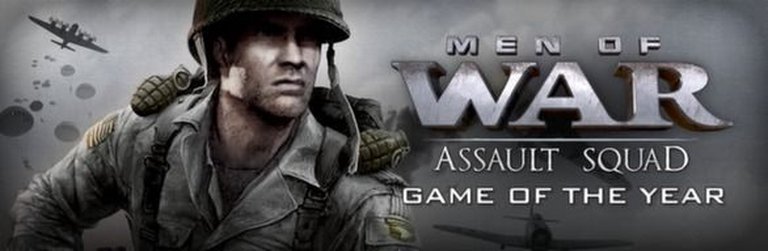
Men of War: Assault Squad – Game of the Year Edition is a comprehensive compilation of the real-time tactics game set during World War II, featuring intense battles across the globe with playable factions including Russia, Germany, USA, Commonwealth, and Japan for the first time in the series. It includes the full base game plus five DLCs—MP Supply Packs Alpha, Bravo, and Charlie, and Skirmish Packs 1 and 2—offering cooperative skirmish modes, multiplayer enhancements, and extensive strategic unit control.
Where to Buy Men of War: Assault Squad – Game of the Year
Men of War: Assault Squad – Game of the Year Cracks & Fixes
Men of War: Assault Squad – Game of the Year Patches & Updates
Men of War: Assault Squad – Game of the Year Mods
Men of War: Assault Squad – Game of the Year Guides & Walkthroughs
Men of War: Assault Squad – Game of the Year: Review
Introduction
Imagine commandeering a Tiger tank’s turret on a fog-shrouded European battlefield, angling your hull just so to ricochet an incoming Sherman shell while your panzergrenadiers lay suppressing fire from sandbag cover—Men of War: Assault Squad – Game of the Year Edition thrusts you into this visceral chaos, where every bullet, grenade, and fuel canister matters. As the definitive compilation of Digitalmindsoft’s 2011 standalone expansion to the acclaimed Men of War series, this GOTY package bundles the core game with all five DLCs, cementing its status as a high-water mark for real-time tactics (RTT) in the World War II genre. Rooted in the lineage of Faces of War and Soldiers: Heroes of WW2, it refines a formula of granular unit control and simulation depth that has influenced tactical gaming for over a decade. My thesis: While not revolutionizing the genre, Assault Squad GOTY delivers unmatched tactical realism and replayability through its innovative direct-control mechanics, faction asymmetry, and expansive skirmish/co-op modes, making it an enduring masterpiece for strategy enthusiasts despite its age-related technical quirks.
Development History & Context
Digitalmindsoft, a small German studio founded by veterans of the Eastern European development scene, took the reins from Ukrainian pioneers Best Way (creators of the GEM 2 engine underpinning the series) to helm Men of War: Assault Squad. Led by designer Christian Kramer, the team envisioned a shift toward infantry-centric warfare, expanding on Men of War (2009)’s vehicular focus by introducing Great Britain/Commonwealth and Imperial Japan as playable factions—marking Japan’s debut in the series. This was no mere sequel; it was a “standalone expansion” with 15 new missions, overhauled squads, and enhanced visuals, internally codenamed “A4” after the “A3” base game.
Released on February 25, 2011, for Windows via 1C Company (later re-published by Fulqrum Publishing on platforms like Steam and GOG), development emphasized accessibility amid 2010s RTS fatigue. The era’s landscape was dominated by Blizzard’s StarCraft II (2010) and Relic’s Company of Heroes 2 (2013), which prioritized spectacle and base-building, but the niche RTT space—echoing Close Combat or Combat Mission—craved simulation depth. Technological constraints of DirectX 9-era hardware (minimum 2.6GHz CPU, 1GB RAM, DX9c GPU) limited graphical ambition, yet GEM 2’s physics and line-of-sight systems shone, tracking ammo, fuel, and modular damage without modern bloat.
A novel pre-release strategy involved paid betas escalating to open ones tied to Steam group milestones (10k then 20k members), fostering community buy-in and ironing out balance issues. Post-launch, five DLCs (MP Supply Packs Alpha/Bravo/Charlie for multiplayer maps; Skirmish Packs 1/2 for co-op missions) culminated in the September 2012 GOTY edition, addressing multiplayer longevity via 15+ new maps and 10 skirmish scenarios. This iterative approach mirrored the mod-heavy ethos of the series, with ModDB hosting hundreds of addons, but GameSpy’s 2014 shutdown crippled online play, confining it to LAN—a poignant relic of early 2010s netcode woes.
Narrative & Thematic Deep Dive
Assault Squad GOTY eschews cinematic storytelling for modular, objective-driven campaigns, embodying the series’ “mission pack” philosophy over linear plots. Each of the five factions boasts a skirmish-style campaign (3-5 missions apiece, expanded by DLC), framing WW2 theaters as dynamic battlegrounds rather than scripted epics. USA’s arc spans “Overlord,” “Carentan,” and “Battle of the Bulge,” tasking Rangers with beachheads and paratrooper drops; Germany’s covers “Caen Outskirts,” “St. Hilaire,” and “Market Garden,” emphasizing Wehrmacht counterattacks; Commonwealth tackles “Battle Axe,” “Operation Torch,” and “Arnhem”; Soviets defend “Smolensk,” assault “Koenigsberg,” and push into “Manchuria”; Japan’s evokes Pacific ferocity in “Khalkhin Gol,” “Singapore,” and “Iwo Jima.”
No named protagonists or branching dialogue exist—units are anonymous squads (e.g., Panzergrenadiers, SAS, SNLF) with inventories lootable from foes, underscoring themes of expendable heroism and resource scavenging. “Direct control” immerses you as a faceless soldier, priming grenades or manning tank guns, evoking grunt-level grit over heroic fantasy. DLC Skirmish Packs deepen this: Pack 1’s defense waves (holdouts leading to counterattacks) and Pack 2’s infiltration (assassinate officers, ambush convoys) introduce procedural elements like random patrols, amplifying replayability.
Thematically, it grapples with WW2’s asymmetry—Americans’ airstrike supremacy vs. Japanese banzai charges; German engineering (Goliaths, Nebelwerfers) vs. Soviet human-wave resilience (“For the Motherland!” charges). Hero units (e.g., Veteran Snipers boosting morale) nod to elite valor, while bonuses like remote bombs or “Homeland Fury” evoke desperation. Absent voice acting or cutscenes, narrative emerges organically: a T-34 crew abandoning a breached hull, or SAS commandos fortifying a bridge. Critiques note repetition—most missions boil down to “capture points for better units”—but this sandbox purity prioritizes tactical expression over Hollywood bombast, thematizing war’s attritional grind.
Gameplay Mechanics & Systems
At its core, Assault Squad GOTY loops around resource-light skirmishes: spawn squads/vehicles at control points, capture zones for manpower (MP) to unlock heavies, and leverage direct control for micro-intensive combat. No base-building; victory hinges on positioning, ammo management, and faction synergies across modes: Skirmish (1-8p co-op vs. AI), Combat/Assault Zones/Frontlines multiplayer (1v1 to 8v8), with DLC adding “Day of Victory” and 20+ maps (e.g., “Frozen River” 1v1, “Desert Walk” 8v8).
Infantry Combat: Squads (4-10 men) carry personalized inventories—riflemen with frags, engineers with mines, elites like Mechanized Rangers with AT gear. Direct control (WASD + mouse) enables peeking, grenade arcs, and sandbag deployment; cover sim blocks LOS/projectiles, rewarding ambushes. Factions differentiate: Soviet conscripts swarm with cheap MG nests; Japanese SNLF excel in close-quarters banzai.
Tank & Vehicle Systems: Genre-defining innovation—no HP bars; armor models penetration by angle/range (green/red hit indicators), with modular damage (de-track, immolate engine, crew-kill). Shells ricochet or overpenetrate, crews bail/repair. Panthers outgun Shermans at range, but KV-1s absorb punishment; DLC adds mass-production spam (e.g., Japanese lights).
Progression & UI: Points buy units (overhauled squads allow specialists); bonuses (airstrikes, Katyushas) cooldown-gated. UI is functional but dated—clunky inventories, dense hotkeys—yet level editor empowers modders. Flaws: AI pathing glitches, perf hitches on low-end rigs (as per GameQuarter’s 65% review), unit imbalance (e.g., “mind-reading” mortars in GOG feedback). Strengths: Dynamic AI adapts (flanks, counters AA), high replay via randomization.
Co-op shines: Up to 8p defend waves or assassinate, with Elo-rated MP (pre-GameSpy). GOTY’s DLC elevates this to “limitless replayability,” per Steam blurbs.
World-Building, Art & Sound
Spanning Western/Eastern Europe, North Africa, and Pacific isles, Assault Squad‘s world-building thrives on tactical verisimilitude over lore. Bocage hedgerows obscure LOS in Normandy; Pacific jungles favor Japanese ambushes; Siberian snows demand fuel convoys. DLC maps like “Kanawa Mine” or “Dubovka” vary biomes (desert walks, urban ruins), with destructible environs—flattened blocks via Goliaths—enhancing immersion.
Visuals, upgraded from Men of War, leverage GEM 2 for detailed models (Tiger angling, shell impacts) and particle effects (fires, ricochets), though DX9 limits fidelity (flat textures, pop-in). Atmosphere builds via scale: lone rifleman vs. Tiger convoys evokes vulnerability. Sound design impresses with weighty booms (88mm cracks), clattering tracks, and muffled small-arms—inaudible at range for realism. No orchestral score; ambient war din (shouts, engines) underscores tension, though sparse VO limits personality. Collectively, these forge a gritty, simulationist tone: war as mechanical ballet, not spectacle.
Reception & Legacy
Launching to a Metacritic 77/100 (21 reviews), Assault Squad earned praise for “tough, brilliant AI” (GameSpot 8/10, Brett Todd) and depth, but mixed on perf/balance (GameQuarter 65%: “not smooth on every system, unit imbalance”). GOTY (2012) averaged 4/5 player scores (MobyGames/GOG), with fans lauding co-op (“blown me away,” GOG) amid gripes (“boring if you’ve played WW2 games,” MILFgaaaaard). Commercial success spawned bundles (Ultimate Collection) and sequels (Assault Squad 2, 2014).
Reputation evolved: GameSpy’s demise hurt MP, but LAN/mods sustained it—ModDB’s 939+ addons (e.g., Blood & Glory, Soviet Front) extend life. Influenced Call to Arms, Combat Mission mods, and modern sims (Graviteam Tactics), prioritizing physics over arcs. In RTS decline, it preserved RTT purity, prefiguring Steel Division asymmetry.
Conclusion
Men of War: Assault Squad – Game of the Year Edition distills WW2 tactics to their essence: intimate, unforgiving simulation where a misplaced AT round spells doom. Its direct control, faction depth, and DLC-expanded skirmishes offer endless mastery, outweighing UI/performance foibles. As a historian, I place it among RTT greats—beside Close Combat III—for pioneering modular damage and co-op replayability, influencing a modding renaissance that outlives official support. Verdict: Essential (9/10). Buy on GOG/Steam for $1.50 sales; eternal value for tacticians, a flawed gem in gaming history.