
- Release Year: 2019
- Platforms: Windows
- Publisher: You Li Hong
- Developer: You Li Hong
- Genre: Adventure
- Perspective: First-person
- Game Mode: Single-player
- Gameplay: Visual novel
- Setting: Werewolves
- Average Score: 88/100
Description
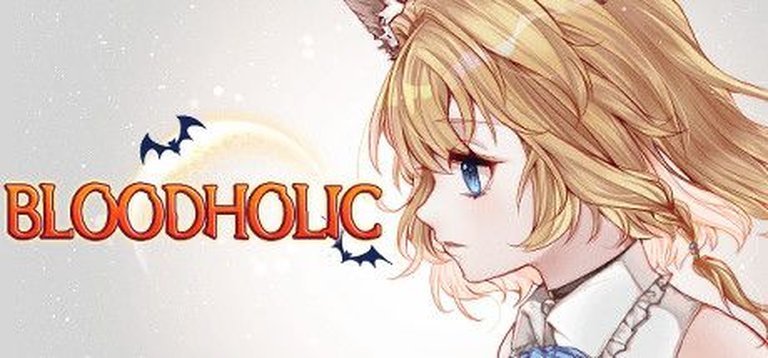
Bloodholic is a short visual novel set in Camper City, a unique metropolis where werewolves, vampires, and witches coexist under the fragile ‘Peace Agreement.’ The story follows Charlotte Christopher, daughter of the true vampire ancestors, who is murdered during a ceremonial signing but miraculously regenerates as a werewolf girl—only to become the prime suspect, forcing her to investigate a web of linked mysteries, past concealed cases, and suspenseful intrigue to prove her innocence amid rising tensions between the races.
Where to Buy Bloodholic
PC
Bloodholic Reviews & Reception
steambase.io (89/100): Very Positive Player Score of 89/100 from 87 reviews.
store.steampowered.com (88/100): Very Positive (88% of the 87 user reviews for this game are positive).
Bloodholic: Review
Introduction
Imagine being stabbed to death at a diplomatic ceremony meant to symbolize eternal peace, only to awaken in the body of your people’s ancient enemies—with the police now hunting you as the prime suspect. This audacious premise hooks you from the first scene of Bloodholic, a 2019 indie visual novel that punches above its weight in supernatural mystery. Developed as a compact 80,000-word experience clocking in at around 4-5 hours, it has quietly carved a niche among free Steam titles, earning “Very Positive” reviews from 88% of 87 players. As a game historian, I see Bloodholic as a testament to the democratization of visual novel creation via tools like Ren’Py, blending vampire lore, werewolf reincarnation, and detective intrigue into a taut, choice-driven tale. My thesis: While its brevity and rough English localization hold it back from masterpiece status, Bloodholic excels as a suspenseful, thematically rich entry that cleverly subverts identity and prejudice in a hidden urban fantasy world, making it essential for fans of concise yuri mysteries.
Development History & Context
Bloodholic emerged from the solo or micro-team efforts of Chinese developer 釉里红 (You Li Hong, also credited as JioJo or srinya_chou), self-publishing on Steam on November 21, 2019. This was a fertile era for indie visual novels, fueled by Ren’Py’s free, Python-based engine, which lowered barriers for creators worldwide. Ren’Py, used here for its sprite-based art, branching dialogue, and simple save systems, had powered hits like Doki Doki Literature Club (2017), proving VNs could thrive commercially even as freeware.
The 2019 gaming landscape was dominated by AAA blockbusters (Death Stranding, Cyberpunk 2077 delays) and a visual novel renaissance on Steam, with titles like Nekopara and Steins;Gate Elite popularizing anime-style narratives. Chinese indies were rising too, thanks to Steam’s global reach and tools like machine translation for English support. Bloodholic‘s free-to-play model (274 MB download) fit perfectly into this ecosystem, targeting niche audiences via tags like “Female Protagonist,” “Vampire,” and “LGBTQ+.” Technological constraints were minimal—running on Windows XP-era hardware (2.5GHz CPU, 8MB/GB RAM)—reflecting Ren’Py’s efficiency, though it exposed limitations like no full voice acting or advanced animations.
Development appears passion-driven: Originally released in Simplified Chinese, an English machine-translated version followed in 2022, with patches fixing achievement bugs (e.g., 2022/12/13 update). No major studio backing meant lean production—static art, text-heavy progression—but this authenticity shines in its unpolished urgency, echoing early 2010s doujin VNs from Comiket circles.
Narrative & Thematic Deep Dive
At its core, Bloodholic is a detective mystery unraveling in Camper City, a fragile melting pot of werewolves (“wolf”), vampires (“blood”), and witches bound by the decade-old “Peace Agreement.” The protagonist, Charlotte Christopher—haughty daughter of the vampire “true ancestors”—attends the 10-year renewal ceremony but is assassinated in a “premeditated live murder.” Reincarnated into a werewolf girl’s body via a rare supernatural loophole, she grapples with identity crisis while the police frame her, citing a concealed case from 10 years prior as motive.
Plot Structure and Twists
The story interlinks three cases: Charlotte’s murder, the decade-old cover-up, and a contemporary conspiracy threatening the Agreement. Suspense builds through map-based movement between city hubs (police station, werewolf dens, witch enclaves), uncovering clues via dialogue trees. Choices lead to two role endings—”My best lover” (romantic yuri branch) and others tied to truth-revealing achievements like “The truth” or “Poor people must have hateful place.” Without spoiling, the narrative masterfully employs unreliable narration: Charlotte’s vampire arrogance blinds her to werewolf perspectives, mirroring real-world prejudices. Pacing is relentless—80,000 words fly by in branching paths, with red herrings (e.g., witch manipulations, internal faction betrayals) culminating in a reveal questioning “Who is the real murderer who killed me?”
Characters and Dialogue
Charlotte evolves from victim to suspect, her internal monologues raw: adapting to feral werewolf instincts while haunted by vampiric memories. Supporting cast shines—stoic werewolf allies, enigmatic witches, biased cops—fleshed out via VNDB tags like “Multiple Protagonists” and “Girl x Girl Romance.” Dialogue, though stiff in English (machine-translated quirks like “Suspense to the plot”), conveys tension effectively, with yuri undertones adding emotional stakes (e.g., “Promise in Naples”).
Themes: Identity, Prejudice, and Reincarnation
Thematically, Bloodholic probes reincarnation as empathy forced: Charlotte’s body-swap exposes racial divides, critiquing how “peace” papers over hatred. Werewolves embody primal loyalty, vampires aristocratic decay, witches arcane neutrality—echoing folklore while allegorizing minority tensions. Girlxgirl romance tempers noir with vulnerability, subverting vampire tropes (no sparkles, all bloodlust). It’s a microcosm of VN evolution from eroge to mature mysteries, akin to Higurashi but bite-sized.
Gameplay Mechanics & Systems
As a Ren’Py visual novel, Bloodholic prioritizes reading over action, but innovative touches elevate it.
Core Loops
Map Movement (VNDB highlight) breaks linearity: Navigate Camper City’s districts, triggering events based on “time” progression or clues collected. Read-heavy loops—advance text via clicks, branch via 2-4 choices—build to deductions, with saves encouraging replays for endings.
Combat and Progression
No traditional combat; “progression” is narrative—unlock truths via evidence-gathering, reflected in 4 Steam achievements (e.g., “Resurrection: I am a ghost,” “Witch’s waltz”). UI is clean: Auto-read, skip, gallery for CGs, but clunky English text boxes occasionally glitch.
Innovations and Flaws
Strengths: Tight choice-consequence (bad ends for hasty accusations), partial controller support. Flaws: Achievements were broken post-launch (fixed 2022), minimal replay incentives beyond endings, no voice acting limits immersion. Still, for 4-5 hours, it’s flawlessly paced—no filler.
World-Building, Art & Sound
Camper City’s world-building is immersive yet concise: A neon-noir metropolis where Peace Agreement posters mask turf wars. Supernatural rules feel lived-in—vampire regeneration, werewolf packs, witch spells—tied to plot without exposition dumps.
Art Direction: Anime/manga style with evocative CGs (e.g., bloodied ceremonies, moonlit transformations). Static sprites convey emotion via poses/expressions; backgrounds (cityscapes, dens) build atmosphere. Tags hint at “Nudity” and “Zombies” (peripheral?), fitting dramatic reveals.
Sound Design: Subtitles-only (English/Simplified Chinese), no full audio. Ambient BGM (likely synth-wave mystery tracks) and SFX (heartbeats, howls) enhance tension, but silence during key dialogues underscores isolation. Ren’Py defaults suffice, prioritizing mood over polish.
Together, they forge a claustrophobic, seductive vibe—think Vampire: The Masquerade meets Ace Attorney in 2D.
Reception & Legacy
Launch reception was quiet: No MobyGames/VNDB critic scores (player avg. 5.86/10 on VNDB, “Meh”), but Steam’s 88% positive (77/87) praises plot twists (“truth is…?”). Community gripes—broken achievements, rough English—were patched, boosting longevity. Curators (7 on Steam) and forums note yuri appeal, with Russian/Chinese fans pushing localizations.
Commercially, as freeware, it amassed modest collections (1 on MobyGames). Legacy: Influences niche VNs with reincarnation mysteries (e.g., echoes in later indies like Paranormasight). In VN history, it exemplifies 2019’s free Steam surge, preserving doujin spirit amid AAA dominance. No industry ripple, but a cult gem for supernatural detective fans.
Conclusion
Bloodholic distills visual novel essence into a bloody, brilliant mystery: Reincarnation flips victim to suspect, weaving prejudice, romance, and suspense across three linked cases and two endings. Its Ren’Py simplicity belies deep themes and tight pacing, marred only by translation hiccups and sparsity. In video game history, it claims a spot as an under-the-radar 2019 triumph—a free gateway to yuri noir that proves indies can thrill without budgets. Verdict: 8.5/10. Play it now on Steam; it’s the quick fix vampire lore needs. For VN veterans, a refreshing detour; for newcomers, an addictive hook into the genre.