
- Release Year: 2019
- Platforms: Windows
- Publisher: rosmic AB
- Developer: rosmic AB
- Genre: Action
- Perspective: 1st-person
- Game Mode: Single-player
- Gameplay: Shooter
- Setting: Futuristic, Sci-fi
- Average Score: 30/100
Description
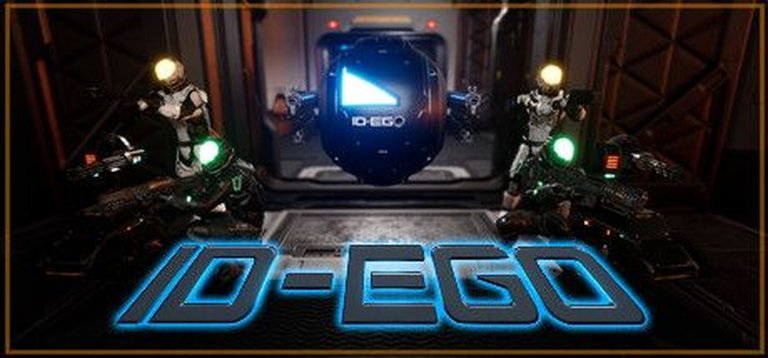
ID-EGO is a first-person sci-fi shooter set in a distant future where humanity has colonized parts of space; after an alien attack on a planetary base, the player awakens revived inside an enemy spaceship, accompanied by the self-centered drone named ID-EGO, and must explore its various sections, battle foes, and piece together the story through intense action gameplay powered by Unreal Engine 4.
Where to Buy ID-EGO
PC
ID-EGO Cracks & Fixes
ID-EGO: Review
Introduction
In an era dominated by sprawling open-world epics and live-service behemoths, ID-EGO emerges as a defiant throwback—a single-player sci-fi FPS that channels the raw, unfiltered spirit of 1990s classics like Doom and Quake, but rendered in the gleaming polish of Unreal Engine 4. Released in 2019 by a tiny Swedish indie studio, this debut title promised “old-school challenge with modern graphics,” thrusting players behind enemy lines aboard an alien spaceship for brutal combat, brain-teasing puzzles, and secretive exploration. Yet, as a game historian, I see ID-EGO not just as nostalgic fan service, but as a microcosm of indie ambition: passionate execution hampered by familiarity. My thesis? ID-EGO delivers competent, replayable FPS action for retro enthusiasts, but its by-the-numbers design and thin narrative prevent it from transcending its inspirations, cementing it as a footnote rather than a legend in the booming retro revival wave.
Development History & Context
rosmic games, an independent studio founded in 2017 by a “small group of gaming enthusiasts” in Borås, Sweden, poured over two years of sweat into ID-EGO, their inaugural project. Self-publishing under rosmic AB, the team leveraged Unreal Engine 4—a bold choice for a debut FPS aiming to blend retro mechanics with contemporary visuals. Development began around 2017, aligning with a surge in indie “boomer shooters” like Dusk and Amid Evil, which revived the fast-paced, arena-style FPS amid a market saturated by battle royales and narrative-driven titles like Half-Life: Alyx.
The 2019 landscape was ripe for this: DOOM Eternal loomed on the horizon, reigniting interest in skill-based shooters, while indie successes like Superhot proved small teams could compete with Unreal’s power. Technological constraints were minimal—UE4 handled procedural generation, dynamic lighting, and effects like muzzle flashes—but the studio’s tiny size meant compromises. Pre-release betas (e.g., BETA-3.5.0 in November 2019) focused on bug fixes, level tweaks, and performance optimizations for procedural rooms, reflecting a scrappy, community-driven process. Post-launch patches (up to 1.1.2 in February 2020) added controller support, Steam achievements, FOV sliders (80-120°), sprinting, and ragdoll death scenes, showing responsiveness to player feedback on Steam forums. Priced at a launch discount of $19.99 (down from $24.99, now ~$7.99), it targeted budget-conscious retro fans, but limited marketing (Twitter @IDEGOGame, site id-ego.se) underscored indie realities—no AAA hype machine.
This context paints ID-EGO as a labor of love from outsiders: Swedes evoking Freudian psyche terms (ID-EGO) for a drone, amid a genre renaissance, yet constrained by resources that kept scope tight.
Narrative & Thematic Deep Dive
ID-EGO‘s story is deliberately secondary to gameplay, a skeleton key unlocking levels rather than a labyrinthine epic. Set in a “distant future” where humanity has colonized space, it opens mid-crisis: an alien attack ravages a planetary base, killing the protagonist. Revived aboard the invaders’ spaceship by the titular drone “ID-EGO”—a self-centered, wannabe-overlord AI with a Freud-inspired name (developer clarification: purely nominal, matching its ego)—players are thrust into survival. ID-EGO acts as “backseat driver,” barking missions via voice lines: explore ship depths, venture planetside, disable defenses. As progression unfolds, “pieces of information” reveal lore piecemeal—hints of betrayal, alien motives, human resilience—but dev posts emphasize it’s “much more centered around fun gameplay than a complex story.”
Characters: The silent protagonist embodies player agency, a blank slate for skill expression. ID-EGO steals the show: pompous, unreliable (“you don’t know if you can trust him”), its normalized voice (post-patch) delivers quips amid chaos, evolving from guide to comic foil. No deep ensemble; enemies are faceless xenomorph hordes, bosses archetypal guardians.
Dialogue & Themes: Sparse, functional voiceovers prioritize objectives over wit—e.g., misspelled corrections in betas highlight polish struggles. Thematically, it probes trust in AI overlords (ID-EGO’s ego vs. player’s grit), humanity’s fragility post-invasion, and self-reliance (no hand-holding mirrors Freud’s id/ego/superego struggle, albeit superficially). Puzzles and secrets tease backstory logs, but the drone’s narration frames it as “ID-EGO’s adventure,” subverting player heroism. Subtitles (improved font post-1.1.0) aid accessibility, yet the narrative’s simplicity suits its arcade roots—evocative of Duke Nukem‘s bravado, but lacking Prey‘s psychological depth critics compared it unfavorably to.
Ultimately, the plot services loops: revive, fight, uncover, repeat. It’s coherent but forgettable, prioritizing emergent stories from player triumphs over scripted drama.
Gameplay Mechanics & Systems
At its core, ID-EGO is a skill-gated old-school shooter: direct control (KB/M, gamepad post-patch), 1st-person perspective, no abilities, no checkpoints—death resets via ragdoll cinematics. Core loop? ID-EGO assigns missions; players navigate alien ship/planetside hubs, battling via “action-packed combat,” “crazy puzzles,” and secret-hunting.
Combat: Arena-style firefights emphasize playstyle freedom—brute force (machinegun runs), run-and-gun, or defensive lures. Weapons include ballistic (muzzle-flash reworked), energy rifles (doppler hums on whiff), rayguns, snipers (toggle/hold aim). Enemies vary: grunts, respawners (hard/insane only), large foes, projectile hurlers. Bosses (turret, crane-puzzle variants) demand adaptation; procedural levels ensure replayability. Difficulties (Easy-Insane) tweak durability—easy buffs player resistance for noobs, insane tests veterans. Patches added sprint bursts, thinner player model for tight spaces.
Progression & Puzzles: No RPG trees; ammo/health from secrets/crates (highlighted post-beta). Puzzles: forcefield hacks (notify enemies on timer), crane drops, teleporters. UI is minimalist—readable subtitles, keybind rebinding, loading tips (procedural precalc indicators). FOV slider combats ultra-widescreen; no VSync lock for 120+ FPS fluidity.
Innovations/Flaws: Procedural generation spices runs (e.g., planet tweaks for snipers), but E1M1 critique notes “by-the-numbers” feel—no DOOM Eternal glory kills. Bugs (pre-patch: stuck players, spawn fails) fixed iteratively; controller hotplug/haptics shine post-1.1.0. Strengths: pure skill progression. Weaknesses: sparse feedback, occasional jank (e.g., water physics gaps).
| Mechanic | Strengths | Weaknesses |
|---|---|---|
| Combat | Fluid, style-flexible; solid enemy variety | Predictable AI; limited weapon synergy |
| Puzzles/Secrets | Integrated, rewarding exploration | Occasional finickiness (widget clicks) |
| Progression | Pure skill; 4 difficulties | No meta-progression; punishing restarts |
| UI/Controls | Rebindable, FOV/controller support | Early bugs; basic menus |
It’s competent retro FPS DNA, refined by patches into a tight package.
World-Building, Art & Sound
The alien spaceship—a labyrinth of corridors, hangars, waterlogged zones, sniper towers—forms a claustrophobic sci-fi maze, punctuated by planetside detours. Procedural elements vary layouts, fostering discovery amid “unexplored” vibes. Visuals: UE4’s vivid lighting (optimized post-launch), atmospheric post-process, effects (smoke, teleporters, debris fades). Art direction evokes Dead Space menace—futuristic panels, organic alien hives—but muted palettes prioritize function over spectacle.
Atmosphere: Tension builds via isolation; ID-EGO’s chatter punctuates silence. Sound design elevates: enemy impacts prioritize over loops, projectile whines/dopplers, normalized drone voice. Menus tip audio tweaks; no surround specifics, but royalty-free cues suit chaos.
These elements amplify immersion: dim-lit procedural rooms heighten dread, audio cues guide without hand-holding, crafting a “behind enemy lines” paranoia that rewards cautious prowls over blind rushes.
Reception & Legacy
Launch reception was muted: MobyGames’ sole 60% (E1M1 Magazine, 3/5) dubbed it “passionate Swedes” effort but “not the next Prey or Unreal”—forgettable amid 2019’s Disco Elysium and Resident Evil 2 Remake. No Metacritic aggregate; Steam lacks visible reviews (sparse discussions: controller pleas, story queries). Commercial? Niche Steam sales at budget price; cracked early, per forums. Patches boosted polish, but low visibility (no player reviews on Moby) suggests modest footprint.
Legacy: Minor influencer in boomer shooter boom—precedes Ultrakill, echoes Dusk. As rosmic’s debut, it proves indie viability on UE4, but no sequels evident. Influences: reinforces no-handholding trend (e.g., Void Bastards). In history, it’s a testament to 2019 indies: admirable, underseen homage, rank ~48k on IndieDB.
Conclusion
ID-EGO capably resurrects old-school FPS joys—punishing combat, puzzle-prowls, procedural spice—in a modern sci-fi shell, backed by rosmic’s post-launch diligence. Yet, its narrative thinness, familiar systems, and lukewarm reception relegate it to cult curiosity, not pantheon. For retro fans seeking $8 thrills on Easy-to-Insane, it’s a win; historians note it as indie grit amid giants. Verdict: 7/10—solid debut, but ego outpaces id in lasting impact. Play for the drone’s snark and shotgun catharsis; history shelves it as passionate obscurity.