
- Release Year: 2010
- Platforms: Windows
- Publisher: Koch Media GmbH (Austria)
- Genre: Compilation
- Game Mode: Single-player
- Average Score: 63/100
Description
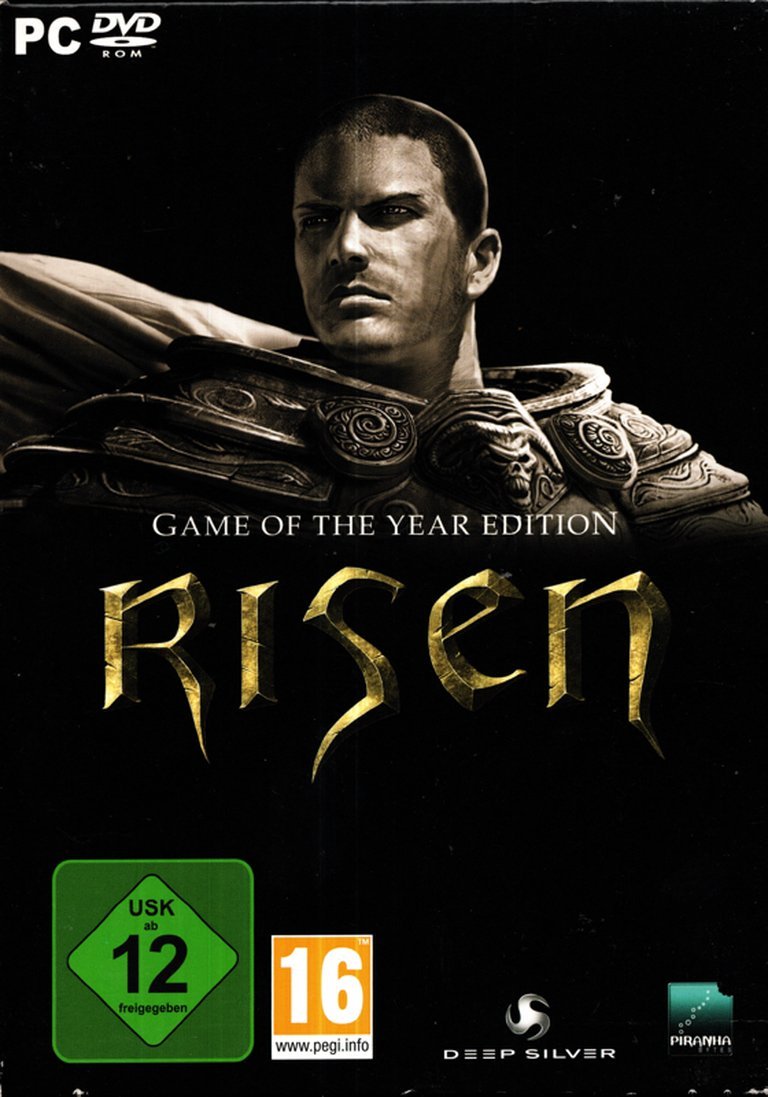
Risen: Game of the Year Edition is a special physical compilation release featuring the action RPGs Risen and Gothic 3, accompanied by extras like a making-of DVD, soundtrack, developer-signed card, and artbook. In Risen, players control a shipwreck survivor on the Mediterranean-inspired island of Faranga, where a Water Titan has shattered barriers unleashing ancient ruins and monsters; aligning with either the bandit outlaws or the Inquisition, the hero explores Saurian fortresses, collects magical artifacts, and battles Titan Lords including Ursegor to end apocalyptic storms and save humanity.
Risen: Game of the Year Edition Cracks & Fixes
Risen: Game of the Year Edition Patches & Updates
Risen: Game of the Year Edition Mods
Risen: Game of the Year Edition Guides & Walkthroughs
Risen: Game of the Year Edition Reviews & Reception
metacritic.com (60/100): Mixed or Average
thenocturnalrambler.blogspot.com : Risen sticks pretty closely to the formula set up by Gothic 1 and 2.
reddit.com : Flat out it’s just fun to play.
opencritic.com (67/100): Risen is packed with content and if you can get past its blemishes there is a solid RPG here to last you at least 60 hours.
Risen: Game of the Year Edition Cheats & Codes
PC
Type “minsky” during gameplay and press Enter to enable cheat mode and unlock the console. Then press ~ (North American), § (European), ` (some keyboards), or F1 to display the console window and enter the codes.
| Code | Effect |
|---|---|
| God | God mode |
| Invisible | Ignored by enemies until you hit someone |
| Teach [skill] [number] | Teaches specific skill |
| Teach All [number] | Teaches all skills |
| give It_Gold | Get gold |
| give It_Gold [number] | Get indicated amount of gold |
| give It_Armor | All armor |
| give It_Ru_Teleport | All 14 Teleport Runes |
| Give All [number] | Get all items; may glitch game |
| Spawn [entity name] | Spawn specific entity |
| Time [hh.mm] | Set game time |
| Time scale [number] | Set slow or fast motion; 1 is default |
| IsoView | Isometric view |
| FirstPerson | First person view; may glitch game |
| Set [variable] [value] | Set variable or state |
| help | Console help |
| list | List cheat codes (use after help) |
| goto [name] | Go to indicated NPC (case-sensitive) |
| edit PC_Hero | Player editor |
| setqueststatus [quest tag] [open, run, cancel, close, succeed, fail] | Set state of any open quest |
Risen: Game of the Year Edition: Review
Introduction
Imagine washing ashore on a storm-ravaged volcanic island, clutching a splintered tree branch as your only weapon, while ancient ruins erupt from the earth and colossal Titans threaten to unravel reality itself. This is the gripping hook of Risen, Piranha Bytes’ 2009 action-RPG that marked a triumphant return to form after the ambitious but flawed Gothic 3. The Game of the Year Edition, released in 2010 by Koch Media, bundles Risen with Gothic 3, a making-of DVD, soundtrack, developer-signed card, and artbook, transforming it into a collector’s treasure trove for fans of the studio’s signature “learn-by-doing” RPGs. As a spiritual successor to the Gothic series—born from a bitter split with publisher JoWood—this edition cements Risen‘s legacy as a raw, unforgiving gem that prioritizes immersion and consequence over hand-holding. My thesis: While imperfect, Risen: Game of the Year Edition stands as a pivotal artifact in RPG history, distilling Piranha Bytes’ hardcore design philosophy into a compact masterpiece that rewards persistence with unparalleled freedom and moral depth.
Development History & Context
Piranha Bytes, the Essen-based German studio behind the cult-classic Gothic trilogy, faced a crossroads after Gothic 3‘s 2006 launch. That game’s sprawling world buckled under technical strain, buggy combat, and rushed content, exacerbated by publisher JoWood’s rights retention post-split. Undeterred, Piranha Bytes inked a deal with Deep Silver in 2007, birthing the Risen series as a “Gothic 4” in all but name—retaining the nameless hero, faction-based progression, and gritty survivalism without IP baggage.
Under managing director Michael Rüve, with game design leads like Mattias Filler and Björn Pankratz crafting the narrative, the team adopted a leaner scope: a single, Sicily-inspired island called Faranga, dwarfing Gothic 1‘s colony but sidestepping Gothic 3‘s continental sprawl. The proprietary Genome engine—refined from Gothic 3—powered seamless exploration with PhysX physics, SpeedTree foliage, and dynamic weather, though it strained on 2009 hardware (e.g., quad-cores underutilized). Combat was overhauled for directional precision, ditching Gothic 3‘s click-fest for parry/dodge timing. The PC version shipped polished on October 2, 2009; Xbox 360 port by Wizarbox lagged with frame drops and input issues.
The 2010 GOTY Edition arrived amid fan fervor, pairing Risen with Gothic 3 (itself patched post-launch) and lavish extras, targeting enthusiasts in a post-Oblivion landscape dominated by quest markers and level-scaling. Piranha Bytes’ vision—immersion via earned power, no fast travel until late-game, trainer-locked skills—clashed with mainstream trends, positioning Risen as a hardcore antidote to Bethesda’s accessibility.
Narrative & Thematic Deep Dive
Risen‘s plot unfolds across four chapters in a world where humanity’s god-banishing hubris unleashes the Titans—primordial forces embodying elemental fury. The nameless Namehero (a Gothic staple) survives a Titan-assaulted Inquisition ship, allying with Patty (voiced by Lena Headey) amid wreckage. Faranga’s factions emerge: Harbor Town under iron-fisted Inquisitor Mendoza (Andy Serkis), ousted Don Esteban’s (John Rhys-Davies) swamp bandits, and the rune-magic mages guarding the Holy Flame monastery.
Chapter I: Faction Forging – Prove loyalty via Harbor Town quests (e.g., smuggling busts, golden bowl heists favoring one side), bandit arena trials, or mage rituals. Choices lock paths: bandits for melee mastery, Inquisition for hybrid warriors, mages for arcana.
Chapter II: Crystal Quest – Collect five Saurian crystal disks from risen ruins, uncovering lizardfolk lore. Mendoza’s volcano temple beckons.
Chapter III: Temple Betrayal – Ursegor’s spirit reveals the imprisoned Fire Titan shields Faranga from storms. Mendoza’s rogue bid to harness it risks annihilation, forcing moral schism.
Chapter IV: Titan Lord – Don Titan Lord’s armor from undead-guarded ruins, slay Mendoza, reimprison the Titan. Post-credits tease mainland Titan wars with Patty.
Thematically, Risen probes ends-justify-means ethics: Mendoza’s noble tyranny vs. Esteban’s self-serving exile vs. mages’ isolationism. No “good” faction exists—Inquisition drafts wanderers, bandits extort, mages hoard power. Saurians add colonial undertones, venerating Titans as gods. Dialogue shines with voice-acted nuance (English-localized masterfully, sans Gothic‘s awkwardness), logged quests weaving personal arcs like Patty’s pirate-treasure hunt or monastery murders. Yet, the four-chapter brevity rushes the climax; retrospectives lament underdeveloped back-half spectacle versus Gothic 2‘s rituals. Still, emergent storytelling via faction ripple effects (e.g., bandit exile deaths) elevates it beyond linear plots.
Gameplay Mechanics & Systems
Risen‘s core loop—explore, grind XP, train skills, conquer barriers—embodies “Gothic DNA”: start weak, end godlike through toil. No classes; progression via 10 LP/level-ups spent at faction trainers (gold-scaling costs). Attributes (Strength/Dexterity/Mana/Wisdom via books) underpin skills: 10-tier melee (swords/axes/staves unlock parries, charges), ranged (bows/crossbows), crafting (alchemy/smithing), thievery (lockpick 3 tiers for “impossible” chests).
Combat Deconstruction: Real-time, directional system demands timing—left-click combos (3-4 hits at high skill), right-block/parry (tap for counter), dodge (double-tap move). Shields block projectiles/low foes; no magic-block. Enemies telegraph variably (ghouls claw, ash beasts charge), but erratic AI frustrates (sudden flanks, combo unpredictability). Souls-like in spirit (pre-Demon’s Souls by days), it’s skill-expressive yet clunky: camera auto-locks poorly, no manual toggle. Crystal Magic (fireball/ice lance bullets, mage/Inquisition-only) and Rune Magic (utility: levitate/telekinesis; buffs/summons) diversify, but runes demand Wisdom seals.
Systems Innovation/Flaws: Quest diary with maps/markers aids without spoiling; no respawns early (new foes later). Crafting: alchemy potions (permanent stats at lvl 3), smith ore weapons. UI: Tab-inventory (tabbed categories, no weight), radial wheel. Faction locks replayability—mages rune-solve puzzles, bandits sneak. Flaws: repetitive ruin puzzles (lizard busts, trap floors), streamerless magic, X360 port woes (laggy controls).
| Mechanic | Strengths | Weaknesses |
|---|---|---|
| Combat | Evolves with skills; tactical depth | Fast animations; poor lock-on |
| Progression | Trainer-gated freedom | Faction silos; LP scarcity |
| Exploration | Verticality, secrets | Monotonous biomes late-game |
World-Building, Art & Sound
Faranga mesmerizes: Mediterranean cliffs, swaying palms, misty swamps, volcano looming. Vertical design—beaches to peaks—hides alcoves (e.g., starter shield). Ruins/Saurian temples contrast organic wilds, puzzles blending platforming/magic. Art direction: Genome’s SSAO/HDRI yields sun-dappled brilliance, PhysX ragdolls chaos. Drawbacks: asset reuse (identical ruins), bland roads.
Kai Rosenkranz’s score—medieval flutes, percussive combats quoting ambiences—immerses sans overpowering (Gothic 3 lesson learned). SFX roar (ash beasts), voicework elevates (Serkis’ zealot Mendoza). Atmosphere: quakes, storms build dread; farms/humanity’s fragility grounds fantasy.
Reception & Legacy
PC launch dazzled (Metacritic 77/100, IGN 8.6/10: “rewarding yet messy”), praising immersion/graphics/VA; X360 port tanked (60/100, Eurogamer 4/10: “technical mediocrity”). GOTY Edition lacked reviews but appealed to collectors. Fan patches (v1.30) fixed bugs; 2023 THQ Nordic ports (PS4/XOne/Switch) added widescreen/achievements, boosting accessibility.
Influence: Birthed Risen 2/3, informed Piranha’s Elex (open-world grit). Cult status endures—retrospectives hail it as “Gothic reborn,” inspiring indie RPGs (Kenshi, Souls-likes) valuing consequence over scale. Commercially modest, its legacy thrives in preservation (GOG/Steam sales).
Conclusion
Risen: Game of the Year Edition encapsulates Piranha Bytes at peak form: a brutal ballet of exploration, combat, and choice on a living island where every decision scars the world. Combat roughens edges, late-game rushes, but triumphs—moral factions, trainer progression, earned power—secure its pantheon spot beside Gothic 1/2. For RPG historians, it’s essential: a defiant 2009 bulwark against bloat, proving small scopes yield grand epics. Verdict: 9/10. Play it, perish often, rise stronger—humanity has.