
- Release Year: 2004
- Platforms: Windows
- Publisher: ASCARON Entertainment GmbH
- Developer: ASCARON Entertainment GmbH
- Genre: Simulation, Sports, Strategy, Tactics
- Perspective: Text-based / Spreadsheet
- Game Mode: Hotseat, Single-player
- Gameplay: Business simulation, Managerial
- Setting: Football (European), Soccer
- Average Score: 79/100
Description
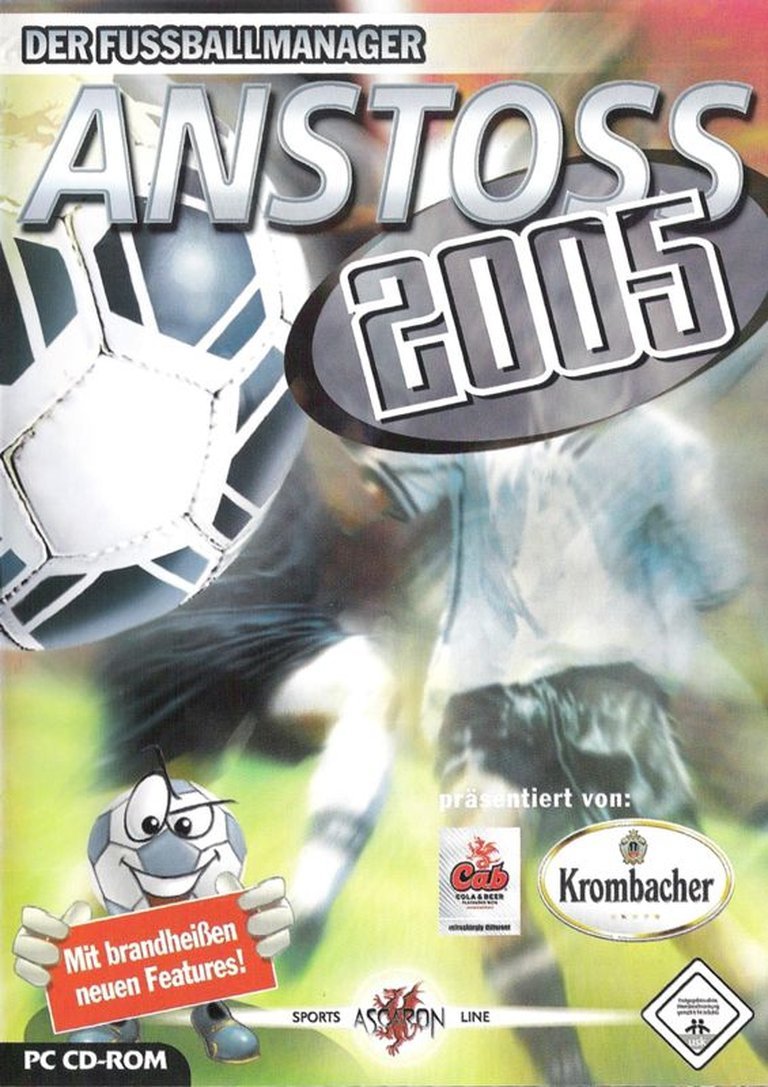
Anstoss 2005: Der Fussballmanager is a soccer management simulation game where players take full responsibility for a football club’s financial and athletic success, handling training, budget management, player transfers, tactics, and more in European leagues. Released in 2004 as an enhanced version of its predecessors, it features updates for the 2004/05 season including a new UEFA Cup format, improved user interface, reworked transfer AI, and various usability tweaks, all delivered through a text-based/spreadsheet perspective with hot-seat multiplayer support.
Anstoss 2005: Der Fussballmanager Cracks & Fixes
Anstoss 2005: Der Fussballmanager Patches & Updates
Anstoss 2005: Der Fussballmanager Reviews & Reception
fmwelten.de : Anstoss 2005 ist das bisher beste deutsche fussball manager spiel.
ascapedia.blogspot.com : Anstoss 2005 ist mit Sicherheit nicht der schönste Manager, aber er ist gut gereift.
Anstoss 2005: Der Fussballmanager: Review
Introduction
In the pantheon of German football management simulations, few series have endured as long or shaped the genre’s DNA quite like Anstoss, a franchise that kicked off in 1993 with the eponymous debut and evolved into a cult favorite through sheer depth and quirky charm. Anstoss 2005: Der Fussballmanager, released in late 2004, arrives not as a revolutionary leap but as a polished refinement of its immediate predecessors—a budget-friendly update that captures the essence of club stewardship amid the 2004/05 season’s rule changes. As a historian of sports sims, I see this title as a testament to Ascaron’s resilience: in an era dominated by Electronic Arts’ licensed behemoths like Football Manager 2005, Anstoss 2005 carves a niche for the purist, prioritizing managerial minutiae over graphical flash. My thesis? While it falls short of the series’ golden age peaks like Anstoss 3, it stands as a competent, playable evolution that rewards patient tacticians with addictive long-term campaigns, cementing the Anstoss legacy as Germany’s answer to spreadsheet soccer.
Development History & Context
Ascaron Entertainment GmbH, formerly Ascon, had been churning out Anstoss titles since the Amiga and DOS days, with series creator Gerald Köhler’s vision of hyper-detailed club management driving early successes like the 1993 original and 2000’s high-water mark Anstoss 3. By 2004, however, the studio faced headwinds: Köhler and key designer Rolf Langenberg had defected to EA to helm their rival Fussball Manager series, leaving a void filled by talents like project manager Ingo Mohr, lead game designer Ingo Bertram, and programming wizard Maik Delitsch (“Scotty”), who handled logic, 3D implementation, and technical localization. The game, built on the buggy foundation of Anstoss 4: Der Fussballmanager – International (2002)—itself a full rewrite plagued by long load times and poor match engines—was iteratively fixed in Anstoss 4: Edition 03/04 (2003) before this 2005 iteration.
Technological constraints of mid-2000s PC gaming played a role: Windows-only, CD/DVD-ROM distribution emphasized menu-driven, text-heavy simulation over resource-intensive 3D, aligning with an era when CPUs like Intel Pentium 4s struggled with complex AI in sprawling databases covering 145 countries. The gaming landscape was fierce—EA’s Football Manager 2005 (rebranded from Sports Interactive’s Championship Manager) boasted official licenses and global appeal, while Anstoss leaned into unlicensed, editor-modifiable content for German fans. Ascaron’s vision here was pragmatic: a “mid-price” update (around €30) incorporating real-world tweaks like the UEFA Cup’s new group stage format, a revamped transfer AI, and usability polish, aimed at luring newcomers while placating veterans weary of Anstoss 4‘s flaws. With 82 credits including graphics from Jürgen Venjakob and sound by Henrik Hobein and Dag Winderlich (stadium ambience and coach speeches), it was a team effort to salvage the series amid Ascaron’s looming financial woes, which culminated in bankruptcy by 2009.
Narrative & Thematic Deep Dive
Anstoss 2005 eschews linear storytelling for emergent narratives born of managerial drudgery and triumph, a hallmark of the genre since the original’s “office” hub. There’s no scripted plot—your “character” is a faceless trainer/manager rising through “echte Managerkarriere” (real manager career) mode, negotiating contracts, building reputation via courses and licenses, and climbing from Regionalliga obscurity to Bundesliga glory or even national team aspirations (though limited compared to early entries). Themes revolve around the duality of sport and business: financial precarity (budget juggling, sponsorships, IPOs), ethical gray areas (“illegales” options like shady deals), and the human element via press conferences, board interactions, and motivational speeches.
Dialogue shines through series-signature humor—witty coach rants, absurd incidents (e.g., fan riots or doping scandals), and satirical events poking fun at football’s absurdities, like overzealous merchandising or eccentric youth prospects. Characters are archetypal: demanding presidents, aging stars with loyalty quirks (one reviewer noted a 68-year legend with endless titles), and AI rivals with improved bidding logic. Underlying motifs echo real 2004/05 football—transfer market realism (four clubs often vying for talent), rule adaptations mirroring UEFA shifts—but laced with levity absent in EA’s sterner tone. Progression feels thematic: early struggles build “image” for top clubs, mirroring real careers like Ralf Rangnick’s tactical revolutions. Yet flaws persist—no deep personalities, and unlicensed names (e.g., “Königsblau” for Schalke) require editor tweaks, diluting immersion until fan patches arrive. Ultimately, the “narrative” is your dynasty: a 25-year-old with 300+ caps or a comeback from 0-3 down in the 82nd, forging personal lore in savegames that span decades.
Gameplay Mechanics & Systems
At its core, Anstoss 2005 is a masterful managerial loop: select a club (up to five leagues simulatable), oversee training regimens, scout transfers, set tactics, manage finances, and intervene in matches via text/3D hybrids. Key innovations over Edition 03/04 include a sleeker UI (straffed menus, intuitive navigation), enhanced transfer AI (rival clubs bid smarter, reducing exploits), expanded “illegales” risks/rewards, more trainer speeches, and UEFA Cup updates. Core systems deconstruct as follows:
Core Gameplay Loops
- Training & Progression: Granular player development—assign drills boosting fitness, skills (limited attributes vs. EA’s depth), or youth (A/B squads yielding “Kaisers”). Long-term motivation thrives here; bloggers note ablösefreie (free-agent) hauls post-season.
- Transfers & Finances: Overhauled market with auctions, prelim talks; buy clubs outright or go public. Budget planning interlinks with “Präsidium” interactions—fail, get sacked.
- Tactics & Matches: Menu-based formations (offensive mids versatile, per reviews), halftime tweaks. Views: pure text (atmospheric, ticker-style), 3D highlights (pre-rendered, criticized as “müder”), or skip. Hot-seat multiplayer (1-4) shines for locals.
Combat (Match Engine) & UI
No direct control, but dynamic: intervene via subs/tactics. Engine flaws—long calc times in 3D/text mix, simplistic strength system—offset by realism (e.g., form dips, injuries). UI is a standout: spreadsheet-like clarity trumps EA’s bloat, though “childish graphics” irk some.
Innovations & Flaws
Pros: Career boosts (image unlocks top jobs), humor events. Cons: Buggy stadium builds, shallow tactics/attributes, no network mode. Patches fixed most, yielding “toll Langzeitmotivation.” Verdict: Addictive for sim fans, but tacticians crave more depth.
World-Building, Art & Sound
The “world” is a sprawling, unlicensed soccer universe: 145 nations, four leagues each, fictional teams aping reality (editor essential for authenticity). Atmosphere builds via procedural events—derbies, scandals—evoking Bundesliga grit without licenses. Visuals: minimalist 2D menus, basic 3D scenes (top-down pitch, dot players), clean but dated (no widescreen, simple stadiums). UI prioritizes function—logical hierarchies, pop-ups—over flair, criticized as “Word-formular schlicht.”
Sound design elevates: Dag Winderlich’s stadium ambience and speeches immerse; Henrik Hobein’s effects punctuate text mode. No full commentary (unlike Anstoss 3‘s Günther Koch), but coach rants add personality. Collectively, these forge a focused, spreadsheet-soaked vibe: not immersive cinema, but efficient immersion for number-crunchers, where a roaring crowd snippet heightens that last-minute equalizer.
Reception & Legacy
Critically, Anstoss 2005 averaged 78% (MobyGames, 12 reviews): 4Players.de (84%) lauded depth/UI/humor despite calc times/licenses; PC Powerplay (80%) preferred it over EA for simplicity; GameStar (64%) dismissed it as a cheap Edition 03/04 update. Players rated 3.5/5 (sparse). Commercial success was modest—budget pricing helped vs. EA giants—but it outsold buggy Anstoss 4. Reputation evolved positively: fan sites praise bug-free patches, long-term play (e.g., 2017 saves), positioning it above Anstoss 4 but below Anstoss 3 (88%).
Influence: Reinforced Anstoss‘ business-sim edge (broader than UK’s Championship Manager), inspiring editor cultures and career modes in modern FM. Post-Ascaron bankruptcy (2009), Kalypso eyed revivals (Anstoss 2022 flopped in Early Access). In history, it’s a bridge: from 90s humor to 2000s polish, echoing in Fussballmanager-Online.com browser spin-offs.
Conclusion
Anstoss 2005: Der Fussballmanager distills the series’ soul into a refined, affordable package—deep finances, solid AI, humorous edges—flawed by graphics, licenses, and iterative roots, yet eternally replayable via mods. It earns a firm 8/10: essential for Anstoss completists, a strong alt to EA for German sim purists, and a poignant marker of Ascaron’s twilight. In video game history, it secures the franchise’s mid-tier immortality—not the pinnacle, but a reliable kickoff for dynasties that outlast engines. If you’re modding real rosters today, it’s still a goal.