
- Release Year: 1998
- Platforms: Windows
- Publisher: Funbox Media Ltd., Gremlin Interactive Limited, Hemming AG, Interplay Entertainment Corp., Jordan Freeman Group, LLC
- Developer: The Software Refinery, Ltd.
- Genre: Action, Simulation
- Perspective: 1st-person
- Game Mode: LAN, Online PVP, Single-player
- Gameplay: Aviation, Combat, Flight, Shooter, Space trading, Vehicular
- Setting: Futuristic, Post-apocalyptic, Sci-fi
- Average Score: 82/100
Description
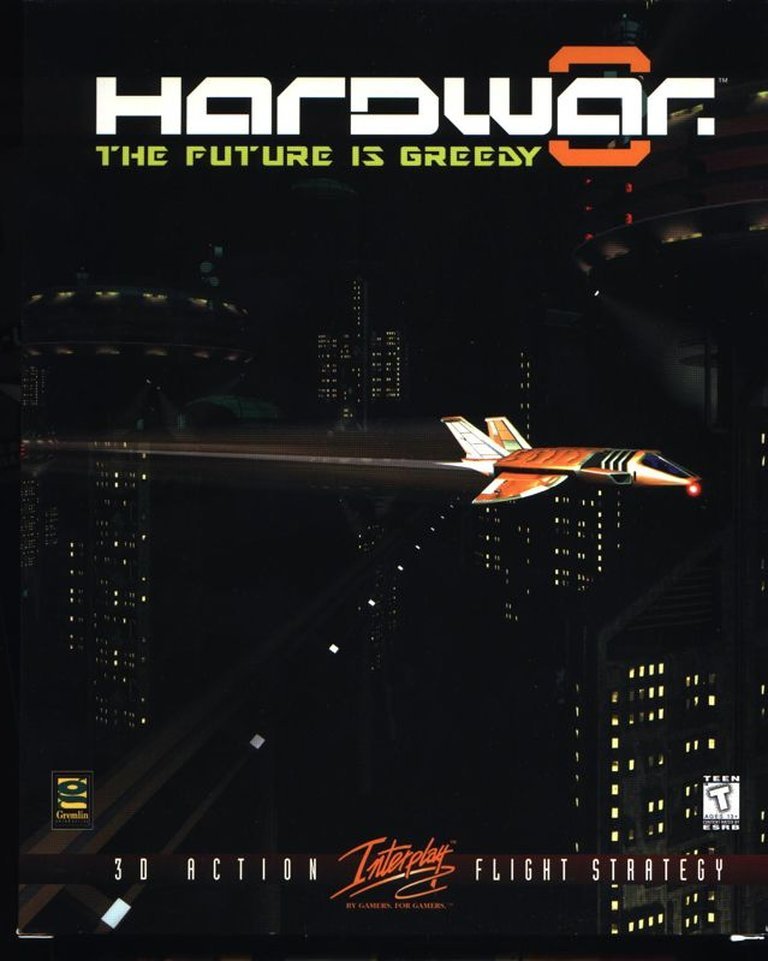
Hardwar is a free-form sci-fi simulation game set in the post-apocalyptic mining colony of Misplaced Optimism on Saturn’s moon Titan, where rival gangs dominate the cratered landscape amid constant strife. Players pilot customizable ‘moth’ flyers, engaging in dynamic activities like trading goods, piracy, bounty hunting, upgrading ships, owning buildings, and following a plot-driven storyline to survive and escape this gang-infested hellhole, all within a fully simulated world inspired by Elite and Privateer.
Gameplay Videos
Where to Buy Hardwar
PC
Hardwar Free Download
PC
Hardwar Patches & Updates
Hardwar Mods
Hardwar Reviews & Reception
imdb.com (90/100): One of the best freelance games EVER!
myabandonware.com (90.4/100): One of the best space trading/adventure games I have ever come across
Hardwar Cheats & Codes
PC
At the game launch screen, go to Controls and reconfigure a joystick button, or enter specific player name and use terminal in hangar.
| Code | Effect |
|---|---|
| God Hanger | Select any joystick button and set its value to this string. Press the button anytime during gameplay to access god hangar with free cash, weapons, items, repairs, teleport, etc. Note: Exiting targets your ship and moves you to downtown. |
| Admin | Enter as player name (case sensitive) at name entry to enable terminal commands in hangars. |
| blag cash,1000000 | In hangar, press O for terminal (requires name Admin), adds specified cash amount. |
| blag moth,8 | In hangar terminal (requires name Admin), grants Swallow Moth. |
Hardwar: Review
Introduction
Imagine piloting a rickety solar-powered “Moth” through the foggy, neon-lit craters of Titan, Saturn’s forsaken moon, where every shadow hides a pirate, every hangar a potential empire, and the only way off this hellhole is through ruthless cunning or sheer persistence. Released in 1998, Hardwar—or Hardwar: The Future is Greedy—is a forgotten gem of the space trading genre, a spiritual successor to Elite and Privateer that dared to simulate an entire post-apocalyptic economy in real-time. Developed by The Software Refinery and published by Gremlin Interactive, it thrust players into Misplaced Optimism, a sprawling colony of interconnected craters teeming with AI pilots living out their own dramas. While its ambitious living world and economic depth were revolutionary, flaws like repetitive loops and clunky combat tempered its shine. My thesis: Hardwar is a visionary sandbox that pioneered emergent simulation in gaming, deserving rediscovery through modern re-releases, even if its era’s tech constraints left it as a brilliant prototype rather than a masterpiece.
Development History & Context
Hardwar emerged from the gritty industrial heart of Sheffield, UK, where publisher Gremlin Interactive collaborated with local talents: Warp Records for the soundtrack and The Designers Republic for box art and styling, echoing the multimedia synergy of Wipeout. The Software Refinery, based in Leeds, northern England, handled development under key figures like designers Mark Griffiths, Ciaran Gultnieks, and Ian Martin; producer Adrian Carless; and technical manager Tim Heaton. Originally slated for 1996, delays pushed release to September 11, 1998, for Windows with DirectX 5 support, amid a gaming landscape dominated by first-person shooters like Half-Life and RTS giants like StarCraft. Space traders like Frontier: Elite II had set the bar, but Hardwar innovated by confining action to Titan’s surface craters—joined by tunnels—eschewing vast space for dense, urban aerial combat.
Technological constraints were pivotal: 1998 PCs struggled with the game’s A-Life AI system, a three-layered simulation (piloting, planning, decision-making) that generated emergent behaviors like faction wars and dynamic economies. FMV cutscenes featured real actors—Carless as the Police Über-Clerk, GMTV’s Ben Shephard as Syd—shot with practical effects by Alan Coltman. Multiplayer via TCP/IP or modem hinted at persistent worlds, but lag plagued early versions until fan patches. Post-launch, Software Refinery’s 2002 liquidation orphaned the game, yet devs like Ian Martin released unofficial UIM patches adding factories, clones, and fixes. Re-releases by Funbox Media (ZOOM Platform, 2021) and Steam (2023, DRM-free) revived it, proving its enduring appeal in an era of open-world behemoths like No Man’s Sky.
Narrative & Thematic Deep Dive
Plot Overview
Hardwar‘s story unfolds in Misplaced Optimism, Titan’s abandoned mining colony turned gang-infested dystopia. Corporations fled 200 years prior, stranding inhabitants who devolved into syndicates: corporate remnants Lazarus Family versus union-born Klamp-G. Players pilot Moths as freelance “aviators,” drawn into chaos when an alien ship crashes in Port Crater. Factions scramble for its tech—fusion cells, shielding—escalating to nuclear sabotage, irradiated water, and human remains traded for alien parts. Key missions involve destroying a “special part,” navigating blockades, and allying with figures like Xavier Lazarus (iron-lung-bound manipulator) and Syd (doomed munitions expert). The bittersweet finale sees escape via a shielded Moth amid Titan’s destruction, a mercy kill for its doomed populace.
Characters and Dialogue
FMV sequences deliver gritty, low-budget cyberpunk drama: Syd (Ben Shephard) offers tech insights before Klamp-G execution; Xavier reveals manipulations via intercepted comms. Dialogue via emails and radio is terse, world-weary—”The future is greedy”—emphasizing survival over heroics. AI pilots bear Hackers nods (Zero Cool, Acid Burn), adding flavor. No voiced protagonist fosters immersion, but obtuseness frustrates: plot triggers via timed events, cryptic messages.
Themes
Greed permeates: players embody “An Entrepreneur Is You,” buying hangars, manufacturing booze from sewage. Crapsack world critiques abandonment (Misplaced Optimism as ironic label), with gray morality—Lazarus and Klamp-G mirror each other in nuclear arms races and body-part trades. Escape tantalizes, but costs (radiation sickness, faction betrayals) underscore Gray-and-Grey Morality. Radiation experiments and cloning evoke body horror, while day/night energy drain symbolizes fragile existence. Though linear plot feels tacked-on, it weaves into sandbox, letting greed drive freeplay.
Gameplay Mechanics & Systems
Core Loops and Progression
Hardwar‘s free-form heart simulates Titan’s economy: mines produce ore, factories craft pods, AI trades dynamically. Players grind credits via trading (supply/demand fluctuates), piracy (loot pods), bounty hunting (police lists), or scavenging (drone-grab drops). Progression: upgrade Moths (Hawk workhorse to Swallow speedster), cells (solar to Fusion infinity), weapons (plasma strips shields, lasers hull-hurt). Own hangars via realtors for storage, repairs, factories (distilleries profit endlessly). Clones avert permadeath; mooks (patches) escort or supply.
Combat and UI
1st-person flight sim demands throttle/joystick nuance. Weapons auto-lead (subverting aim), but AI exploits abound: lure into tunnels (straight-line fly), obstacles (collision dodges). Missiles like Devastator (OHK) or Groundbase (gravity suck) add flair, countered by flares/holograms. Energy management shines: daytime solar infinite, night drains HUD-fadingly. UI clunky—radial menus chaotic—but radar excels for blips.
Innovations and Flaws
A-Life brilliance: AI pursues goals (pirates raid, taxis spawn pilots), emergent wars. Multiplayer persistent servers foster power struggles. Flaws: repetitive trades devolve to odometer-watching; combat neither sim-detailed nor arcade-thrilling early-on; small world (8 craters) exhausts. Patches fix lag, add starts (corrupt cop nuke), but vanilla obtuse.
| Mechanic | Strength | Weakness |
|---|---|---|
| Economy | Dynamic prices, player factories | Scarce rares (Gems, Sprats) |
| Combat | Emergent AI chases | Predictable exploits |
| Progression | Hangar empires | Grind-heavy upgrades |
| Multiplayer | Persistent worlds | Original laggy |
World-Building, Art & Sound
Misplaced Optimism breathes: foggy craters (Alpha to Port), tunnels link arcologies, monorails/taxis idle. Day/night cycle—pink mist skies, refinery glows—forces Lightwell recharges, heightening peril. Art by Designers Republic: trendy 1998 cyber-grunge, fog purposeful (atmosphere, not draw distance). 3D models functional—Moths boxy save elegant Swallow.
Sound immerses: Warp Records’ electronica (Autechre’s “Second Bad Vilbel,” Squarepusher’s “Chin Hippy”) blasts via HardWarp FM, techno pulsing cyberpunk. Pat Phelan/Kevin Saville SFX: laser zaps, explosions waver. FMV gritty, cheap-actor charm; radio chatter builds liveliness. Collectively, elements forge “living, breathing world,” fog/mist evoking isolation, beats fueling dogfights.
Reception & Legacy
Launch mixed: MobyGames 74% critics (Hacker 90%, Power Play 87%; German mags 45-70% slammed graphics/UI). CVG: “Brilliant atmosphere… slow hours.” Players 3.1/5; zero@titan lauded freeform (“months, years” replay), Ashley Pomeroy critiqued tedium (“odometer… real life”). Commercially niche—Gremlin/Refinery folded—yet cult endured via fansites (Alpha Crater), webrings.
Legacy profound: Pioneered simulated worlds pre-EVE Online, influencing X-series. Fan UIM patches (dev-led) added depth, enabling Ultima Online-like sci-fi. 2021/2023 re-releases spotlight it amid sandbox revival. Unavailable physically once, now Steam/ZOOM affirms: flawed visionary, ahead-of-time A-Life blueprint.
Conclusion
Hardwar masterfully blends Elite‘s freedom with cyberpunk grit, its simulated Titan a chaotic joy—AI swarms, economy ebbs, greed empires. Yet repetition, clunky UI, and small scale hobble longevity, dooming mainstream success. As game historian, I verdict it essential: 8.5/10, a proto-sandbox etching place in history beside Privateer. Rediscover via Steam; patches unlock potential. In a greedy future, Hardwar endures as misbegotten optimism realized.