
- Release Year: 2009
- Platforms: Windows
- Publisher: SEGA Europe Ltd.
- Genre: Compilation
- Game Mode: Single-player
- Average Score: 68/100
Description
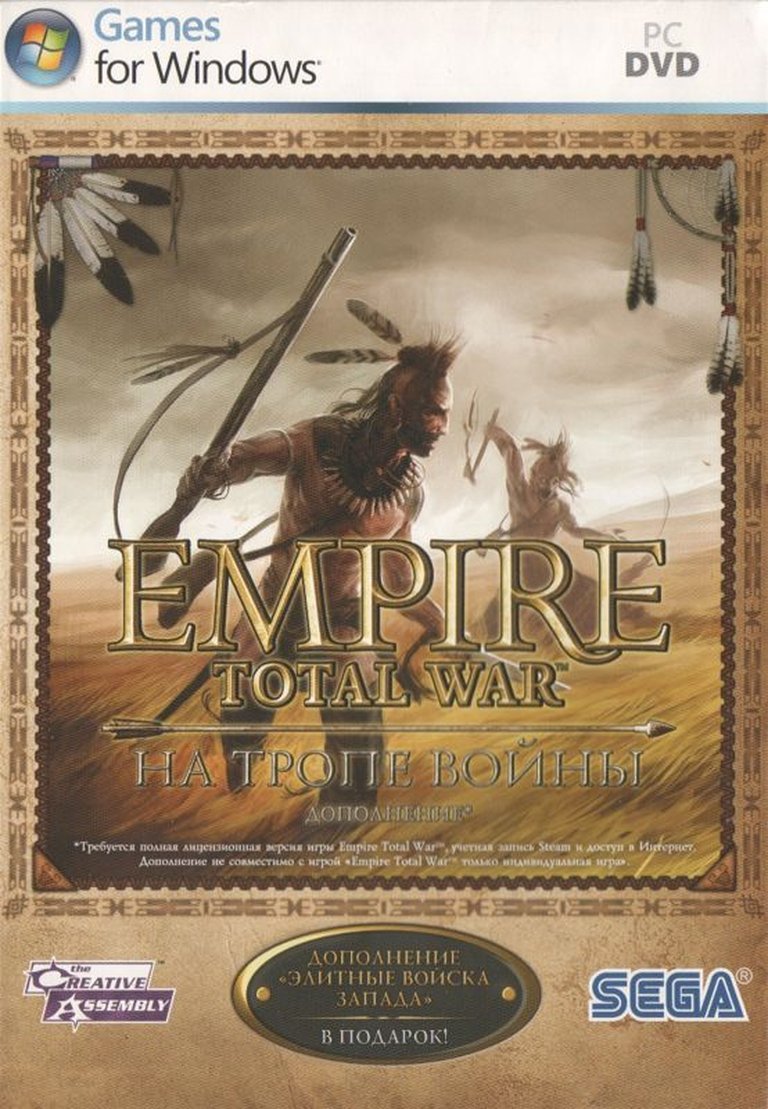
Empire: Total War – The Warpath Campaign / Empire: Total War – Elite Units of the West is a compilation of two expansions for the strategy game Empire: Total War, set in the 18th-century world of colonial empires and warfare. The Warpath Campaign offers a unique 1783 campaign centered on Native American nations like the Cherokee, Huron-Wyandot, Iroquois Confederacy, Plains Nations, and Pueblo Nations, with a new North American map, specialized units, technologies, and distinctive mechanics such as no government structures and 100% tax rates; Elite Units of the West adds powerful elite infantry, cavalry, and artillery for Western European and colonial factions, enhancing grand strategy, turn-based empire management, and real-time battles.
Gameplay Videos
Empire: Total War – The Warpath Campaign / Empire: Total War – Elite Units of the West Reviews & Reception
store.steampowered.com (68/100): Mixed (68% of 136 user reviews are positive).
Empire: Total War – The Warpath Campaign / Empire: Total War – Elite Units of the West: Review
Introduction
Imagine commanding a warband of fierce Iroquois warriors, their tomahawks gleaming under a blood-red sunset, as you ambush European settlers encroaching on ancestral lands— a stark pivot from the powdered wigs and line infantry of Empire: Total War‘s grand campaigns. Released in late 2009 as a bundled compilation of two key DLCs, The Warpath Campaign and Elite Units of the West arrives as a bold sidebar to Creative Assembly’s magnum opus, shifting the lens from imperial pomp to Native American defiance in a post-Revolutionary North America. Building on the core game’s legacy as a genre-defining blend of turn-based grand strategy and real-time tactics, this package carves out a niche of cultural clash and survival warfare. My thesis: While it masterfully expands tactical diversity and thematic depth for Total War enthusiasts, its narrow scope and uneven integration reveal the DLC format’s limitations, cementing it as an essential but imperfect epilogue to one of strategy gaming’s finest hours.
Development History & Context
Creative Assembly, the British studio behind the Total War series since Shogun: Total War (2000), unveiled Empire: Total War at the 2007 Leipzig Games Convention as their most ambitious entry yet—a sprawling 18th-century epic grappling with gunpowder revolutions, colonial expansion, and naval supremacy. Directed by Michael Simpson and led by designer James Russell, the base game pushed the era’s bespoke Warscape engine to visualize massive line battles and real-time sea clashes, but development pressures led to a rushed March 2009 launch marred by AI glitches and Nvidia driver conflicts. Enter the DLC era: The Warpath Campaign (October 2009) and Elite Units of the West (bundled November 2009) emerged from Sega’s post-launch support strategy, addressing fan demands for deeper North American content amid the base game’s commercial triumph (over 810,000 units sold in its first fiscal year).
Technological constraints of 2009 loomed large—no modern multi-threading or asset streaming meant the Warpath map’s dense forests and rivers strained even high-end PCs, echoing the base game’s pathfinding woes. Yet, CA’s vision shone: Warpath reframed Empire‘s Eurocentric gaze, introducing five Native factions (Cherokee Nations, Huron Wendat, Iroquois Confederacy, Plains Nations, Pueblo Nations) with a 1783 start date post-American Independence. Features like unexemptable 100% taxes, absent governments, and tribal tech trees (e.g., Spirit Medicine, Dreamwalking) simulated pre-industrial hardship. Elite Units of the West complemented this by bolstering European rosters with 15 premium units (e.g., Hessian Grenadiers for Britain, Chasseurs à Cheval for France), leveraging motion-captured animations for authenticity.
The gaming landscape was fertile: 2009 saw Dawn of War II‘s squad-based RTS innovation and Company of Heroes: Tales of Valor‘s skirmish focus, but Empire‘s DLC model pioneered live-service strategy expansions. Feral Interactive later ported it to Mac/Linux (2014), bundling into the 2018 Definitive Edition—free DLC for owners—ensuring longevity amid CA’s pivot to Napoleon: Total War.
Narrative & Thematic Deep Dive
Empire: Total War eschews linear storytelling for emergent narratives born of sandbox empire-building, and this compilation amplifies that ethos with poignant historical irony. The Warpath Campaign thrusts players into 1783 North America, where fledgling USA and lingering European powers (Britain, France, Spain) vie against united Native confederacies. Absent traditional protagonists, “characters” emerge via faction leaders—stoic Iroquois chiefs or Plains shamans—whose traits (e.g., “Warrior Society” morale boosts) personify resistance. Dialogue is sparse, limited to event pop-ups like “The Call of the Wild” tech unlock evoking spiritual communion, or Scout agent reports of “enemy long-knives advancing.”
Thematically, it’s a requiem for indigenous sovereignty: Playable factions start technologically hobbled—no artillery, line infantry dominance—mirroring real asymmetries post-Yorktown. Objectives pivot from conquest to survival: Cherokee must secure southern heartlands against Creek interlopers and US expansion; Plains Nations repel Comanche rivals while raiding settlers. Themes of cultural erasure clash with resilience—Shaman agents incite rebellions via “Dreamwalking,” subverting Empire‘s Enlightenment progressivism. Elite Units of the West inject Euro hubris, with units like British Coldstream Guards symbolizing unyielding imperialism.
Yet, narrative depth falters: No voiced campaigns or branching plots; events feel procedural, like random settler revolts. Characters lack arcs—gentlemen duel generically, minus Native flavor. Still, the compilation’s thesis resonates: Empire’s “civilizing mission” unravels against asymmetric warfare, forcing players to embody the era’s losers in a genre obsessed with victors.
Gameplay Mechanics & Systems
At its core, Warpath / Elite Units refines Empire‘s dual loops: turn-based diplomacy/economics yielding real-time battles. Warpath’s revamped North American map (dozens of regions from frozen Huron tundras to sun-baked Pueblos) starts in 1783 winter, enforcing scarcity—no forts initially, 100% taxes crippling income sans exemptions. Progression ditches gentlemanly research for 18 tribal techs (e.g., “Spirit Medicine” heals units, “Call of the Wild” boosts irregulars), gated by scarce resources. Agents evolve: Scouts sabotage trade nodes/economy; Shamans lower enemy zealotry, inciting desertions—innovative asymmetry for melee-heavy Natives.
Combat Deconstruction: Land battles emphasize hybrid warfare. Native rosters prioritize irregulars/melee over gunlines:
| Faction | Elite Units | Signature Cavalry | Skirmishers |
|---|---|---|---|
| Cherokee | Medicine Men, Warrior Society, Atakapa Elite Warriors | Creek Horse Riders, Lancers | Bowmen, Muscogee Tribesmen |
| Huron Wendat | Medicine Men, Warrior Society | Lancers, Ojibwa Horse Warriors | Bowmen |
| Iroquois | Medicine Men, Mohawk Elite Warriors, Warrior Society | Lancers, Onondaga Fire Keepers | Bowmen |
| Plains | Medicine Men, Warrior Society, Blackfoot Blood Warriors | Cheyenne Dog Soldiers, Comanche Mounted Warriors | Bowmen |
| Pueblo | Medicine Men, Warrior Society | Lancers, Crow Horse Warriors, Navajo Scout Warriors | Bowmen, Apache Mescalero Warriors |
Irregulars excel in ambushes/forests (e.g., Mohawk Warriors’ stealth), mounted gunners harass lines. Elite Units bolsters foes: Prussia’s Death’s Head Hussars flank savagely; France’s Tirailleurs skirmish. UI shines—clean tech trees, agent action previews—but pathfinding stumbles in woods, naval irrelevance (coastal skirmishes only).
Flaws & Innovation: Campaign AI fixates on expansion, ignoring diplomacy; multiplayer shines with cross-faction balance. Progression feels punishing—Natives snowball via raids, but early defeats cascade. Overall, loops innovate survival strategy, flawed by base game’s AI inheritance.
World-Building, Art & Sound
Warpath’s 1783 frontier evokes a fractured New World: Snowy Great Lakes yield to arid Southwest mesas, teeming with procedural wildlife (bears disrupt charges). Visuals leverage Warscape’s dynamism—rolling fog cloaks ambushes, dynamic foliage sways in charges. Native models dazzle: Feathered Mohawks whirl tomahawks in motion-captured fury; Comanche riders loose arrows mid-gallop. Elite Units elevates Europeans—Hessian grenadiers’ bearskins gleam amid musket volleys. Draw distances impress, but low-res textures betray 2009 limits; fog-of-war hides map sprawl effectively.
Sound immerses: Tribal war cries pierce gunfire symphonies; shamans chant ethereally. Richard Beddow/Walter Mair’s score fuses flutes/drums with orchestral swells, underscoring cultural tension. Battle audio pops—chain-shot whistles, war whoops echo—though voice lines repeat (generic “chief’s bodyguard” shouts). Atmosphere nails post-colonial grit: Raider horns signal doom, settler bells herald invasion.
Reception & Legacy
Launch reception was muted: Steam’s 136 reviews average “Mixed” (68% positive), praising Native asymmetry (“finally playable underdogs!”) but slamming AI (“Europeans cheese-rush every game”) and scope (“teaser map, not grand campaign”). MobyGames echoes sparsity—2.7/5 from one player vote, unranked critics. Bundled November 27, 2009 (Windows; Mac/Linux 2014), it sold modestly as Empire DLC pack, bundled into Gold/Definitive Editions.
Legacy endures: Warpath influenced Total War‘s asymmetry (Attila‘s Huns), inspiring Native-focused mods. Elite Units presaged unit packs (Rome II). Amid Empire‘s patches (1.5 AI overhaul), it redeemed American theater critiques, paving Napoleon‘s naval polish. Industry ripple: Pioneered DLC campaigns, boosting replayability in strategy giants like Civilization VI.
Conclusion
Empire: Total War – The Warpath Campaign / Elite Units of the West distills the series’ grandeur into a raw, unflinching Native odyssey—tribal techs and elite warriors breathe life into 1783’s margins, their ambushes a tactical revelation amid Empire‘s flintlock symphonies. Yet, AI inertia, map brevity, and DLC isolation temper its triumph, rendering it a fervent footnote rather than standalone epic. For Total War faithful, it’s indispensable (9/10); newcomers, sample base first. In gaming history, it secures Empire‘s pantheon as strategy’s Enlightenment pinnacle—flawed, ambitious, eternal. Verdict: Essential DLC Masterpiece.