
- Release Year: 2022
- Platforms: Android, iPad, iPhone, Nintendo Switch, PlayStation 5, Windows Apps, Windows, Xbox Series
- Publisher: Coffee Stain Publishing AB
- Developer: Coffee Stain North AB
- Genre: Action
- Perspective: Behind view
- Game Mode: Online Co-op, Single-player
- Gameplay: Open World, Sandbox
- Setting: Contemporary
- Average Score: 68/100
Description
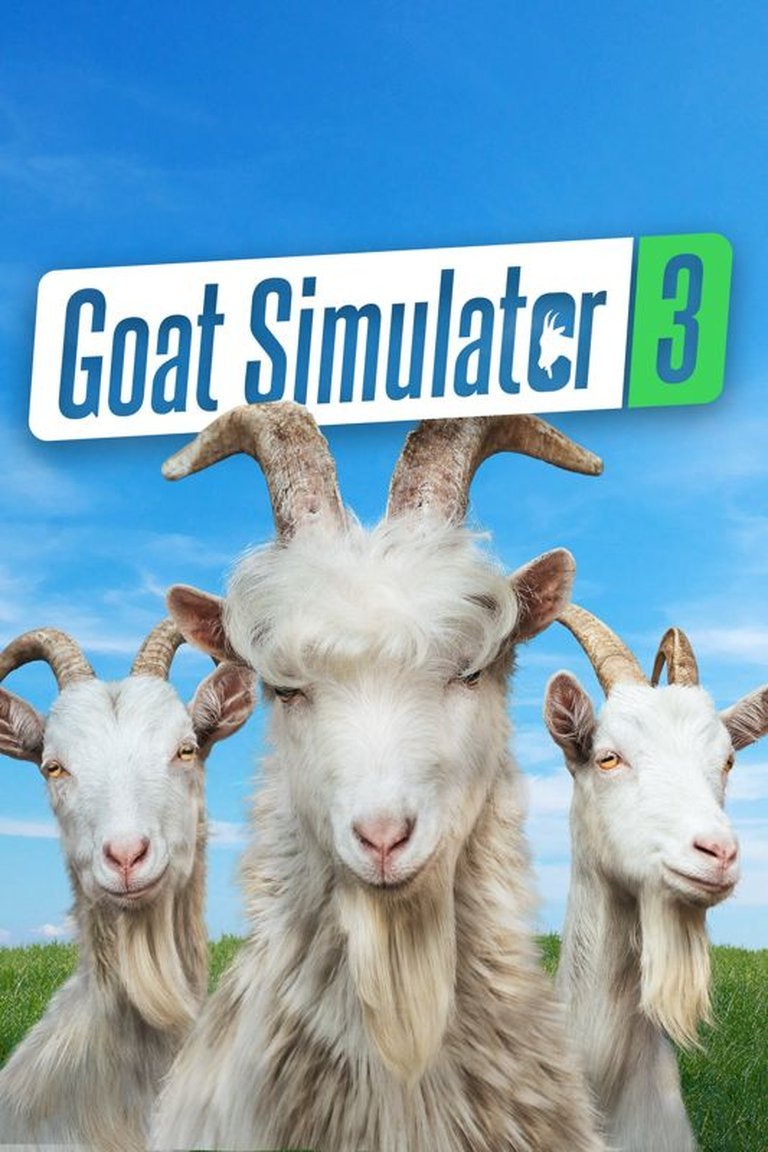
Goat Simulator 3 is a comedic sandbox action game in the Goat Simulator series, where players control a goat in a vast contemporary open-world environment, engaging in physics-driven chaos, absurd antics, and multiplayer mayhem with up to four players online, developed by Coffee Stain North and published by Coffee Stain Publishing.
Gameplay Videos
Where to Buy Goat Simulator 3
PC
Goat Simulator 3 Free Download
Goat Simulator 3 Cracks & Fixes
Goat Simulator 3 Mods
Goat Simulator 3 Guides & Walkthroughs
Goat Simulator 3 Reviews & Reception
metacritic.com (68/100): Mixed or Average
ign.com : A ridiculous sequel that’s bigger, sillier, and packed with more low-stakes fun.
pcgamer.com : Better than the original, but not better enough to recommend.
gamesradar.com : A punchline that ultimately outstays its welcome.
Goat Simulator 3: Review
Introduction
Imagine hurtling down a rickety cart track in a Skyrim-esque parody, only to leap out as a rampaging goat, headbutting farmers and licking cars into explosive oblivion—welcome back to the unhinged universe of Goat Simulator 3. This 2022 sequel from Coffee Stain North builds on the 2014 viral sensation that turned glitchy physics into gold, skipping Goat Simulator 2 entirely as a cheeky in-joke that perfectly encapsulates its trollish spirit. Larger, sillier, and now multiplayer-ready, it transforms sandbox absurdity into a co-op party game par excellence. Thesis: Goat Simulator 3 masterfully evolves its predecessor’s gleeful idiocy into a bigger, bolder satire of open-world excess, delivering endless low-stakes chaos that shines brightest with friends, even if its novelty occasionally frays under repetition and technical jank.
Development History & Context
Coffee Stain North, a Swedish studio spun off from the original Coffee Stain team behind hits like Satisfactory and Goat Simulator, spearheaded this project under Creative Director Santiago Ferrero and Producer Sebastian Zethraeus. Announced at Summer Game Fest 2022 with a trailer aping Dead Island 2‘s infamous E3 flop, the game skipped straight to “3” as a developer gag—Ferrero called it a “compromise” between factions pushing for 2 or 4, while others joked about typos or box art goats. Powered by Unreal Engine 4, it launched November 17, 2022, on PC (Epic), PS5, and Xbox Series X/S, with mobile ports in 2023, Switch in 2024, and last-gen consoles later that year.
The 2014 original was a surprise smash, born from a modding experiment amid Steam Green’s early access boom, capitalizing on YouTube virality and meme culture. By 2022, the gaming landscape had shifted: open-world fatigue from Assassin’s Creed clones and battle royales dominated, while indie physics sandboxes like Teardown and Totally Accurate Battle Simulator refined the glitch-comedy formula. Coffee Stain North responded by hiring “actual game designers” (per their blurb), adding structure via quests and progression without diluting the chaos. Technological constraints? Minimal—Unreal 4 handled the ragdoll mayhem, though performance hiccups persisted, echoing the original’s “intentional bugs as features.” Priced at $30 (three times the first game’s launch), it targeted nostalgic fans and party gamers, bolstered by player research from Player Research firm, which iterated on progression like Goat Towers to combat aimlessness in the 18x-larger world.
Narrative & Thematic Deep Dive
Goat Simulator 3‘s “story” is a masterclass in anti-narrative comedy, a loose framework mocking open-world tropes while embracing goat supremacy. You reprise Pilgor, the iconic female goat, escaping a farm via Skyrim-style cart ride (bookended in credits where you drive). Thrust into San Angora—a sprawling island blending suburbs, cities, zoos, and occult hideouts—you ascend Illuminati ranks by completing absurd “events” for Goat Tower medallions, unlocking your customizable Goat Castle hub. The arc culminates in a boss against “The Farmer,” revealed via bait-and-switch: he begs you to wait for his unfinished fight, only for you to yeet him into the void, triggering a sequential spectacle of dodging, hide-and-seek, retro platforming, and server-smashing.
Characters are archetypal punchlines: poached rhinos like Rosie (endlessly rammed by tractors), cubic whale Billy (eaten post-“rescue”), and NPCs spouting sanitized swears (“What the frog?!”). Dialogue is sparse, pun-drenched VO—Pilgor “baas” triumphantly, Farmer rants dev-style meltdowns. Themes satirize entitlement and simulation excess: goats as chaotic neutrals parody player agency in GTA-likes, with Illuminati progression lampooning Ubisoft towers. Easter eggs abound—Wolfenstein 3D FPS parody, P.T. horror corridor, Counter-Strike dust2 portal—celebrating gaming history while subverting it (e.g., nuking cul-de-sacs). Black comedy shines: satanic circles, banana invasions, eternal ballerina tornadoes. It’s not deep, but the self-aware farce critiques “content filler” while reveling in it, evolving the original’s purgatory vibes (fan theories link to DLC timelines like GoatZ zombies) into a gleeful “goat theft auto.”
Gameplay Mechanics & Systems
Core loop: third-person sandbox havoc via licking (tether objects), headbutting (charged explosions), triple-jumping, and ragdoll physics—no death, infinite respawns. Progression via Illuminati ranks: Events (quests like electing yourself president via tongue-dragged voters or birdwatching) and Instincts (e.g., arson sprees, arrests) earn points for Goat Castle upgrades and cosmetics. Gear system innovates—wardrobe unlocks 100+ items: aesthetic (toilet paper hats) or powered (jetpack, rocket launcher, shark-on-skateboard Tony). Abilities like stilts trivialize verticality, butterfly wings enable gliding.
Combat? Nonexistent—pure destruction, with vehicles hijackable for demolition derbies. UI is minimalist: map markers, quest log, radial wardrobe; intuitive but pop-in heavy. Multiplayer elevates it—4-player online/local co-op (no crossplay at launch), drop-in chaos where friends split events or grief via minigames (Hoofball soccer, Headsplat Splatoon, Floor is Lava). PvP nodes spawn anywhere, but lack matchmaking. Flaws: repetition (fetch/headbutt quests), overpowered tools erode challenge, bugs (clipping, framerate dips in splitscreen). Strengths: emergent joy—spawn UFOs via 5G towers, slime-bounce maps. Roughly 8-10 hours for story, 20+ for 100%, with DLCs (Multiverse of Nonsense, Baadlands: Furry Road) adding gears/quests.
| Mechanic | Strengths | Weaknesses |
|---|---|---|
| Physics/Ragdoll | Glorious, unpredictable mayhem | Jank can frustrate (stuck glitches) |
| Customization | 100s of hilarious, ability-granting gears | Some OP early-game |
| Co-op/Minigames | Amplifies absurdity; anytime PvP | Basic, no matchmaking |
| Quests/Instincts | Varied parodies, eureka moments | Repetitive checklists |
World-Building, Art & Sound
San Angora dazzles as an 18x-scaled parody paradise: urban sprawl with climbable towers, foggy cemeteries (ghost hunts), neon zoos (cubic whales), occult woods (Baphomet sigils). Atmosphere thrives on discovery—crashed UFOs spawn bouncy slime, sandcastles portal to CS:GO. Secrets reward exploration: Fallout-esque bunkers, Silent Hill fog. Visuals: Cartoonish Unreal 4 stylings—vibrant, destructible environs pop amid pop-in and LOD chugs. Ragdolls stretch hilariously; VFX like tornadoes persist session-long.
Sound design elevates: Stuart Docherty’s twangy score mixes banjo-folk with EDM chaos. Baa-ing SFX, punny VO (“Judas Priest!”), ragdoll thwacks, and explosive crunches immerse. Ambient bustle—screams, crashes—feeds feedback loop. Elements synergize: sound cues secrets (haunted whispers), physics chaos scores emergent comedy, creating a lived-in satire where every lamppost begs licking.
Reception & Legacy
Critically mixed (Metacritic: PC 71/100, PS5 68/100, Xbox Series 78/100; MobyGames 72%), Goat Simulator 3 polarized: Attack of the Fanboy (100%) hailed “punniest adventure”; PC Gamer (50%) decried “fine but uninnovative” amid indies like Garry’s Mod. Common praise: co-op hilarity (IGN 8/10: “bigger, sillier”), humor (TheGamer 80%: “baaa-r on every level”). Critiques: repetition (GamesRadar 2.5/5: “outstays welcome”), bugs, $30 price (Hooked Gamers: “lacks content justification”). Players averaged 3.3-7.6/10, loving multiplayer but noting solo shallowness.
Commercially solid via Game Pass/Xbox boost, it spawned DLCs (Digital Downgrade, Multiverse, Super Duper Pack, Baadlands) and ports. Influence: Reinforces party-sandbox niche (Party Animals echoes), parodies endure (Goat Towers mock AC). Legacy: From meme cash-in to refined chaos, it cements the series as gaming’s ultimate troll, inspiring unhinged indies while proving structured absurdity sells.
Conclusion
Goat Simulator 3 distills sandbox lunacy into multiplayer gold, expanding a joke into a referential riot that skewers open-world bloat while embracing it. Its physics-fueled freedom, gear madness, and co-op carnage deliver unadulterated joy, bugs be damned—perfect for couch degenerates, less so solo completionists. In video game history, it joins GTA parodies and physics pioneers as a gleeful artifact of 2010s virality refined for 2020s audiences. Verdict: Essential party game (8.5/10); buy on sale for solo (7/10). Baa-r none in absurdity—grab friends and rampage.