
- Release Year: 2018
- Platforms: Android, Oculus Go, Windows
- Publisher: OZWE Games
- Developer: OZWE Games
- Genre: Action
- Perspective: 1st-person
- Game Mode: MMO
- Gameplay: Aviation, Flight, Shooter
- Setting: Fantasy, Futuristic, Sci-fi
- Average Score: 90/100
- VR Support: Yes
Description
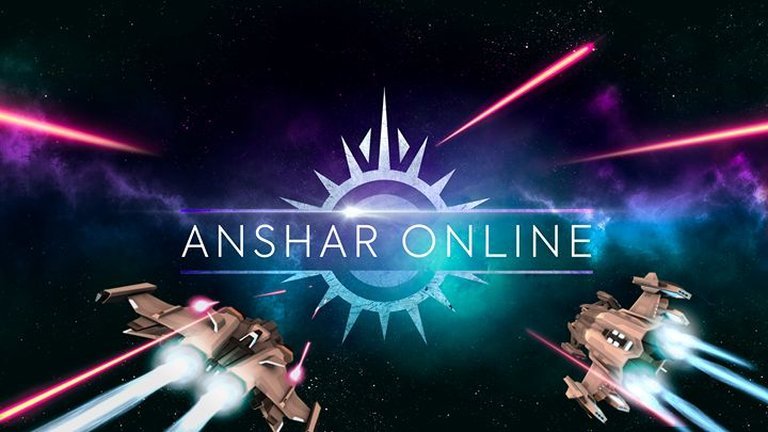
Anshar Online is a first-person action shooter developed and published by OZWE Games, released in 2018 for Android, Oculus Go, and Windows, immersing players in a fantastical sci-fi futuristic setting where they pilot advanced aircraft in intense vehicular combat. Featuring direct and motion controls, the game emphasizes thrilling flight and aviation gameplay in an online multiplayer environment blending fantasy elements with high-tech space battles.
Anshar Online Reviews & Reception
vrtruths.com (90/100): The amazing, immersive experience that this game offers is most definitely not only for the fans of space-themed games, but for everyone else, and with its fairly low price, we recommend you try it out.
Anshar Online: Review
Introduction
In the nascent era of consumer virtual reality, where headsets like the Oculus Go and Samsung Gear VR promised to transport players into immersive worlds but often delivered fleeting novelties, Anshar Online exploded onto the scene like a barrage of plasma missiles. Released in 2018 by the Swiss studio OZWE Games, this multiplayer space shooter built upon the visual splendor of its predecessors, Anshar Wars and Anshar Wars 2, to deliver a cross-platform odyssey of dogfights, co-op raids, and high-stakes racing. As a cornerstone of early VR multiplayer gaming, Anshar Online masterfully blends arcade action with persistent progression, proving that even on modest hardware, epic space battles could feel intimately personal. My thesis: Anshar Online stands as a triumphant evolution of VR flight shooters, pioneering scalable multiplayer and loot-driven customization that influenced the genre’s shift toward live-service experiences, cementing its place as an underappreciated gem in VR history.
Development History & Context
OZWE Games, a Lausanne-based studio founded around the mid-2010s, entered the VR arena with Anshar Wars in 2015, quickly earning acclaim for pushing the graphical boundaries of Gear VR. By 2018, with Anshar Online, they assembled a 54-person team blending industry veterans like Jason Rubin (co-founder of Naughty Dog), Michael Doran, and David Yee—credits overlapping with ambitious titles like Asgard’s Wrath—alongside specialists in Unity engine optimization, cross-platform play, and VR motion controls. Producer Michael Morishita oversaw development, with visual partners like Sunnyside Games, CG Pitbull, and Zvky Design Studio handling assets, while Erik Desiderio and Kynoa Studios crafted the score.
The era’s technological constraints were defining: Oculus Go’s standalone nature demanded low-latency, mobile-optimized graphics without PC tethering, while cross-play across Gear VR, Rift, Oculus Go, Android, and Windows required innovative networking. Game designer Yoan Santelli, a Unity expert with a decade in mobile/VR, conceptualized 50+ levels over 14 months, balancing “stories” (narrative-driven, multi-stage missions) with “contracts” (procedural variants like destroy, escort, chase). This modular approach addressed VR’s motion sickness risks and short-session playstyle.
The 2018 VR landscape was fragmented—Oculus was pivoting to standalone, Sony’s PSVR dominated consoles, and multiplayer shooters like Eve: Valkyrie set high bars but lacked accessibility. Anshar Online filled a gap for affordable, social VR combat, launching amid hype for cross-platform unity. Post-release updates, like “Head for Flight” and “Gaze to Turn” controls, responded to feedback, showcasing OZWE’s commitment amid a market where VR adoption hovered below 10 million units globally.
Narrative & Thematic Deep Dive
At its core, Anshar Online weaves a sci-fi revenge thriller amid chaotic multiplayer skirmishes. Players embody a lone survivor of an ambush that claims Rush Steel—your partner and best friend—forcing a quest to unmask the orchestrators. Guided by the enigmatic Lady Elitas via voice logs and mission briefings, the story unfolds across 50+ missions, blending personal vendetta with galactic intrigue. Themes of loyalty and betrayal permeate: Rush’s death symbolizes fractured alliances in a war-torn universe blending fantasy elements (alien worlds) with hard sci-fi (interstellar cruisers).
Plot Structure: Missions progress from tutorial ambushes to escalating assaults, with stories offering branching paths—e.g., farming resources from wandering foes or battling colossal bosses—while contracts provide procedural grit (chase preys across caverns). Dialogue, penned by Andrew Saxsma, Rich Willmott, and Amy Farris, is concise yet evocative: Elitas’s terse commands (“Steel trusted you—don’t make him regret it”) inject urgency, humanizing faceless PvP foes.
Character Depth: Protagonists are archetypal but resonant—Rush as the fallen mentor, Elitas as the shadowy benefactor—serving as narrative glue for solo play. Multiplayer dilutes linearity, turning personal revenge into communal catharsis, where VoIP banter amplifies themes of camaraderie in chaos. Stealth missions (sneaking past patrols) subvert shooter tropes, emphasizing stealth and strategy over brute force, while racing modes evoke high-speed pursuits, mirroring the chase for truth.
Underlying motifs explore VR immersion as existential flight: Head-tracking flight evokes vulnerability, themes of isolation yielding to multiplayer bonds critiquing solo heroism. Though light on cutscenes, the narrative elevates arcade action, rewarding repeat plays with lore drops.
Gameplay Mechanics & Systems
Anshar Online‘s core loop is a symphony of fluid flight and explosive combat, iterated across solo, co-op (up to 5), PvP deathmatch (up to 8), and racing. Controls shine: Gaze-directed steering (head movements pitch/roll) delivers intuitive 6DoF freedom, with controllers handling lasers, missiles, boost, and specials—options like remote joysticks mitigate fatigue.
Core Loops:
– Missions/Stories: Multi-objective campaigns (e.g., escort allies, destroy targets) ramp difficulty, with hazards like spawning resources or roaming elites.
– Contracts: Five archetypes (destroy, escort, chase) procedurally generated by swapping environments/enemies, ensuring replayability.
– Assaults/Racing/PvP: Horde survival, time-trial races, and arena deathmatches emphasize skill-matching via scaling.
Progression Systems: Levels 1-50 via XP from missions, unlocking skill trees for three classes:
| Ship Class | Role | Key Features |
|---|---|---|
| Fighter | Agile DPS | High speed, lasers/missiles; loot for modules. |
| Tank | Durable Frontline | Heavy armor, area denial; specials like shields. |
| Engineer | Support | Repairs, buffs; utility drones/skins. |
Loot drops and resource upgrades allow deep customization (weapons, hulls, cosmetics), with a “sidekick” scaling system recomputing stats to the party leader’s level—preserving XP/loot fairness while enabling cross-level play. UI is VR-optimized: Radial menus minimize nausea, HUD overlays ship status seamlessly.
Flaws include occasional missile bugs (pre-updates) and matchmaking queues, but innovations like dynamic AI and VoIP elevate it. Balance favors groups, maximizing co-op synergy.
World-Building, Art & Sound
The Anshar universe pulses with lived-in futurism: asteroid belts teeming with debris, cloud cities pierced by spires, alien planets with bioluminescent flora, caverns echoing with rumbles, and cruisers as colossal arenas. Environments rotate per mission, fostering variety—racing through canyons feels distinct from cruiser dogfights.
Visual Direction: High-fidelity models (e.g., shimmering hulls, particle explosions) punch above Oculus Go’s weight, with anti-aliasing and dynamic lighting masking hardware limits. Cross-platform consistency via Unity ensures parity, though Rift users enjoy sharper fidelity. Art evokes Star Wars meets Homeworld, immersive 360° vistas amplifying scale.
Sound Design: Erik Desiderio’s orchestral score swells with brass fanfares during chases, synth pulses underscoring tension—epic yet restrained for VR comfort. Spatial audio renders laser whines directional, engine hums visceral via head-tracking; VoIP integrates naturally. These elements forge total immersion, where a missile lock’s beep viscerally spikes adrenaline, transforming flatscreen shooters into embodied odysseys.
Reception & Legacy
Launch reception was rapturous in VR circles—no Metacritic aggregate, but Oculus Store brimmed with 5-star effusions (“Best flight game… top-notch,” smidgy) praising controls, visuals, and multiplayer. Press lauded it: Variety’s Janko Roettgers hailed its beauty on $200 hardware; Techradar deemed it Oculus Go’s essential shooter; VRFocus and VRTruths (9/10) spotlighted co-op depth. Commercial success fueled updates, though niche VR limited mainstream traction (MobyGames notes 1 collector).
Legacy endures: Pioneered VR cross-play pre-Quest era, influencing Star Wars: Squadrons scaling and loot in Everspace 2. Credits’ overlap with Asgard’s Wrath underscores talent pipeline. Reputation evolved from “Go must-have” to historical benchmark—OZWE’s Anshar trilogy defined accessible VR space combat, inspiring mobile-VR hybrids amid 2020s metaverse pushes. Commercially modest, its influence looms large in indie VR’s multiplayer pivot.
Conclusion
Anshar Online masterfully fuses narrative intrigue, mechanical depth, and sensory splendor into a VR multiplayer pinnacle, overcoming hardware limits through clever design like scaling systems and modular missions. Its flaws—minor bugs, queue times—pale against innovations that made space combat social and sustainable. In video game history, it occupies a vital niche: the bridge from solo VR curios to communal epics, a testament to OZWE’s vision. Verdict: Essential VR classic (9/10)—strap in, pilots; the stars await.