
- Release Year: 2016
- Platforms: Nintendo Switch, PlayStation 4, PS Vita, Wii U, Windows
- Publisher: CIRCLE Entertainment Ltd., Dotoyou Games, Flyhigh Works Co., Ltd., Oasis Games Ltd., QubicGames S.A., Shanghai Oriental Pearl Suole Culture Development Ltd.
- Developer: Dotoyou Games
- Genre: Action
- Perspective: Top-down
- Game Mode: Single-player
- Gameplay: Mini-games, Naval, Puzzle elements, Simon says, watercraft
- Average Score: 52/100
Description
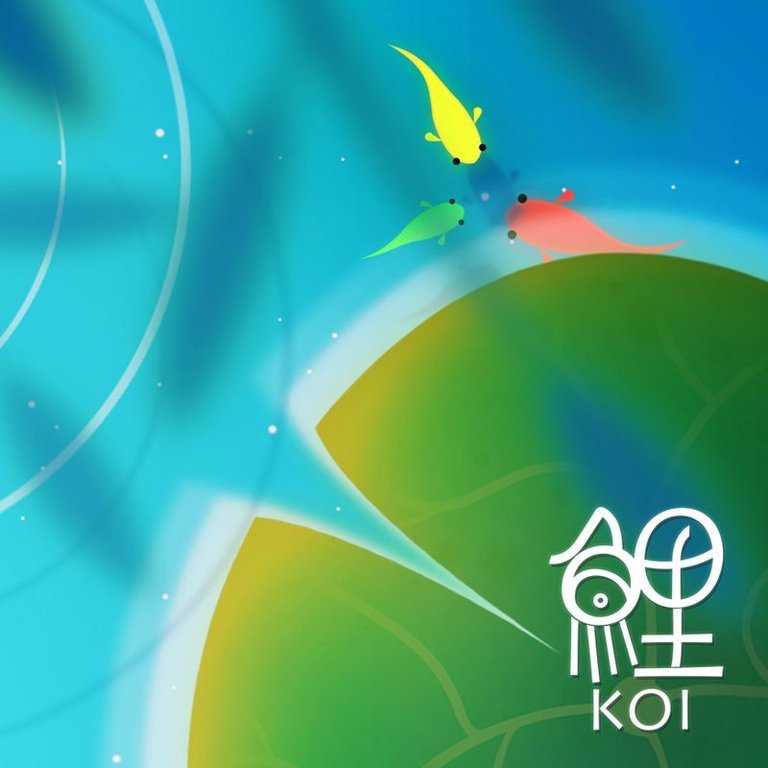
Koi is a top-down 2D scrolling action-puzzle game where players control a koi fish navigating serene aquatic environments across eight levels, engaging in mini-games, matching puzzles, and light challenges while collecting items to uncover a heartfelt story, all set to soothing music and soft visuals in a relaxing zen-like experience.
Where to Buy Koi
PC
Koi Guides & Walkthroughs
Koi Reviews & Reception
metacritic.com (51/100): It’s a smart, genuine little game, with soul and a story to tell, and wraps it within one of the best examples we’ve seen to date of serenity as a play concept.
opencritic.com (53/100): Koi is a beautiful, soft and serene game that doesn’t quite manage to fulfil the ideas and message it is clearly trying to convey.
blastawaythegamereview.com : Graphically beautiful even for how simplistic the title is
operationrainfall.com : creates a journey for players to be immersed in as they lose themselves in calm waters
outoflives.net : a well-made short adventure that leads the way and puts the future of Chinese-developed games in good stead
Koi: Review
Introduction
Imagine gliding silently through crystalline waters as a vibrant koi fish, your tailfin slicing through serene ponds tainted by encroaching shadows of pollution—a digital metaphor for real-world environmental decay that whispers rather than shouts. Released in 2016, Koi emerged as a quiet pioneer: the first fully Chinese-developed title to grace Western consoles on PlayStation 4, helmed by fledgling studio Dotoyou Games amid China’s freshly lifted console ban. This unassuming 2D adventure, blending puzzle elements with zen-like exploration, promised tranquility in a sea of bombastic blockbusters. Yet, its legacy is bittersweet—a noble first swim for Chinese indie devs, hampered by shallow depths. My thesis: Koi shines as a historical milestone for its cultural and thematic ambitions, delivering moments of profound serenity through art and sound, but founders on repetitive mechanics, brevity, and unpolished execution, rendering it more mobile curiosity than console classic.
Development History & Context
Dotoyou Games, a small Chinese studio making their debut with Koi, crafted this title against a backdrop of seismic shifts in China’s gaming landscape. Prior to 2015, a 15-year console ban stifled domestic production, funneling talent toward PC and mobile. The ban’s lift in January 2015—coupled with mandates for content censorship—opened floodgates, but Koi was among the earliest to navigate these waters internationally. Publisher Oasis Games localized it for PS4 (initial release March 29, 2016, per MobyGames; April 19 per some outlets), followed by ports to Wii U, PS Vita, Nintendo Switch (2017), and Windows (2019 as Koi DX). Built in Unity, it originated as a 2015 mobile game, explaining its touch-friendly symbols and short runtime.
The 12-person team, credited for the Wii U version, was lean: Producer/SFX/Artist DAQ led, with Zeta on music, artists like Liu Yuewen, Gan Shasha, and Li Jing, coders including Julien Lee (credited as Julien), Tian Jing, and others, plus tester Ma Zheng. Their vision, per official blurbs and reviews, targeted “zen meets skill”—a relaxing odyssey purifying polluted ponds, subtly critiquing China’s industrial pollution crisis. Technological constraints were minimal (Unity’s cross-platform ease), but era-specific hurdles loomed: PS4’s indie scene boomed with Undertale and Inside, yet zen games like Flower (2009) and Flow (2006/2007 PSN) set high bars for atmospheric minimalism. Amid 2016’s AAA deluge (The Division, Quantum Break), Koi‘s $9.99 PSN price and E-rating positioned it as accessible “serenity as gameplay,” earning pre-launch nods like “Best End of the Day Game” at SJ GDC 2016 and top prize at Modian Web PlayStation Developer Competition. It symbolized China’s indie thaw, but small scope reflected bootstrapped origins.
Narrative & Thematic Deep Dive
Koi‘s story unfolds wordlessly through a lone orange koi’s “epic journey,” separated from its owner amid mankind’s pollution. Across eight levels, you investigate darkening waters, rallying smaller koi to bloom lotus flowers, releasing purifying “Light Fish.” Minimal dialogue—sparse textual hints—guides your quest, but collect four puzzle pieces per level to unlock panoramic images revealing an external world: idyllic landscapes morphing into uncanny hints of artifice, suggesting the pond’s reality bends (e.g., a koi linked to human realms). The finale ties pollution to industrial shadows, with full stars unlocking a “true ending” cutscene emphasizing restoration.
Thematically, Koi dives deep into environmental purity vs. corruption, mirroring China’s real pollution woes (e.g., murky Yangtze). Early levels evoke harmony—vibrant fish schools under lotuses—escalating to grim, gray abyss with skeletal remains and shadowy aggressors. Perseverance shines: your koi endures stuns without permadeath, embodying resilience. Subtle uncanny elements (puzzle pics hinting at simulated ponds) evoke existentialism, questioning nature’s authenticity in a man-made crisis. Characters are archetypal: protagonist koi (unlockable skins via feats), helpful colored fish, antagonistic black “shadow koi” (pollution-corrupted), and unseen humans as culprits. No deep arcs, but Zeta’s score amplifies emotional beats—from playful piano ripples to foreboding drones. Critiques note heavy-handedness (e.g., “on the nose” skeletons), yet its subtlety suits zen pacing, fostering introspection over exposition. As reviewer KeenGamer noted, it motivates via “purity and perseverance,” though reliant on tolerance for vagueness.
Gameplay Mechanics & Systems
At core, Koi loops around exploration and matching: top-down 2D scrolling as a naval/watercraft protagonist. Swim freely in open levels, bump stationary colored fish to recruit them, then herd to matching lotus flowers for blooms unlocking paths/light. Collect stars (completion %) and puzzle pieces (story unlocks); 100% yields koi skins (e.g., black fish after 20 hits). No combat—hazards like shadow koi stun briefly (regenerates), currents push back, dark zones obscure vision, electrocution jolts. Mini-games innovate sporadically:
Core Loops and Progression
- Recruitment/Bloom Cycle: Fluid, hypnotic; levels expand (later ones “too big,” per KeenGamer), demanding navigation.
- Progression: Linear 8 levels, replayable post-game. No RPG stats; unlocks cosmetic. Shoulder buttons toggle hints (massive arrows overwhelm tutorial).
Mini-Games and Challenges
- Simon Says (sequence memory): Brutal for some, rhythmic recall.
- Matching/Grid Puzzles: Tile rotation, color swaps—simple but inconsistent.
- Environmental: Patrol-dodging, current-fighting vary pace.
Flaws abound: No challenge scaling (all-ages zen intent, but “boring busywork,” per Game Hoard). UI cryptic—symbol menus (controller? puzzle? shirt?) baffle (5+ minutes lost, per KeenGamer); imprecise controls frustrate (Gamer’s Palace). Short (1-2 hours core, 4-5 full completion); filler stars purposeless beyond %. Innovative “swimming simulator” serenity falters in emptiness—vast ponds, sparse events. Mobile roots show: touch-optimized, lacks console depth (no Vita port initially, despite pleas).
| Mechanic | Strengths | Weaknesses |
|---|---|---|
| Exploration | Immersive freedom, hidden collectibles | Overly large/empty levels, repetition |
| Mini-Games | Variety (“Simon says,” matching) | Inconsistent frustration, low difficulty |
| Hazards | Tense avoidance (stuns, currents) | No fail states, predictable |
| UI/Controls | Hint system aids zen | Symbol menus, imprecise swimming |
World-Building, Art & Sound
Koi‘s world—a sprawling pond ecosystem—transforms from azure serenity to polluted underbelly, fostering atmospheric immersion. Early: lush lotuses, playful fish amid reeds/twigs. Progression darkens: gray murk, skeletal husks, cavernous depths—visual pollution metaphor palpable. Levels distinct (surface streams to starlit ethereal finale), Unity’s 2D scrolling yields smooth parallax, cutout-style art (vibrant contrasts pop).
Visual Direction: Hand-painted-esque simplicity charms—sharp colors (oranges, blues) against soft gradients; tail oscillations hypnotic. Pollution effects (inky spreads, low-vis) heighten tension; late starry swims evoke spirituality (KeenGamer). Critiques: “Basic/uninteresting” (eShopper), slowdowns on action.
Sound Design: Zeta’s soundtrack steals the show—piano/water droplets cascade meditatively, evolving grim (droning lows). Immersive headphones treat (Operation Rainfall); activates on blooms, syncing emotion. SFX subtle (bubbles, stuns). Together, they craft “serenity” (Digitally Downloaded), outweighing gameplay flaws.
Reception & Legacy
Launch reception was mixed: MobyGames 5.3/10 (40% critics, 1.0/5 players); Metacritic PS4 51/100 (12% positive, 62% mixed); OpenCritic 53. PS4 averaged ~47%; Switch 16% (eShopper: “boring, slow”). Positives: Serenity (Digitally Downloaded 80%: “soulful zen”), visuals/sound (Blast Away 7/10), pollution message (PlayStation Universe 65%). Negatives: Shallow/short (COGconnected 55%, Push Square 50%), dull (Game Hoard 43%, MAN!AC 28%).
Commercially modest—niche $9.99 digital, low collections (5 on Moby). Reputation evolved: Initial pioneer hype faded to obscurity (“lost among PS4 sea,” Digitally Downloaded), ports extended life sans revival. Influence: Paved Chinese indies (post-ban trailblazer); echoes in zen titles (ABZÛ, 2016), fish protagonists. No direct successors, but Dotoyou’s roots noted. Historically: Milestone for China-West bridge, critiquing censorship via eco-themes.
Conclusion
Koi glimmers with promise—a visually poetic, sonically transcendent meditation on pollution’s toll, born from China’s gaming renaissance. Its relaxing loops, thematic depth, and cultural significance endure, yet brevity, repetition, and polish gaps relegate it to curiosity. As video game history’s first Chinese PS4 import, it earns a niche: not masterpiece, but vital stepping stone. Verdict: 6/10—Recommended for zen seekers or historians; a tranquil footnote in indiedom’s global tide.