
- Release Year: 2018
- Platforms: Macintosh, Windows
- Publisher: Greenolor Studio
- Developer: Greenolor Studio
- Genre: Strategy, Tactics
- Perspective: Diagonal-down
- Gameplay: Hexagonal map, Turn-based
- Setting: Fantasy
- Average Score: 72/100
Description
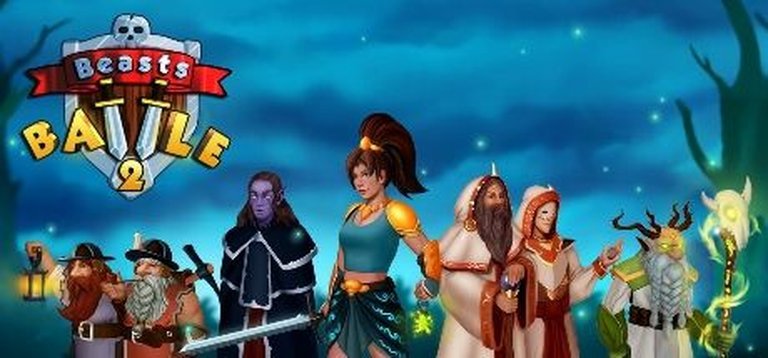
Beasts Battle 2, also known as Necromancer Returns, is a turn-based strategy game set in a fantasy kingdom where peace is disrupted by the return of a malevolent Necromancer intent on enslaving all living beings. Players assemble an army of diverse warriors with unique skills, travel alongside the princess to explore varied lands, recruit opponents to their cause, and engage in tactical hex-based battles, upgrading heroes, collecting artifacts, and tackling bonus quests, dungeons, and endless arenas.
Beasts Battle 2 Reviews & Reception
3rd-strike.com (75/100): Fun RPG title, easy to learn and understand
Beasts Battle 2: Review
Introduction
In an era dominated by sprawling open-world epics and hyper-realistic blockbusters, Beasts Battle 2 (also known as Necromancer Returns) emerges as a humble yet heartfelt tribute to the golden age of turn-based strategy games, evoking the tactical purity of Heroes of Might and Magic and King’s Bounty. Released in 2018 by the one-man powerhouse Greenolor Studio, this sequel to the 2014 original builds on its predecessor’s foundation, thrusting players into a fantasy realm shattered by an ancient evil. As the princess of a beleaguered kingdom, you assemble a ragtag army of beasts and warriors to combat the Necromancer’s undead hordes. Amidst a sea of indie titles vying for attention on Steam, Beasts Battle 2 stands out for its unpretentious charm and old-school design—but does it recapture the strategic depth of its inspirations, or does it falter under modest ambitions? This review argues that while it delivers accessible, nostalgic fun for casual strategists, its shallow mechanics and repetitive execution prevent it from ascending to classic status, cementing it instead as a poignant artifact of solo indie grit.
Development History & Context
Greenolor Studio, spearheaded by Russian developer Sergey Pomorin from Kaliningrad, embodies the archetype of the passionate solo indie creator navigating a cutthroat industry. Pomorin’s journey began with the original Beasts Battle in 2014—a browser, Ouya, iPhone, and later Steam title (2016)—born from his freelance mobile app work. Frustrated with contract gigs, he self-funded a “big project” inspired by his love for Heroes of Might and Magic and King’s Bounty, channeling their hex-based battles and army-building into a compact package. Beasts Battle 2 took roughly a year to develop, released on February 1, 2018, for Windows (and Macintosh), priced at $9.99 on Steam.
Built using the lightweight Corona SDK (now Solar2D), the game leveraged its cross-platform prowess for quick iteration on modest hardware—requiring just 250MB storage, 1GB RAM, and OpenGL 2.1. Pomorin handled core programming solo, outsourcing art, music, writing, and UI to freelancers amid constant challenges: exhausting freelancer management, pauses for day-job income, and burnout. As detailed in his candid Corona Labs interview and ModDB articles, the process was a “false start” after initial mobile roots, evolving into a Steam-focused PC title via Greenlight (announced December 2016). No external funding was sought; it was bootstrapped from personal earnings, totaling around $17,000—far less than the $23,800 sunk into the unreleased follow-up Magicians Legacy.
The 2018 gaming landscape was flooded with indie strategies like Battle Brothers and Cassette Beasts, but Beasts Battle 2 carved a niche in the “casual turn-based tactics” space, targeting fans of hexagonal grids amid rising battle royale dominance. Technological constraints? Minimal—Corona’s 2D focus suited hand-drawn assets perfectly, but limited Pomorin’s scope to 2D isometry, avoiding the 3D experiments he later abandoned. This context paints a dev saga of persistence: “Make a team. Be persistent. Be prepared for unforeseen expenses,” Pomorin advised, a mantra echoing broader indie struggles in a post-Flappy Bird monetization frenzy.
Narrative & Thematic Deep Dive
Beasts Battle 2‘s story is a straightforward fantasy yarn, laced with humor and self-awareness, unfolding across a world map divided into 10 varied locations. It opens idyllically in a quiet coastal town, where a mud-caked ruby washes ashore. A fisherman sells it to a jeweler, who cleaves it open—unleashing the Necromancer, a “Universal Evil” that possesses him and resurrects townsfolk as undead horrors. As the kingdom’s princess, you embark on a rescue expedition, recruiting allies, exploring lands, and confronting the darkness threatening enslavement.
The plot advances linearly through dialogues—amusing, Petrosyan-style jokes (Russian humor tropes) peppered with modern pop culture nods, like movie references noted in reviews. You travel with a companion princess (or as her?), engaging opponents who might join your cause post-battle. Themes center on assembly and redemption: piecing together a fractured kingdom from beasts, warriors, and reformed foes, countering the Necromancer’s corrupting influence. Subtle motifs of leadership emerge via your hero’s growth, skill trees symbolizing personal evolution amid chaos.
Yet depth wanes. Progression feels like “going down the hallway,” as one RAWG critic lamented—repetitive fetch-quests, side banter, and boss fights without branching paths. No voice acting (despite Pomorin’s localization plans), and choices are superficial, lacking the moral ambiguity of Heroes. Thematically, it romanticizes indie heroism: the princess as underdog assembler mirrors Pomorin’s freelancer-wrangling. Bonus quests and dungeons add flavor, but the narrative prioritizes accessibility over epic scope, delivering cozy escapism rather than Shakespearean intrigue.
Gameplay Mechanics & Systems
At its core, Beasts Battle 2 is a turn-based tactics game on hexagonal grids, blending exploration, army recruitment, and combat. The loop: traverse a diagonal-down world map, trigger battles against 40+ enemy types, recruit survivors (if morale holds), upgrade via gold/experience, and tackle campaigns, arenas, dungeons, or endless survival.
Combat shines in familiarity—units move/attack in initiative order (princess first, then player-selected stacks interleaving with foes). Melee risks retaliation (Newton’s third law, per 3rd-strike), backstabs amplify damage, ranged ignores some obstacles (a quirky flaw). Over 20 recruitable units boast unique skills: goblins repair mechanisms, dragons resist magic, undead/spirits/elementals offer synergies. Your princess supports with spells (fire waves, resurrections—though critics note only two dominate), artifacts, and a spellbook accessible mid-map.
Progression includes hero leveling (skill tree with branches for magic, XP/gold boosts—underutilized per detractors), auto-upgrading units (post-Beasts Battle improvement), inventory for bonuses, and leadership healing losses. UI is clean but basic: hex highlighting, unit stats, order queuing. Difficulties scale enemy stack sizes (not XP/gold), enabling exploits like arena grinding for top gear in 20 minutes, trivializing hard mode.
Innovations? Arenas for gold, recruitable neutrals, no mandatory grind. Flaws abound: tactics feel illusory—wave of fire clears fields, dragons neuter spells, skill tree redundant beyond center branch. No hotseat (unlike predecessor), limited party size forces setups, slow starts demand patience. Pacing suits casual play (4-hour average), with achievements like “John Wick” (5 survival wins) adding replay. It’s intuitive for newcomers, fair via planning, but lacks the punishing depth of forebears—more puzzle than chess match.
World-Building, Art & Sound
The fantasy setting—a kingdom of forests, swamps, harbors, and necrotic blights—is compact yet evocative, with 10 locations fostering immersion via progression: from serene towns to undead-infested arenas. Hex maps vary battlefields, obstacles differentiating foreground/background, though ranged exploits high blockades.
Art is hand-drawn 2D isometry, initially “cheap” like a mobile port (3rd-strike), but charms with juicy colors, detailed models, and fluid animations. Units pop with personality—fierce dragons, evil undead—though princess customization is stats-only, no visuals. Effects (spells, attacks) are lively, evoking Kingdom Rush.
Sound design impresses: charming, varied tracks shift from calm town lullabies to tense combat (difficulty-specific), bolstered by crisp SFX for cues. No voiceover, but Russian localization preserves humorous dialogues. These elements coalesce into a cozy atmosphere—bright, approachable fantasy that punches above its 250MB weight, drawing players into Pomorin’s “wonderful world.”
Reception & Legacy
Launch reception was muted: no MobyGames critic score, zero player reviews there, 6 collectors. Steam/RAWG mixed—praise for visuals, unit variety, accessibility (7.5/10 from 3rd-strike: “fun RPG, easy to learn”); ire for no tactics, exploits, repetitive jokes (“Petrosyan humor,” shallow plot—Artureg’s 7-hour rant). Positive Russian Steam curator: “worthy genre rep,” compact quality. Commercially modest—few sales recouped $17K costs, per Pomorin’s ModDB confessions—yet fostered community via Steam forums, Discord.
Legacy endures as indie testament: sequel spurred Magicians Legacy (evolving mechanics: bosses per chapter, magic types, towers), documenting gamedev woes (burnout, PR struggles, publisher hunts). Influenced niche hex-strats? Marginally, akin to Braveland Wizard, but shines in dev narrative—Corona feature, Indie Cup entry—inspiring solos. Evolved rep from obscurity to cult curiosity for HoMM fans seeking bite-sized homage.
Conclusion
Beasts Battle 2 is a loving, flawed paean to turn-based strategy’s heyday—accessible, charming, and authentically indie, yet hobbled by shallow tactics, exploits, and repetition that curb replayability. Pomorin’s solo saga elevates it beyond mechanics: a $10 gem for nostalgic explorers craving hex-grid comfort, but not a pantheon contender. In video game history, it occupies a footnote as resilient underdog—proof passion persists, even sans profit. Verdict: 7/10—Recommended for casual tacticians; a must-play for indie historians tracing King’s Bounty echoes in Steam’s shadows.