
- Release Year: 2024
- Platforms: Nintendo Switch, Windows
- Publisher: Nementic Games GmbH, rokaplay GmbH
- Developer: Nementic Games GmbH
- Genre: Adventure
- Perspective: 1st-person
- Game Mode: Single-player
- Gameplay: Puzzle elements
- Setting: Fantasy
- Average Score: 82/100
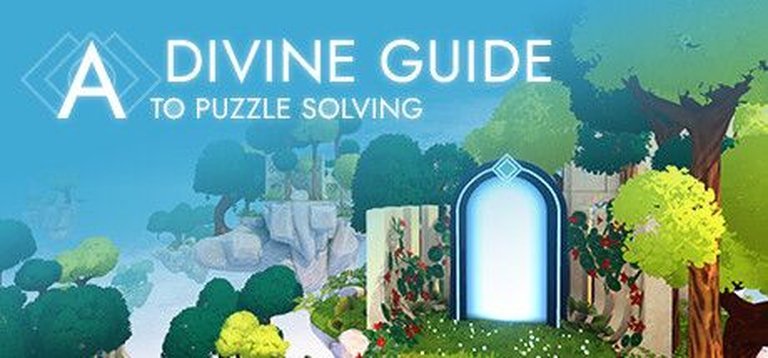
Description
A Divine Guide to Puzzle Solving is a first-person fantasy adventure game where a mortal is invited by whimsical gods to test their new puzzles, primarily built around a magical swap mechanic that allows exchanging any two objects in the environment using a divine hand, blending humor, puzzle-solving, and a touch of fear of the gods in short, engaging levels.
Gameplay Videos
A Divine Guide to Puzzle Solving Guides & Walkthroughs
A Divine Guide to Puzzle Solving Reviews & Reception
gamegrin.com (85/100): A Divine Guide To Puzzle Solving is simply a nice time that doesn’t last longer than it should, but the last level could be a bit better.
gaming-age.com (80/100): If you’re a fan of Portal-style puzzlers, you should buy it all the same.
A Divine Guide to Puzzle Solving: Review
Introduction
Imagine being yanked from your mundane life by a pompous deity who demands you beta-test her sadistic puzzle gauntlet, all under the guise of “divine honor”—and the only way home is to play along. This is the cheeky premise of A Divine Guide to Puzzle Solving, a 2024 indie gem from Nementic Games that distills the essence of first-person puzzlers into a bite-sized, 1-3 hour experience. Drawing inevitable comparisons to Portal and The Talos Principle, it swaps portals for a Swap Beam but delivers elegant brain-teasers wrapped in cosmic comedy. As a game historian chronicling the evolution of puzzle adventures from The Witness to modern indies, I argue that this title’s true brilliance lies in its restraint: a swan-song debut that prioritizes polish over bloat, proving small teams can still craft divine entertainment in an era dominated by sprawling epics.
Development History & Context
Nementic Games GmbH, a diminutive German indie studio, birthed A Divine Guide to Puzzle Solving (aka Tobla: Divine Path) as their final hurrah amid the brutal indie landscape of 2024. Led by project managers Julian Ludwig and Sebastian Jantschke—who doubled as game designers alongside Laurin Grossmann—the team of just 21 credits (19 developers, 2 thanks) punched far above their weight. Programmers Anja Haumann and Frederic Fulghum handled the Unity engine backbone, while Ksenia Berndl crafted 3D art and environments, Hanna Gärtner contributed concept and UI design, and Julian Ludwig tackled technical art and VFX. Writing by Jantschke and Grossmann infused the script with wit, voiced masterfully by Jessica Osborne as Tobla, with Michael Hartung on sound and Philipp Kapusta composing the score. Quality assurance involved a grassroots crew including Prof. Dr. Christoph Minnameier.
Released March 29, 2024, on Windows via Steam ($7.99) and later Nintendo Switch ($1.99), it emerged during a puzzle renaissance post-The Talos Principle 2 (2023) and amid Unity controversies that squeezed small devs. A Reddit post from developer “basti1295” (likely Jantschke) reveals the heartbreak: studio disbandment due to “industry challenges,” making this a poignant swan song. Self-published with rokaplay GmbH support, it leveraged a free demo for Steam traction, earning “Very Positive” user ratings early. Technologically, Wwise audio and physics-consistent swaps fit the post-Portal 2 era’s demand for precise, momentum-retaining interactions—no VR or multiplayer bloat, just pure puzzle craft in a market flooded by roguelikes and live-service giants.
Narrative & Thematic Deep Dive
At its core, A Divine Guide to Puzzle Solving is a monologue-driven farce masquerading as a puzzle test. You play a silent mortal protagonist, abducted by Tobla, the self-proclaimed “Mighty Tobla” and goddess of puzzles, who quips gems like, “How many mortals does it take to populate Mars? Trick question, they are all dead before it could even happen.” Jessica Osborne’s voice acting elevates Tobla from archetype to standout: haughty, condescending, yet laced with maternal delusion—she’s “doing what’s best for you” while engineering your peril. Dialogue punctuates levels, revealing Tobla’s loneliness and god-complex; post-puzzle banter peels back layers, hinting at divine motives beyond mere testing.
The plot unfolds across 16 levels in three acts: sky-island introductions, escalating trials, and a fiery underworld climax. Themes riff on free will (your “not at your free will” conscription), hubris (Tobla’s godhood fragility), and mortality’s absurdity—echoing The Stanley Parable‘s meta-narration or Talos Principle‘s existentialism, but compressed into comedy. No deep lore dumps; instead, environmental storytelling via Tobla’s taunts builds dread, culminating in a twist where her “trials” border on lethality. Subtle motifs—like swapping as metaphor for inescapable fate—add depth without pretension. It’s not revolutionary, but the writing’s economy shines: every line advances character or puzzle, making Tobla a villain you love to outwit.
Gameplay Mechanics & Systems
The Swap Beam is the game’s raison d’être: aim at two objects (or object and surface?), mark them, and snap—they exchange positions instantly, preserving momentum for physics wizardry. No inventory clutter; non-carryable blocks demand swaps, evolving from cube-on-button basics (Portal nod) to ball-rolling chains, momentum flings, and multi-step Rube Goldberg chains. Puzzles ramp elegantly: early levels teach swaps via sky platforms; mid-game introduces hazards like pits and crushers; late ones layer balls needing directional inertia post-swap.
Core loop: explore open-yet-guided arenas, scan for swappables (clear visual cues prevent frustration), execute (with satisfying pop feedback), progress. No combat, pure puzzles—16 levels, restart-anytime via intuitive UI. Progression is linear but achievement-rich (full completion in <3 hours). Strengths: consistent physics (balls roll true post-swap), “cheese” exploits for leniency, no wild jank. Flaws: single mechanic risks monotony, execution fiddliness (e.g., precise ball swaps), and a reportedly weaker final level. UI is minimalist—Hanna Gärtner’s design shines with clean HUD, radial menus, and god-ray highlights. Direct control feels fluid on keyboard/gamepad; Switch port adapts seamlessly. Achievements encourage replays, but brevity (1-2 hours speedrun) suits casuals over obsessives.
World-Building, Art & Sound
Tobla’s realm is a fantastical diorama: floating sky islands with ethereal clouds, verdant platforms, and glowing runes evoke Talos Principle‘s serenity; hellish underworld pits brim with lava flows and jagged obsidian for claustrophobic tension. Three area types—puzzle hubs, inter-level voids, finale realm—rotate without overstaying, bolstered by Ksenia’s stylized 3D: hand-painted textures, dynamic lighting, and subtle VFX like beam tracers create “picturesque” vistas that punch visually despite indie budget.
Atmosphere thrives on immersion: first-person direct control lets worlds breathe, no HUD overload. Sound design elevates—Michael Hartung’s crisp swaps, rolling thuds, and ambient whooshes via Wwise sync perfectly; Philipp Kapusta’s score blends whimsical flutes with ominous strings, swelling post-solve. Tobla’s VO is the star: Osborne’s timbre shifts from smug to sinister, syncing with puzzle states for reactivity. Collectively, these forge a cohesive “divine” mood—cozy yet menacing—like stumbling into a god’s playground.
Reception & Legacy
Launching to niche acclaim, A Divine Guide to Puzzle Solving averaged 82% on MobyGames (GameGrin 85%: “nice time that doesn’t last longer than it should”; Gaming Age 80%: “solid entertainment for $8”). Steam’s “Very Positive” (50+ reviews) hailed brevity and Tobla; Adventure Gamers noted its Portal/Talos kinship. Critics praised value (90-180 minutes), puzzles, VO; nitpicks hit shortness, last-level dip, unoriginality. Commercially modest—indie pricing aided Switch sales—yet culturally resonant as Nementic’s epitaph.
Legacy? Too nascent for pantheon status, but it exemplifies 2020s indie resilience: Unity-fueled precision amid layoffs. Influences Viewfinder-era swappers; Reddit promo humanized its disbandment story. In puzzle history—from Chip’s Challenge to Baba Is You—it carves a footnote as the “perfect coffee-break deity,” inspiring bite-sized narratives. Future ports/remasters could amplify it.
Conclusion
A Divine Guide to Puzzle Solving is indie alchemy: a tiny team transmuting one mechanic into 2+ hours of joy, buoyed by Tobla’s venomous charm and pristine execution. Flaws—brevity, familiarity—pale against strengths: elegant swaps, laugh-out-loud writing, atmospheric polish. Not a landmark like Portal, but a vital counterpoint in puzzle evolution, reminding us gods fall, yet clever mortals endure. Verdict: Essential for puzzlers (9/10)—buy on sale, worship the demo, and toast Nementic’s divine exit. Its place in history? A fleeting comet in the indie firmament, brilliant while it lasts.