
- Release Year: 2012
- Platforms: Windows
- Publisher: 9Heads Game Studio
- Developer: 9Heads Game Studio
- Genre: Action, Puzzle
- Perspective: 1st-person
- Game Mode: Single-player
- Gameplay: Platform
- Setting: Fantasy
- Average Score: 41/100
Description
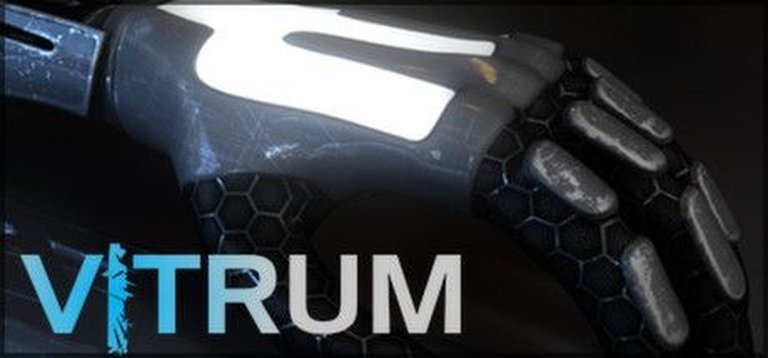
Vitrum is a 3D first-person puzzle-platformer set in a fantasy world, where players control an android designed to absorb and convert energy from crystals into various powers to navigate intricate levels, solve environmental puzzles, and perform platforming challenges using direct control, cinematic camera views, and physics-based interactions.
Where to Buy Vitrum
PC
Vitrum Guides & Walkthroughs
Vitrum Reviews & Reception
steambase.io (41/100): Mixed
Vitrum: Review
Introduction
In the vast digital desert of early 2010s indie gaming, where Steam Greenlight birthed a thousand experimental titles, Vitrum emerges as a crystalline curiosity—a first-person puzzle-platformer that dares players to bend gravity and wield elemental powers drawn from glowing shards. Released in September 2012 by the one-man-or-small-team operation at 9Heads Game Studio, this unassuming Windows title promised physics-driven ingenuity in a sci-fi laboratory overrun by hazardous crystals. Yet, for all its ambitious mechanics, Vitrum remains a footnote in gaming history, emblematic of the era’s raw, unpolished creativity. My thesis: While Vitrum innovates with combinatorial crystal powers and a stage editor that hints at untapped community potential, its legacy is marred by technical instability, frustrating controls, and levels that fail to evolve beyond basic experimentation, rendering it a flawed artifact more intriguing for historians than modern players.
Development History & Context
9Heads Game Studio, a diminutive indie outfit likely spearheaded by a core developer (as evidenced by direct Steam forum responses under the “9heads” tag), self-published Vitrum on September 24-25, 2012, via Steam and Desura amid the Wild West of digital distribution. This was the heyday of Steam Greenlight, where bedroom coders could pitch prototypes to a gatekeeping community, and Vitrum fit the mold: a low-budget passion project leveraging free middleware like the OGRE 3D engine for rendering and Bullet Physics for realistic interactions. System requirements were laughably modest—Pentium 4-era hardware with 1-2 GB RAM—reflecting resource constraints but also enabling broad accessibility on aging PCs.
The gaming landscape in 2012 was dominated by polished blockbusters like Portal 2 (still fresh from 2011) and emerging indies like Antichamber, which elevated first-person puzzles to art. Vitrum arrived as a DIY counterpoint, prioritizing raw mechanics over narrative sheen. Post-launch updates included a stage editor (December 2012 on Desura, later Steam-integrated), allowing user-generated content and ratings, alongside troubleshooting guides for crashes and graphical glitches (e.g., flickering lights on AMD Radeon cards, fixed via driver rollbacks). Music was sourced via Creative Commons (tracks by Eye Depth, Fingers In The Noise, et al.), credited in-game and folders, underscoring the bootstrap ethos. No major expansions or sequels followed; 9Heads faded into obscurity, leaving Vitrum as a snapshot of pre-Unity boom indie hustle—innovative yet hampered by solo-dev limitations in optimization and polish.
Narrative & Thematic Deep Dive
Vitrum‘s story is whisper-thin, a deliberate choice confirmed by lead developer “9heads” in a 2014 Steam thread: “We didn’t go too deep on the story, it’s more about the gameplay and content.” Players embody a silent android awakening in a derelict desert laboratory, tasked with escaping stages riddled with energy crystals. Scattered text logs provide minimal lore—hints of experimentation gone awry, crystalline anomalies, and the android’s purpose as an energy converter—but no grand arc, characters, or “darker secrets” akin to Portal‘s GLaDOS twists. No named protagonists, antagonists, or dialogue; progression is gated by shard collection to unlock “Insane” stages, evoking a theme of incremental mastery over chaos.
Thematically, Vitrum explores discovery through manipulation: crystals symbolize raw, untamed power (benign colors grant abilities; red/radioactive ones harm), mirroring real-world atomic or quantum themes in a fantasy-sci-fi hybrid. The android’s dual-hand absorption mechanic embodies duality—combine blue (gravity inversion) with green (platform materialization) for hybrid solutions—forcing players to internalize risk-reward. Yet, this subtlety drowns in mechanical focus; absent voice acting, cutscenes, or branching paths, the narrative feels like set dressing for puzzles. In an era of lore-heavy indies (Braid, Fez), Vitrum‘s austerity amplifies isolation but undermines emotional investment, reducing themes to intellectual exercises rather than resonant metaphors.
Gameplay Mechanics & Systems
At its core, Vitrum deconstructs first-person platforming into a physics sandbox of crystal empowerment. The android absorbs energy from colored crystals into left/right hands, unlocking powers like:
- Gravity Inversion: Flip directional pull in 3D space—walk on ceilings, redirect falls—for fluid navigation.
- Platform Materialization: Summon crystalline bridges mid-void.
- Super Jumps/Repulsion: Launch skyward or blast obstacles.
- Hybrids: Dual-hand combos (e.g., gravity + jump) for advanced puzzles.
Over 45 stages escalate from tutorials to “Insane” shard-unlocked gauntlets, blending platforming (precise jumps, avoidance of death/radioactive crystals) with puzzles (combine powers to reach exits). A stage editor empowers creation/sharing, fostering replayability via community stages.
| Mechanic | Strengths | Flaws |
|---|---|---|
| Crystal Powers | Innovative combos; 3D gravity feels liberating. | Unintuitive hand-switching; power decay forces constant re-absorption. |
| Physics/Platforming | Bullet engine yields satisfying momentum. | Janky controls (unresponsive mouse/keyboard, gamepad optional but finicky). |
| Progression/UI | Shard collection unlocks content cleanly. | Cluttered HUD; no tutorials beyond trial-error. |
| Editor | Full-featured for custom puzzles. | Buggy integration; sparse community uptake. |
Loops shine in mid-game eureka moments but falter late: repetitive level design (lab corridors, crystal mazes) breeds boredom, compounded by crashes, lag (even on recommended hardware), and imprecise collision. Compared to Portal‘s elegant momentum, Vitrum‘s systems feel prototype-like—promising but unrefined.
World-Building, Art & Sound
Set in a sprawling desert laboratory—evocative of fallout bunkers amid dunes—Vitrum‘s world is austere yet atmospheric. Cinematic camera pans reveal vast chambers aglow with neon crystals (blue hues for calm, red for peril), using OGRE’s cel-shaded visuals for a crystalline sheen. Environments evolve subtly: early sterile halls give way to shard-littered ruins, harmful crystals pulsing like veins. No open world; stages are linear but interconnected via shard hunts, building tension through isolation.
Art direction is minimalist—blocky android model, geometric labs—but evocative, with gravity flips transforming familiar spaces into alien vertigo-scapes. Sound design elevates: CC-BY tracks (“Nothing to Hide” by Eye Depth, ambient electronica by Fingers In The Noise) weave ethereal synths with crystalline chimes, syncing to power activations for immersion. SFX (energy hums, gravity whooshes) reinforce tactility, though sparse voice work leaves silence oppressive. Collectively, these craft a hypnotic, otherworldly vibe—contributing to highs of discovery but underscoring emptiness in weaker puzzles.
Reception & Legacy
Launch reception was muted: No MobyGames critic scores (n/a), zero user reviews initially; Steam settled at “Mixed” (41-43% positive from 51-80 reviews). Positives praised concepts (“interesting gravity mechanics”), soundtrack, and editor potential; negatives dominated—frustrating controls (“unresponsive”), poor optimization (“crashes on load, lag on capable PCs”), boring/repetitive levels, Portal comparisons (“unfavorably”). Bundles (e.g., Bundle Stars) boosted visibility, but sales languished (collected by ~18-19 players on MobyGames).
Over a decade, Vitrum‘s reputation stagnated as a curio—ranked low (e.g., 2,520/72k on IndieDB, 3/10 on VideoGameGeek). Influence is negligible; gravity puzzles echoed in later titles (Antichamber, The Talos Principle), but Vitrum predates them without credit. The editor hinted at modding vitality (Desura shares), yet community fizzled amid technical woes. In indie history, it exemplifies Greenlight’s double-edge: democratizing creation but flooding markets with unpolished gems, paving for tools like Unity/Unreal that professionalized the scene.
Conclusion
Vitrum is a relic of indie optimism—crystalline powers sparkle with invention, bolstered by a thoughtful editor and haunting soundtrack, yet crumble under controls, bugs, and uninspired design. For historians, it’s a vital document of 2012’s DIY ethos; for players, a niche curiosity demanding patience (tweak drivers, embrace frustration). Definitive verdict: 6/10—not a masterpiece, but a commendable swing in video game history’s experimental fringes. Tinkerers and completionists, grab it on a Steam sale; others, admire from afar. Its true legacy? Reminding us that even flawed facets can refract brilliance.