
- Release Year: 2005
- Platforms: Android, iPad, iPhone, Windows
- Publisher: Cenega Czech s.r.o., Ludonic, Prague Promotion, s.r.o., ZIMA software
- Developer: ZIMA software
- Genre: Adventure
- Perspective: 3rd-person
- Game Mode: Single-player
- Gameplay: Graphic adventure, Puzzle elements
- Setting: Ancient Greece
- Average Score: 77/100
Description
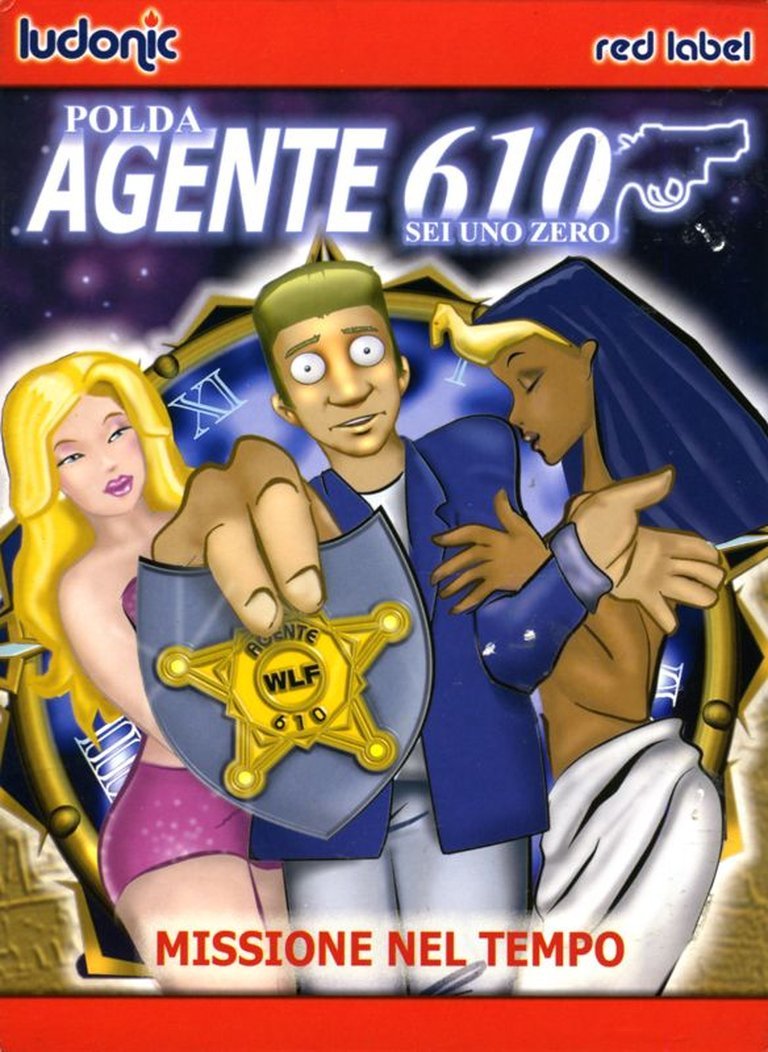
Polda 5 is the fifth installment in the humorous Czech point-and-click adventure series, where detective Pankrác assists a secret organization through time travel adventures, journeying to ancient Greece and other historical eras while solving puzzles in a 3rd-person graphic adventure filled with detective mystery elements.
Where to Buy Polda 5
PC
Polda 5 Reviews & Reception
mobygames.com (65/100): one of the worst episodes of the series, but worth it
steambase.io (83/100): Player Score of 83 / 100 with Positive rating
store.steampowered.com (83/100): 83% of the 18 user reviews for this game are positive
Polda 5: Review
Introduction
Imagine stumbling upon a mysterious parcel at your doorstep, slicing it open with a pocket knife, and suddenly hurtling through time—from the sun-baked sands of ancient Egypt to the siege of Troy and a shadowy German airfield buzzing with experimental aircraft. This is the absurd, time-warping hook of Polda 5, the fifth installment in one of the Czech Republic’s most enduring adventure game series. Launched in October 2005 by ZIMA software, Polda 5 continues the escapades of the bumbling yet heroic detective Pankrác (or Pankrac in English localizations), a staple of Czech gaming since 1998’s blockbuster Polda 1. As a cornerstone of Eastern European point-and-click adventures, the series blends slapstick humor, cultural satire, and logical puzzles in a distinctly cartoonish vein. My thesis: While Polda 5 stumbles with a shallow story and technical rough edges—marking it as the series’ weakest link—it endures as a nostalgic testament to mid-2000s indie ambition, now revitalized on modern platforms like Steam, offering lighthearted escapism for fans of unpretentious detective yarns.
Development History & Context
ZIMA software, founded by producer Martin Zima, took the reins of the Polda series after the original Polda 1 (1998, developed by SleepTeam) exploded as the Czech Republic’s best-selling game of 1999. By Polda 5, ZIMA had solidified its role as both developer and publisher, with a small team of 20 credits including programmer Petr Svoboda, screenplay writer Josef Nemet, and a graphics squad led by David Dvořák, Petr Samek, and others like Luděk Hroch (veteran of 15 games). Production manager Radek Smíšek and technical manager Pavel Neužil oversaw a project that pushed beyond the 2D roots of earlier entries (Polda 1-3) into hybrid 2D/3D territory introduced in Polda 4: Time Guard (2002).
The era’s technological constraints were palpable: Released on CD-ROM for Windows, Polda 5 targeted Pentium IV-era hardware (minimum 1.0 GHz CPU, 64MB VRAM, 700MB RAM), emphasizing pre-rendered backgrounds and cel-shaded 3D models over full real-time rendering. This mirrored the mid-2000s adventure scene, where LucasArts and Sierra’s legacies waned amid rising 3D action games like Half-Life 2 (2004) and GTA: San Andreas (2004). In the Czech/Slovak market, however, point-and-click thrived via local humor and dubbing—Polda‘s hallmark, featuring stars like Luděk Sobota. Publishers like Cenega Czech s.r.o., Ludonic, and Prague Promotion s.r.o. distributed it regionally, with an Italian localization (Polda: Agente 610 – Missione nel tempo) adding voices by Francesco Basso et al. ZIMA’s vision was clear: evolve Pankrác from village cop to time-traveling “Time Police” agent, blending series tradition with bolder settings, though budget limits yielded a “relatively short” experience (as noted by Games.cz). Ports to Android/iOS (2019) and Steam (2024, €3.99) reflect ongoing preservation efforts amid a global indie revival.
Narrative & Thematic Deep Dive
Polda 5‘s plot kicks off with Pankrác, now an “elite private detective,” receiving an unmarked parcel that detonates a time-bomb mechanism, thrusting him into service for a secret organization rectifying “time anomalies.” Jetting across epochs—ancient Greece, Egypt, Troy, and a WWII-era German base—he must unravel a conspiracy threatening humanity (or “at least a few beauties,” per Steam’s cheeky synopsis). Screenplay author Josef Nemet crafts a detective/mystery yarn packed with 36 interactive characters across 45 locations, emphasizing logical puzzles over deep lore. Dialogues brim with Czech humor: absurd one-liners, pop culture nods (e.g., parodies of historical figures), and self-aware gags, delivered via professional Czech dubbing (Luděk Sobota as Pankrác shines) and Italian voices for export.
Thematically, it’s pure Polda: satirical takes on history, authority, and machismo. Time travel serves as a vehicle for comedy—Pankrác bungles through Troy’s siege or Egyptian pyramids, wielding gadgets like a “vibrator gun” (noted by Sector as a “mature” shift, warning parents). Characters are caricatures: quirky NPCs spout witty banter, but the story feels “boring” and “shallow” (Chronik808, Bonusweb), lacking the emotional heft of Grim Fandango. Underlying motifs explore determinism vs. agency—fixing timelines echoes real-world regrets—but they’re undercut by illogic (e.g., “non-logical problem solutions,” per Bonusweb). For series fans, it’s “still the old Czech cop full of humor” (Hry Sme); newcomers find it “plytký” (shallow). Roman Perlovsky’s music underscores the farce, but the narrative’s brevity (absurdly short playtime) prevents epic scope.
Gameplay Mechanics & Systems
Classic point-and-click defines Polda 5: explore hand-drawn screens, collect “lots of game items,” converse via dialogue trees, and solve puzzles in a detective loop. No combat or progression trees—just inventory management, hot-spot clicking, and trial-and-error logic (e.g., combining objects for time gadgets). UI is straightforward: point-and-select interface with fixed 3rd-person views, save-anywhere in %APPDATA%\Polda 5. Innovations include time-hopping as progression—unlocking eras via anomaly fixes—but flaws abound: bad animations stutter (player consensus), illogical riddles frustrate, and brevity (under 5 hours) skimps on depth.
Steam adds 11 achievements, enhancing replayability, while mobile ports adapt touch controls. Compared to predecessors, it’s “more difficult” (Sector) yet “krátký” (short, Games.cz). No remapping or controller support hampers modernity (PCGamingWiki notes 4:3 only, no widescreen). Strengths: “lots of screens” reward exploration; puzzles feel “interesting” (Steam). Weaknesses: clunky 3D integration yields stiff movement, echoing era constraints. Overall, solid for casual puzzling, flawed for precision.
World-Building, Art & Sound
Polda 5 shines in evocative, stylized worlds: 45 locations span epochs with cartoonish flair—cel-shaded 3D models (David Dvořák et al.) overlay vibrant, hand-painted backdrops, evoking comic books. Ancient Greece bustles with toga-clad philosophers; Troy’s wooden horse looms; Egypt’s pyramids hide secrets; the German base hums with proto-Jetpacks. Atmosphere blends whimsy and menace, heightening immersion despite fixed cameras.
Art direction is “outstanding and stylish” (Steam), with colorful, 1990s-inspired palettes, though “podprůměrné grafické zpracování” (subpar graphics, Bonusweb) shows dated polys and animations. Sound elevates: Perlovsky’s “quality music and sound effects” pulse with jaunty tunes; “excellent dubbing” (Chronik808, all critics) delivers comedic timing—Czech voices ooze personality, Italian adds flair. Subtitles support English/Czech/Italian (Steam). These elements forge a cozy, humorous vibe, masking technical limits for a “cartoony” delight.
Reception & Legacy
At launch, Polda 5 garnered mixed Czech reviews (MobyGames: 60% average from 6 critics)—70% from Hry Sme (“skvelý titul” for relaxation), Games.cz (“zábavný” for fans), Czech Gamer; dipping to 57% (Sector: “plytký,” avoid for newbies), 50% (Doupe.cz), 40% (Hrej!: “podpůměrná”). Bonusweb called it disappointing despite dubbing/humor. One player review (4/5): “one of the worst episodes” but “worth it” on Steam. Commercial success was regional—bundled in Polda 1-5 (2007)—fueling the series to Polda 7 (2022, crowdfunded) and Polda 8 (2026).
Reputation evolved positively: Steam (2024) boasts 83% positive (18 reviews), praising time travel/dubbing. Influence? Cemented Czech adventures’ niche (post-Sam & Max, pre-Machinarium), inspiring mobile ports (Polda 6: Detective Hayseed) and proving longevity—Polda 1 citations in academia (MobyGames). Globally obscure (#20,013/27K MobyScore), it’s a cult gem shaping Eastern Europe’s humorous P&C tradition.
Conclusion
Polda 5 captures the Polda series’ chaotic charm—time-leaping hijinks, stellar Czech dubbing, and puzzle-filled epochs—but falters on a “boring story,” choppy animations, and brevity, earning its “worst episode” tag. ZIMA’s modest team delivered a heartfelt, cel-shaded romp amid 2005’s 3D shift, now accessible via Steam for €3.99. In video game history, it occupies a quirky corner: not revolutionary like Monkey Island, but a vital Czech artifact, best for series devotees seeking unadulterated, low-stakes fun. Verdict: Recommended for nostalgia hunters (7/10)—play it to honor Pankrác’s enduring, poctivostí-driven legacy.