
- Release Year: 2001
- Platforms: Windows
- Publisher: Nikita Ltd., rondomedia Marketing & Vertriebs GmbH
- Developer: Nikita Ltd.
- Genre: Action, Driving, Racing
- Perspective: 3rd-person (Other)
- Game Mode: Single-player
- Gameplay: Hovercraft, Shooter, Vehicular
- Setting: Futuristic, Sci-fi
- Average Score: 85/100
Description
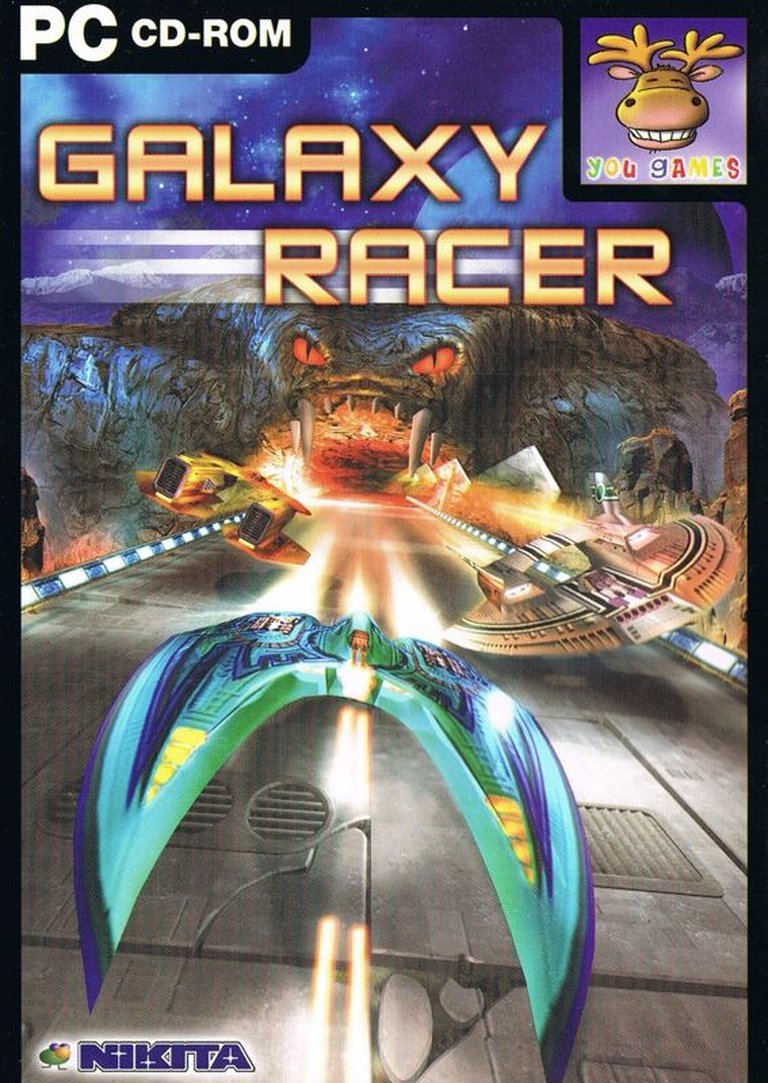
Galaxy Racer is a futuristic racing game set in a sci-fi universe where players select from 15 different space trucks and gliders to compete on 9 challenging tracks, collecting power-ups like turbo boosters and ammo while shooting opponents to eliminate them from the race and secure victory, with winnings used to upgrade vehicles and equip new weapons.
Galaxy Racer Reviews & Reception
myabandonware.com (85/100): Looks like a cool game.
Galaxy Racer: Review
Introduction
In the shadow of 2001’s titans—Grand Theft Auto III‘s open-world revolution, Halo: Combat Evolved‘s console-defining FPS, and Gran Turismo 3‘s sim-racing pinnacle—Galaxy Racer emerged as an unassuming blip on the radar, a Russian-developed Windows oddity blending hovercraft racing with trigger-happy combat. Developed and published by Nikita Ltd., this futuristic racer/shooter hybrid invited players to pilot “space trucks and gliders” across alien tracks, armed to the teeth and hungry for upgrades. Its legacy? One of obscurity, preserved not by critical acclaim but by abandonware enthusiasts and a tiny cadre of collectors (just eight on MobyGames). Yet, in an era when vehicular combat like Twisted Metal: Black and arcade racers ruled, Galaxy Racer (aka Safari Biathlon) carves a niche as a raw, unpolished artifact of post-Quake II ambition—budget sci-fi chaos that punches above its weight in replayable mayhem. This review argues that Galaxy Racer endures as a cult curio, a testament to Eastern European dev grit amid Western dominance, flawed but fiercely addictive for genre purists.
Development History & Context
Nikita Ltd., a modest Russian studio, birthed Galaxy Racer in 2001, releasing it first in Russia before a German localization via rondomedia Marketing & Vertriebs GmbH in 2002. This dual-market push hints at Nikita’s opportunistic scope—targeting Eastern budgets while eyeing Western shelves—but the game’s CD-ROM roots scream early-2000s PC shareware vibes. No splashy press events like Elite‘s Thorpe Park debut or Squaresoft’s cinematic misfire Final Fantasy: The Spirits Within; instead, it’s a product of the post-Dreamcast collapse, when Sega pivoted to third-party and Microsoft crashed the console party with Xbox.
The era’s tech constraints shaped its DNA: Windows XP compatibility woes (needing virtual machines or compat modes, per MyAbandonware) reflect DirectX-era optimism clashing with hardware fragmentation. Nikita drew from the “car/motorcycle combat” group on MobyGames—echoing Interstate ’76 or Vigilante 8—but infused hovercraft sci-fi, predating Wipeout Fusion‘s polish. Vision? A turbo-fueled response to POD or Rollcage, where physics-defying vehicles turned tracks into battlegrounds. Gaming landscape: 2001 overflowed with racers (Metropolis Street Racer on Dreamcast, Burnout igniting Criterion’s streak), but Galaxy Racer‘s armed-racing loop targeted bargain-bin buyers amid economic flux post-9/11 delays. No star devs credited (just Rainer S. adding it to MobyGames in 2015), underscoring Nikita’s underdog status—raw code over hype.
Technological Constraints
Built for CD-ROM, it sidestepped PS2/Xbox polys but battled Windows quirks: setups demand XP VMs, keygens unlock “full-rips” (84MB downloads), and widescreen hacks tease modern viability. Hovercraft physics? Likely rigid-body sims akin to Re-Volt, optimized for era rigs sans shaders.
Narrative & Thematic Deep Dive
Galaxy Racer shuns story for sandbox savagery—no cutscenes, protagonists, or dialogue trees. You’re a nameless racer in a sci-fi arena, grinding credits via victories to ascend galactic hierarchies. Plot? Implicit: dominate 9 tracks, obliterate foes, upgrade your rig. Themes echo Elite‘s trader-pirate freedom but vehicular-ized—capitalism via carnage, where turbo-hoarding and ammo barrages symbolize ruthless futurism.
Characters? Absent; 15 space trucks/gliders are your avatars, customizable via earnings (weapons, boosts). No lore dumps like F-Zero‘s pilots; foes are AI fodder, spawning rivalries through repeated shellings. Dialogue? Nil—pure action purity. Underlying motifs: Safari Biathlon‘s alt-title nods hunting/shooting sports, twisting biathlon into cosmic safari. Themes probe isolation (solo campaigns) vs. chaos (multi-rival races), mirroring 2001’s post-Cold War flux—Russian devs crafting escapist anarchy amid global shifts. Critically, its narrative void amplifies replay: victories beget empowerment, failures fuel vendettas. In a Final Fantasy X year, this minimalism is bold anti-storytelling, prioritizing loops over epics.
Gameplay Mechanics & Systems
Core loop: select rig, race 9 tracks, collect power-ups (turbo boosters, ammo), shoot rivals off-course, bank winnings for upgrades. 3rd-person perspective delivers hovercraft drift—sci-fi anti-grav skims neon circuits, blending POD‘s velocity with Quake‘s shootouts.
Core Loops & Combat
Races escalate: early laps hoard boosts; mid-game, ammo rains (push rivals via explosions). Combat shines—vehicles crumple realistically (per era norms), creating debris chaos. No rubber-band AI gripes noted; foes demand positioning. Victory: first-to-finish, but knockouts net bonuses.
Progression & UI
Earnings fund arsenals/upgrades—mirroring Gran Turismo‘s garage but weaponized. 15 vehicles vary (trucks tanky, gliders nimble?), fostering experimentation. UI? Functional: track maps, HUD for ammo/boosts/speed. Flaws: clunky menus (abandonware gripes), no multiplayer (missed LAN-era opportunity).
Innovations & Flaws
Innovative: power-up economy ties racing/shooting—turbo evades missiles, ammo clears paths. Hovercraft freedom defies terrain. Flawed: install hurdles (no serials, XP compat), potential jank (keygen rips). Balance? 4.25/5 on MyAbandonware suggests tight tuning; 16 votes hail “cool game” vibes. Exhaustive depth: 9 tracks imply variety (loops, jumps?), upgrades spiral meta-progression.
| Mechanic | Strength | Weakness |
|---|---|---|
| Racing | Fluid hovercraft handling | Track repetition risk |
| Combat | Satisfying push-kills | Ammo scarcity pressure |
| Progression | Credit grind rewarding | Linear unlocks |
| Controls | Intuitive 3rd-person | Compat mode fiddling |
World-Building, Art & Sound
Sci-fi/futuristic setting: unearthly tracks (per IGN) evoke Wipeout‘s abstraction—neon vistas, zero-G bends. Atmosphere? Adrenaline-fueled safari: blast “turbocars” amid alien backdrops. Visuals: low-poly 2001 PC fare, but hovercraft gleam; power-ups pop. Widescreen support hints scalability.
Art direction: functional futurism—space trucks as beefy haulers, gliders sleek predators. No screenshots overflow (MobyGames sparse), but promos tease vibrant palettes. Sound? Turbo whines, laser pew-pews, explosion rumbles—standard but immersive. No score noted; likely looping electronica, amplifying velocity. Contributions: sensory overload sells chaos—visual debris + audio booms heighten eliminations, forging “Champion of the Universe” (IGN) thrill.
Reception & Legacy
Launch: No MobyScore, zero critic/player reviews on MobyGames—ghost in 2001’s storm (Silent Hill 2, Devil May Cry). MyAbandonware’s 4.25/5 (16 votes) and “cool game” nods signal cult warmth; comments fixate installs (“full-rip” hacks). Commercial? Budget obscurity; Nikita faded, game abandonware staple.
Evolution: 2015 MobyGames entry (Rainer S.) + 2025 mods preserve it. Influence? Niche: prefigures Full Auto, Twisted Metal PC ports. Industry: exemplifies Eastern exports (Biathlon ties nod Nikita’s sim roots). No heirs, but hover-shooters (Vigilante 8 echoes) owe its formula. Legacy: abandonware beacon—16 votes > many obscurities; widescreen tweaks enable modern play.
Conclusion
Galaxy Racer is no GTA III disruptor but a scrappy survivor: 15 rigs, 9 tracks, endless shoot-‘n-upgrade loops distill vehicular combat to addictive essence. Flaws—compat woes, narrative void—pale against raw fun, a 2001 time capsule from Nikita’s labs. Amid Halo‘s glory, it claims underdog throne: playable chaos for retro racers. Verdict: 7.5/10. Essential for genre historians; download a rip, crank compat mode, and blast into oblivion—history’s forgotten champ deserves revival. In video game canon? A quirky footnote, proving even shadows cast long trails.