
- Release Year: 2004
- Platforms: Macintosh, Windows
- Publisher: Ubisoft Entertainment SA
- Genre: Special edition
- Game Mode: Single-player
- Average Score: 87/100
Description
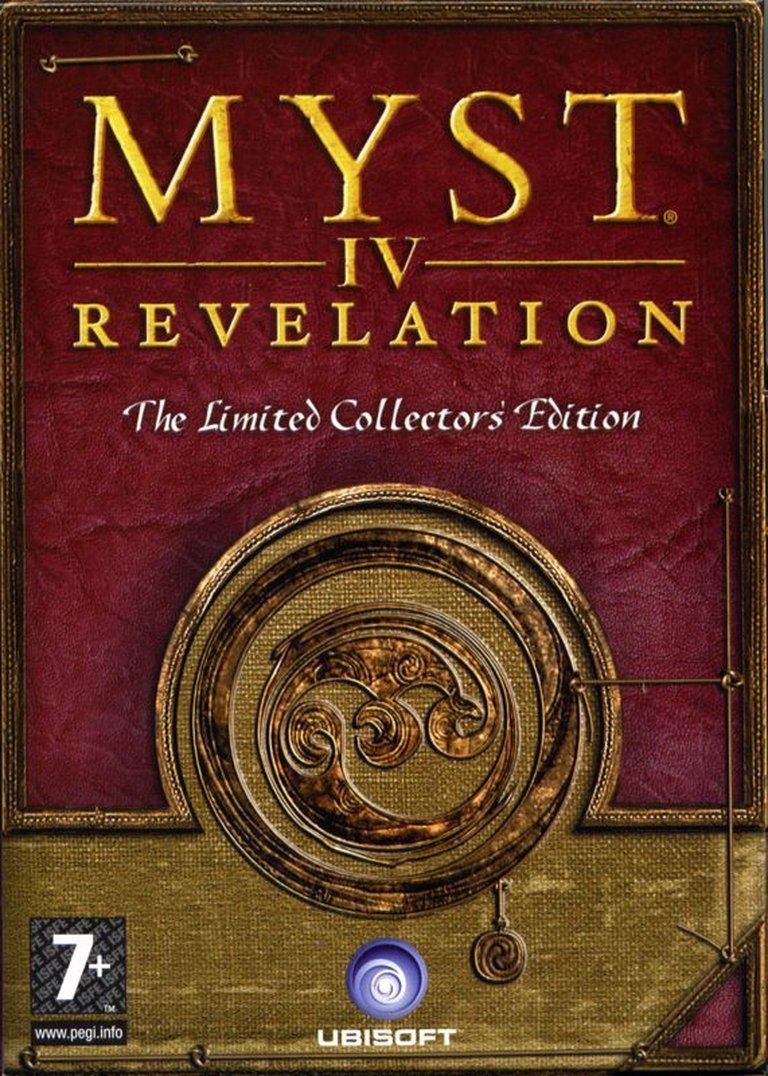
Myst IV: Revelation (Collector’s Edition) is a special edition of the fourth Myst adventure game, where players are summoned by Atrus to investigate his imprisoned sons’ potential reformation and rescue his daughter Yeesha from their schemes, exploring intricate Ages through puzzle-solving in pre-rendered 3D environments with real-time effects. Housed in a book-shaped box, it includes the standard game (DVD-ROM for Windows/Mac), a making-of CD with videos and trailers, and a deck of playing cards, enhancing the immersive Myst series experience.
Gameplay Videos
Where to Buy Myst IV: Revelation (Collector’s Edition)
PC
Myst IV: Revelation (Collector’s Edition) Cracks & Fixes
Myst IV: Revelation (Collector’s Edition) Patches & Updates
Myst IV: Revelation (Collector’s Edition) Guides & Walkthroughs
Myst IV: Revelation (Collector’s Edition) Reviews & Reception
metacritic.com (82/100): Everything in the game remains true to the source material, and Revelation is the best Myst sequel yet released.
ign.com : as far as adventure games go, it’s damn near flawless.
gamespot.com : dazzlingly beautiful sights and amazing sounds. Much of the game is truly a wonder to behold.
imdb.com (100/100): The best game in the Myst franchise.
mobygames.com (80/100): Myst IV is more interactive than any other previous Myst game.
Myst IV: Revelation (Collector’s Edition): Review
Introduction
Imagine stepping into a world where every rustle of leaves, flicker of sunlight on water, and distant cry of an unseen creature pulses with uncanny life—a digital dreamscape that feels more real than the room you’re playing in. Myst IV: Revelation (Collector’s Edition) doesn’t just continue the legendary Myst saga; it elevates it to a collector’s pinnacle, bundling the core game’s masterful adventure with a lavish book-shaped box, a making-of DVD packed with developer insights, trailers, and the evocative soundtrack, plus a deck of Myst-themed playing cards. As the fourth mainline entry, released in 2004 by Ubisoft Montreal, it resolves lingering threads from the original Myst while pushing graphical and narrative boundaries. Thesis: This Collector’s Edition isn’t merely a game—it’s a preserved artifact of adventure gaming’s golden era, blending exhaustive world-building, intellectually rigorous puzzles, and emotional depth into an experience that cements Revelation’s status as the series’ most ambitious and rewarding chapter, flaws in pacing notwithstanding.
Development History & Context
The journey to Myst IV was turbulent, reflecting the shifting sands of early-2000s gaming. Originally, under Mattel Interactive’s ownership of the Myst IP, DreamForge Intertainment (creators of the psychological horror Sanitarium) was tasked with developing a real-time 3D sequel. Two years in and 20% complete, Ubisoft acquired the rights in 2001, scrapped the project, and handed reins to its Montreal studio—marking the second non-Cyan Myst game after Presto Studios’ Myst III: Exile. Directors Patrick Fortier and Michel Poulette, producer Geneviève Lord, designer/writer Mary DeMarle, programmer Nicolas Beaudette, and artist Pascal Blanché led a team swelling to over 80, spanning three-plus years of production.
Cyan Worlds imposed “rules” to preserve Myst lore, but Ubisoft innovated freely. Key decisions included sticking to pre-rendered backgrounds for stylistic continuity with Myst, Riven, and Exile, despite no prior experience—necessitating 50+ hires. The proprietary “ALIVE” engine animated static scenes with real-time effects: swaying trees, rippling water per location, dynamic clouds, lens flares, wildlife interactions, and focal blur. Over 70 minutes of live-action video (FMV) used real actors, viewable interactively during playback. Revelation pioneered DVD-ROM launch (requiring two discs; CD version would need 12), amid a landscape dominated by shooters like Half-Life 2 and MMOs like World of Warcraft. Post-Uru: Ages Beyond Myst‘s multiplayer flop, Ubisoft refocused on single-player purity, positioning Revelation as a traditionalist bulwark against 3D action trends.
The Collector’s Edition (Europe-focused, aka The Limited Collector’s Edition or Édition Collector) arrived September 10, 2004, for Windows/Mac, with Xbox in 2005. Its book-box packaging evoked Myst’s literary mysticism, extras like the making-of CD offering dev diaries on challenges (e.g., artist-programmer tensions from rushed tools), cementing it as a premium artifact.
Narrative & Thematic Deep Dive
Revelation’s plot masterfully weaves redemption, familial betrayal, and the perils of forbidden knowledge, directly resolving Myst‘s cliffhanger: Atrus imprisons sons Sirrus and Achenar in Spire and Haven after their library rampage. Twenty years on, Atrus summons the Stranger (player) to Tomahna, his Earth-cove home, to judge the brothers’ reform. Catherine urges mercy; Atrus doubts. An explosion (later revealed as sabotage) knocks the Stranger out; Yeesha vanishes, leaving an amulet revealing “memories” via flashbacks.
Core Plot Arcs:
– Prison Ages (Spire & Haven): Sirrus (scientific rationalist, played by Brian Wrench) crafts “Nara” explosives from vibrating minerals to escape Spire’s storm-ravaged floating isles, journals unrepentant. Achenar (warrior-turned-primitivist, Guy Sprung) harmonizes with Haven’s jungle predators, regretting past savagery—yet both flee via Tomahna books.
– Serenia & Revelation: Brothers converge on this Atlantis-like Age of memory-preserving “Memory Chambers” (gigantic flowers storing ancestors’ globes via “Life Stone”). Flashbacks/Achenar’s journal expose their Myst-era plot: trap Catherine on Riven, mind-swap Atrus via chamber to steal “the Art.” Sirrus kidnaps Yeesha (Juliette Gosselin), transfers his mind into her body. Achenar intervenes, stealing the Life Stone.
– Climactic Choice: In the decaying chamber, “Yeesha” (Sirrus) begs silver-lever release; Achenar urges amber reversal. Bad endings: delay/silver kills all. Good: reverse, enter Dream (mirror realm), disentangle Sirrus’ monstrous form from Yeesha’s scrambled memories. Achenar sacrifices via toxins; Sirrus perishes in Dream. Atrus mourns sons, vows focus on Yeesha (safe in rebel Age Tay).
Themes:
– Redemption’s Illusion: Achenar’s arc humanizes him (nature harmony, sacrifice), contrasting Sirrus’ unyielding ambition—subverting Myst‘s binary evil.
– Family & Legacy: D’ni “Art” as double-edged: creation/destruction. Yeesha embodies hope amid Atrus’ (Rand Miller) burden.
– Memory & Identity: Serenia’s Dream mechanics philosophize perception; amulet flashbacks deepen immersion, echoing novels (Book of Atrus et al.).
Dialogue is sparse but potent—narrated journals, FMV confrontations—prioritizing environmental storytelling. Minor controversy: retconning trap books as Prison Ages simplifies lore but irks purists.
Gameplay Mechanics & Systems
Revelation refines Myst’s node-based loop: click-to-move between panoramic “nodes” (rotatable 360° views), no free-roaming like Uru. Intuitive hand-cursor signals actions (point=walk, magnifier=zoom, drag=manipulate). No combat, progression, or UI clutter—pure puzzle-driven exploration (20-40 hours).
Core Loops:
– Exploration & Puzzles: Logical, multi-step (e.g., Spire’s spider chair: timed frequency-matching for floating rocks; Haven’s predator tracking via environmental cues). Inter-Age dependencies demand backtracking; red herrings abound.
– Innovations:
| Feature | Description | Impact |
|---|---|---|
| Zip Mode | Thumbnail fast-travel to visited nodes | Mitigates tedium without spoiling discovery |
| Camera | Snapshot clues/journal | Eliminates note-taking; aids complex symbols |
| Journal | On-screen notepad | Beginner-friendly |
| Amulet | Object-triggered FMV flashbacks | Narrative delivery, subtle hints |
| Hints | 3-tiered (cryptic to spoiler) | Accessibility without hand-holding |
Flaws: Pixel-hunting hotspots frustrate; slow cursor animations tedious; node travel feels dated vs. contemporaries. No multiplayer/character builds—single-player purity. CE extras (cards) offer offline puzzle proxies.
World-Building, Art & Sound
Four Ages + Dream form a tapestry of alien immersion:
– Tomahna: Intimate Earth-cove, windmills/dams evoke ingenuity.
– Spire: Verticality of levitating mesas, perpetual lightning—claustrophobic peril.
– Haven: Lush jungle/swamps teeming fauna (predators befriendable).
– Serenia: Utopian monasteries, bioluminescent chambers—ethereal Atlantis.
– Dream: Abstract spirit-realm, harmony puzzles.
Art: Pre-rendered (1024×768 max) with ALIVE’s animations (wildlife, weather) creates “living paintings.” Real-time effects (flares, blur) add depth; distinct palettes per Age enhance mood.
Sound: Jack Wall’s score ($100k budget) reorchestrates Robyn Miller motifs (Atrus’ theme, brothers’ leitmotifs), Eastern European influences. Peter Gabriel’s “Curtains” (B-side) + voiceover elevates FMV. Ambient foley (dripping caves, beast growls) immerses; 24-track OST (e.g., “Enter Serenia”) hauntingly melodic. CE’s soundtrack CD amplifies this.
Reception & Legacy
Launched September 28, 2004 (PC/Mac; Xbox March 2005), Revelation scored 82/100 (Metacritic/GameRankings PC), 75/100 (Xbox)—praised for visuals (“lifelike,” GameSpot), puzzles (“logical,” IGN 9/10), sound (noms: Best Music). Critics lauded polish post-Uru (PC Zone: “most polished ever”); quibbles: hotspots (CGW), node tedium (Houston Chronicle), system reqs (7GB install). Sales: #6 US weekly debut, 100k-400k units by 2006 (part of 1.6M 2000s Myst total).
Awards: GameSpot/GameSpy 2004 Best Adventure; AIAS nominee; #40 Adventure Gamers top 100 (2011). MobyGames player avg: 3.8/5 (CE unranked). Legacy: Last pre-rendered/FMV Myst (Cyan’s End of Ages went real-time); influenced node adventures (The Witness echoes puzzles); CE rarefied as physical relic amid digital shift. Retcon debates persist, but it bridged Cyan/Ubisoft eras, proving adventure viability.
Conclusion
Myst IV: Revelation (Collector’s Edition) distills the series’ essence—cerebral solitude, visual poetry, lore depth—into its zenith. Puzzles demand genius without frustration’s abyss; Ages breathe like lost worlds; narrative redeems villains humanely. Drawbacks (dated nav, hunting) pale against innovations and production zenith. In video game history, it’s the Myst finale fans deserved: a 9/10 triumph, essential for genre historians. Verdict: Buy the CE if you can find it—it’s not just a game, but a time capsule securing Revelation’s immortal place among adventure greats.