
- Release Year: 2018
- Platforms: Macintosh, Windows
- Publisher: Root121 Games
- Developer: Root121 Games
- Genre: Action
- Perspective: Diagonal-down
- Game Mode: Single-player
- Gameplay: Shooter
- Average Score: 50/100
Description
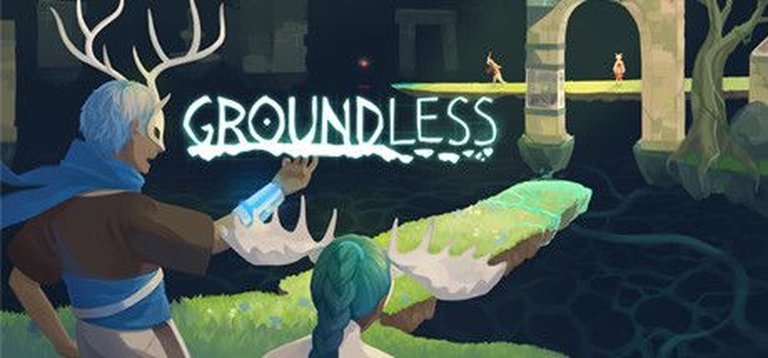
Groundless is a local multiplayer arena game featuring competing tribes in a dynamic battlefield where players build and destroy the ground they walk on to move, interact, and achieve objectives. Perform rituals at the Summoning Circle, seize control of Offerings, or sacrifice enemies into the Abyss using curved abilities that aid allies while hindering foes, across modes like Ritual and Control in shared/split-screen PvP or co-op.
Where to Buy Groundless
PC
Groundless: Review
Introduction
Imagine a battlefield where the very earth beneath your feet is both your greatest ally and your deadliest foe—a chaotic arena where every bridge you build becomes a path for your enemies, and every pit you dig could swallow you whole. Groundless, released in 2018 by the indie studio Root121 Games, captures this precarious thrill in a local multiplayer arena shooter that turns terrain manipulation into a weapon of pure mayhem. In an era dominated by sprawling battle royales like Fortnite and epic single-player narratives like God of War and Red Dead Redemption 2, Groundless stands as a defiant throwback to couch co-op anarchy, echoing the spirit of classics like Bomberman or Worms but with a fresh, physics-driven twist. Its legacy is that of an under-the-radar gem: a game that flew beneath the radar amid 2018’s blockbuster releases, yet offers timeless fun for friends gathered around a screen. My thesis? Groundless is a masterclass in elegant simplicity, proving that innovative mechanics can outshine bombast, but its lack of polish and visibility consign it to indie obscurity rather than hall-of-fame status.
Development History & Context
Root121 Games, a small indie outfit, developed and self-published Groundless using the ubiquitous Unity engine, launching it on Windows on September 6, 2018, followed by a Macintosh port later that year. Priced at a humble $4.99 on Steam, it was clearly positioned as an accessible party game rather than a AAA contender. A Drexel University Westphal page hints at academic roots, suggesting the game may have originated as a student project from the school’s game design program—common for Unity-based indies that emphasize rapid prototyping over high-fidelity production. This aligns with Root121’s lean operation: no sprawling team credits on MobyGames, just a solo entry added by contributor Alaka in 2023, underscoring its grassroots origins.
The 2018 gaming landscape was a perfect storm of contrasts. Mobile and free-to-play giants like Fortnite ($5.47 billion in revenue) and Honor of Kings dominated, while consoles saw critical darlings like God of War (94 Metacritic) and Celeste (94). Battle royales exploded, cross-play emerged (Sony’s Fortnite pivot), and studios like Telltale collapsed amid unionization calls. Technological constraints for indies like Root121 were minimal thanks to Unity’s accessibility—no era-defining hardware limits like the NES days—but competition was fierce. Local multiplayer titles like Overcooked 2 thrived in the party game niche, capitalizing on Nintendo Switch’s portability, yet PC-focused Groundless targeted Steam users craving split-screen chaos. The creators’ vision shines through: a “double-edged sword” philosophy where building and destroying ground affects everyone equally, promoting emergent strategy over power fantasies. In a year of loot boxes and microtransactions scrutiny, Groundless‘ straightforward $5 model felt refreshingly pure, though its lack of online play or bots (as lamented in Steam discussions) reflected indie resource limits.
Narrative & Thematic Deep Dive
Groundless eschews traditional storytelling for abstract, ritualistic lore that permeates its multiplayer mayhem, framing players as warring tribes in a primordial arena of creation and destruction. There’s no linear plot or voiced campaign—it’s pure mode-based competition—but the ad blurb paints a vivid mythic backdrop: perform rituals at the Summoning Circle, seize Offerings, or hurl foes into the Abyss. Characters are faceless tribe avatars, differentiated only by color and team, embodying primal forces rather than deep personalities. Dialogue is absent; communication happens via in-game chaos, like curving ground abilities to “detonate early for impact.”
Thematically, Groundless delves into duality and impermanence. Ground manipulation symbolizes life’s fragility: building enables mobility but aids enemies, mirroring real-world interdependence (think environmentalism or arms races). Modes reinforce this—Ritual (2v2) evokes communal ceremonies turned violent, collecting offerings for points; Control (FFA) is possessive greed over a single prize; Sacrifice (FFA) tallies lives like ancient blood sports. Influences nod to Worms‘ destructible terrain and Totem‘s tribal vibes, but with a philosophical edge: every action rebounds, punishing hubris. No Reddit-style lore books here (unlike RPGs), but the Abyss as a sacrificial void subtly critiques multiplayer toxicity—drop others, risk yourself. For a 2018 indie, this embeds replayable depth without cutscenes, prioritizing “play with friends, or against them!” over exposition. Flaws? Zero character arcs or unlocks leave themes surface-level, but in local co-op, emergent “stories” of betrayals and comebacks suffice.
Gameplay Mechanics & Systems
At its core, Groundless is a diagonal-down shooter where terrain is the star, blending platforming, destruction, and objective capture in tight arenas. Players dash across procedurally-alterable ground, building ramps/bridges (for traversal) or destroying chunks (to trap foes). This double-edged core loop is genius: creation aids you and enemies, destruction hinders all—pure risk-reward. Controls are direct: move, build (hold to curve projectiles into ground-formers), destroy (similarly explosive). Combat emerges from positioning—curve shots to surprise, detonate early for blasts, sacrifice rivals into voids.
Modes deconstruct beautifully:
Ritual (2v2 Team)
Capture the Summoning Circle (central point), ferry Offerings (glowing pickups) back for points. Teammate synergy shines: one builds paths, the other defends. Chaotic when foes tunnel underneath.
Control (Free-for-All)
FFA keep-away with one Offering—chase, block, drop pursuers. Last-man-standing vibes, but terrain flux keeps it unpredictable.
Sacrifice (Free-for-All)
Stock lives; yeet enemies into the Abyss. High lethality, respawns encourage aggression.
Progression & UI: Minimalist—no RPG trees, just scoreboards. UI is clean (Unity default polish), with clear health/lives icons, but Steam forums note no bots/AI, limiting solo play. Up to 4 players via shared/split-screen (Remote Play Together supported), Family Sharing enabled. Innovative systems: physics-based curving (catch foes off-guard), detonation timing. Flaws? Balance issues in mixed reviews (e.g., Steam’s 2 pos/2 neg)—ground regen too slow? No patches noted. Loops excel in 15-20min matches: scout, build paths, ambush, collapse escapes. Compared to Overcooked‘s coop frenzy or Gang Beasts‘ physics flops, Groundless nails strategic sabotage.
| Mechanic | Strength | Weakness |
|---|---|---|
| Building/Destroying | Emergent creativity (ramps to high ground) | Mutual benefit frustrates solos |
| Modes | Variety suits groups | No online = party-only |
| Controls | Intuitive direct input | No tutorials deepen curve |
World-Building, Art & Sound
Arenas are abstract, void-rimmed pits evoking abyssal realms—floating islands of buildable gray matter against starry black voids, Summoning Circles pulsing with ritual glows, Offerings as ethereal orbs. No sprawling open world; compact maps amplify chaos, with Abyss edges as instant-death borders. Atmosphere builds tension: precarious platforms crumble mid-jump, creating vertigo.
Visuals: Unity’s low-poly aesthetic—clean, colorful tribes (red/blue teams), particle-heavy destructions. Diagonal-down perspective evokes Asteroids meets Tron, performant on Intel i3/GTX 630 (min specs). No screenshots flood MobyGames, but promos show vibrant explosions, curved ground trails. Art direction prioritizes readability over spectacle—functional indie charm, not Celeste‘s pixel poetry.
Sound: Full English audio (interface cues), subtitles. Explosive SFX punctuate digs/builds, ritual chimes for objectives. No OST details, but arena-shooters imply tense percussion—evocative of tribal drums for immersion. Elements synergize: crumbling roars heighten falls, building “whooshes” telegraph ambushes. Overall, minimalist world-building sells the theme—ground as living entity—immersing via mechanics over assets.
Reception & Legacy
Launch reception was whisper-quiet: zero MobyGames critic reviews, Steam’s 4 user reviews split (50% pos/neg, no score). Positive notes praise “fun with friends,” negatives gripe replayability sans bots. No sales figures, but obscurity evident—buried in 2018’s 309k+ MobyGames titles amid Fortnite‘s dominance. Curators (3 on Steam) lukewarm.
Legacy? Negligible industry influence—no Worms-like sequels, no battle royale terrain rip-offs. Steam discussions (e.g., “More than 4 players?” “AI?”) show niche appeal, updated to 2025 MobyGames standards. In local multiplayer canon (Overcooked, Gang Beasts), it’s a forgotten innovator; student-project vibes (Drexel) echo jam-game evolutions. Evolved rep: cult curiosity for Unity tinkerers, but no reprints/awards. 2018’s indie surge (Dead Cells, 91 Metacritic) overshadowed it—rightfully, as polish lacks.
Conclusion
Groundless distills multiplayer brilliance into terrain-tinkering chaos: addictive loops, thematic duality, and couch-king potential make it a hidden delight for 2-4 players. Yet, no narrative depth, absent AI/online, and 2018’s giants eclipsed its spark. As a historian, it exemplifies indie ingenuity amid battle royale fever—Unity’s power birthed a mechanic ripe for revival. Verdict: 8/10 for local warriors; a modern classic demanding bots/sequels. Seek it on Steam for game nights—lest it vanish into the Abyss.