
- Release Year: 2017
- Platforms: Android, iPad, iPhone, Linux, Macintosh, Nintendo Switch, tvOS, Windows
- Publisher: Adriaan de Jongh
- Developer: Adriaan de Jongh
- Genre: Puzzle
- Perspective: Diagonal-down
- Game Mode: Single-player
- Gameplay: Hidden object
- Average Score: 78/100
Description
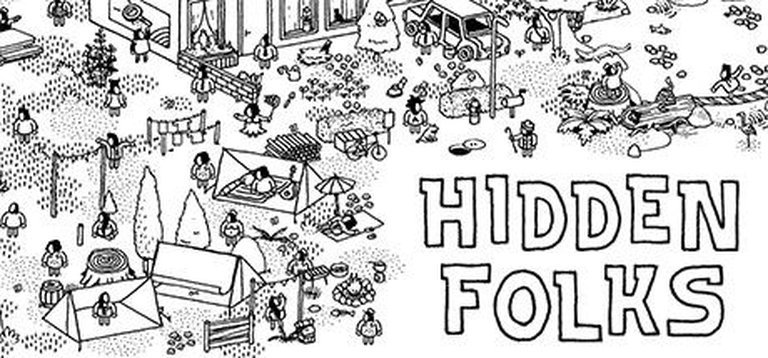
Hidden Folks is a relaxing hidden object puzzle game featuring detailed, hand-drawn black-and-white scenes teeming with animated characters, quirky interactions, and mouth-made sound effects, where players search for hidden people using point-and-click controls in bustling environments reminiscent of Where’s Waldo books.
Gameplay Videos
Where to Buy Hidden Folks
Hidden Folks Free Download
Hidden Folks Guides & Walkthroughs
Hidden Folks Reviews & Reception
metacritic.com (83/100): It’s just so charming and fun to tap around in this world that feels alive.
opencritic.com (73/100): Hidden Folks may be on the short side, and has its occasional hair-pulling moment, but the hefty amount of charm it has in even the smallest individual, combined with some particularly clever puzzle design, make it worth taking at least one quick spin with.
appunwrapper.com : Hidden Folks is like Where’s Waldo, but it’s so much more.
justadventure.com : Hidden Folks uses visual creativity and ingenious sound effects to make a gameplay experience that is calming and amusing.
Hidden Folks: Review
Introduction
Imagine flipping open a Where’s Waldo? book, but instead of static crowds frozen in ink, the scenes pulse with life—monkeys hop, cars honk with guttural “meep meeps,” and poking a crocodile elicits a throaty roar. This is Hidden Folks, a 2017 indie gem that transforms the humble hidden object puzzle into an interactive playground of discovery. Born from a chance encounter at an art exhibition and refined through relentless iteration, the game carries the legacy of wimmelbilderbuch traditions like Martin Handford’s Waldo series, yet infuses them with digital interactivity absent in print predecessors. As a professional game journalist and historian, my thesis is clear: Hidden Folks is a masterful reinvention of casual searching games, blending handcrafted artistry, playful audio, and forgiving design to create a timeless antidote to high-stakes gaming, proving that whimsy and relaxation can rival blockbuster spectacle in cultural impact.
Development History & Context
Hidden Folks emerged from the unlikeliest of collaborations in Amsterdam’s indie scene. In late 2014, Dutch game designer Adriaan de Jongh—known for tactile social experiments like Fingle and Bounden from his former studio Game Oven—stumbled upon illustrator Sylvain Tegroeg’s graduation exhibition at the Rietveld Academy. Amid “Idea Globes” (miniature product worlds in glass orbs), de Jongh fixated on Tegroeg’s intricate black-and-white backdrops: teeming microcosms of faceless figures in orthographic perspective, brimming with untold stories. Jokingly proposing a game, de Jongh prototyped in three hours using “stolen” art from Tegroeg’s site, animating it crudely for iOS. The duo’s excitement ignited a two-and-a-half-year odyssey.
Built in Unity with custom tools for digitizing hand-scanned paper art and preserving mobile detail, the project eschewed traditional hidden object rigidity. De Jongh programmed interactions (taps, drags, layers for 2D depth), while Tegroeg layered thousands of elements manually in Photoshop before importing. Sound designer Martin Mathiesen Kvale mixed ambient “mouth noises” yelled by the team—over 2,000 unique effects via FMOD. Assistants like Aran Koning (programming), Mirthe Venbrux (production/trailers), Bram van Dijk (witty clues), and QA firm Please Ignore rounded out a lean six-person core, bolstered by 200 beta testers and 150+ community translators for 22 languages.
Released February 15, 2017, on Windows, macOS, Linux, iOS, iPadOS, and tvOS (Android/Switch later), it arrived amid mobile gaming’s freemium glut and PC’s battle royale boom. Casual puzzles like Monument Valley thrived, but hidden object games languished in Big Fish’s ad-riddled margins. Technological constraints—mobile touch limits, 2D performance—shaped its forgiving scope: no timers, partial progression. Yet de Jongh’s iterative chaos (throwing out entire areas thrice, rebuilding post-GDC/PAX) honed a premium model ($4.99-$14.99), rejecting IAP friction for “honest” relaxation. Updates (Factory/Snow 2017, Beach 2018, On Tour 2020) expanded to 32 areas, embodying post-launch evolution rare in indies.
Narrative & Thematic Deep Dive
Hidden Folks eschews overt plot for emergent micro-narratives, a wimmelbilderbuch triumph where “story” unfolds via player agency in 32 hand-drawn vignettes (jungle, desert, city, lab, factory, snow, beach, tour). No protagonists or arcs bind scenes; instead, themes emerge from environmental vignettes. Clues like “Salma has been waiting over two hours at the pedestrian crossing—can’t the bus drivers see?!” propel discovery, turning searches into detective tales. Characters—nameless “folks” in absurd poses (Superman on roofs, melon-partiers in hotels)—embody whimsy and inclusivity: a world where traffic jams at flower stalls are peak drama, echoing reviews’ praise for its “schattig” (cute) escapism.
Dialogue manifests in 300+ clue texts, penned by van Dijk for humor and utility: cryptic (“golf ball over the hedge”), temporal (“waiting for music”), or punny (“Superfolk!”). These aren’t voiced but contextualize themes of patience, observation, and serendipity. Underlying motifs—chaos amid order, hidden lives in crowds—critique modern isolation; poking tents reveals butterfly parties, garages hide mechanics. No villains or conflict; progression (find ~half targets per area) rewards curiosity over completionism. Thematically, it’s folkloric minimalism: monochrome universality invites projection, fostering mindfulness. As de Jongh notes, clues shift “searching for graphics” to “searching for stories,” elevating passive spotting to active storytelling, subverting genre tropes of silhouette hunts.
Gameplay Mechanics & Systems
Core loop: Enter animated scene, scan bottom target strip (folks/objects/animals), tap for clue, interact to uncover. No combat, timers, or scores—pure point-and-select bliss. Innovations abound: 500+ interactions (unfurl tents, rotate dishes, dig X-marks) hide ~70% of targets, demanding experimentation. Clues guide via specificity (location/area/object), varying difficulty: plain sight, known/unknown interactions, puzzles (multi-step, e.g., start music for dancers), size (dot-like golf balls), animation/timing/context/sound reveals.
Progression: Unlock areas by finding “enough” (6/12 early, scaling), encouraging revisits without penalty—genius frustration-buster. UI: Minimalist strip, pinch-zoom (volume scales immersively!), swipe-pan, color modes (sepia/night). Single-player offline, cloud sync (iOS/Steam). Flaws: Early drag oversight (tutorials mitigate), repetition in crowds (late-game “busywork”), iPhone portrait cramps vast scenes (iPad ideal). Achievements (8 Steam), trading cards, stickers (100+ iMessage) add light metagame. Controller/touch/mouse support shines; no multiplayer yet, though de Jongh eyed shareable custom hides. Exhaustive yet accessible: 5-10 hours core, endless poking.
World-Building, Art & Sound
Settings span microcosms: jungle bustle, desert SOS, suburban haunts, labs/keys, factories/gears, snowy wilds, beaches/cabanas, tours/stages—each a “giant sheet of paper” teeming life. Atmosphere: Serene chaos, monochrome evoking newsprint yet vibrant via motion (jumping folks, flapping birds). Tegroeg’s orthographic style—tiny scales, dense layering—forces intimacy, building immersion through contrast (dense grass hides, sparse skies guide).
Visuals: Hand-scanned paper yields organic tactility; 1,000+ objects/area, animated fluidly. Sound: 2,000+ a cappella effects (huffs, zips, roars) form symphony—ambient loops (city hums), interactions (cactus yelps), clues amplified by proximity. Mouth-made charm (de Jongh/Kvale yelling) injects personality, turning taps into comedy (vulture caws, computer beeps). Together, they forge synesthetic joy: visuals invite eyes, sounds reward ears/hands, crafting “magically alive” puzzle books.
Reception & Legacy
Launch acclaim peaked mobile: Metacritic 83 iOS/78 PC; MobyGames 7.1 (65% critics). TouchArcade (100%) hailed “peak ambition”; Verge/RPS praised “serene gratification”/”living Waldo.” Nods: Polygon/The Verge/Engadget best-2017, TGA/GDC/Golden Joystick noms (Best Mobile). Sales: 2M+ players, Steam/GOG/App Store staples ($5.99-$14.99). Critiques: Short (Digitally Downloaded 50%, Game Hoard 29% iPad—”sterile crowds”); some unscored (Verge “Sunday coffee companion”).
Reputation evolved positively: Updates quelled “short” gripes, Switch port broadened reach. Influence: Revitalized hidden objects—spawned Wind Peaks, Toem, MicroMacro board games, Lofty/HoloVista indies. De Jongh rejects “HOG” label (“searching game”), inspiring “interactive discovery” offshoots. Culturally, it spotlights casuals’ depth (female/senior skew), challenging “hardcore” bias; Apple Arcade Hidden Folks+ (2022) cements endurance.
Conclusion
Hidden Folks distills searching’s primal joy into digital poetry: artisanal worlds where every tap unveils whimsy, every clue sparks sleuthing. Through de Jongh/Tegroeg’s vision—iterative chaos yielding forgiving interactivity—it transcends Waldo’s static hunt, marrying art/sound in relaxing splendor. Flaws (brevity, scale) pale against charms; updates ensure vitality. In history, it anchors indie’s casual renaissance, a premium beacon amid freemium noise—essential for mindfulness seekers. Verdict: Masterpiece (9.5/10), eternal digital heirloom. Seek it out; the folks await.