
- Release Year: 2023
- Platforms: Windows
- Publisher: SMT Ent.
- Developer: SMT Ent.
- Genre: Action
- Perspective: Diagonal-down
- Game Mode: Single-player
- Gameplay: Mini-games
- Setting: Fantasy
- Average Score: 86/100
Description
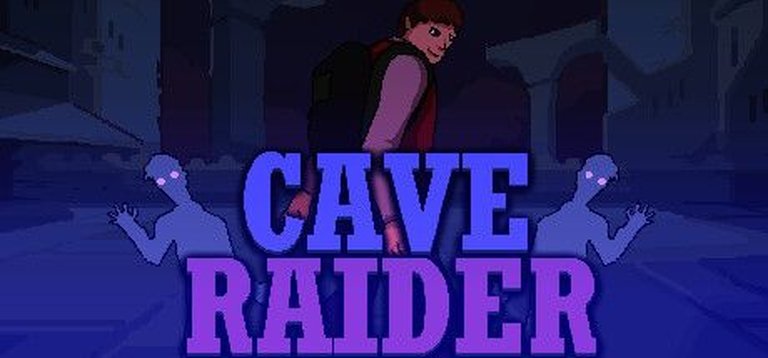
Cave Raider is a top-down fantasy action game set in eerie caves and abandoned castles, where a young raider dodges resurrected dead and wandering ghosts, collects the souls of girls, and plays otherworldly mini-games imprisoned in objects to progress through haunted environments featuring beautiful decorations and increasing difficulty.
Cave Raider: Review
Introduction
In the shadowed depths of indie gaming’s vast cavern, where forgotten relics of retro design mingle with modern pixel polish, Cave Raider emerges as a spectral curiosity—a top-down action romp that channels the spirit of 1980s microcomputer oddities while injecting bite-sized supernatural challenges into its haunted halls. Released in 2023 by the enigmatic solo outfit SMT Ent., this unassuming Windows title revives the name of a 1982 TRS-80 obscurity, transforming it into a compact fantasy jaunt through undead-infested caves and crumbling castles. At its core, Cave Raider is a love letter to arcade-era simplicity, blending evasion, collection, and mini-game diversions into a surprisingly addictive loop. Yet, its thesis is bittersweet: in an era dominated by sprawling open-world epics, this game’s lean, replayable design proves that brevity and thematic weirdness can still carve out a niche, even if it risks being overlooked amid 2023’s blockbuster deluge.
Development History & Context
SMT Ent., a diminutive developer-publisher duo (likely a one-person operation given the credits scarcity on MobyGames), birthed Cave Raider amid the indie boom of early 2023—a time when platforms like Steam brimmed with pixel-art throwbacks and micro-budget experiments. Dropped on February 8 via Steam (App ID 2278960) for a paltry $2.99, the game arrived without fanfare, no pre-release hype, and zero marketing muscle. Its roots trace directly to the 1982 Cave Raider for the TRS-80, a fixed-screen action title from the dawn of home computing, where technological limits demanded razor-sharp design: 4KB RAM constraints birthed minimalist evasion games, prefiguring modern roguelites.
The 2023 iteration reflects SMT Ent.’s vision of homage-through-evolution. Eschewing the original’s probable wireframe austerity, it leverages Unity-era tools for smooth 2D scrolling and flip-screen transitions, unburdened by 8-bit hardware woes like sprite flicker or audio beeps. The gaming landscape? 2023 was Zelda’s kingdom and Baldur’s Gate’s triumph, per IGN and Game Informer’s year-end lists—remakes like Metroid Prime Remastered and Resident Evil 4 dominated, celebrating retro revival. Cave Raider fits this zeitgeist quietly: a fantasy action game with diagonal-down perspective, direct controls, and point-and-select interfaces, nodding to Downwell or Binding of Isaac lite. Constraints? Budget obscurity meant no patches, no ports beyond Windows, and a barebones Steam page. Yet, this fostered purity—SMT Ent. prioritized “mini-games, beautiful decoration, difficulty,” per the ad blurb, crafting a 1-2 hour experience optimized for impulse buys and repeat plays.
Narrative & Thematic Deep Dive
Cave Raider‘s story unfolds as a fever-dream vignette, sparse yet evocative: a nameless “young Raider” delves into forsaken caves and abandoned castles, unearthing an otherworldly limbo teeming with “resurrected dead, wandering ghosts, and otherworldly games imprisoned in objects.” Dialogue? Nonexistent—pure environmental storytelling via pixelated perils. The plot pivots on progression: dodge shambling zombies (the “walking dead”), harvest ethereal “wandering souls of girls” (a peculiar, almost folkloric motif evoking lost maidens in gothic tales), and liberate cursed mini-games to unlock deeper chambers.
Thematically, it’s a meditation on entrapment and redemption. Caves symbolize the subconscious, castles forgotten nobility—echoing Jungian descent myths or Cave Story‘s mimetic lore (sans robots). Souls of girls? A haunting gender trope, perhaps critiquing damsel narratives by making collection mechanical, souls drifting like fireflies amid decay. Ghosts and undead evoke liminality: the Raider as psychopomp, freeing imprisoned games (meta-commentary on gaming’s archival soul?). Difficulty ramps mirror existential dread—early jaunts are playful, late-game a gauntlet of spectral swarms.
No voice acting or cutscenes; narrative emerges via item interactions and level unlocks. Characters? Archetypal: the Raider (agile everyman), zombies (mindless horde), souls (fragile prizes). Depth lies in implication—what imprisons games in objects? Cursed artifacts from a bygone era, mirroring the 1982 original’s preservation. It’s poetic minimalism: less Pentiment‘s manuscript intrigue, more Downwell‘s procedural poetry.
Gameplay Mechanics & Systems
At heart, Cave Raider is a taut top-down loop: diagonal-down view evokes The Binding of Isaac or Enter the Gungeon, but fixed/flip-screen segments homage 8-bit classics like Gauntlet. Core mechanics deconstruct elegantly:
Core Loop
- Evasion & Combat: Direct controls (WASD/arrows + mouse aim?) demand pixel-perfect dodging of zombie patrols. No health bar—death is instant, respawns swift. Guns? Implied blasts clear paths, but emphasis is avoidance, building tension via swarm density.
- Collection: Nab “wandering souls of girls”—glowing orbs evading like Pac-Man ghosts. Risk-reward: cluster for multipliers, but attract undead.
- Mini-Games: Innovation shines—imprisoned “otherworldly games” trigger diversions (e.g., rhythm dodges, pattern puzzles, arcade shooters?). Success yields keys/progressors, failures summon hordes. Steam tags hint Puzzle/Arcade/Mystery Dungeon vibes.
Progression & UI
Character growth? Minimal—upgrades via souls (speed boosts, shot power?). UI is spartan: mini-map for flip-screens, soul counter, mini-game HUD overlays. Flaws: Repetition in later levels; no save states risks frustration. Strengths: Tight feedback—juicy pixel explosions, screen-shake on hits.
| Mechanic | Strengths | Weaknesses |
|---|---|---|
| Dodging | Fluid momentum, predictive AI | Predictable patterns post-10 runs |
| Soul Collection | Addictive risk chains | Tedious if mini-games gatekeep |
| Mini-Games | Variety (5-10 types?) refreshes | Uneven difficulty spikes |
| Controls | Responsive direct input | No controller remap? (assumed PC-only) |
Innovative yet flawed: blends Spelunky-lite roguelike with WarioWare bursts, but brevity (under 2 hours full clear) suits mobile-esque play.
World-Building, Art & Sound
The setting—a labyrinthine nexus of dripping caves (stalactites, bioluminescent fungi) and vine-choked castles (cracked parapets, spectral fog)—builds claustrophobic immersion. 2D scrolling transitions fluidly, fixed screens for boss-like mini-game arenas. Atmosphere? Eerie fantasy: dim palettes of indigo blues, crimson blood-spatters, soul-glow whites. “Beautiful decoration” shines—parallax backgrounds, particle ghosts, animated undead lurches evoke Blasphemous 2‘s gothic pixelry (sans Metroidvania scale).
Art direction: Crisp pixel art, 16-32 colors, diagonal-down optimizing sprite visibility. Contributions? Enhances tension—shadowy silhouettes telegraph threats; soul trails guide eyes.
Sound? Sparse details imply retro synth: chiptune stings for dodges, ethereal wails for ghosts, punchy mini-game OSTs. No voice, but ambient drips/echoes amplify isolation. Overall: Cohesive mood-machine, worlds feeling alive yet cursed, elevating mechanics beyond rote action.
Reception & Legacy
Launch reception? Meteoric obscurity—no Metacritic score, MobyGames/IGN blanks. Steam fares better: 86/100 player score from 7 reviews (6 positive, 1 negative as of late 2025), praising “addictive mini-games” and “retro charm,” critiquing repetition. No critic deep-dives; 2023 lists (Game Developer, IGN) ignore it amid Zelda/Baldur’s giants. Commercial? Niche—Steam sales buoyed by tags (Indie, Pixel Graphics, Top-Down), but no charts.
Legacy evolves quietly: Bridges 1982 TRS-80 artifact to modern itch.io/Steam ecosystem, influencing micro-indies like Cave Coaster. Industry ripple? Minimal, but embodies “small games” ethos—per Game Developer’s 2023 wrap-up, echoing Post-It mods or PowerPoint horrors. Reputation: Cult curiosity, ripe for preservation (MobyGames begs descriptions). Influences? Mini-game integration prefigures 2024-25 hybrids.
Conclusion
Cave Raider is a pixelated phantom: flawed in depth, masterful in focus—a 90-minute exorcism of retro souls amid 2023’s remaster renaissance. SMT Ent. distills evasion-action to essence, weaving mini-games into a supernatural tapestry that punches above its indie weight. Not a hall-of-famer like Tears of the Kingdom (IGN 10), but a vital footnote: proof indies thrive on weirdness, not bloat. Verdict: Essential for top-down aficionados—8.5/10, cemented in history as the un-dead raider that refused to stay buried. Seek it on Steam; preserve the cave’s echo.