
- Release Year: 2022
- Platforms: Windows
- Publisher: Killjoy Games
- Developer: Killjoy Games
- Genre: Adventure
- Perspective: 1st-person 3rd-person (Other)
- Game Mode: Single-player
- Gameplay: Visual novel
- Setting: Contemporary
- Average Score: 63/100
Description
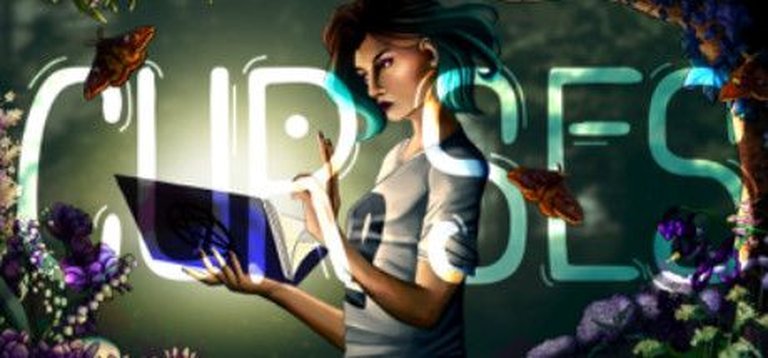
Curses is a short visual novel set in a contemporary world, where players help a troubled teenage girl confront her dark feelings and personal issues, with assistance from a cynical cat and magical elements in a blend of 1st-person and 3rd-person perspectives.
Where to Buy Curses
PC
Curses: Review
Introduction
Imagine being trapped in the cluttered chaos of your teenage bedroom, where every crumpled note, flickering lava lamp, and scattered tarot card pulses with the raw, unspoken turmoil of adolescence—anger, shame, loneliness, and that simmering urge for revenge against a world that feels perpetually unfair. Curses, the 2022 visual novel from indie developer Killjoy Games, plunges players into this intimate hellscape, tasking you with guiding “Girl,” a ’90s-inspired teen grappling with dark emotions, through a web of magical choices aided by her snarky, cynical cat familiar. As a milestone in short-form emotional interactive fiction, Curses transforms point-and-click simplicity into a therapeutic mirror, offering ten branching endings that reward vulnerability over vengeance. My thesis: In an era oversaturated with sprawling epics, Curses carves a vital niche as a concise, hand-drawn gem that normalizes “negative” feelings without judgment, proving that brevity and emotional depth can outshine bombast in preserving gaming’s introspective soul.
Development History & Context
Developed single-handedly by Emily Flynn-Jones under the banner of Killjoy Games, Curses emerged from a deeply personal crucible. Flynn-Jones began game-making around 2015-2016 as a coping mechanism during intensive therapy, rejecting “boring and stale” tools like journaling in favor of interactive mediums that could engage raw emotions. A friend’s encouragement at a conference led to public releases of earlier works on themes like disordered eating and alcohol, which were warmly received, emboldening the shift to Curses. Built in GameMaker, the game embodies indie ethos—hand-drawn 2D scrolling visuals, point-and-select interface, and a contemporary ’90s aesthetic that evokes grunge-era teen angst without modern gloss.
Released on August 29, 2022, for Windows (with MacOS support noted in reviews), it arrived amid a visual novel renaissance fueled by platforms like Steam and itch.io, where short, narrative-driven titles like Doki Doki Literature Club and NORCO thrived. Priced at $7.99, it targeted players weary of AAA bloat, echoing the non-commercial interactive fiction boom of the ’90s—ironically paralleling Graham Nelson’s seminal 1993 Curses, a Z-machine text adventure that pioneered Inform and explored family curses amid attic rummaging. Technological constraints? GameMaker’s accessibility allowed Flynn-Jones to prioritize emotional mechanics over polish, though early Steam Deck demos lagged slightly in point-and-click responsiveness. The gaming landscape in 2022 brimmed with horror hybrids like the Cursed trilogy (Disaster Squad Productions’ 2009-2022 series of point-and-click adventures involving demon cults and goddess warriors), but Curses stood apart as a witchy, self-reflective antidote to their action-horror sprawl.
Narrative & Thematic Deep Dive
Curses is a masterclass in emotional alchemy, confining its surreal tale to Girl’s bedroom—a microcosm of adolescent turmoil. You play as an unseen guide (or perhaps the cat’s proxy), helping Girl navigate “troubles and dark feelings” via magic sparked by everyday objects: tarot cards for divination, mirrors for self-confrontation, and cursed trinkets fueling spells of revenge or release. The cynical cat familiar—sarcastic, world-weary, and unapologetically blunt—serves as narrator and antagonist, negging Girl toward catharsis or chaos. Dialogue crackles with ’90s teen vernacular: raw, fragmented confessions like “I hate them all” or “Why me?” evolve into ten unique endings based on emotion paths—feed rage for curses on family/friends, or pivot to self-care for ambiguous redemption.
Themes dissect shame’s tyranny, uncoupling it from “negative” feelings in a non-judgmental framework. Flynn-Jones designed it therapeutically: choices yield mixed results, blurring moral binaries (revenge might empower, self-focus might isolate). Echoes of legacy titles abound—the 1993 Curses‘ protagonist uncovers a Meldrew family hex via a lost Paris map, mirroring Girl’s attic-like room quests; the Cursed trilogy’s Jennifer Lloyd battles demonic possession and reincarnation as Luna, contrasting Girl’s internal curses. Characters shine through minimalism: Girl as “emotional avatar,” voiceless yet visceral; the cat as Jungian shadow, cynical yet compassionate. Plot branches surgically—mini-games tied to moods (e.g., rage-fueled destruction or sorrowful reflection)—culminating in endings from wicked empowerment to quiet healing, underscoring themes of agency amid inherited pain.
Gameplay Mechanics & Systems
At its core, Curses loops through point-and-select visual novel beats: explore Girl’s room (1st/3rd-person hybrid perspectives), interact with items sparking emotion-driven choices, and trigger magic mini-games. No combat, no progression trees—just intuitive loops of feel → choose → manifest. UI is clean, hand-drawn elegance: hover for emotional auras (red for anger, blue for melancholy), click to delve, with the cat’s quips as contextual hints. Innovative systems include dynamic inventory magic—tarot pulls randomize outcomes, blending RNG with player agency for replayability.
Flaws? Brevity (under an hour per playthrough) risks shallowness, and Steam Deck input lag in demos frustrates precision-clicking. Yet strengths dominate: emotion meters build tension, unlocking paths without grind; mini-games (e.g., curse-casting via pattern-matching) feel organic, not tacked-on. Compared to Graham Nelson’s 1993 innovations—like auto-inventory sorting (places/objects commands listing explored elements)—Curses innovates emotionally, auto-resolving “dark feelings” into branching narratives. No overt progression, but ten endings encourage replays, with subtle meta-layers (revisit cursed items post-ending).
| Mechanic | Strengths | Weaknesses |
|---|---|---|
| Point-and-Select Exploration | Intuitive room navigation; hand-drawn hotspots evoke nostalgia | Occasional input lag on handhelds |
| Emotion Choice Trees | Non-judgmental branching; 10 endings reward nuance | Short length limits depth |
| Mini-Games | Mood-tied variety (tarot, rituals) | Simple, risk repetition |
| UI/Inventory | Cynical cat tooltips; auto-contextual magic | Minimalist to a fault—no tutorials |
World-Building, Art & Sound
Confined to one room, Curses‘ world-building thrives on implication: posters of Nirvana, cluttered desks, flickering screens paint a ’90s teen purgatory thick with atmosphere. Contemporary setting amplifies universality—Girl’s isolation mirrors modern mental health struggles, infused with witchy surrealism (objects animate via curses). Visuals: Gorgeous 2D scrolling hand-drawn art, evoking The Longest Journey or Unavowed, with moody palettes shifting per emotion (crimson rage, indigo sorrow). Atmosphere builds dread-to-relief via subtle animations—rippling shadows, glowing cards.
Sound design leans minimalist: ambient synths underscore angst (chiptune whispers akin to Machinarium), cat’s voiceover drips sarcasm (text-based, but rhythmic pacing sells it). No bombastic OST, but emotional swells during rituals amplify immersion. These elements forge a claustrophobic intimacy, turning a bedroom into a metaphysical arena where curses manifest psychologically, not supernaturally—contrasting Cursed trilogy’s mazes and voids.
Reception & Legacy
Launch reception was muted but poignant: No Metacritic/MobyGames critic scores (user reviews absent), Steam’s 63/100 from 8 players praises emotional resonance (“therapeutic witchy gem”) but notes brevity. The Mary Sue’s Princess Weekes lauds it as “angsty, witchy ’90s dreams,” highlighting non-judgmental paths and desktop polish over Deck hiccups. Commercial? Niche Steam success ($7.99, family sharing), evoking freeware like Disaster Squad’s Cursed trilogy (2009-2022, cult vs. goddess lore, Hardcore modes).
Legacy elevates it: As a modern heir to 1993’s Curses (acclaimed IF milestone, NYT-praised innovations), it influences short VNs (Kathy Rain, Paradigm). Broader impact? Sparks indie therapy-games boom, decoupling shame from dark emotions amid Cursed to Golf‘s roguelike curses. Evolving rep: From obscure 2022 drop to cult “teen self would love,” its source-available ethos (GameMaker) invites preservation.
Conclusion
Curses distills adolescent darkness into a 2022 visual novel triumph—hand-drawn intimacy, cynical cat wit, and ten endings that validate every feeling without prescription. Exhausting its loops reveals a flawless therapeutic loop: feel deeply, choose freely, heal ambiguously. Amid gaming’s giants (The Walking Dead, Return to Monkey Island), it claims a hallowed niche beside Nelson’s 1993 pioneer and Cursed‘s horrors: essential for emotional explorers. Verdict: 9/10—a cursed essential, etching permanence in video game history as indie empathy’s gold standard. Play it; curse the world, or yourself kindly.