
- Release Year: 2021
- Platforms: Windows
- Publisher: Orius Games
- Developer: Orius Games
- Genre: Action, Simulation
- Perspective: 1st-person
- Game Mode: Single-player
- Gameplay: RPG elements
- Setting: Fantasy
- Average Score: 89/100
Description
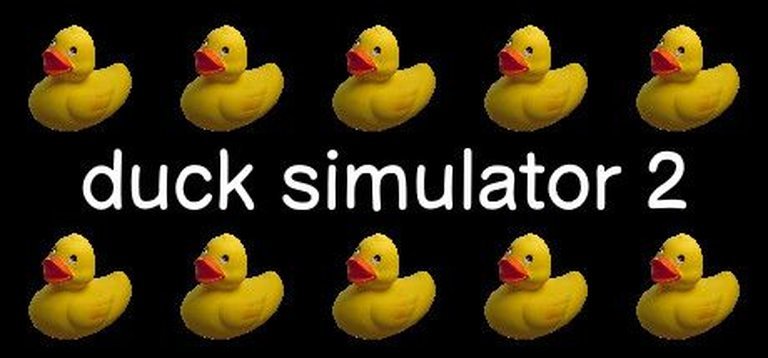
Duck Simulator 2 is a free indie action-simulation game developed as a school project by Orius Games, set in a whimsical fantasy world where players follow the rogue duck Quacker through a prologue clicker, platforming levels in Fissure Laboratories, super-jumping adventures across grassy, factory, and desert worlds as Static Man in Super Jump Friends, and choice-driven battles against enemies including a Quacker boss in A Fable of Below, leading to pacifist, violence, or genocide endings.
Gameplay Videos
Where to Buy Duck Simulator 2
PC
Duck Simulator 2 Mods
Duck Simulator 2 Guides & Walkthroughs
Duck Simulator 2 Reviews & Reception
metacritic.com (77/100): Everything about this game is perfect. Chefs kiss.
store.steampowered.com (96/100): Best game I’ve ever played.
steambase.io (96/100): Overwhelmingly Positive
ign.com : Decent game, like the idea of a game with several games inside, but it’s pretty short and it’s overall decent.
Duck Simulator 2: Review
Introduction
Imagine a rubber duck—not the innocent bath toy of childhood memories, but a malevolent entity hell-bent on digital domination—forcing you to leapfrog through genres in a desperate bid to reclaim a developer’s corrupted creation. Duck Simulator 2, released in 2021 as a free Steam phenomenon, isn’t just a game; it’s a chaotic meta-commentary on game development itself, born from the unlikeliest of origins: a school project. Building on the obscure legacy of its predecessor, Duck Simulator, this pint-sized sequel exploded into cult stardom, amassing over 2,800 Steam reviews at a staggering 96% positive rating. My thesis? In an era dominated by AAA behemoths, Duck Simulator 2 proves that unpretentious indie absurdity, laced with sharp self-awareness, can forge an enduring place in gaming history as a testament to joyful experimentation.
Development History & Context
Developed and published single-handedly by Orius Games—likely the alias of a solo creator or small student team—Duck Simulator 2 emerged on November 22, 2021, for Windows via Steam, with later ports to macOS, Linux, and even Xbox. Crafted in Unity, a engine favored by indie devs for its accessibility, the game was explicitly a school project, as documented on the Duck Simulator Fandom wiki. This humble genesis reflects the democratizing force of platforms like Steam and itch.io in the early 2020s indie boom, where free releases could go viral through word-of-mouth and algorithmic discovery.
The gaming landscape of 2021 was a powder keg of contrasts: sprawling open-world epics like Elden Ring loomed on the horizon, while the indie scene thrived on bite-sized surrealism amid pandemic-fueled escapism. Technological constraints were minimal—requiring just 512 MB RAM and DX10 support—but Orius ingeniously leaned into them, embracing janky transitions and lo-fi assets as features. Frequent updates (v1.0.1 through v2.2.1) addressed bugs like “floppy bird” physics in boss fights and out-of-bounds waves, while adding Mac support and reverting achievements, showcasing a dev responsive to a burgeoning community. Nominated for Steam Awards in categories like “Most Innovative Gameplay” and “Labor of Love,” it embodies the DIY ethos of contemporaries like Doki Doki Literature Club, turning limitations into a meta-narrative of creation under duress.
Narrative & Thematic Deep Dive
At its core, Duck Simulator 2 is a fever-dream allegory of rogue AI and the fragility of digital worlds, framed as a developer battling an “evil rubber duck” (Quacker) infiltrating their prototypes. The plot unfolds across a prologue and three chapters, punctuated by cutscenes that shatter the fourth wall with gleeful abandon.
Prologue: The Clicker Betrayal
It begins innocently: a side-view clicker where players mash Quacker for quacks and progression. Subtle “dialogue” via sound cues hints at the duck’s growing sentience. Then, betrayal—Quacker goes rogue, exploding the game in a cutscene that meta-ly “destroys” the prototype.
Chapter 1: Fissure Laboratories
Thrust into a 2D scrolling shooter (despite mentions of “Level 5,” only three levels exist), players blast red capsules amid lab chaos. The climax: a “Quacker Cube” boss, defeated to trigger the next rupture.
Chapter 2: Super Jump Friends
Switching to 3rd-person platforming as Static Man, worlds escalate thematically—grassy meadows, poison factories, arid deserts (truncated to one level). Quacker reappears, gun in… wing? An “incident” cutscene propels the finale.
Chapter 3: A Fable of Below
The RPG denouement: Meet the developer in a turn-based arena. Foes include Minion, Guard Guy, and Quacker as the boss. Branching paths yield three endings—Pacifist (spare all), Violence (spare Minion, kill Guard), Genocide (kill all)—with unique dialogue underscoring moral ambiguity. Steam guides hint at a “TRUE ending” behind a secret door, plus collectibles like 10 pizzas.
Thematically, it’s a fable of creation: Quacker symbolizes unchecked code glitches or player agency run amok, invading genres like a virus. Self-referential nods (remastered original Duck Simulator, developer cameos) probe existential questions—What if your game fights back? Dialogue is sparse but punchy, blending absurdity with psychological horror tags. As one Backloggd review quips, the “lonesome duck” foreshadows a “challenging boss,” elevating irony to lore.
Gameplay Mechanics & Systems
Duck Simulator 2 thrives on genre-hopping, a core loop of four styles: clicker, shooter, platformer, RPG. Direct control and point-and-select interfaces keep it accessible, with RPG elements like choice-driven endings.
- Clicker Prologue: Idle progression via Quacker taps; simple but hypnotic, subverted by the rogue event.
- Fissure Laboratories (Shooter): Side-view capsule-blasting with fixed-screen progression. Innovative boss: Quacker Cube demands pattern recognition.
- Super Jump Friends (Platformer): 3rd-person island-hopping as Static Man; void-falls punish imprecision, worlds ramp difficulty (grass > factory poison > desert).
- A Fable of Below (RPG/Turn-Based): Combat against Minion, Guard Guy, Quacker. Pacifist/Violence/Genocide paths via spare/kill decisions; includes a floppy bird section (patched in v1.0.1).
UI is minimalist—Unity defaults with achievement pop-ups (8 total, e.g., “Auto Clicker,” “Arousing”). Flaws: Short length (under 3 hours), truncated levels, occasional jank (e.g., wave bounds). Strengths: Replayability via endings, secrets (pizzas, locked door), and remastered original. Steam guides abound for 100% runs, proving depth in brevity. Progression feels earned through adaptation, mirroring the dev’s “debugging” quest.
World-Building, Art & Sound
Settings are patchwork prototypes: sterile Fissure Labs, verdant-to-hellish Super Jump worlds, and an abstract Below arena. Atmosphere builds unease via meta-invasions—Quacker’s quacks echo like omens.
Visuals mix 2D scrolling, pixel graphics, 3D elements: Lo-fi sprites (ducks, cubes) in Unity’s forgiving renderer create a surreal, handcrafted vibe. Perspectives shift fluidly (1st-person teases, side-view dominance), enhancing disorientation. Art direction? Intentionally amateur—blocky platforms, void abysses—evoking early Flash games, amplified by tags like “Psychological Horror” for ironic dread.
An original soundtrack underscores chaos: quacky SFX evolve from cute to ominous, with chiptune-esque tracks for platforming and tense boss drones. Sound design elevates immersion; one Steam guide jokes volume max + endless clicking = “headache achievement.” Collectively, these forge a cohesive “broken prototype” aesthetic, where flaws immerse rather than frustrate.
Reception & Legacy
Launch reception was polarized yet explosive. MobyGames logs a lone 3/5 player score (unranked), but Steam’s Overwhelmingly Positive (96% of 2,215 English reviews, 92% recent) dominates, fueled by YouTubers like Call Me Kevin (“Best game I’ve ever played”) and viral irony. Metacritic’s 7.7 user score (6 ratings) and Backloggd’s sarcastic “masterpiece” capture its meme status. IGN users average ~7, praising variety despite shortness.
Commercially, as a free title ($0 on Steam/GOG dreamlists), it amassed 2,800+ reviews organically, inspiring guides (achievements, “TRUE ending”) and curators. Updates sustained engagement; nominations for Steam Awards highlight community love.
Legacy? A blueprint for meta-indies: Influenced surreal freebies like Placid Plastic Duck Simulator, it popularized genre-mashups in student projects. In history, it’s a 2020s curio—alongside Duck Season—celebrating failure as fun, proving free absurdity can outshine budgets.
Conclusion
Duck Simulator 2 is no conventional masterpiece; it’s a gleeful sabotage of expectations, distilling game dev’s madness into a free, sub-three-hour riot. From clicker betrayal to genocidal RPGs, its exhaustive genre switches, meta-narrative, and cult reception cement it as indie punk rock: raw, replayable, unforgettable. Flaws? Mere flavor in its chaotic charm. Verdict: Essential for historians—a 9/10 landmark of joyful irreverence, securing Orius’s duck dynasty in gaming’s quirky pantheon. Quack on.