
- Release Year: 2002
- Platforms: PlayStation 3, PlayStation, PS Vita, PSP, Windows
- Publisher: Disney Interactive, Inc., Noviy Disk, Sony Computer Entertainment America Inc., Sony Computer Entertainment Europe Ltd.
- Developer: Blitz Games Ltd
- Genre: Action
- Perspective: Behind view
- Game Mode: Single-player
- Gameplay: Platform
- Setting: Hawaiian
- Average Score: 70/100
Description
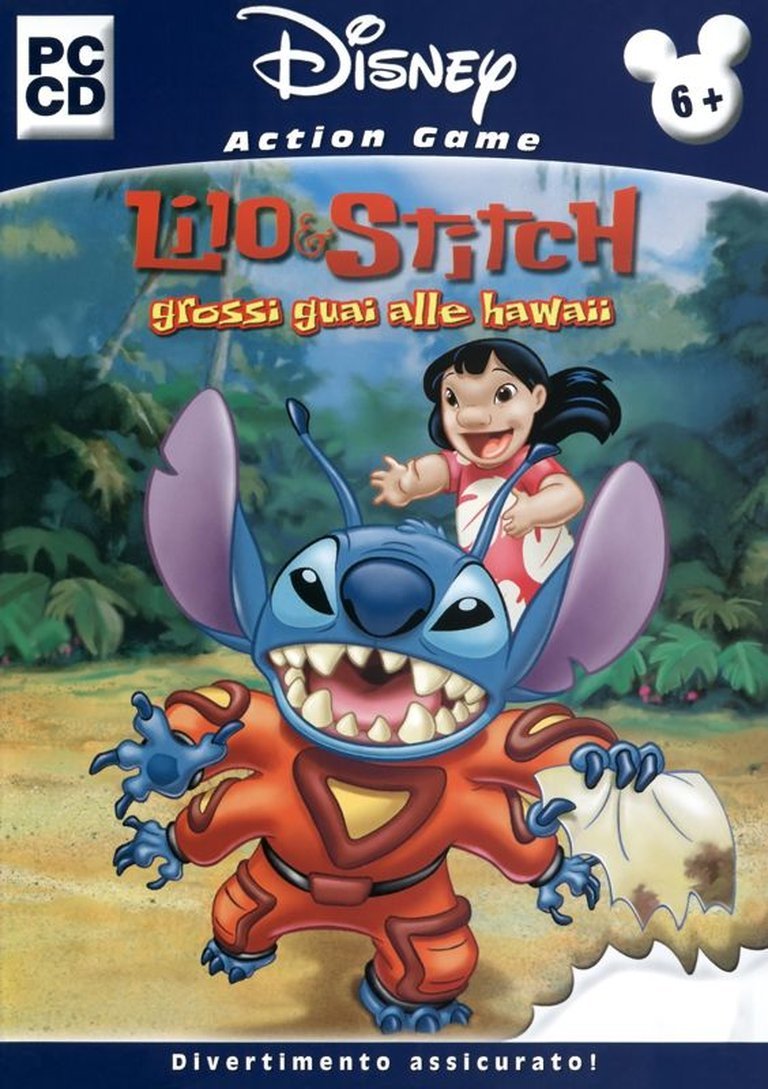
Disney’s Lilo & Stitch: Trouble in Paradise is a 3D kids action-adventure platformer based on the Disney movie, set across the Hawaiian islands where players alternate controlling Lilo, the young girl with voodoo magic, and Stitch, the alien experiment who can turn deadly, to evade bounty hunters and navigate 15 levels filled with moving platforms, varied enemies like turtles and man-eating plants, while collecting 100 tokens, special icons, power-ups, and uncovering hidden photos and movie clips through mini-games and exploration.
Gameplay Videos
Disney’s Lilo & Stitch: Trouble in Paradise Free Download
Disney’s Lilo & Stitch: Trouble in Paradise Cracks & Fixes
Disney’s Lilo & Stitch: Trouble in Paradise Mods
Disney’s Lilo & Stitch: Trouble in Paradise Reviews & Reception
myabandonware.com (95/100): still a popular licensed title amongst retrogamers, with a whopping 4.7/5 rating.
en.wikipedia.org (62/100): was met with very mixed reception.
Disney’s Lilo & Stitch: Trouble in Paradise Cheats & Codes
PS1 (NTSC-U)
Action Replay codes for physical console with Action Replay device or compatible emulator (e.g., ePSXe).
| Code | Effect |
|---|---|
| 800C87D0 00?? 800C87D2 000Y 800C87C4 000Z |
Level Modifier (replace ?? with level code like 01 for Koa Wood, Y=1 default/2 for *, Z=1 default/0 for @) |
| 300BD369 0001 | Debug Mode ((Pad 1) L2 Toggle Debug Menu; (Pad 1) R2 Choose PlayCS/Game Control Menu; (Pad 2) Square Run Self Test; (Pad 2) Triangle Roll Credits; (Pad 2) X Unsure; (Pad 2) R1 Toggle GPU Info; (Pad 2) Select Reset GPU Info) |
| 300C93A4 00?? | Lilo Jump Height Modifier (default 46) |
| 300C93A4 00FF | Lilo Jump Height Is Much Higher |
| 300C93A6 00?? | Stitch Jump Height Modifier (default 46) |
| 300C93A6 00FF | Stitch Jump Height Is Much Higher |
| 80061750 8710 80061752 0801 |
God Mode (falling into water & off ledge won’t kill you – use jump codes to get out) |
| 80069F80 00CE 80069F82 A104 |
Stitch Always Able To Roll |
| D00D54CA 0100 800CC9E0 0005 |
US English Cheats Menu (Press L2 on Main Menu/Room) |
Disney’s Lilo & Stitch: Trouble in Paradise: Review
Introduction
Imagine a chaotic alien crash-landing on the sun-kissed shores of Kauai, teaming up with a plucky Hawaiian girl armed with voodoo dolls and explosive pots to fend off bounty hunters, man-eating plants, and even a tricycle-riding bully—welcome to Disney’s Lilo & Stitch: Trouble in Paradise, a 2002 platformer that bottles the irreverent spirit of Disney’s breakthrough animated hit. Released amid the franchise’s meteoric rise, this Blitz Games title captures the “ohana means family” ethos while thrusting players into a whirlwind of tropical mischief. As a tie-in that dared to give Lilo supernatural powers and let Stitch guzzle coffee for rage-fueled rollouts, it occupies a quirky niche in early-2000s licensed gaming. My thesis: While hampered by era-typical technical quirks and a kiddie focus that alienated older players, Trouble in Paradise endures as a charming, if uneven, platformer that faithfully translates the film’s heartfelt chaos into playable form, cementing its place as an underrated gem in Disney’s video game legacy.
Development History & Context
Blitz Games Ltd., a British studio founded in 1990 and known for family-friendly fare like Chicken Run and Zapper: One Wicked Cricket!, spearheaded development under director Craig Desjardins and producers from Team Enigma. Key designers Tony Cartwright, Leigh Griffiths, and Simon Little shaped its action-platformer blueprint, with programmers Ian Bird, Kieren Bloomfield, and Neil Campbell handling the 3D engine. Artists Chris Hamilton, Richard Jones, and Robert Price crafted the visuals, while composer John Guscott infused Hawaiian flair. The PlayStation version, published by Sony Computer Entertainment (titled simply Disney’s Lilo & Stitch in North America), dropped on June 18, 2002, in NA and September 27 in EU; the PC edition, via Disney Interactive, followed suit with a September 20 EU launch.
This era marked the twilight of the PS1 (1994-2006 lifecycle), where developers grappled with aging hardware amid the PS2’s dominance—think limited polygons, fixed camera angles, and load times that tested patience. Technological constraints manifested in behind-view perspectives blending 2.5D side-scrolling with linear 3D segments, echoing Crash Bandicoot‘s influential formula. The gaming landscape buzzed with movie tie-ins (Spider-Man, Treasure Planet), but Disney’s output often prioritized accessibility for “Everyone” ratings over innovation. Blitz’s vision aligned with this: a “3D kids action-adventure” retelling the 2002 film Lilo & Stitch, emphasizing co-op character-swapping (Lilo/Stitch turns) to evoke ohana bonds. With 198 credits (172 developers), including producer Daimion Pinnock and QA leads like David Parkinson (veteran of 416+ titles), it was a collaborative rush job timed to the film’s hype. Ports to PSP, PS3, and PS Vita (2011-2012) extended its life, while PC abandonware scenes highlight ongoing tinkering with widescreen fixes and patches.
Narrative & Thematic Deep Dive
Plot Synopsis and Structure
The game loosely adapts the film’s core: Experiment 626 (Stitch) crash-lands on Kauai, bonds with orphan Lilo Pelekai (raised by sister Nani), and evades alien pursuers like Jumba, Pleakley, and Captain Gantu. Divided into three sections of five levels each (15 total), play alternates between Lilo and Stitch across Hawaiian locales—beaches, trails, Lilo’s house, alien ships. Objectives blend exploration (collect 100 tokens, 4 special icons per level) with survival chases: flee Mertle Edmonds’ tricycle, Cobra Bubbles’ pursuit, or Jumba/Pleakley’s capture attempts. Bosses are escape sequences, underscoring peril. Hidden photos, movie clips, and mini-games (e.g., timed races) unlock bonuses, framing a “trouble in paradise” arc where mischief reinforces family ties.
Character Analysis
Lilo embodies Badass Adorable: her voodoo doll attacks (glowing doll zap), explosive red pots (lift-and-toss like TNT crates), and “voodoo spoon” Limit Break (summoning a tourist to squash foes) amplify her film’s spunk into Hollywood Voodoo fantasy. Stitch channels destruction—spit attacks, spin dashes, butt-stomps, and a “Bad-o-Meter” fueled by 20 coffee cups for rolling rampages—true to his “ohana” redemption. Supporting cast shines in voice work (Daveigh Chase as Lilo, Chris Sanders as Stitch, David Ogden Stiers as Jumba), with adaptational twists like a villainous sunburned tourist (Lilo’s summon flips this). Dialogue snippets capture the film’s humor, but linearity skips deeper lore (no Grand Councilwoman beyond clips).
Themes and Subtext
“Ohana” pulses through co-op switches and dual paths, mirroring the movie’s family motif amid sci-fi invasion. Hawaiian culture infuses via ukuleles, hula, tikis (fire-spitting enemies as Terrifying Tiki guardians), but Misplaced Wildlife (echidnas) and voodoo jar authenticity. It’s a kid-safe retelling: Stitch’s alien terror domesticates into fun, bounty hunters as cartoon foes (turtles, plants). Critics noted its “essence of the movie,” but repetition dilutes emotional beats, prioritizing platforming over narrative depth.
Gameplay Mechanics & Systems
Core Loops and Progression
A Crash Bandicoot clone at heart: behind-view platforming demands precise runs, jumps, butt-stomps across moving platforms. Collectibles (tokens in pots/ground/air, power-ups, health/lives) fuel progression; 100 tokens + 4 icons unlock hubs guarded by stone tikis (mini-bosses). Character-specific moves diversify: Lilo’s pots/voodoo for ranged puzzles, Stitch’s spin/spit for melee. “Ohana System” swaps at checkpoints (cameras), mailboxes save. Mini-games (races vs. opponents) and bonuses (photos/clips) add replay via time trials.
Combat and Controls
Combat feels twitchy: ground pounds, spins, spits dispatch foes, but reviews lambast “quirkiness”—Lilo drowns easily near water (re-spawns at edge, wasting lives), unpredictable attack initiations (per 7Wolf Magazine). Unlimited continues mitigate frustration, but older players breeze through. UI is simple (health, lives, meters), innovative Bad-o-Meter adds chaos.
Flaws and Innovations
Flawed systems: stiff controls, repetition (hop, collect, repeat), short length (~5-10 hours). Strengths: energy-loaded retries, co-op illusion via swaps, caffeine boosts/Must Have Caffeine trope. PCGamingWiki notes modern fixes (widescreen, admin runs), but era hardware amplified gripes (IGN: “play control quirks”).
World-Building, Art & Sound
Kauai bursts vibrantly: Lahui Beach sands, Iniki Trail foliage, house interiors, alien lairs—elaborate 2.5D environments with breakables (pots yield coffee/flowers). Atmosphere evokes paradise peril: tropical frenzy via man-eating plants, porcupines, lizards. Visuals: cel-shaded 3D mimicking film art (praised by GameZone), though dated (GameStar: “magere Optik”). Enemies vary (turtles to hunters), tikis add folklore menace.
Sound design shines: John Guscott’s Hawaiian-upbeat score blends leis with whizz-bang action. Movie voices (Chase, Sanders) immerse; effects (spits, booms) pop. Consoles Plus hailed “ambiance féerique,” enhancing kid appeal despite repetition.
Reception & Legacy
Launch reception split sharply: MobyGames 61% critics (15 reviews: GameZone 85%—”tropical fun for all ages”; GameSpot 38%—”technical limitations”), 3.6/5 players. Aggregates: GameRankings PS1 57.73%/PC 62%, Metacritic PS1 54/100. Positives: captures movie spirit (PlayStation Illustrated: “amuse the kids”), challenge/motivation (Review Corner). Negatives: kiddie simplicity (PC Action: “hop around… invest in the film”), controls/frustration (KidZone: “twitchiness… for older kids”), repetition (Meristation: “s repetitive”).
Legacy evolved positively: PS1 Platinum, digital re-releases (PSP/PS3/Vita 2011-12), abandonware cult (MyAbandonware 4.73/5). Influences: Echoed in Stitch: Experiment 626 (PS2 prequel), GBA sequels; Blitz’s Disney streak (Monsters, Inc.: Scare Island). No industry shaker, but preserves franchise—TV Tropes notes tropes like Adaptational Badass Lilo. Retrogamers cherish via emulators (ClassicGameZone), Disneyland demos.
Conclusion
Disney’s Lilo & Stitch: Trouble in Paradise distills a beloved film’s aloha chaos into a platformer punchbowl—vibrant Hawaiian hops marred by clunky controls and brevity, yet redeemed by ohana swaps, voodoo whimsy, and movie fidelity. For kids in 2002, a thrilling intro; for historians, a testament to tie-in potential amid PS1’s end. Score: 7/10—a nostalgic paradise with troubled edges, worthy of modern rediscovery but no pantheon staple. In video game history, it reminds us: even flawed family adventures endure.