
- Release Year: 2021
- Platforms: Nintendo Switch, PlayStation 4, Windows
- Publisher: SEGA Corporation, Taito Corporation, United Games Entertainment GmbH
- Developer: M2 Co., Ltd., Taito Corporation
- Genre: Action
- Perspective: Side view
- Game Mode: Single-player
- Gameplay: Shooter
- Setting: Futuristic, Sci-fi
- Average Score: 77/100
Description
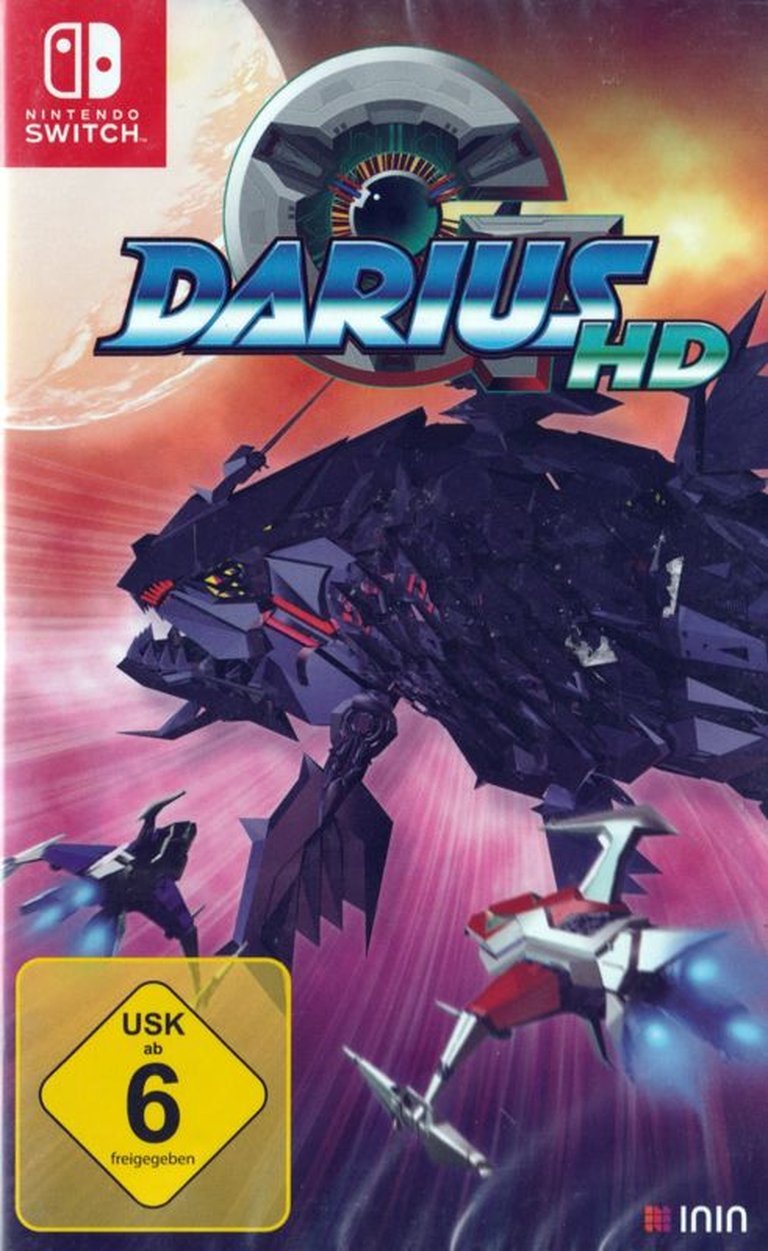
G-Darius HD is an enhanced collection of the classic 1997 arcade shoot ’em up G-Darius, set in a sci-fi futuristic universe where players pilot the Silver Hawk Genesis spaceship through side-scrolling space battles, capturing enemies to turn them into allied drones while facing massive mechanical bosses across branching zones.
Gameplay Videos
Where to Buy G-Darius HD
PC
G-Darius HD Guides & Walkthroughs
G-Darius HD Reviews & Reception
metacritic.com (78/100): G-Darius is classic Arcade shooting action at its very best.
opencritic.com (76/100): G-Darius HD still holds up as a great shoot ’em up even over twenty years later.
nintendolife.com : G-Darius, the first fully 3D title in the series, is immensely ambitious.
moviesgamesandtech.com : G-Darius still holds up great… one of the best the series has to offer.
G-Darius HD: Review
Introduction
Imagine locking beams with a colossal cybernetic sea turtle, your fingers a blur on the fire button as you wrestle control of its devastating Beta Beam, turning the enemy’s ultimate weapon against it in a cinematic clash of light and fury. This is the heart-pounding essence of G-Darius HD, a 2021 high-definition remaster of Taito’s 1997 arcade masterpiece G-Darius—a game that boldly thrust the iconic Darius series into the 3D era while redefining shoot-’em-up (shmup) innovation. As the chronological prequel to the entire franchise, it chronicles the genesis of the Silver Hawk fighters amid an interstellar war, blending mechanical fish horrors with strategic depth. Long celebrated as one of the genre’s pinnacles alongside Darius Gaiden, G-Darius HD—crafted by emulation wizards M2 Co., Ltd.—delivers the definitive experience through multiple versions, quality-of-life enhancements, and pristine visuals. My thesis: This isn’t just a faithful port; it’s a triumphant resurrection that cements G-Darius as a timeless shmup triumph, accessible yet punishing, visually poetic, and mechanically revolutionary.
Development History & Context
Taito Corporation, the architects of the Darius saga since 1987, unleashed G-Darius in arcades on custom Taito FX-1 hardware—a response to the mid-90s shmup landscape where 2D stalwarts like R-Type, Gradius, and RayStorm dominated, but 3D loomed large. Released amid the arcade twilight (as consoles like PlayStation rose), it marked the series’ daring pivot to 2.5D polygons, blending side-scrolling tradition with early 3D flair to combat visual fatigue in a post-Doom world. Directors envisioned a “Genesis” evolution: Silver Hawk ships reverse-engineered from foes, echoing Metal Black‘s beam wars, amid branching paths inspired by Star Fox 64.
Key creators included Taito veterans, with M2’s 2021 HD revival (producer Naoki Horii, director Yukiko Karashima, programmers like Tetsuya Abe) polishing it for PS4, Switch, and PC. Technological constraints? The original’s PS1 port (1998) suffered slowdowns and FMV swaps; PC (2000) and PS2 compilations (Taito Legends 2) improved fluidity but lacked depth. M2’s magic—HD-upscaled polygons (enhanced Silver Hawk “Genesis” model from Dariusburst), Ver.2 rules (first home port), training modes, and 30 quick-saves—overcomes era limitations like jaggies and no rapid-fire. In 2021’s retro boom (indie shmups, collections like Darius Cozmic), it fits perfectly, publishers Taito/ININ/SEGA bridging arcade nostalgia to modern handhelds, evoking Akihabara’s Hirose Entertainment Yard via ambient noise options.
Narrative & Thematic Deep Dive
G-Darius rewrites Darius lore as a prequel, predating Proco/Tiat pilots by eons. The peaceful Amnelia Kingdom clashes with the Thiima Empire’s biomechanical armada—vast living battleships resembling sea life (shrimp, turtles, coelacanths). After Thiima superweapons ravage Amnelia, King Amnelia steals Beta Beam tech, birthing the Silver Hawk Genesis fighters piloted by Sameluck Raida (red ship) and Lutia Feen (blue, co-op). Their mission: infiltrate 15 zones (G-themed: Green Globe, Granulated Star), branch paths via upper/lower screen choices, and assault the Thiima core.
Plot unfolds via dynamic FMVs and in-engine cinematics—wails herald bosses like Queen Fossil or G.T. (Great Thing). Dialogue is sparse, pilot banter terse (“Target locked!”), emphasizing epic scale over verbosity. Themes probe creation and destruction: Tagline “You will see the creation of new lives” hints at Silver Hawks as Thiima hybrids, culminating in bizarre endings. Zone Omicron links to original Darius (Belsar evolution); others dissolve pilots into voids or birds, evoking existential dread—lips touch in disintegration, weirder than any shmup narrative. Aquatic motifs symbolize primordial chaos: fish-ships birth from eggs, wars echo evolution. No deep characters, but Raida/Feen’s symbiosis mirrors captured foes—alliances forged in enmity—making it thematically richer than bullet-hell peers, a cosmic tragedy of technological genesis.
Gameplay Mechanics & Systems
G-Darius HD‘s core loop is horizontal shmup perfection: pilot Silver Hawk through five-zone runs (15 total via branching maps), dodging foes while powering up. Power-ups cycle red (firepower: missiles → lasers → waves, 7 sub-levels per tier), green (armor/shields), purple (Capture Balls, stock-limited). Death demotes sub-levels but retains tiers—survival is key for endgame viability.
Innovation shines in Capture system: Balls snag enemies (HP-based; weaken minibosses’ gold armor first), yielding allies with unique patterns (turrets, shields). Detonate as bombs (size-scaled blasts); hold to charge Alpha Beam—screen-clearing laser fed by sacrifices, powering score multipliers (formations cleared, beams countered). Bosses unleash Beta Beams; duel by aligning Alpha, mashing fire to reverse/absorb (up to 4x simultaneous, frantic intensity). Ver.2 tweaks balance (auto-fire, timers); PS port adds boss rush/FMV gallery.
UI/Systems excel in HD: gadgets show arm strength, beam power, capture HP; training customizes zones/lives/difficulty; achievements/replays/leaderboards fuel competition. Co-op doubles chaos; quick-saves (30 slots + autosave branches/bosses) tame brutality. Flaws? No inherent tutorial (manual advised); steep curve demands mastery. Controls: direct (analog/arcade stick), customizable rapid-fire. Branching (intra-stage forks) + short runs (30-45 mins) ensure replayability, scoring via captures/duels.
| Mechanic | Function | Innovation |
|---|---|---|
| Capture Ball | Ally conversion, bomb, beam fuel | Strategic risk/reward over options |
| Alpha/Beta Duel | Beam clash, absorb/reverse | Button-mash spectacle, Metal Black homage |
| Upgrades | Tier/sub-level persistence | Punishes death, rewards caution |
| Branching | 15 zones, 5-run paths | Star Fox-like variety |
World-Building, Art & Sound
Sci-fi aquatic dystopia immerses: Amnelia’s seas/airscapes host Thiima horrors—underwater coral trains (Green Globe), dinosaur skies, planet-melting motherships (Granulated Star). Branching forks vary bosses/attacks (e.g., sky vs. sea routes), backgrounds bustle with pterodactyls, lasers, escapes—alive, distracting peril.
Art: 2.5D triumph—crisp 2D scrolling, polygonal bosses (HD smooths jaggies, upgraded ship). Stages burst: diagonal scrolls, set-pieces dwarf player. HD mode shines docked (scanlines/smoothing optional); original preserves jaggies. Sound: Zuntata’s industrial electronica—synth dread (“ADAM” for climaxes), samples evoke tension/awe. FMVs/cutscenes amplify scale; arcade noise option immerses. Slowdown (simulatable) heightens drama, backgrounds contribute chaos (blending foes/projectiles).
Elements synergize: Visual poetry underscores themes (biomechanical births), sound amplifies duels—total sensory overload, elevating shmups to opera.
Reception & Legacy
Arcade launch wowed (EGM: “best U.S. 32-bit shooter”); PS1 port lauded mechanics despite slowdowns. G-Darius HD: MobyGames 80% critics (37 reviews: LadiesGamers 100%, Nintendo Life 90%), 7.8 Moby Score; Metacritic 78 (Switch/PS4). Praise: “Essential shmup” (Nintendo Life), “love letter” (GamersHeroes), capture/beams “game-changer” (Retro XP). Critiques: Pricey ($30), tough for newbies (PlayStation Country 70%), minor frame drops.
Legacy: Genre benchmark—innovative 2.5D influenced Border Down, Dariusburst; capture/duels echoed in indies. “Jewel” of Cozmic Revelation, best Darius for many (vs. Gaiden’s 2D purity). Evolved rep: From arcade quarter-muncher to Switch essential, preserving history via M2’s ports. Influences: Shmups’ 3D shift, scoring depth.
Conclusion
G-Darius HD masterfully exhumes a 1997 visionary—exhaustive versions (arcade/HD/Ver.2/PS/Exhibition), QoL (training/gallery/saves), and uncompromised challenge synthesize into shmup nirvana. Its narrative poetry, capture genius, beam spectacle, and aquatic grandeur transcend eras, flaws (tutorial void, cost) mere specks. Verdict: Essential masterpiece, Darius zenith, shmup history’s crown jewel—9/10. Own it; duel eternity.